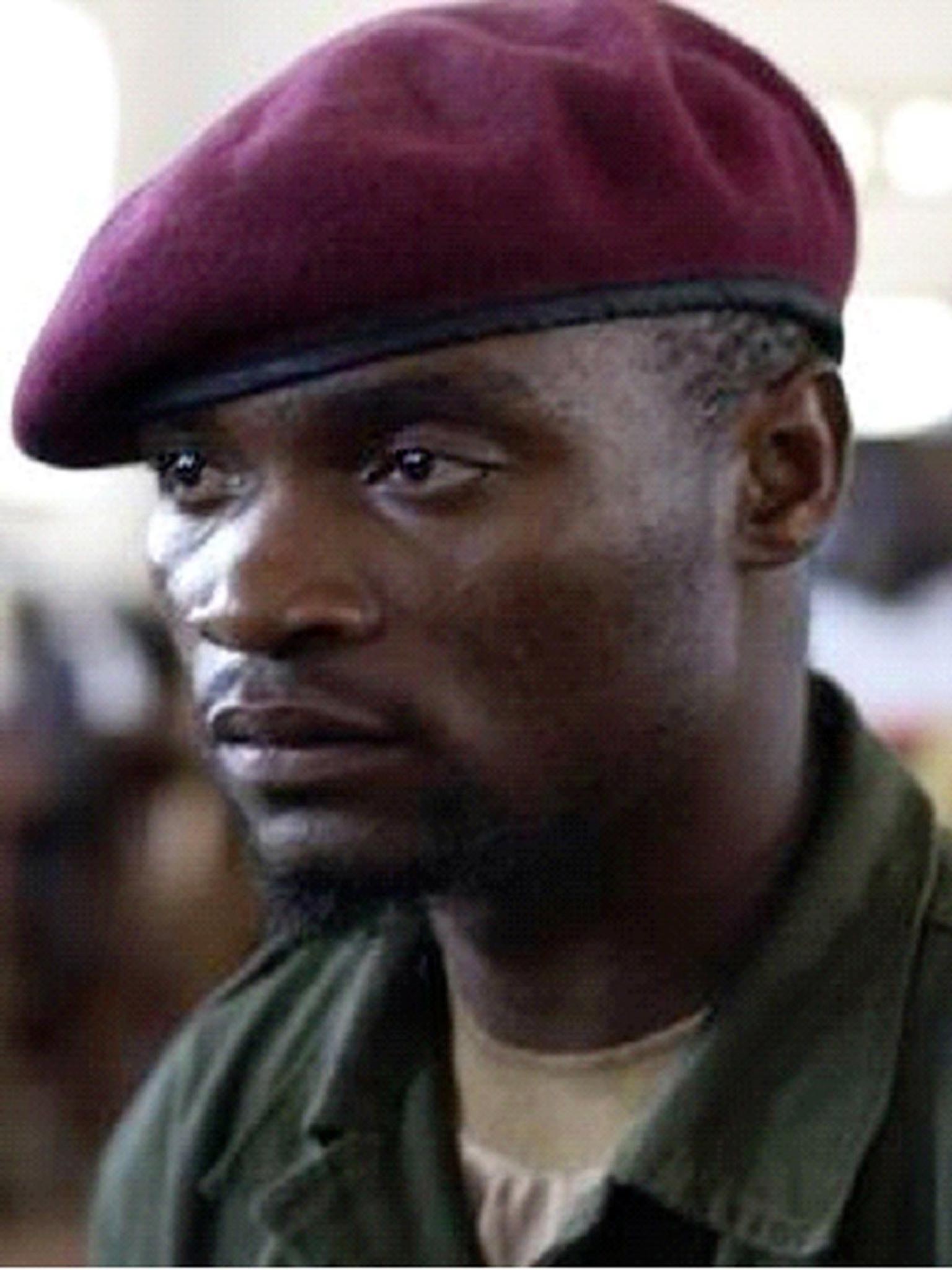
Germain Katanga
 DR Congo
Former Congolese Rebel Leader•Military Figure
Also known as: Simba
Birthday
April 28, 1978
Birth Sign
Taurus
Birthplace
Mambasa, Democratic Republic of the Congo
Age
48 years old
About
Germain Katanga is a Congolese former rebel leader and military figure, born on April 28, 1978. He commanded the Patriotic Resistance Force in Ituri (FRPI), an armed group that operated within the Ituri Province of the Democratic Republic of the Congo. His public profile is largely defined by his leadership during periods of intense regional conflict and his subsequent legal proceedings before the International Criminal Court (ICC). He was convicted of war crimes and a crime against humanity, marking a notable instance of international accountability for such offenses. Having completed his sentence and been released, Katanga remains a figure associated with the complex history of armed conflict in the DRC and the ongoing efforts to ensure justice for victims, with his case often cited in international legal discourse.
Early Life & Background
Information regarding Germain Katanga's early life and background before his involvement in armed conflict remains largely undocumented in public records. Details about his childhood, including his upbringing in Mambasa, Democratic Republic of the Congo, are not extensively available. Publicly accessible information does not specify his parents' names, his family structure, or any siblings he might have. His educational path, formative experiences, or initial career steps prior to becoming a military figure are similarly absent from the public domain. The circumstances that led to his eventual command of the Patriotic Resistance Force in Ituri (FRPI) are not detailed through publicly reported accounts of his youth or early adulthood. This scarcity of biographical data is not uncommon for individuals who emerge from conflict zones into roles of military leadership, where personal histories are often obscured by the exigencies of war and the lack of comprehensive civilian record-keeping during periods of instability. Unlike public figures in other domains, the records for individuals like Katanga often begin with their military or political activities, leaving their foundational years largely unexamined in the public eye. Therefore, public understanding of Katanga’s development into a military commander is limited to the period of his active involvement in the Ituri conflict. Traditional sources of biographical information, such as school records, local community testimonials, or detailed family histories, have not emerged in public discourse concerning his pre-conflict life, leaving a significant gap in the narrative of his early years. His pre-conflict narrative, therefore, remains largely unwritten in public records.
Career Growth
Germain Katanga's public career began with his leadership of the Patriotic Resistance Force in Ituri (FRPI), an armed faction active in the Ituri Province of the Democratic Republic of the Congo during the early 2000s. His activities as a military commander primarily occurred between August 2002 and May 2003, a period marked by intense conflict in the region. Congolese authorities apprehended Katanga and, in October 2007, transferred him to the custody of the International Criminal Court (ICC) to face charges. These charges included murder, sexual slavery, rape, destruction of property, and directing attacks against civilian populations.
The legal proceedings against Katanga culminated on March 7, 2014, when the ICC convicted him as an accessory to a massacre in the village of Bogoro on February 24, 2003. He was found guilty of one count of crime against humanity (murder) and four counts of war crimes, which included murder, attacking a civilian population, pillage, and destruction of property. This verdict represented a significant moment for the ICC, as it was only the second conviction in the Court's history at that time. On May 23, 2014, the ICC sentenced Katanga to 12 years of imprisonment. He initially served his sentence in the Netherlands before being transferred to a Congolese prison in December 2015 to complete his term. His ICC sentence officially concluded on January 18, 2016, though he remained in custody under domestic Congolese charges. In March 2017, the ICC ordered him to pay $1 million in reparations to victims of the 2003 attacks. Katanga was eventually released from prison on March 31, 2020, as part of broader governmental initiatives aimed at restoring peace in the Ituri region.
Career Timeline
Public Image & Style
Germain Katanga's public image is primarily that of a former military commander who faced international justice. His persona is largely shaped by the gravity of the charges brought against him by the International Criminal Court and his subsequent conviction for war crimes and a crime against humanity. Media portrayals consistently depict him in the context of the Ituri conflict, emphasizing his leadership role in the Patriotic Resistance Force in Ituri (FRPI) and the severe human rights violations associated with the events in Bogoro. Discussions surrounding Katanga in both media and human rights circles typically focus on accountability, justice for victims, and the broader implications of international criminal law. His public presence does not involve typical celebrity engagement or social media interaction; instead, it is defined by the legal and historical record of his actions and their consequences. Audiences and observers connect with his story through the lens of international justice and the ongoing challenges of peace and stability in the Democratic Republic of the Congo.
Fame & Fandom (iFAMOUS Rankings)
Germain Katanga commands a global attention defined entirely by the gravity of international justice rather than the glow of celebrity. He is currently evaluated as an unranked figure in the iFANN Global Fame Engine, holding no placement within the published Top 1,000 or any scope list. This absence of a rank reflects his status as a convicted war criminal and former militia leader, a profile that generates intense scrutiny from legal analysts and human rights organizations but zero organic adoration. There is no documented fandom name for this audience; no fanbase organizes campaigns, birthday billboards, or streaming pushes. The only collective groups engaging with his name are those monitoring the International Criminal Court proceedings or advocating for victims of the 2003 Bogoro massacre. His interactions remain adversarial and legalistic, devoid of the viral moments or iconic performances that typically drive fame metrics. While the world watches his legal history unfold, there are no fan-funded projects, subway ads, or chart pushes associated with him. Any movement surrounding his name involves political negotiations regarding his release or efforts to ensure justice for the atrocities committed in the Ituri region. He stands as a figure of infamy where others might be legends, his legacy tied to precedents in international law rather than cultural mythology.
Interesting Facts and Legends
During his time leading the Patriotic Forces for the Liberation of Congo (FPLC) in Ituri, Germain Katanga operated under the nom de guerre "Simba," a moniker translating to "lion" that signifies strength and ferocity across many African cultures. Public records contain almost no details about his personal habits, hobbies, or surprising talents, leaving his visibility centered strictly on geopolitical events. The central story defining his life is the February 2003 attack on the village of Bogoro, where he led the FPLC militia in massacring civilians and destroying property. This verified event became the basis for his conviction as an accessory to crimes against humanity and four counts of war crimes. A historic moment followed on March 7, 2014, when the ICC found him guilty, marking one of the first major judgments regarding sexual violence and child soldiers in the Democratic Republic of the Congo. In May 2014, he received a 12-year sentence, displaying no emotion during the reading. The narrative continued in March 2017 when the court ordered him to pay approximately $1 million in reparations to the victims. His final chapter saw release in March 2020 via presidential order intended to restore peace in the eastern Ituri region, a move described by some as a necessary price for stability.
Family & Personal Life
Public information concerning Germain Katanga's family life is notably sparse. Details about his parents, including their names or professions, are not available in public records. Similarly, there is no public documentation regarding any siblings he might have, nor are there accounts of his own household composition today, such as a spouse or children. The absence of such biographical details is common for individuals whose public lives are primarily defined by their involvement in armed conflict rather than by roles that typically generate extensive personal records. Therefore, specific family stories or values he might have shared publicly are not part of the known narrative.
Notable Connections
Relationships & Dating History
Public records do not contain any information regarding Germain Katanga's personal relationships, including details about any romantic partners, marriages, divorces, or high-profile associations. His public profile has consistently focused on his military and legal activities, leaving his private life, including his dating history, entirely undocumented in publicly accessible sources. The absence of such biographical details is common for individuals whose public lives are primarily defined by their involvement in armed conflict rather than by roles that typically generate extensive personal records or media interest in their private affairs. Unlike public figures in the entertainment or political spheres, Katanga's trajectory has not led to the kind of public scrutiny that typically uncovers details about personal relationships. Consequently, there are no reported accounts of early relationships, longer-term partners, or any specific marriage or breakup dates. No information has emerged concerning children he might have or other family structures beyond the general context of his upbringing in the Democratic Republic of the Congo. As of 2026, his relationship status is not known through any reported accounts, and there is no information available about any current or past partners. This aspect of his life remains outside the scope of public knowledge, reflecting the specific nature of his documented history, which is predominantly judicial and military.
Salary, Net Worth In 2026
$100,000
iFANN Editorial Team estimate
Estimates for Germain Katanga's net worth are not publicly available through traditional financial reporting or celebrity wealth tracking services. Given his history as a former rebel leader, his subsequent lengthy imprisonment following conviction by the International Criminal Court, and his release in 2020, his financial standing does not align with typical income-generating professions. His public life has not involved ventures such as business ownership, high-profile endorsements, or salaried positions that would generate significant, publicly verifiable income streams. The $1 million in reparations ordered by the ICC in March 2017 was designated for victims of the 2003 attacks, not as personal income for Katanga, further illustrating the unique financial context of his situation. Per iFANN's editorial analysis, any estimated current wealth, such as a nominal figure of $100,000 as of 2026, would reflect a complete absence of documented substantial assets or consistent, high-value earnings following his release from custody. The economic reality for individuals transitioning from military and legal confinement, particularly in regions affected by prolonged conflict, typically involves limited opportunities for wealth accumulation in the public sphere. His financial situation remains largely opaque to the public, consistent with his profile as an individual whose public record is dominated by military and legal affairs rather than commercial or professional endeavors.
Awards & Accolades
Known For
Patriotic Resistance Force in Ituri (FRPI)
2003 · Commander
International Criminal Court (ICC) Conviction
2014 · Convicted for War Crimes
Keywords
Sources
Quick Facts
- Profession
- Former Congolese Rebel Leader, Military Figure
- Born
- April 28, 1978
- Birthplace
- Mambasa, Democratic Republic of the Congo
- Gender
- Male
- Birth Sign
- Taurus
Personal Details
- Children
- Education
Frequently Asked Questions
What is Germain Katanga known for?
When was Germain Katanga convicted by the ICC?
What was Germain Katanga's sentence?
Where was Germain Katanga born?
When was Germain Katanga released from prison?
Join the community
fans discussing