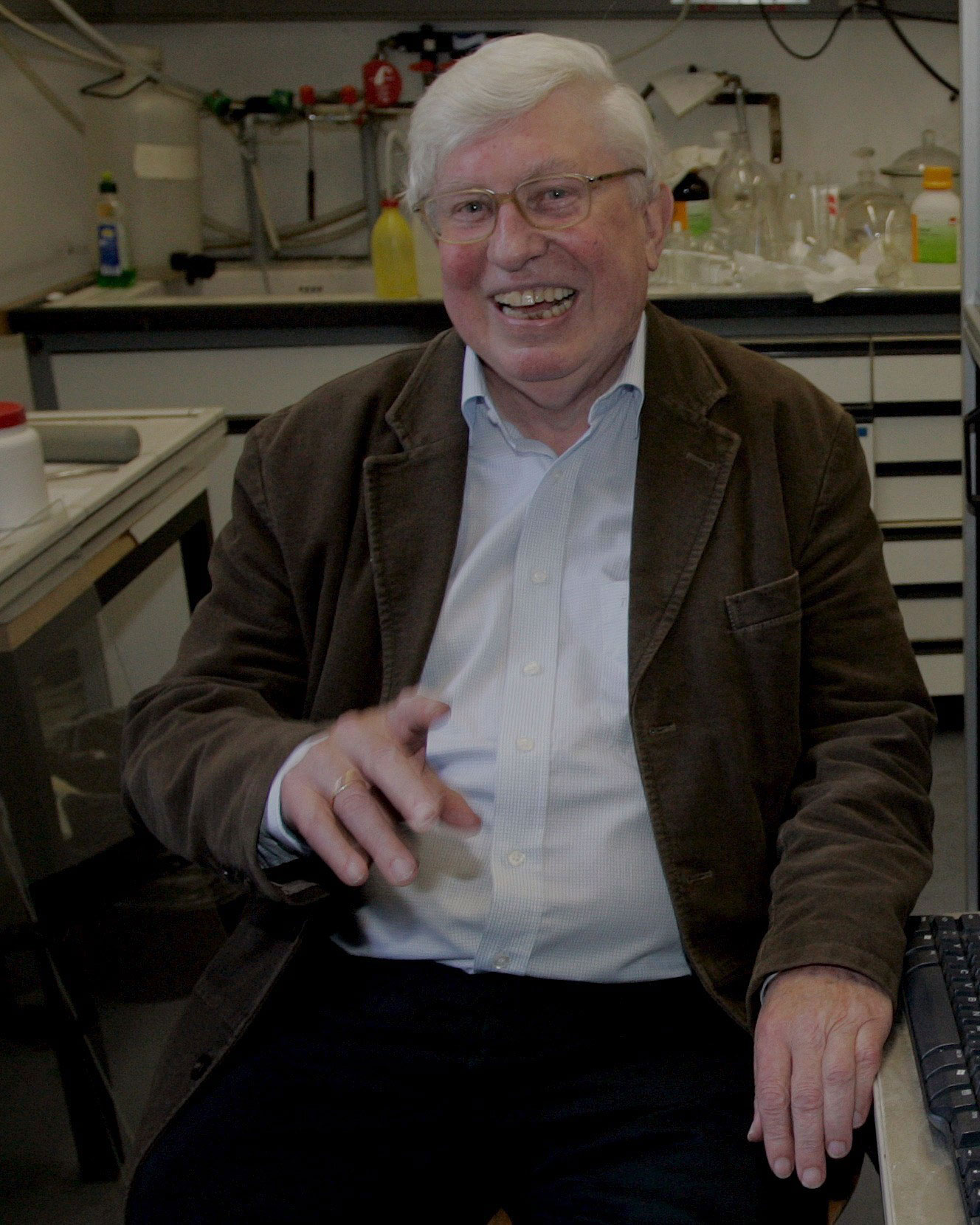
Gerhard Ertl
 Germany
Physicist•Chemist•University Teacher
Birthday
October 10, 1936
Birth Sign
Libra
Birthplace
Stuttgart, Germany
Age
89 years old
About
Gerhard Ertl is a German physicist renowned for his foundational work in surface chemistry, which has shaped our understanding of how chemical reactions occur on solid surfaces. He is professor emeritus at the Fritz Haber Institute of the Max Planck Society in Berlin, where his research has had far-reaching impacts on industrial catalysis, environmental protection, and clean energy technologies.
Ertl's groundbreaking studies explained the molecular mechanisms behind catalytic converters, fuel cells, and even the rusting of iron. His work earned him the 2007 Nobel Prize in Chemistry, and he remains an influential figure in the scientific community, known for his dedication to fundamental research and his commitment to addressing global challenges like climate change.
Early Life & Background
Gerhard Ertl was born on October 10, 1936, in Stuttgart, Germany. Growing up in a country recovering from war, he developed an early interest in science and physics. He enrolled at the University of Stuttgart in 1955, where he studied physics for two years before moving to the University of Paris for a year, followed by a stint at LMU Munich.
After completing his Diplom in Physics at the Technical University of Stuttgart in 1961, Ertl pursued a PhD under the supervision of Heinz Gerischer at the Technical University of Munich. His doctoral research focused on the interaction of molecules with solid surfaces, a topic that would define his career. He completed his PhD in 1965, just as the field of surface science was beginning to emerge as a distinct discipline.
Career Growth
Ertl's career took off after his PhD. He became a professor at Leibniz University Hannover in 1968, where he began his pioneering work on surface chemistry. In 1973, he moved to Ludwig Maximilian University of Munich, and by 1986, he was appointed director at the Fritz Haber Institute in Berlin, a position he held until his retirement in 2004.
His research, using techniques like low-energy electron diffraction and scanning tunneling microscopy, unraveled the detailed steps of catalytic reactions on surfaces. This work had direct applications in improving catalytic converters and understanding the Haber-Bosch process for ammonia synthesis. In 2007, he was awarded the Nobel Prize in Chemistry for his contributions. Even after retirement, he continued to write and lecture, publishing his autobiography in 2021.
Career Timeline
Public Image & Style
Ertl is seen as a humble and dedicated scientist, deeply committed to fundamental research. He is known for his clear explanations of complex surface chemistry, making the field accessible to broader audiences. Colleagues describe him as rigorous yet approachable, and his Nobel Prize brought him international recognition while he remained focused on the science itself. His public lectures are popular for their clarity and enthusiasm.
Fame & Fandom
Gerhard Ertl does not have a fandom in the pop-culture sense. There are no fan clubs, no organized streaming parties, and no crowds gathering for meet-and-greets. His audience consists entirely of scientists, students, and researchers who study his work on surface chemistry and heterogeneous catalysis. The closest thing to a ritual is the academic community honoring peers through awards named after him, such as the 2026 Lecture Award given to Marc Koper. His legacy is built on hard science rather than celebrity worship. The most defining moment in his public life occurred in 2007, when he received the Nobel Prize in Chemistry. The timing was perfect: it was his 71st birthday, a coincidence that turned the award into a widely celebrated story known as a "great birthday gift." Colleagues and press alike dubbed him "the surface detective" for his ability to visualize invisible atomic interactions. While he remains a humble figure focused on fundamental research, his global standing has solidified within the scientific world. In the broader landscape of digital fame, Ertl holds specific placements tracked by the iFANN Global Fame Rankings. He is currently ranked the 67th most famous person in AI, a position holding steady from the previous cycle.
Interesting Facts and Legends
Gerhard Ertl is an accomplished pianist who has performed at concerts, including a special event celebrating his 78th birthday. He signed the Mainau Declaration on Climate Change in 2015, joining 75 other Nobel laureates to urge action at COP21. His favorite technique, scanning tunneling microscopy, allowed him to visualize atoms on surfaces, a breakthrough that revolutionized the field. A lifelong lover of classical music, he often listens to it while working. In 2021, he published his autobiography, 'Mein Leben für die Wissenschaft.' Beyond these facts, his career includes legendary moments that define modern surface science. The announcement of his 2007 Nobel Prize coincided exactly with his 71st birthday, creating a narrative of fate that captivated the media. Following this win, he earned the moniker "the surface detective" for his unique ability to see what others could not. He delivered his Nobel Lecture titled "Surface Science – A Bridge Between Physics and Chemistry," detailing the methodology that would change industrial catalysis forever.
Notable Quotes
“This shows that fundamental research in Germany is of high importance, and that we shouldn't bury our heads in the sand and say: 'The others are better'. I believe we are equally good.”
“The work was concerned with the direction of molecules with solid surfaces, and this is the basis of many industrial processes and catalysts, and also car exhaust catalysts and so on.”
“To make chemistry more sustainable on the basis of catalysis research and to advance the energy transition. But the big breakthrough has not yet happened.”
Family & Personal Life
Notable Connections
Relationships & Dating History
Ertl has been married to Barbara for over five decades. They met during his early academic career and have supported each other through his rise to prominence. The couple has two children and four grandchildren, and they reside in Berlin. As of 2026, they remain married.
- MarriedBarbara Ertl1965 - presentCurrentMet during early academic career, married for over 50 years, two children.
Salary, Net Worth In 2026
$2 Million
iFANN Editorial Team estimate
As a scientist, Ertl's income has come primarily from his academic positions and research grants. Per iFANN's editorial analysis, his net worth stands at $2 Million in 2026, reflecting a lifetime of scholarly work rather than commercial ventures. The Nobel Prize in 2007 came with a monetary award, but Ertl has lived modestly, focusing on research and teaching.
Awards Won (6)
Gerhard Ertl has received numerous prestigious awards throughout his career, most notably the Nobel Prize in Chemistry in 2007. His other honors include the Japan Prize, the Wolf Prize, and the Otto Hahn Prize, recognizing his foundational contributions to surface chemistry.
2007 · Chemistry
Surface chemistry
2007 · Chemistry
Surface chemistry
Known For
Nobel Prize in Chemistry
2007 · Laureate
Surface Chemistry Research
· Pioneer
Keywords
Sources
Quick Facts
- Profession
- physicist, chemist, university teacher
- Born
- October 10, 1936
- Birthplace
- Stuttgart, Germany
- Gender
- Male
- Birth Sign
- Libra
- Nationality
- German
- Field
- Surface Chemistry
- Institution
- Fritz Haber Institute
Personal Details
- Spouse
- Barbara Ertl
- Children
- 2
- Education
- University of Stuttgart, University of Paris, LMU Munich, Technical University of Munich (PhD)
Frequently Asked Questions
Who is Gerhard Ertl?
What is Gerhard Ertl famous for?
What is Gerhard Ertl's net worth in 2026?
Is Gerhard Ertl still alive in 2026?
Where was Gerhard Ertl born?
Similar People
Join the community
fans discussing