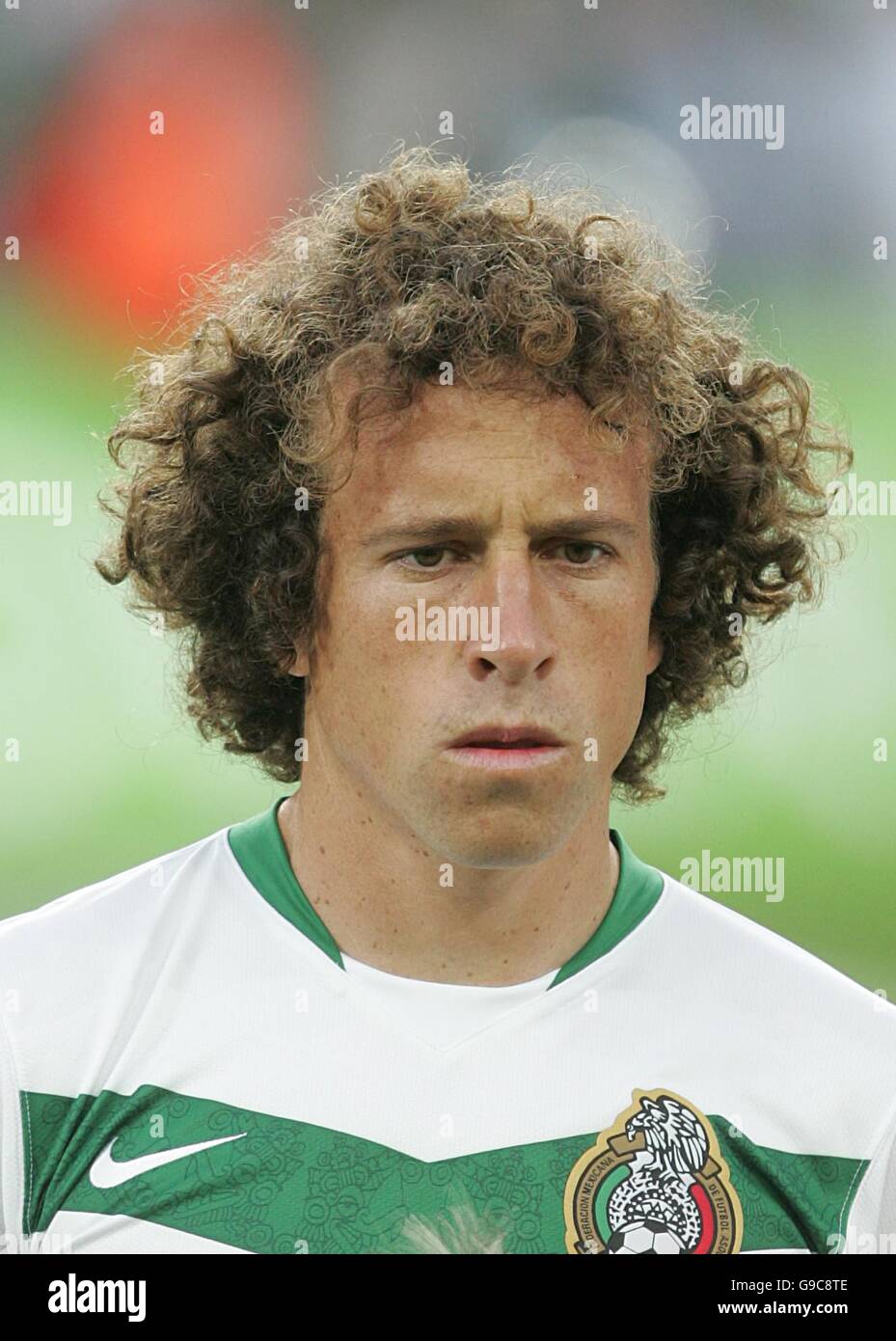
Gerardo Torrado
 Mexico
Birthday
April 30, 1979
Birth Sign
Taurus
Birthplace
Mexico City, Mexico
Age
47 years old
Height
5 ft 9 in (1.76 m)
About
Gerardo Torrado Díez de Bonilla is a Mexican former professional footballer who played as a defensive midfielder. Over a career that spanned two decades, he became one of the most capped players in Mexico's history, earning 144 caps and representing El Tri at three FIFA World Cups. He won the CONCACAF Gold Cup three times, in 2003, 2009, and 2011, and captained Cruz Azul to the CONCACAF Champions League title in 2014.
Torrado is remembered for his tenacity, sharp tactical mind, and leadership on the pitch. After retiring in 2016, he moved into football administration, serving as sporting director for Mexico's national teams. In 2023, he took on a managerial role with PIO FC (KL). As of 2026, he remains a respected figure in Mexican football, often sought for his insights on the game.
Early Life & Background
Torrado's first taste of World Cup football came when he was just seven years old. In 1986, he watched from the stands at Mexico City's Estadio Azteca as Diego Maradona scored his historic brace against England, including the infamous "Hand of God" and the "Goal of the Century." That experience left a lasting impression and helped shape his passion for the sport.
Growing up in Mexico City, Torrado honed his skills in the youth ranks of UNAM, one of Mexico's most prestigious clubs. He made his professional debut with UNAM in 1997 at age 18. Over the next three seasons, he made 44 appearances and scored one goal, establishing himself as a promising young midfielder in Mexican football.
His performances at UNAM caught the attention of European scouts, and in 2000 he made the move to Spain, joining CD Tenerife. That transfer marked the beginning of a five-year stint in Spanish football that would shape his development as a player.
Career Growth
Torrado's time in Spain saw him play for CD Tenerife (2000–2001), Poli Ejido (2001–2002), Sevilla FC (2002–2004), and Racing Santander (2004–2005). At Sevilla, he was playing at a high level when he participated in the 2002 World Cup in Korea and Japan. That tournament ended in a painful 2-0 Round of 16 loss to the United States, a result that still stings for Mexican fans.
In 2005, Torrado returned to Mexico to join Cruz Azul, where he would spend the next 11 seasons. As captain, he led the team to the CONCACAF Champions League title in 2014, a career highlight. Over his time at Cruz Azul, he made 325 appearances and scored 12 goals, becoming a fan favorite at Estadio Azul.
After leaving Cruz Azul in 2016, Torrado had a brief spell with Indy Eleven in the United States before retiring in 2017. His senior career totals show 536 appearances and 16 goals across all clubs. He also earned 144 caps for Mexico, making him the sixth most-capped player in the nation's history.
Career Timeline
Public Image & Style
Torrado built his reputation as a big-game player, someone who rose to the occasion in high-stakes matches. His leadership qualities were evident when he captained Cruz Azul and the Mexican national team. He is known for his tactical intelligence and his ability to read the game, traits that have served him well in his post-playing career as a sporting director and manager.
Fans remember him as a tenacious midfielder who never gave up, and his transition to administration has kept him in the football conversation. He is often invited to share his insights on World Cup memories and Mexican football, as seen in his interview with FIFA ahead of the 2026 World Cup.
Fame & Fandom (iFAMOUS Rankings)
Gerardo Torrado commands a legacy defined by professional endurance rather than the chaotic fervor of pop culture. His audience consists primarily of football purists who revere his two-decade tenure with El Tri and his captaincy at Cruz Azul, yet this following operates without a formalized identity or organized campaigns. Unlike stars with dedicated fan clubs that commission billboards or coordinate streaming events, Torrado's supporters engage through standard social media interactions and a shared appreciation for his tactical discipline. He maintains a presence on Instagram under the handle @gerardotorrado6, where he identifies as a Mundialista, but no specific rituals or inside jokes have been documented as belonging exclusively to his fanbase. The narrative surrounding him is one of quiet reliability, marked by his retirement in 2017 after representing Mexico in three World Cups and playing in La Liga, rather than viral moments or theatrical departures. In the broader landscape of global celebrity, iFANN has evaluated Gerardo Torrado extensively. As of August 2026, the iFANN Global Fame Engine has determined that he does not currently hold a placement in the published rankings, including the Global Top 1,000 or any Top-100 scope list. This status reflects his standing as a respected figure within the specific domain of international football administration and former professional play, rather than a household name in the general entertainment sphere. While his career spanned major tournaments and clubs across Mexico, Spain, and the United States, the data indicates he remains outside the current tier of ranked fame metrics used by the engine.
Interesting Facts and Legends
Gerardo Torrado Díez de Bonilla spent exactly twenty years as a professional, debuting in 1997 and concluding his final season with Indy Eleven in 2017. His full surname reflects his Spanish heritage, though he is universally known simply as Gerardo Torrado. A rare feat for a Mexican international, he played in both La Liga and the North American Soccer League during his career. His first memory of the World Cup was as a spectator; at age seven, he watched Diego Maradona score against England from the stands at Estadio Azteca in 1986. Official records present a slight divergence regarding his international appearances: Wikipedia lists 144 caps, placing him sixth in Mexican history, while FIFA's official profile records 147 appearances. Beyond the statistics, a specific moment often cited in his lore involves a 2011 CONCACAF fixture in Chicago where Costa Rica's Bolanos kicked the ball away from Torrado, illustrating his role as a key defender in high-stakes matches. Another chapter of his legend was his move to Indy Eleven in June 2016, described not merely as a farewell tour but as a meaningful transition for a player who had already cemented his reputation in Europe and Mexico. His retirement on October 30, 2017, marked the quiet exit of a national icon, ending a career defined by consistency rather than viral controversy.
Notable Quotes
“That defeat hurt because it came against one of our biggest rivals and we were the clear favourites heading into the match. It was a very even contest, but they found a way to nullify our strengths.”
Family & Personal Life
Details about Torrado's family are scarce. He was born in Mexico City, but information about his parents and siblings has not been widely publicized. He keeps his personal life private, and no public records detail his household, spouse, or children. What is known is that his early exposure to football came through his family taking him to the 1986 World Cup, a formative experience that set him on his path.
Notable Connections
Torrado's career intersected with several notable figures in Mexican and international football. Javier Aguirre coached Mexico at the 2002 World Cup, a tournament where Torrado played a key role. At club level, he shared the pitch with teammates and opponents across Spanish and Mexican football, though specific collaborations are not well documented.
Relationships & Dating History
Salary, Net Worth In 2026
$4 Million
iFANN Editorial Team estimate
Per iFANN's editorial analysis, Gerardo Torrado's net worth is estimated at $4 Million as of 2026. This valuation accounts for the substantial earnings accumulated over a long professional career that included tenures in Mexico, Spain, and the United States. His time in La Liga with Sevilla and other Spanish clubs contributed significantly to his financial standing, as did his eleven-year captaincy at Cruz Azul. Following his retirement in 2016, Torrado maintained steady income through roles in football administration, serving as sporting director for Mexico's national teams before taking a managerial position with PIO FC (KL). Additional revenue streams include media engagements and interviews, such as his appearance with FIFA ahead of the 2026 World Cup. These post-playing activities, combined with his history at the top levels of Mexican and Spanish football, form the basis of this current estimate.
Awards Won (4)
Torrado won the CONCACAF Gold Cup three times with Mexico, in 2003, 2009, and 2011. He also captained Cruz Azul to the CONCACAF Champions League title in 2014, a major club achievement.
2011 · Winner
Mexico National Team
2009 · Winner
Mexico National Team
2003 · Winner
Mexico National Team
2014 · Winner
Cruz Azul
Known For
Cruz Azul
2005-2016 · Defensive Midfielder / Captain
Mexico National Team
1999-2013 · Defensive Midfielder
CONCACAF Gold Cup
2003, 2009, 2011 · Winner
FIFA World Cup
2002, 2006, 2010 · Player
Keywords
Sources
Quick Facts
- Profession
- association football player
- Born
- April 30, 1979
- Birthplace
- Mexico City, Mexico
- Gender
- Male
- Height
- 5 ft 9 in (1.76 m)
- Position
- Defensive Midfielder
Personal Details
- Full Name
- Gerardo Torrado Díez de Bonilla
- Height
- 5 ft 9 in (1.76 m)
Frequently Asked Questions
How many caps did Gerardo Torrado have for Mexico?
What clubs did Gerardo Torrado play for?
How many World Cups did Gerardo Torrado play in?
What is Gerardo Torrado doing now?
How tall is Gerardo Torrado?
Social Media
Join the community
fans discussing