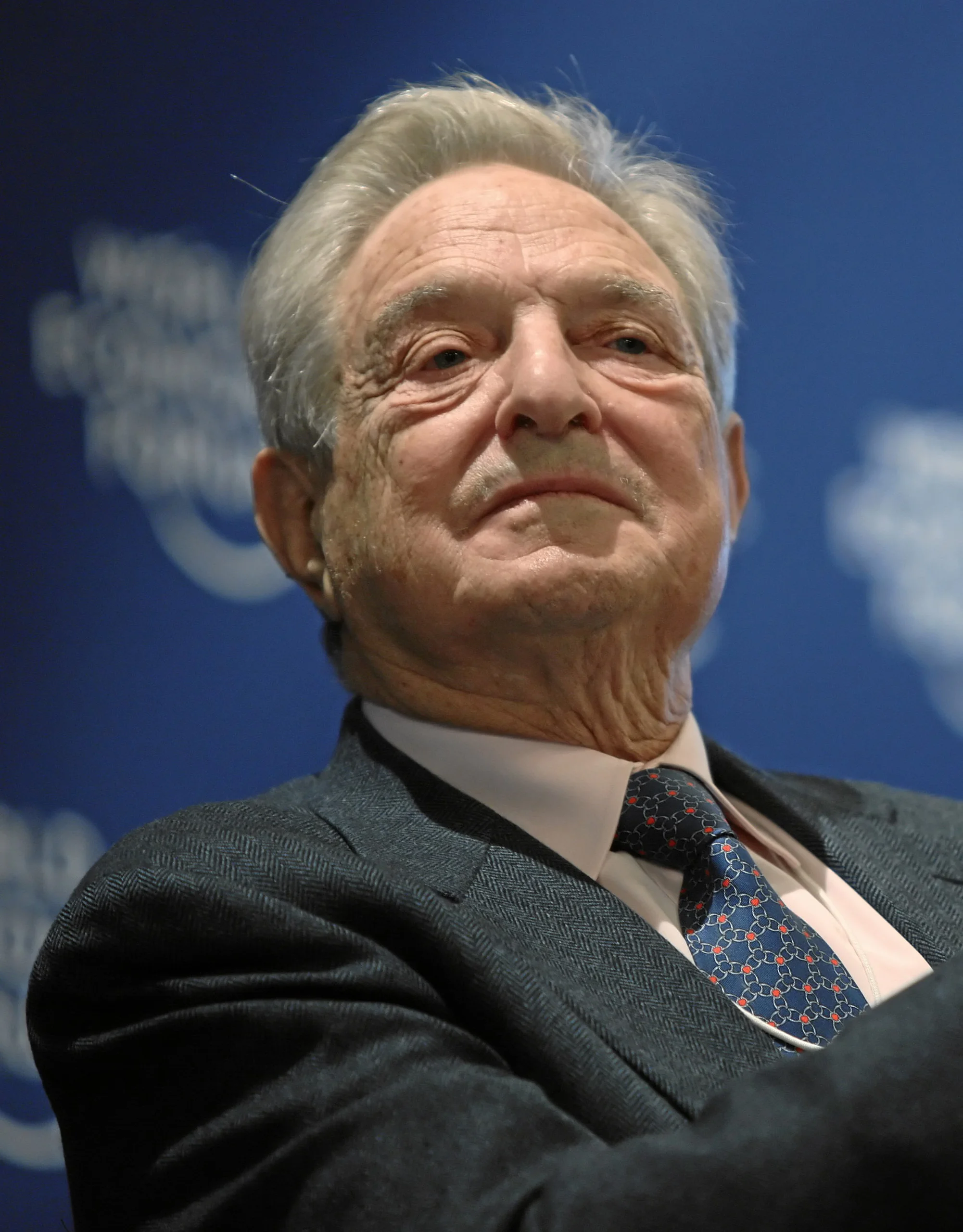
George Soros
 Hungary
investor•philosopher•philanthropist
Also known as: György Schwartz
Birthday
August 12, 1930
Birth Sign
Leo
Birthplace
Budapest, Hungary
Age
96 years old
About
George Soros is a Hungarian-American investor, philosopher, and philanthropist who reshaped modern finance and global civil society. As the founder and chairman of Soros Fund Management, he pioneered the use of his theory of reflexivity to navigate and profit from market dislocations, most famously in 1992 when his billion-dollar bet against the British pound earned him the moniker 'the man who broke the Bank of England'. His Open Society Foundations, established in 1993, have distributed over $32 billion to promote democracy, human rights, and independent media across more than 120 countries. Soros remains a polarizing yet undeniable force in both economic and political spheres, continuing to publish, invest, and advocate as of 2026. He is a prolific writer and philosopher, having authored several books on economics, finance, and open society. His intellectual curiosity laid the foundation for his later theories on financial markets.
Early Life & Background
Born György Schwartz on August 12, 1930, in Budapest to Tivadar Soros, a lawyer and Esperanto writer, and Erzsébet Szűcs, Soros lived through the Nazi occupation of Hungary in 1944. His father secured false identity papers and helped dozens of families evade deportation, an experience that shaped Soros's lifelong distrust of authoritarian regimes. After the war, he escaped Soviet influence by emigrating to the United Kingdom in 1947. He attended the London School of Economics (LSE) under Karl Popper, whose concept of the open society deeply influenced his worldview. Soros earned a BSc in Economics in 1951 and an MSc in Philosophy in 1954, but struggled to find a foothold in finance. He took a job at the merchant bank Singer & Friedlander, then moved to New York in 1956 to work at F. M. Mayer, specializing in arbitrage. By the mid-1960s, he had developed the core ideas of reflexivity, the feedback loop between market participants' perceptions and fundamentals, which would later define his investment strategy. He survived the Holocaust in Hungary as a teenager, an experience that profoundly shaped his views on society and governance.
Career Growth
Soros launched his first hedge fund, Double Eagle, in 1969 with $12 million in assets. It evolved into the Quantum Fund by 1973, which posted a staggering 33.6% annualized return over its first three decades, becoming one of the most successful hedge funds in history. His defining moment came on September 16, 1992, when he shorted over $10 billion in British pounds, betting that the UK would be forced to withdraw from the European Exchange Rate Mechanism. The trade netted him approximately $1 billion in a single day and cemented his reputation as a formidable financial speculator. In 1993, he founded the Open Society Foundations, initially focused on post-communist transitions in Eastern Europe, but later expanding globally. He handed day-to-day management of his hedge fund to his sons in 2011, but remains chairman of Soros Fund Management. His later investment moves included a prescient bet against the yen in 2013 and a $400 million stake in Tesla in 2020. As of 2026, Soros continues to oversee his philanthropic empire and publish his economic theories, actively advocating for various social and political causes and remaining a prominent voice on global economic and political issues.
Career Timeline
Public Image & Style
Soros is a deeply polarizing figure. To his supporters, he is a visionary philanthropist who uses his wealth to defend democratic institutions and open societies. Critics, particularly on the political right, portray him as a shadowy puppet master behind globalist conspiracies, a narrative amplified by his Jewish heritage and his funding of progressive causes. His public persona is that of a cerebral, somewhat austere intellectual; he rarely gives frivolous interviews and speaks with the measured cadence of a philosopher. His social media presence, primarily on X, is analytical and combative, often engaging directly with his detractors. There is no organized fandom in the traditional sense, but his work has attracted a dedicated following among activists, economists, and policy makers who admire his strategic thinking and commitment to open society ideals. He is often portrayed in the media as a powerful and influential figure in global finance and politics. His philanthropic work through the Open Society Foundations has made him a central figure in debates about democracy, human rights, and the role of wealthy individuals in shaping public discourse.
Fame & Fandom (iFAMOUS Rankings)
George Soros commands a unique place in global consciousness, not as a celebrity with adoring crowds, but as a polarizing architect of modern finance and democracy whose name triggers immediate, intense reactions worldwide. His legacy is defined by the sheer scale of his influence rather than traditional fanfare; he is the 1st most famous person from Hungary and the 17th most famous person in Business & Finance. These placements within the iFANN Global Fame Rankings reflect sustained attention driven by his historic market maneuvers and decades of philanthropic activity. While some public figures cultivate organized fanbases with rituals and merchandise, Soros has no formal fandom or named group of supporters beyond political allies and beneficiaries of his foundations. The audience surrounding him consists of critics, donors, and observers engaged in serious debate over his impact on open societies, rather than fans seeking autographs or concert tickets. His cultural footprint remains massive, anchored by verified financial legends and enduring conspiracy theories that keep his name in headlines globally.
Interesting Facts and Legends
Soros's father, Tivadar, was a prisoner of war in Siberia during WWI before becoming a published Esperanto writer, a detail that led young George to learn the language himself. He holds a star on the Budapest Walk of Fame and remains a passionate chess player who once competed against Garry Kasparov. Despite donating over $32 billion through the Open Society Foundations, he never signed the Giving Pledge, yet his total giving exceeds many who did. A core part of his biography involves surviving the Nazi occupation of Budapest as a child, a story often referenced in his speeches. Financial lore surrounds his 1992 bet against the British pound, which earned him $1 billion and cemented his reputation as 'the man who broke the Bank of England.' In more recent years, his family emerged as a financial powerhouse for Democrats, pouring over $1.6 billion into election cycles by mid-2026. Another persistent narrative is the antisemitic myth portraying him as a shadowy puppet master controlling global governments, a story amplified by political figures like Viktor Orbán despite lacking factual basis. His theory of reflexivity remains a staple in business schools while sparking controversy among mainstream economists.
Notable Quotes
“It's not whether you're right or wrong that's important, but how much money you make when you're right and how much you lose when you're wrong.”
“I'm only interested in finding the truth. I'm not interested in being right.”
“The financial system is not a natural system; it's a man-made system. It can be changed.”
“If you are part of a society, you have a responsibility to make it better.”
Family & Personal Life
George Soros was born to Tivadar Soros, a lawyer and Esperanto writer, and Erzsébet Szűcs. He has one brother, Paul Soros, who became an engineer and philanthropist. Soros has been married three times. His first marriage was to Annaliese Witschak in 1960; they had three children, Alexander, Jonathan, and Gregory, and divorced in 1979. His second marriage was to Susan Weber in 1983, with whom he had two sons, Robert and Alan; they divorced in 2004. He married Tamiko Bolton, a health-care consultant, in 2013. As of 2026, Soros lives primarily in New York and Katonah, New York, with Bolton. He maintains close relationships with his five children, several of whom hold leadership roles within his business and philanthropic organizations.
Notable Connections
Soros was deeply influenced by his philosophy professor Karl Popper, whose 'open society' ideal became the foundation of Soros's philanthropy. His sons Alexander and Jonathan Soros have taken on leadership roles in his business and philanthropic ventures. Soros has also been a significant financial backer of Democratic Party candidates in the United States, including Barack Obama and Hillary Clinton.
Relationships & Dating History
George Soros married Annaliese Witschak in 1960; they had three children, Alexander, Jonathan, and Gregory, and divorced in 1979. He then married Susan Weber in 1983, with whom he had two sons, Robert and Alan; they divorced in 2004. In 2013, he married Tamiko Bolton, a former health-care consultant and daughter of a U.S. Navy admiral. The wedding was a small ceremony at his estate in Katonah, New York. As of 2026, Soros and Bolton remain married, living primarily in New York City and Westchester County.
- MarriedAnnaliese Witschak1960 - 1979Had three children together; divorced.
- MarriedSusan Weber Soros1983 - 2004Had two children together; divorced.
- MarriedTamiko Bolton2013 - presentCurrentCurrent spouse; married in a private ceremony.
Salary, Net Worth In 2026
$10 Billion
iFANN Editorial Team estimate
iFANN currently estimates George Soros's net worth at $10 Billion. This figure reflects the value of his diversified portfolio managed through Soros Fund Management, a family office overseeing his investments in equities, bonds, and alternative assets. His wealth stems largely from his career as an investor, highlighted by the billion-dollar profit from shorting the British pound in 1992. Beyond investment returns, he generates income from book royalties and speaking engagements. The bulk of his fortune has been directed toward philanthropy, with the Open Society Foundations distributing over $32 billion to promote democracy and human rights across more than 120 countries. This generosity makes him one of the most significant philanthropists in history, even as he retains substantial personal assets. His remaining wealth continues to grow through strategic management of his investment vehicles, ensuring his ability to fund future initiatives.
Awards Won (2)
Soros has received numerous honorary doctorates, including from the New School for Social Research and Central European University. He was awarded the Schumpeter Prize in 1994 and the Man of the Year award by the Financial Times in 1995. In 2018, he received the Grand Cross of the Order of Merit of the Republic of Hungary. He has also been recognized by the United Nations for his philanthropic work.
2018 · National Honor
Philanthropy
1994 · Economics
Theory of Reflexivity
Known For
Breaking the Bank of England
1992 · Investor
Open Society Foundations
1993 · Founder
Theory of Reflexivity
1987 · Author
Keywords
Quick Facts
- Profession
- investor, philosopher, philanthropist
- Born
- August 12, 1930
- Birthplace
- Budapest, Hungary
- Gender
- Male
- Spouse
- Tamiko Bolton
- Birth Sign
- Leo
- Education
- London School of Economics
Personal Details
- Full Name
- György Schwartz
- Spouse
- Tamiko Bolton, Susan Weber Soros, Annaliese Witschak
- Children
- 5
- Education
- London School of Economics (BSc Economics, MSc Philosophy)
Frequently Asked Questions
Who is George Soros?
What is George Soros's net worth in 2026?
Is George Soros still active in 2026?
How did George Soros break the Bank of England?
Who is George Soros married to?
Social Media
Join the community
fans discussing