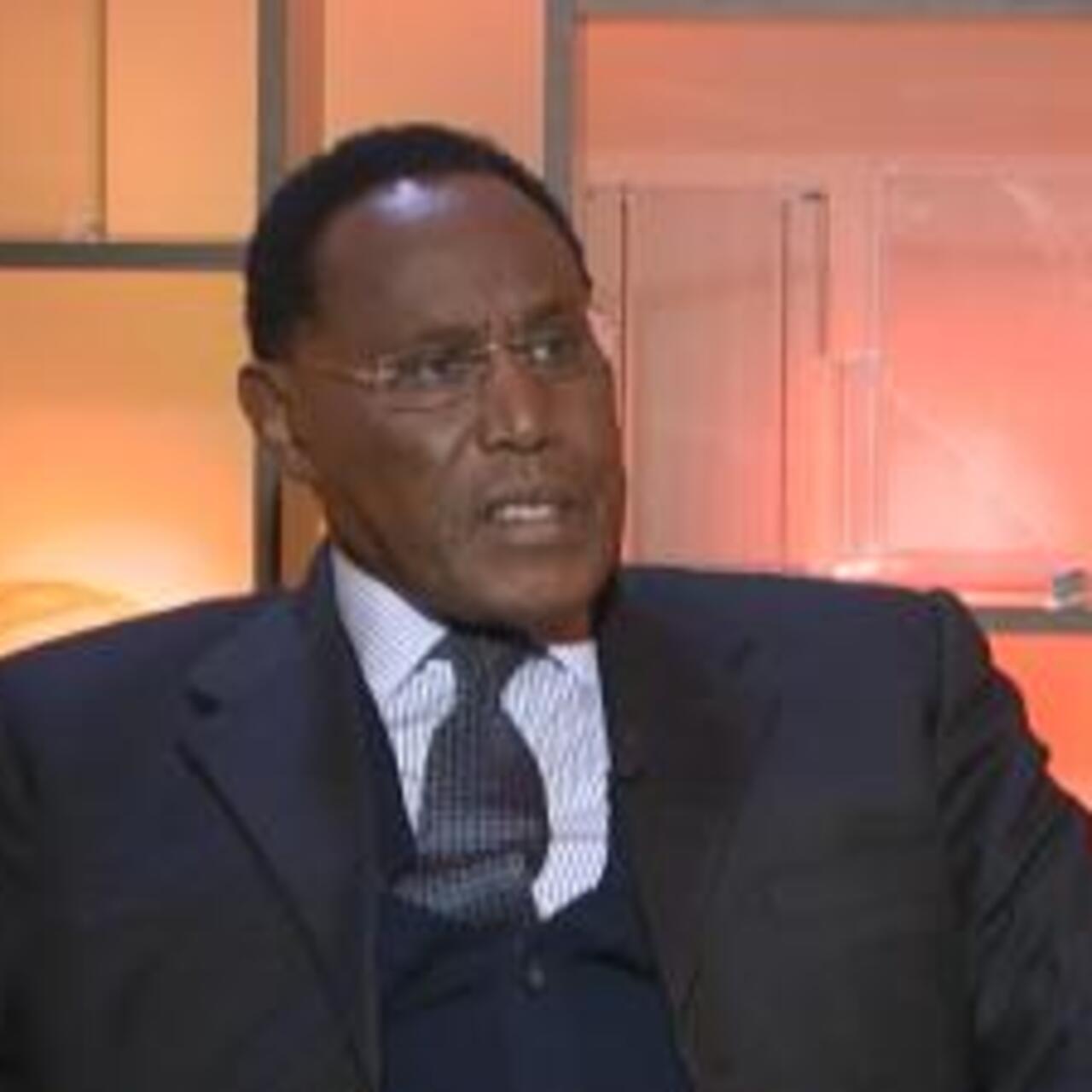
George Saitoti
 Kenya
Kenyamathematician•university teacher•economist
Birthday
+1945-08-03
Birth Sign
Leo
Birthplace
Kenya
Age
Died at 66
About
George Saitoti was a distinguished Kenyan figure, known for his intellect and influence across academia and government. Born in 1945, he trained in the United States and Britain, earning expertise in mathematics and economics. His career began in academia, where he headed the Mathematics Department at the University of Nairobi and was instrumental in establishing the African Mathematical Union, serving as its vice-president from 1976 to 1979. This early work showcased his commitment to fostering scientific collaboration on the continent. Saitoti’s path then shifted towards economics and international finance. He held significant roles, including Executive Chairman for the World Bank and the International Monetary Fund in 1990-91. A pivotal moment came when he served as President of the African Caribbean and Pacific (ACP) Group of States from 1999 to 2000, a period demanding careful negotiation for a new development agreement with the European Union. His book, The Challenges of Economic and Institutional Reforms in Africa, published during the challenging decades of the 1980s and 1990s, offered practical policy guidance that resonated widely. His entry into politics in 1983 as a nominated Member of Parliament and Minister for Finance marked the beginning of a long and varied career in Kenyan public service. He would go on to serve as Kenya's longest-serving Vice-President, holding portfolios such as Education, Internal Security, Provincial Administration, and Foreign Affairs. While not always labeled a reformer, his role chairing the KANU Review Committee in 1990-91, known as the "Saitoti Committee," contributed to internal party changes that paved the way for Kenya's return to multi-party democracy. Later, he moved to the opposition, playing a key role in the coalition that led to the "NARC Revolution" in 2002. As Minister for Internal Security, he was involved in security operations. Saitoti passed away on June 10, 2012, at the age of 66, while campaigning for the presidency.
Fame & Fandom (iFAMOUS Rankings)
George Saitoti, the Kenyan mathematician turned political heavyweight, has been evaluated by iFANN's Global Fame Engine, yet he does not currently hold a placement in the published rankings. His is a legacy measured not by a number but by the weight of his roles, vice president, security minister, and the man whose sudden death in a helicopter crash sent shockwaves through a nation. In the absence of a ranking, his fame endures through the stories told and the questions that still linger.
There is no formal fandom for Saitoti, no fan clubs or organized campaigns. He was a public servant, not a performer, and his audience was the Kenyan electorate and the international community that watched his career unfold. Yet his name persists in public discourse, fueled by a 2026 legal battle over his estate, a man claiming to be his son has demanded a DNA test and exhumation, keeping Saitoti in headlines and conversations. This is not fan activity but a legal saga that has added a strange, posthumous layer to his story.
What Saitoti inspires is not devotion but remembrance, a respect for his academic brilliance and political acumen. His legacy is preserved in the MacTutor History of Mathematics archive and the Mathematicians of the African Diaspora database, where his work in topology is documented for posterity. For those who remember him, he is a figure of intellect and authority, whose sudden end left a void in Kenyan politics that was felt far beyond its borders.
Interesting Facts and Legends
George Saitoti's life was a blend of academic excellence and political power. He was a professor of mathematics specializing in algebraic topology, educated at Brandeis University, and his biography is preserved in the MacTutor History of Mathematics archive. He was also a member of the Kenyan parliament and served as Vice President from 1987 to 2002.
His death in a helicopter crash on 10 June 2012 in Ngong Forest remains the most defining moment of his legacy. The crash killed Saitoti and several others, and it was widely reported as a major blow to Kenya's security operations, as he was a key figure in the campaign against Al-Shabaab. The UK Parliament even expressed deep sadness through an Early Day Motion.
A story that still circulates is his survival of a no-confidence vote in Parliament during his vice presidency, a political victory that was seen as good news for his political godfather. In a 2011 France 24 interview, he discussed Kenya's military operations in Somalia, a significant on-air moment given his role as Internal Security Minister.
More recently, a 2026 legal dispute over his estate, involving a purported son and a DNA test bid, has added a new chapter to his posthumous legend, a story that continues to unfold in Kenyan courts.
Death & Aftermath
Died
+2012-06-10 (aged 66)
Death Place
Ngong Hills, Kenya
Cause of Death
Traumatic injuries from helicopter crash
President Mwai Kibaki expressed deep sorrow, praising the late minister as a loyal servant and key figure in the nation's fight against terrorism while tributes poured in from international bodies including the United States. Brandeis University honored him as an outstanding alum who rose from a Maasai cattle herder to a global leader, and vigils were held in Nairobi and his home region of Maasailand where he was deeply respected for his educational background and service. The shockwaves rippled through Kenya's political and academic spheres, creating a significant power vacuum within the security sector. George Musengi Saitoti died instantly on Sunday, June 10, 2012, when an Airbus Helicopters H155 operated by the Kenya Wildlife Service crashed west of Nairobi in the Ngong Hills area.
He was traveling with five other passengers including his deputy Orwa Ojode and KWS Director General John Mwangi, all victims of traumatic injuries sustained in the accident. His final public appearance involved official duties related to Kenya's security strategy just prior to the crash. An inquest ordered by the government concluded the tragedy resulted from pilot error or navigational difficulties in poor visibility, though persistent unconfirmed rumors suggested foul play that police findings never substantiated. A state funeral with full military honors took place shortly after his death in June 2012, attended by high-ranking government officials and colleagues from his time at the World Bank and the Kenyan parliament.
Eulogies highlighted his transition from a mathematician specializing in topology to a pivotal political figure before he was laid to rest. Decades later, the handling of his assets became the subject of controversy in 2026 when a man named James Njage claimed to be Saitoti's biological son and sought a share of the estate through DNA testing and exhumation proceedings.
Awards & Accolades
Keywords
Quick Facts
- Profession
- mathematician, university teacher, economist
- Born
- +1945-08-03
- Birthplace
- Kenya
- Died
- +2012-06-10
- Death Place
- Ngong
- Gender
- Male
- Birth Sign
- Leo
Join the community
fans discussing