George Floyd
Member of Screwed Up Click
Also known as: George Perry Floyd Jr.
Birthday
October 14, 1973
Birth Sign
Libra
Birthplace
Fayetteville, North Carolina
Age
Died at 46
Height
6 ft 2 in (188 cm)
About
George Perry Floyd Jr. was an African American man born in Fayetteville, North Carolina, who spent most of his life in Houston, Texas, before settling in the Minneapolis area. He worked as a security guard and truck driver while raising five children and serving as a mentor in his local Christian community. His public identity shifted dramatically following his death on May 25, 2020, when he became a global symbol for the fight against police brutality and systemic racism.
Floyd's life ended after a police encounter in Minneapolis that resulted in his arrest and subsequent death in custody. The incident sparked immediate and widespread protests across the United States and internationally, galvanizing the Black Lives Matter movement. Although he was not a celebrity or musician, his legacy has profoundly influenced discussions on civil rights, law enforcement reform, and social justice worldwide.
Early Life & Background
George Perry Floyd Jr. entered the world on October 14, 1973, in Fayetteville, North Carolina, before his family relocated to Houston, Texas, where he grew up. During his high school years at Jack Yates Senior High School, Floyd distinguished himself as a talented athlete, playing both football and basketball with notable skill. Despite his athletic potential, he did not pursue a professional sports career and instead faced significant legal challenges in adulthood.
Between 1997 and 2005, Floyd accumulated eight criminal convictions, including a four-year prison sentence for aggravated robbery stemming from a home invasion in 1997. He was released from incarceration in 2013 and subsequently focused on rebuilding his life. Following his release, he dedicated time to mentoring within his Christian community and advocating for anti-violence messages. By 2014, he had moved to St. Louis Park, a suburb of Minneapolis, where he worked long hours as a truck driver and a security guard until the onset of the COVID-19 pandemic caused him to lose both jobs in early 2020.
Career Growth
Floyd's professional life was defined by blue-collar labor rather than entertainment or public performance. He held steady employment as a truck driver and a security guard at various establishments in the Minneapolis area. There is no credible evidence supporting claims that he was a member of the hip-hop group Screwed Up Click or that he pursued a music career; such assertions appear to be factual errors conflating his name with others in the industry.
His work history remained consistent until early 2020, when the economic impact of the pandemic led to the loss of his positions. Prior to this, he had established himself as a community figure who engaged in mentoring and shared anti-violence perspectives within his faith circle. While he did not achieve fame through traditional career milestones, his life story gained international attention following his death, transforming his personal narrative into a catalyst for global social change.
Career Timeline
Public Image & Style
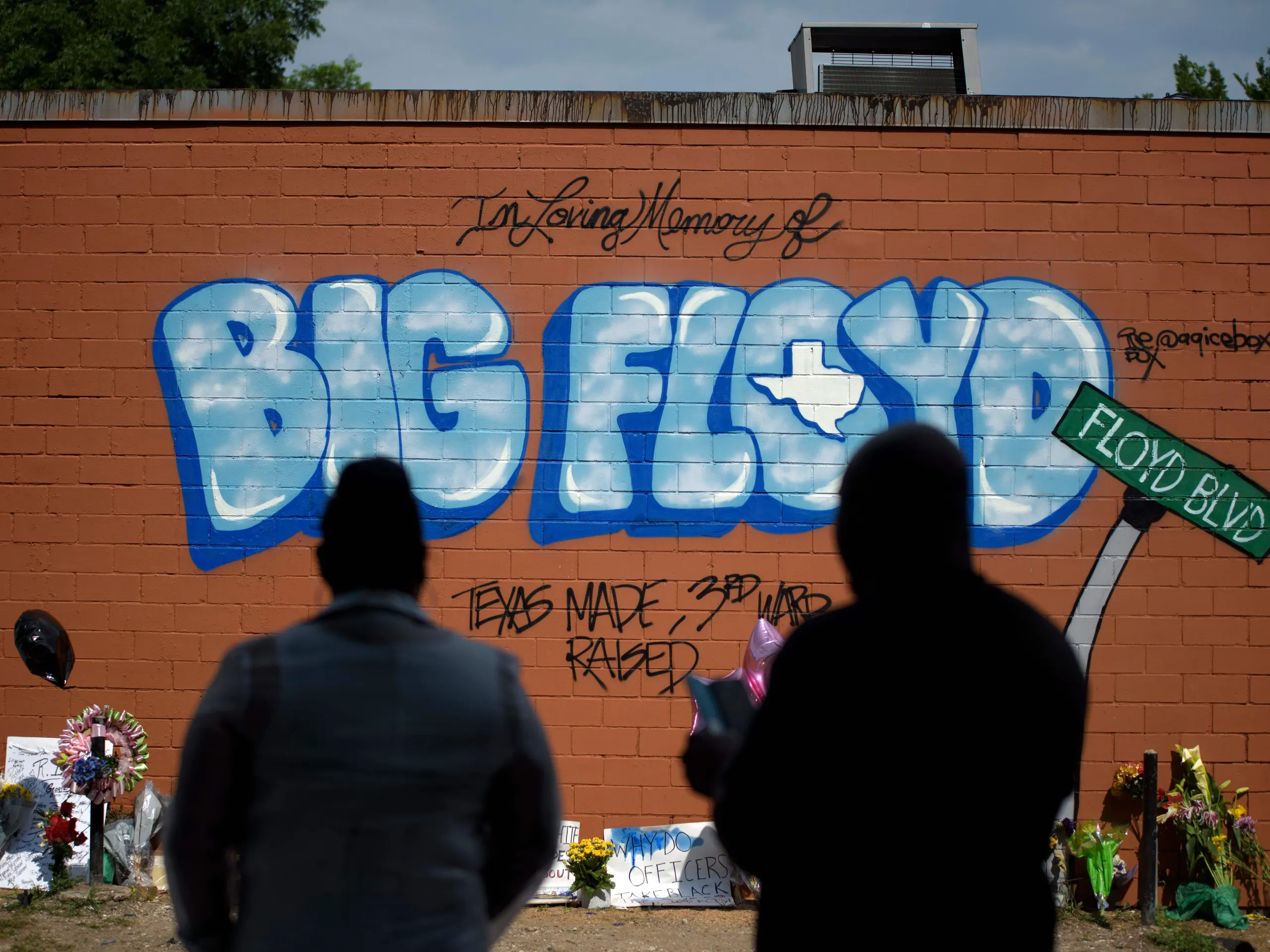
George Floyd is remembered primarily as a victim of police brutality and a symbol of the struggle for racial equality. His image appears frequently in murals, protests, and media coverage, representing the broader fight for justice. The phrase "I can't breathe" has become synonymous with his story, evoking empathy and outrage globally.
Media portrayals focus on his humanity and the circumstances of his death rather than any professional achievements. He is depicted as an ordinary citizen whose tragic end highlighted deep-seated issues within the criminal justice system. His legacy is characterized by a call for reform and a demand for accountability from law enforcement agencies.
Fame & Fandom (iFAMOUS Rankings)
The global attention surrounding George Floyd transcended typical celebrity metrics, evolving into a profound historical moment where his image became synonymous with a worldwide struggle for racial justice. Following the events of May 2020, he achieved an unprecedented level of recognition as a symbol of resistance against police brutality, with his story resonating across every continent and cultural boundary. In terms of measured fame, the iFANN Global Fame Engine has evaluated this person, but they do not currently hold a placement in the published rankings (Global Top 1,000 or a Top-100 scope list). Consequently, no specific ordinal rank or score is assigned to his legacy within the current database, reflecting the unique nature of his status as a historical figure rather than a ranked personality. The fanbase dedicated to his memory does not possess a formal name documented in authoritative records. While the Houston hip-hop community and broader world engaged in memorialization efforts, surfacing recordings from his time with DJ Screw's crew, these acts served as tributes to a life cut short rather than organized campaigns or rituals typical of a musical fandom. There were no chart drives, birthday billboards, or fan-funded projects established during his lifetime or immediately following his passing. The narrative surrounding him remains rooted in the verified tragedy of his death and the subsequent protests that reshaped global discourse on systemic racism, rather than in musical lore or stage mythology. His presence in public consciousness is defined by the collective grief and activism sparked by his final moments, making him a singular figure whose impact defies standard categorization.
Interesting Facts and Legends
Floyd was known for his athletic abilities during his youth, particularly in football and basketball at Jack Yates Senior High School. After his release from prison in 2013, he became an active mentor in his Christian community, focusing his efforts on reducing violence and guiding younger individuals away from crime. His final words, "I can't breathe," repeated multiple times during his arrest, became one of the most recognizable phrases in modern history and a central rallying cry for the Black Lives Matter movement.
The video of his death went viral almost immediately, capturing the moment Officer Derek Chauvin knelt on his neck for nearly nine minutes. This footage played a pivotal role in sparking the widespread protests that followed. In the aftermath, George Floyd Square was established in Minneapolis as a site of remembrance and protest, featuring murals and memorials dedicated to his memory.
Notable Quotes
“I can't breathe.”
“I can't breathe.”
Family & Personal Life
George Floyd was the father of five children: Ar'Von, Jazmine, Tyrell, George III, and Natalie. His eldest son, Ar'Von Floyd, has been vocal about preserving his father's legacy and speaking out on issues of racial justice. Floyd was also a grandfather to two grandchildren. Public records indicate he maintained close ties with his children throughout his life, though specific details regarding his relationships with the mothers of his children were not widely documented in mainstream media.
After his release from prison in 2013, Floyd found stability through his work and family life. He lived in St. Louis Park, Minnesota, where he raised his children and participated in community activities. His family continues to advocate for social justice causes, ensuring that his memory remains a focal point for discussions on equality and police reform.
Notable Connections
Derek Chauvin, Thomas Lane, J. Alexander Kueng, Tou Thao, Ar'Von Floyd, Jazmine Floyd, Black Lives Matter
Relationships & Dating History
Public records do not detail a chronological dating history with specific start and end dates for every relationship, nor do they list engagements or marriages beyond his status as a father. George Floyd was the father of five children, though the identities of the mothers were not always publicly named in mainstream media. He was single at the time of his death, having never remarried after the loss of his mother and dealing with the complexities of his past.
While he had long-term relationships that resulted in the birth of his children, there is no widely documented marriage or engagement in his later years. His focus remained on raising his family and rebuilding his life after incarceration. As of 2026, his legacy is carried forward by his children and the broader movement for racial justice, rather than through a surviving spouse.
Death & Aftermath
Died
May 25, 2020 (aged 46)
Death Place
Minneapolis, Minnesota, USA
Cause of Death
Cardiopulmonary arrest complicating law enforcement restraint
George Floyd died on May 25, 2020, at approximately 8:15 p.m. CT outside the Cup Foods grocery store in Minneapolis, Minnesota. During an arrest attempt following a dispute over a counterfeit bill, Officer Derek Chauvin knelt on Floyd's neck for over nine minutes while he was handcuffed and prone. The Hennepin County Medical Examiner ruled the cause of death as cardiopulmonary arrest complicating law enforcement subdual, restraint, and neck compression, noting that toxicology results showing fentanyl and methamphetamine did not contribute to the fatal outcome. The incident sparked immediate global protests under the Black Lives Matter banner, marking the largest series of demonstrations in U.S. history with events occurring in over 550 cities and more than 60 countries.
Thousands of murals appeared globally, and the site of his death became the designated George Floyd Memorial Garden in Minneapolis. A permanent exhibit titled Remembering George Floyd was later created at the National Museum of African American History and Culture to honor his legacy. Floyd's funeral took place on June 9, 2020, at the Garden Grove Christian Church in Houston, Texas, where former President Barack Obama delivered a eulogy. The service was broadcast live online and attended by notable figures including Beyoncé and Michelle Obama, though the family requested privacy inside the church while thousands gathered outside.
Floyd was subsequently buried at Restland Memorial Park in Houston. Following the death, legal proceedings resulted in the conviction of Derek Chauvin for second-degree unintentional murder and third-degree murder in state court, followed by a federal civil rights conviction. As of August 2026, ongoing petitions continue to challenge these convictions, keeping the case in public discourse.
Net Worth (Estate Value)
$27 Million
iFANN Editorial Team estimate
As of 2026, the estate of George Floyd is valued based on the $27 million settlement paid by the City of Minneapolis to resolve wrongful death lawsuits. This sum was distributed among his family members to support their financial well-being and fund ongoing advocacy efforts. Unlike traditional estates generated by commercial ventures or intellectual property, Floyd's estate relies on these settlement funds and contributions from charitable organizations dedicated to his cause.
The iFANN Editorial Team estimates the current value of the estate at approximately $27 million, reflecting the primary source of wealth available to his heirs. No income is generated from endorsements or artistic works, as Floyd was not a public figure in those capacities. The financial trajectory of the estate remains tied to the management of the settlement and continued support from the community and activists who carry forward his legacy.
Awards & Accolades
View 2 records, honours and achievementsKeywords
Sources
Quick Facts
- Profession
- security guard, truck driver
- Born
- October 14, 1973
- Birthplace
- Fayetteville, North Carolina
- Died
- May 25, 2020
- Death Place
- Minneapolis, Minnesota
- Gender
- Male
- Birth Sign
- Libra
Personal Details
- Full Name
- George Perry Floyd Jr.
- Height
- 6 ft 2 in (188 cm)
- Children
- Ar'Von Floyd · Jazmine Floyd · Tyrell Floyd · George Floyd III · Natalie Floyd
- Education
- Jack Yates Senior High School
Frequently Asked Questions
Who was George Floyd?
How did George Floyd die?
Was George Floyd a rapper?
What happened to Derek Chauvin?
How much was the settlement for George Floyd's family?
Social Media
Similar People
Join the community
fans discussing