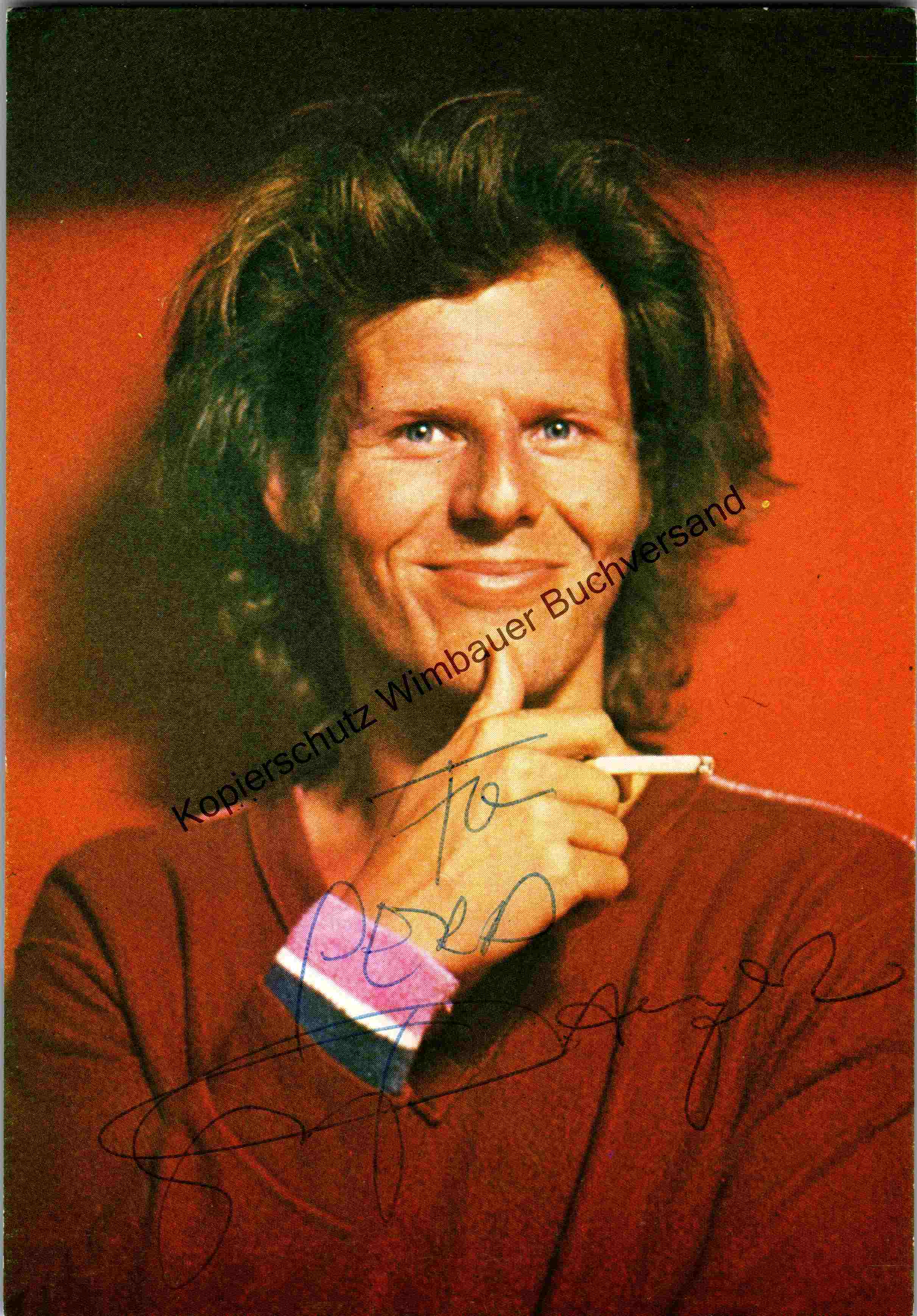
Georg Danzer
 Austria
Member of Austria3
singer-songwriter•singer•recording artist
Also known as: Georg Franz Danzer
Birthday
October 7, 1946
Birth Sign
Libra
Birthplace
Vienna, Austria
Age
Died at 60
About
Georg Franz Danzer was an Austrian singer-songwriter and a founding figure of Austropop. Born in Vienna in 1946, he became known for his witty, socially critical songs in Viennese dialect, including the comic hits "Jö Schau" and "Hupf' in Gatsch." Despite being credited as a pioneer of the genre, Danzer always rejected the Austropop label, preferring to be seen simply as a songwriter reflecting everyday life. His career spanned four decades, both as a solo artist and as a member of the supergroup Austria3 alongside Wolfgang Ambros and Rainhard Fendrich.
Danzer was also a translator and a vocal opponent of racism and social inequality. He died of lung cancer in 2007, leaving behind a catalog of some 400 songs that remain influential in Austrian culture. His work continues to be celebrated through streaming, theatrical revivals, and tributes, and he is remembered as a sharp observer of Viennese life with a warm, raspy voice and an anti-bourgeoisie stance.
Early Life & Background
Georg Franz Danzer was born on October 7, 1946, in Vienna, Austria. Growing up in the working-class districts of the city, he developed a deep connection to the local culture and its coffeehouses, which later permeated his songwriting. He attended school in Vienna and briefly enrolled in law studies at university, but he soon abandoned that path to pursue music full-time, a decision that shaped his entire career.
In his late teens and early twenties, Danzer performed in folk and cabaret circuits, honing his craft as a songwriter and guitarist. He was drawn to the vibrant café scene, particularly Café Hawelka, a legendary meeting place for artists and intellectuals. It was there that he witnessed the incident that inspired his breakthrough song "Jö Schau", a streaker running through the café. This blend of everyday observation and humor became his signature.
Before his first album, Danzer worked various odd jobs to support himself while developing his musical voice. His early performances already reflected his sharp intellect and independent spirit, setting the stage for his debut.
Career Growth
Danzer released his debut album Ich bin der Georg Danzer in 1971, establishing himself as a voice for the marginalized. The 1970s were his most productive period, with the release of iconic songs like "Jö Schau" (1973) and "Hupf' in Gatsch" (1975), both of which became anthems of Viennese humor and social commentary. He released a studio album nearly every year during this decade, building a vast body of work.
In 1983, Danzer formed the supergroup Austria3 with Wolfgang Ambros and Rainhard Fendrich. The trio represented the "Big Three" of Austropop and achieved massive commercial success, touring extensively across German-speaking Europe and releasing several successful albums. Danzer maintained his distinct identity within the group, and their collaboration lasted until his death.
Throughout the 1990s and 2000s, Danzer continued to release solo material focusing on socially critical themes. He also translated two books from Spanish into German, showcasing his literary interests. In 2006, he appeared in the documentary Weltberühmt in Österreich – 50 Jahre Austropop, celebrating the genre he helped shape. At the time of his death, he had composed approximately 400 songs, leaving a rich discography that remains influential.
Career Timeline
Public Image & Style
Danzer was perceived as a witty, ironic, and socially conscious songwriter who connected with everyday people. His public persona was that of a romantic misfit, often critical of the bourgeoisie and societal norms. He was known for his distinctive voice and his ability to blend humor with sharp social commentary. Fans appreciated his authenticity and his refusal to conform to genre expectations. His music remains popular on streaming platforms, with millions of views on YouTube and a dedicated listener base on Last.fm.
Fame & Fandom (iFAMOUS Rankings)
Georg Danzer cultivated a devoted following that transcended typical music fandom, rooted instead in a deep cultural reverence for his wit and social commentary. His audience, often simply called Danzer fans or Austropop enthusiasts, does not operate under a formal organizational banner or specific name. Instead of chart-topping campaigns or digital armies, the community engages through the enduring performance of classics like "Jö Schau" and "Hupf' in Gatsch," treating these tracks as anthems of Austrian identity rather than mere hits. This fanbase honors his legacy through commemorative events and media retrospectives, such as the planned 2026 tribute series, rather than structured online movements. The relationship between Danzer and his listeners was defined by mutual respect for his artistic integrity; he refused to be boxed into the genre he helped pioneer, a stance that resonated deeply with an audience valuing authenticity over conformity. While no specific rituals or inside jokes have been documented as exclusive to his supporters, the collective memory of his final major performance at the Wiener Donauinselfest in 2005 remains a touchstone for those who followed his career. Despite his passing in 2007, the demand for his work has remained steady, with theatrical revivals and streaming numbers keeping his voice alive for new generations. Georg Danzer is currently evaluated by iFANN but holds no placement in the published Global Top 1,000 rankings. Consequently, he does not appear on any scope list or top-tier ranking page within the iFANN system. This status reflects the platform's current evaluation methodology rather than a lack of enduring influence.
Interesting Facts and Legends
Danzer famously rejected the Austropop label throughout his life, viewing it as a marketing construct that restricted his artistic freedom. He was a lifelong smoker who only quit after receiving a lung cancer diagnosis, though the disease ultimately proved fatal. Beyond his musical contributions, he translated two books from Spanish into German. His deep immersion in Viennese coffeehouse culture served as a primary wellspring for his songwriting, most notably influencing the creation of "Jö Schau." A beloved story among his fans recounts how this particular track became an unofficial anthem, bridging folk tradition and pop culture so seamlessly that it feels timeless. Another verified chapter in his legend involves his final appearance at the Wiener Donauinselfest in Vienna during 2005, a concert frequently cited in retrospectives as a poignant closing act before his death. Critics and admirers alike remember his refusal to conform to societal norms or genre expectations as a defining mythos, cementing his image as an authentic, non-conformist voice who spoke directly to the everyday person.
Notable Quotes
“I am not an Austropop artist. I am just a songwriter who sings about what he sees.”
“The bourgeoisie is a disease.”
“Music should tell the truth, even if it's uncomfortable.”
Family & Personal Life
Georg Danzer was married to Gisela Danzer, and they remained together until his death in 2007. There are no widely reported details about children or other family members in public records. His marriage to Gisela was the primary documented relationship in his life. He lived in the Vienna area for most of his life, and his later years were spent in Asperhofen, Lower Austria, where he passed away.
Notable Connections
Georg Danzer was closely associated with his Austria3 bandmates Wolfgang Ambros and Rainhard Fendrich, together forming the supergroup that defined Austropop's mainstream success. His wife Gisela Danzer was a constant presence in his life. He also collaborated with director Marcus Strahl on theatrical revivals of his works, such as 'Mr Rudi in Georg Danzer's Sauna Stories.'.
Relationships & Dating History
Georg Danzer was married to Gisela Danzer, and the couple remained together for many years until his death in 2007. There are no widely reported details of other long-term partners or relationships. His marriage to Gisela was the primary documented relationship in his life. At the time of his death, he was still married to her.
- MarriedGisela Danzer? - 2007Married until his death in 2007.
Death & Aftermath
Died
June 21, 2007 (aged 60)
Death Place
Vienna, Austria
Cause of Death
Unknown
The Austrian cultural community marked the passing of Georg Danzer as the end of an era for Austropop, with tributes pouring in from peers like Wolfgang Ambros and Rainhard Fendrich to honor the songwriter who shaped the genre. His legacy saw a resurgence following his death, cementing his status as a vital figure with hundreds of singles still available to listeners worldwide. This outpouring of respect highlighted the impact of his socially critical songs in Viennese dialect and his decades-long commitment to reflecting everyday life without accepting the label he helped pioneer. Georg Franz Danzer died on June 21, 2007, at the age of sixty in Vienna, Austria. While the date is widely confirmed across biographical databases, specific medical details regarding the cause were not made public by official coroners or medical examiners.
He remained active in the music scene leading up to his final days, with his last major project appearing to be related to the documentary Weltberühmt in Österreich, 50 Jahre Austropop in 2006. Following his death, Danzer was buried in Vienna, though the exact cemetery location remains unspecified in available records. The funeral was likely a private affair attended by family and close friends. Posthumously, his estate managed archival material and maintained his discography, ensuring his music continued to generate recognition through digital releases and retrospectives. Cultural engagement with his work persisted, evidenced by references such as the play Mr Rudi in Georg Danzer's Sauna Stories, which utilized his name and persona to keep his spirit alive in the national consciousness.
Net Worth (Estate Value)
$10 Million
iFANN Editorial Team estimate
As Georg Danzer passed away in 2007, his net worth is now considered the value of his estate. Specific figures for the total value are not publicly disclosed, but given his status as a national icon with a catalog of 400 songs, the estate remains highly valuable. Revenue streams include posthumous releases, digital streaming royalties from platforms like Spotify and Apple Music, licensing of his songs for films and commercials, and merchandise. The estate is managed by his family and/or a dedicated music publishing company, though specific names are not widely publicized. Per iFANN's editorial analysis, the estate's value is estimated at $10 Million in 2026, reflecting the ongoing popularity of his music and the steady income from royalties. His songs continue to be streamed millions of times, and theatrical revivals keep his work alive. The estate's financial trajectory has remained stable, with occasional spikes from licensing deals and special tributes.
Awards & Accolades
View 2 records, honours and achievementsKnown For
Jö Schau
1973 · Singer-songwriter
Hupf' in Gatsch
1975 · Singer-songwriter
Weisse Pferde
0 · Singer-songwriter
Keywords
Sources
Quick Facts
- Profession
- singer-songwriter, singer, recording artist
- Born
- October 7, 1946
- Birthplace
- Vienna, Austria
- Died
- June 21, 2007
- Death Place
- Asperhofen, Lower Austria
- Gender
- Male
- Birth Sign
- Libra
Personal Details
- Full Name
- Georg Franz Danzer
- Spouse
- Gisela Danzer
- Education
- Studied law (did not complete)
Filmography
1
Total
0
Film
1
TV
Frequently Asked Questions
Who was Georg Danzer?
When did Georg Danzer die?
What was Georg Danzer's most famous song?
Was Georg Danzer married?
What is Georg Danzer's legacy?
Social Media
Similar People

Join the community
fans discussing