 Armenia
About
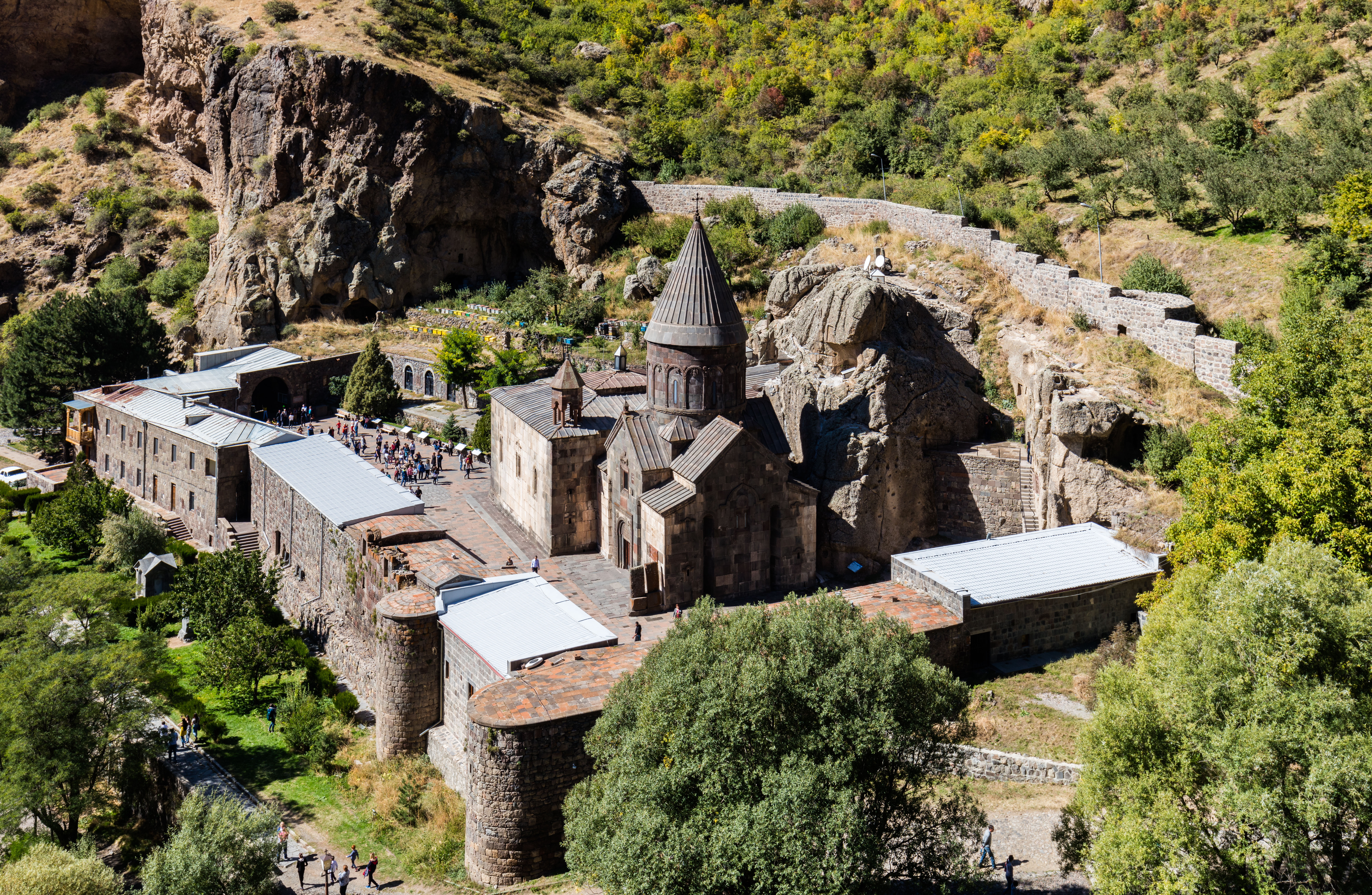
Geghard, a name that translates to "spear" in Armenian, is a remarkable medieval monastic complex nestled within the dramatic cliffs of the Kotayk province. Recognized globally as a UNESCO World Heritage Site, it stands as a testament to unique rock-cut architecture and its enduring significance as a pilgrimage destination. The monastery's origins trace back to the 4th century, when Saint Gregory the Illuminator established a monastic community at a sacred spring within a natural cave. Initially known as Ayrivank, or "cave monastery," it evolved significantly over centuries.
The main chapel, Katoghike, was completed in 1215, marking a period of intense development where monks meticulously carved additional chapels, tombs, and halls directly into the surrounding rock. This integration of natural caves with intricate stone carvings makes Geghard a prime example of medieval Armenian architectural and artistic achievement. Beyond its stunning visual appeal, the complex served as an important spiritual and educational hub in medieval Armenia, housing a scriptorium, library, and music school. Today, it continues to be an active spiritual center, drawing visitors from around the world who come to admire its artistry and experience its profound atmosphere.
Mission
Historically, Geghard served as a vital religious and educational institution, preserving manuscripts and fostering spiritual life. Today, its mission centers on safeguarding its unique cultural heritage as a UNESCO World Heritage Site, serving as a place of pilgrimage, and sharing its historical and architectural significance with visitors from across the globe.
History
The story of Geghard begins in the 4th century, when Saint Gregory the Illuminator established a monastery at a sacred spring within a cave. He named this early foundation Ayrivank, meaning "cave monastery." For centuries, it remained a secluded spiritual retreat. The monastery's prominence grew significantly in the medieval period. The main church, Katoghike, was completed in 1215, a time when Armenian architecture flourished. Following this, monks undertook ambitious projects, carving additional chapels, tombs, and halls directly into the sheer rock face. This period of expansion transformed Ayrivank into the complex we recognize today, known as Geghard.
The monastery was also a significant cultural center, housing a school, a scriptorium for copying manuscripts, a library, and a music school. It was said to have housed the lance that pierced Christ's side, contributing to its fame and drawing pilgrims. Over time, the monastery complex, along with the surrounding Azat River Gorge, became a UNESCO World Heritage Site in 2000, celebrating its exceptional architecture and historical importance.
Notable People
Saint Gregory the Illuminator
Founder · 4th century
Founded the original monastery at the sacred spring.
Milestones
4th Century
Saint Gregory the Illuminator founds the monastery of Ayrivank at a sacred spring.
1215
Completion of the main chapel, Katoghike.
Post-1215
Monks expand the complex by carving structures into the surrounding rock.
2000
Geghard and the Upper Azat Valley are inscribed as a UNESCO World Heritage Site.
Sources
Organization Info
- Founded
- 4th century
- Headquarters
- Geghard, Kotayk Province
- Country
- Armenia
- Type
- Museum
- Name Meaning
- Spear
- Location
- Kotayk Province, Armenia
- Architectural Style
- Rock-cut, Medieval Armenian
- Associated Relic
- Lance of Longinus (allegedly)
- Entry Fee
- 250 AMD (approx. $0.50 USD)
Join the community
fans discussing