Overview
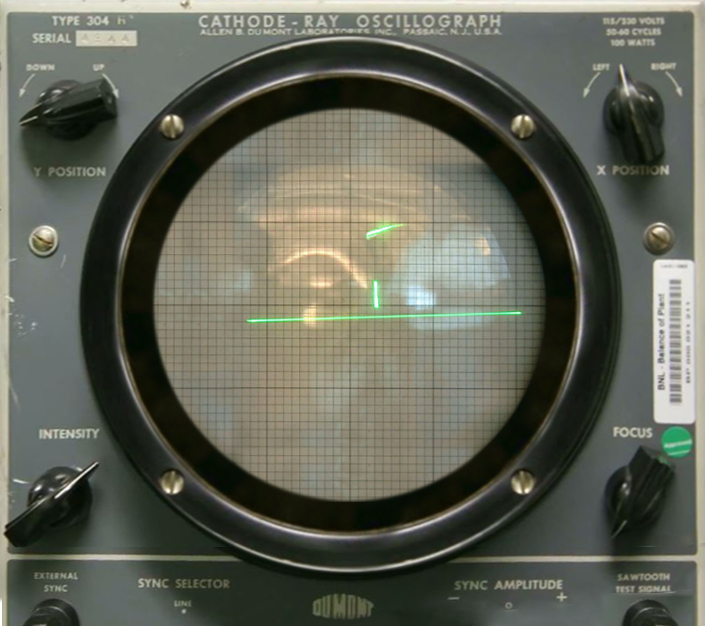
William Higinbotham, a physicist at Brookhaven National Laboratory, created Tennis for Two in just three weeks during the summer of 1958. He built this interactive simulation to entertain visitors at the laboratory's annual public exhibition using a Donner Model 30 analog computer capable of calculating trajectories with wind resistance. The game appeared on an oscilloscope screen as a side-view tennis court where two players used custom aluminum controllers to adjust shot angles and hit the ball over the net. High school students lined up for hours to play the simple sports title, which ran without any complex graphics or sound effects beyond the visual movement of the ball.
Higinbotham and technician Robert V. Dvorak constructed the device quickly after realizing the computer could model physics for entertainment purposes. The exhibit returned the following year with a larger screen and adjustable gravity settings before getting dismantled and forgotten until the late 1970s. Legal battles between Magnavox and Ralph H. Baer brought the project back into the spotlight when Higinbotham testified about his work. Today historians often cite Tennis for Two as the first video game designed purely for fun rather than research or commercial demonstration.
Gameplay
Players sat opposite each other facing a single oscilloscope screen displaying a white line representing the ground and a curved arc for the net. A small dot moved across the display to represent the ball. Each participant held an aluminum controller box containing a knob and a push button. Turning the knob changed the angle of the return shot while pressing the button determined the power and timing of the strike. The system calculated real-time physics including gravity and air resistance to simulate the ball's flight path.
The objective was straightforward: bounce the ball over the net so the opponent failed to return it. In 1959 Higinbotham added a switch to adjust the gravity setting allowing users to make the ball fall faster or slower. This tweak let players alter the difficulty level without changing the core mechanics or adding new hardware.
Story
The experience had no narrative arc characters or plot progression. Higinbotham designed the software strictly as a recreational tool to break the monotony of the lab environment. Visitors arriving for the annual open house found themselves waiting in long lines to test their reflexes against a friend or stranger.
Keywords
Sources
Game Info
- Developer
- William Higinbotham
- Engine
- Donner Model 30 Analog Computer
- Release Date
- October 18, 1958
- Modes
- two-player local
- Platforms
- Donner Model 30
- Hardware
- Donner Model 30 Analog Computer
- Display
- Oscilloscope
- Controller Type
- Custom Aluminum Box (Knob + Button)
- Gravity Feature Added
- 1959
Links
Join the community
fans discussing