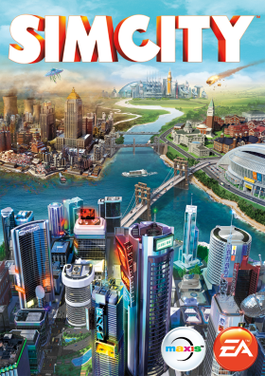
SimCity
"Build the city of your dreams."
Overview
SimCity is a landmark open-ended city-building and management simulation video game franchise, first conceptualized by designer Will Wright and developed by Maxis. The original game was published by Broderbund in 1989. The core premise is that the player acts as a mayor and city planner, tasked with designing, constructing, and managing a metropolis. There is no fixed story or goal; instead, gameplay is a software toy where players zone land for residential, commercial, and industrial use, build infrastructure like roads, power plants, and water pipes, and manage municipal budgets, taxes, and citizen satisfaction. The game simulates complex emergent behaviors: crime rates rise with poor policing, traffic congestion increases with density, and pollution from industry lowers property values.
The series spans multiple core titles and countless ports. The original SimCity (1989) was released on an extraordinary number of platforms, including DOS, Commodore 64, Amstrad CPC, Atari ST, BBC Micro, Macintosh, Super Nintendo Entertainment System, ZX Spectrum, Acorn Archimedes, FM Towns, NEC PC-9800 series, Unix, X Window System, OS/2, Linux, NeWS, Tk, Tcl, DESQview, EPOC, Symbian, Java, Palm OS, CDTV, iOS, iPod touch, web browser, and the OLPC XO-1. Sequels include SimCity 2000 (1993), SimCity 3000 (1999), SimCity 4 (2003), and the controversial reboot SimCity (2013). The franchise also spawned spin-offs like SimCity Societies (2007) and numerous console and mobile adaptations.
Technically, the original 1989 game used a tile-based isometric engine with 256-color VGA graphics on PC. SimCity 2000 upgraded to a true isometric 3D perspective, while SimCity 4 introduced a full 3D engine with zoom and rotation capabilities. The 2013 reboot used a custom GlassBox engine designed to simulate individual agents in real-time, but it was heavily criticized for its small city lot sizes and forced online connectivity. The franchise has been ported to virtually every major gaming platform from the late 1980s through the 2010s.
Gameplay
The player takes on the role of a mayor and city planner with the goal of building and managing a thriving city. Gameplay involves zoning land for residential, commercial, and industrial use, constructing infrastructure such as roads, power plants, water pipes, police stations, and fire stations, and managing the city budget by setting tax rates and issuing bonds. The simulation runs continuously, with agents like Sims, cars, and services moving through the city. Emergent behaviors include crime, traffic, pollution, and natural disasters like earthquakes and tornadoes. Player satisfaction is measured by citizen approval ratings and population growth. There is no explicit win condition; the game encourages open-ended play and creativity.
Awards & Acclaim
Computer Gaming World: Best Simulation: (1989)
World Video Game Hall of Fame: Inductee: (2016)
Keywords
Game Info
- Developer
- Maxis
- Publisher
- Broderbund
- Release Date
- 1989-02-01
- Modes
- single-player
- Platforms
- Acorn Archimedes, Acorn Electron, CDTV, Amstrad CPC, Atari ST, BBC Micro, Commodore 64, DESQview, DOS, EPOC, FM Towns, iOS, iPod touch, NEC PC-9800 series, OLPC XO-1, OS/2, Linux, macOS, Symbian, Java, NeWS, web browser, Super Nintendo Entertainment System, Tk, Unix, Microsoft Windows, X Window System, Tcl, ZX Spectrum, Wii, Palm OS
Join the community
fans discussing