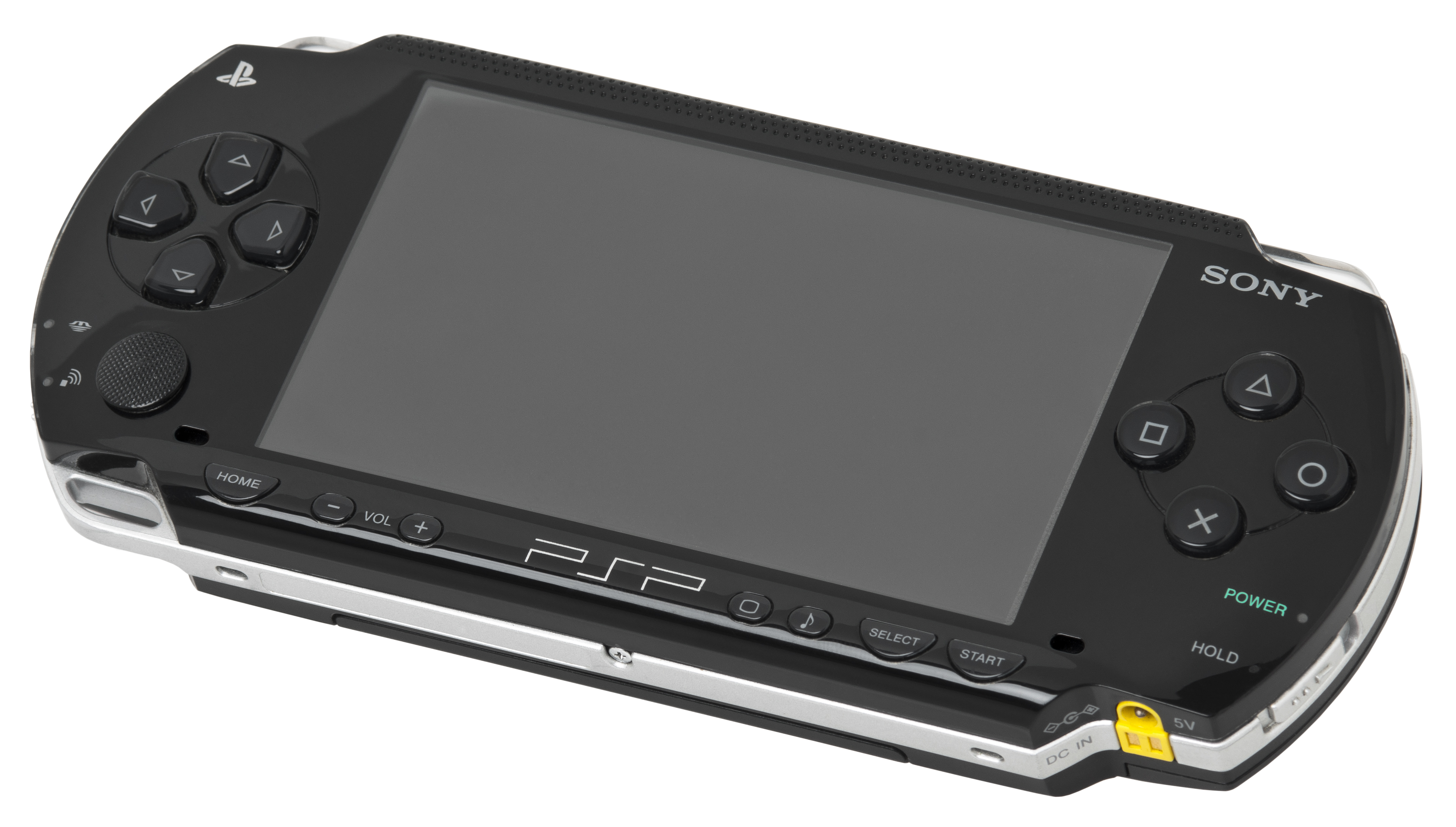
PlayStation Portable
"Console-quality gaming in a handheld form factor"
Overview
Sony Computer Entertainment unveiled the PlayStation Portable at E3 in 2003, bringing a vision of console-quality gaming to a handheld form factor. The device launched in Japan on December 12, 2004, followed by North America and Europe in early 2005. This seventh-generation system challenged Nintendo's dominance with superior graphics that allowed it to run complex titles previously impossible on portable hardware. Players could explore vast worlds or engage in fast-paced combat while carrying the power of a home console in their pocket.
The PSP stood out as the only handheld to use Universal Media Discs for both games and movies. Sony designed the machine to function as a multimedia hub, letting users stream content from PlayStation 2 and PlayStation 3 systems or connect directly to the internet. Critics praised the screen quality and processing power immediately after release. Over its ten-year lifespan, the platform sold more than 80 million units despite stiff competition from the Nintendo DS. Later models like the PSP Street and PSP Go refined the experience before the line eventually transitioned to the PlayStation Vita.
Gameplay
The system features a 4.3-inch 16:9 widescreen LCD display with a resolution of 480x272 pixels, offering graphical fidelity that surpassed competitors like the Nintendo DS. Hardware acceleration enabled texture filtering and anti-aliasing for smooth 3D rendering. Developers ported complex home console titles such as Grand Theft Auto: Vice City Stories and Metal Gear Solid: Peace Walker to the handheld format using this custom processor. The input scheme includes a D-pad paired with an analog nub, alongside a touch-sensitive screen found on later revisions.
Users accessed content through Memory Stick PRO Duo cards and supported various media formats including MP3, AAC, JPEG, and MPEG-4 video. The operating system facilitated online battles via the PlayStation Network and local multiplayer sessions without an internet connection. Titles like Warhawk utilized these network capabilities extensively to create persistent online worlds.
Story
As a platform rather than a single title, the PSP does not have a unified narrative arc but hosted numerous story-driven franchises. Patapon offered a rhythm-based strategy experience where players commanded armies through drum beats. Lumines presented a puzzle game wrapped in a futuristic sci-fi setting. God of War: Chains of Olympus served as a prequel to the main series, exploring Kratos's early life before the events of the original trilogy.
Multiplayer and online features remained robust throughout the system's lifecycle. Ad-hoc wireless play allowed local multiplayer without internet access, while infrastructure mode enabled online battles via the PlayStation Network. These features were integral to titles like Warhawk and GTA: Vice City Stories, which leveraged them for competitive gameplay experiences.
Trailers

Awards & Acclaim
Best Handheld Console: Gaming Industry Awards: (2005)
Excellence in Game Design: Japan Game Awards: (2006)
Keywords
Sources
Game Info
- Developer
- Sony Computer Entertainment
- Publisher
- Sony Computer Entertainment
- Engine
- Custom MIPS R4000-based architecture
- Release Date
- December 12, 2004
- Age Rating
- ESRB: E10+ / PEGI: 12
- Modes
- Single-player, Multiplayer, Ad-hoc wireless, Infrastructure mode
- Platforms
- PlayStation Portable
- Total Sales
- 80 million units
- Screen Size
- 4.3 inches
- Resolution
- 480x272 pixels
- Media Format
- Universal Media Disc (UMD)
- Discontinued
- 2014
- Key Models
- PSP-1000, PSP-2000, PSP-3000, PSP Go, PSP-E1000
Join the community
fans discussing