Google Earth
"Explore the planet in three dimensions"
Overview
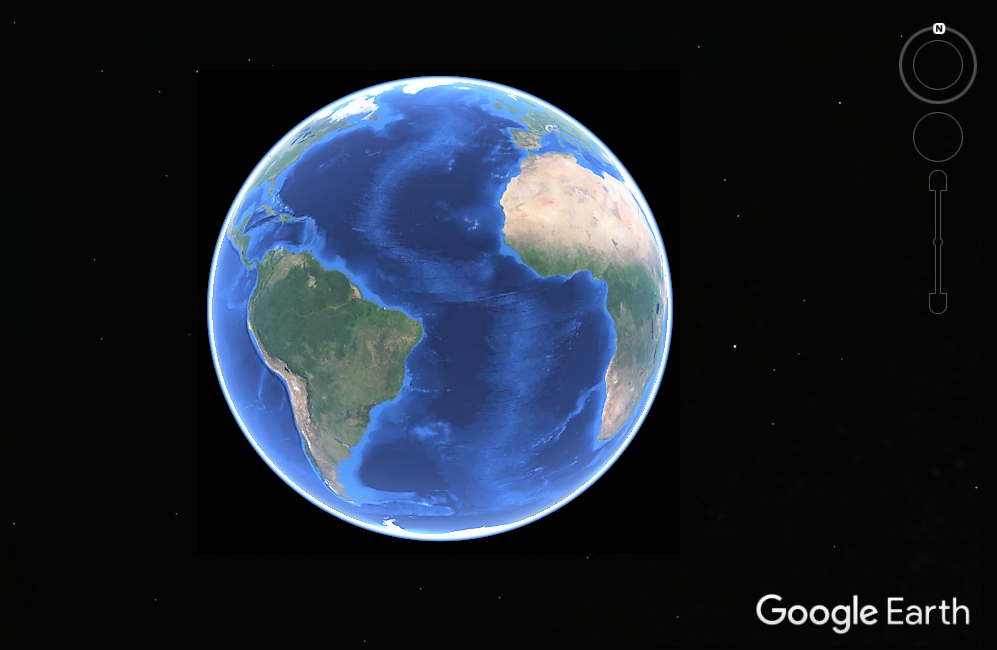
Launched in 2001, Google Earth transformed how people explore the planet by turning a static map into a spinning, three-dimensional globe. Users navigate through satellite imagery and aerial photography to visit cities or remote landscapes from any angle. The software runs on web browsers and Microsoft Windows, letting travelers zoom from orbit down to street level with a simple click or scroll. Beyond standard navigation, the application includes tools to measure distances, view the night sky, and even fly a virtual aircraft over famous landmarks.
The experience relies on a proprietary rendering engine that streams massive amounts of geospatial data in real time. This system uses advanced level-of-detail algorithms to load high-resolution textures only when the user zooms in, ensuring smooth performance across different hardware. Recent updates have added AI-driven agents to help analyze planetary challenges like climate change models and population density shifts.
Gameplay
The core interaction involves seamless navigation using a "zoom-to-your-house" interface where users traverse the globe via mouse controls or touch gestures. A significant feature often cited as a game mode is the Flight Simulator, which allows players to pilot various aircraft over famous landmarks and global airports with physics-based dynamics. The application integrates tools for measuring distances and areas while viewing the night sky with star maps.
Users can overlay data layers such as Wikipedia articles and Panoramio photos to add context to specific locations. In recent iterations, AI-driven geospatial agents assist in analyzing planetary challenges, adding a layer of interactive problem-solving to the exploration loop.
Story
This software lacks a traditional narrative plot or win conditions. Its story is the collective history of human geography accessible through its time-slider feature, which lets users view how locations have changed over decades. The experience is defined by user agency: the narrative is whatever the user chooses to discover, ranging from exploring the ruins of ancient civilizations to observing the devastation of natural disasters or urban development.
Trailers


Awards & Acclaim
Time Magazine Top 50 Best Websites: Best Website: (2006)
National Geographic Society Explorers' Award: Innovation: (2008)
Keywords
Sources
Game Info
- Developer
- Keyhole, Inc.
- Publisher
- Engine
- Proprietary Geospatial Engine
- Release Date
- 2001
- Modes
- Single-player, Exploration
- Platforms
- Web Browser, Microsoft Windows, macOS, iOS, Android
- Original Developer
- Keyhole, Inc.
- Acquisition Year
- 2004
- Rebranding Year
- 2005
- Key Figure
- Michael T. Jones
Join the community
fans discussing