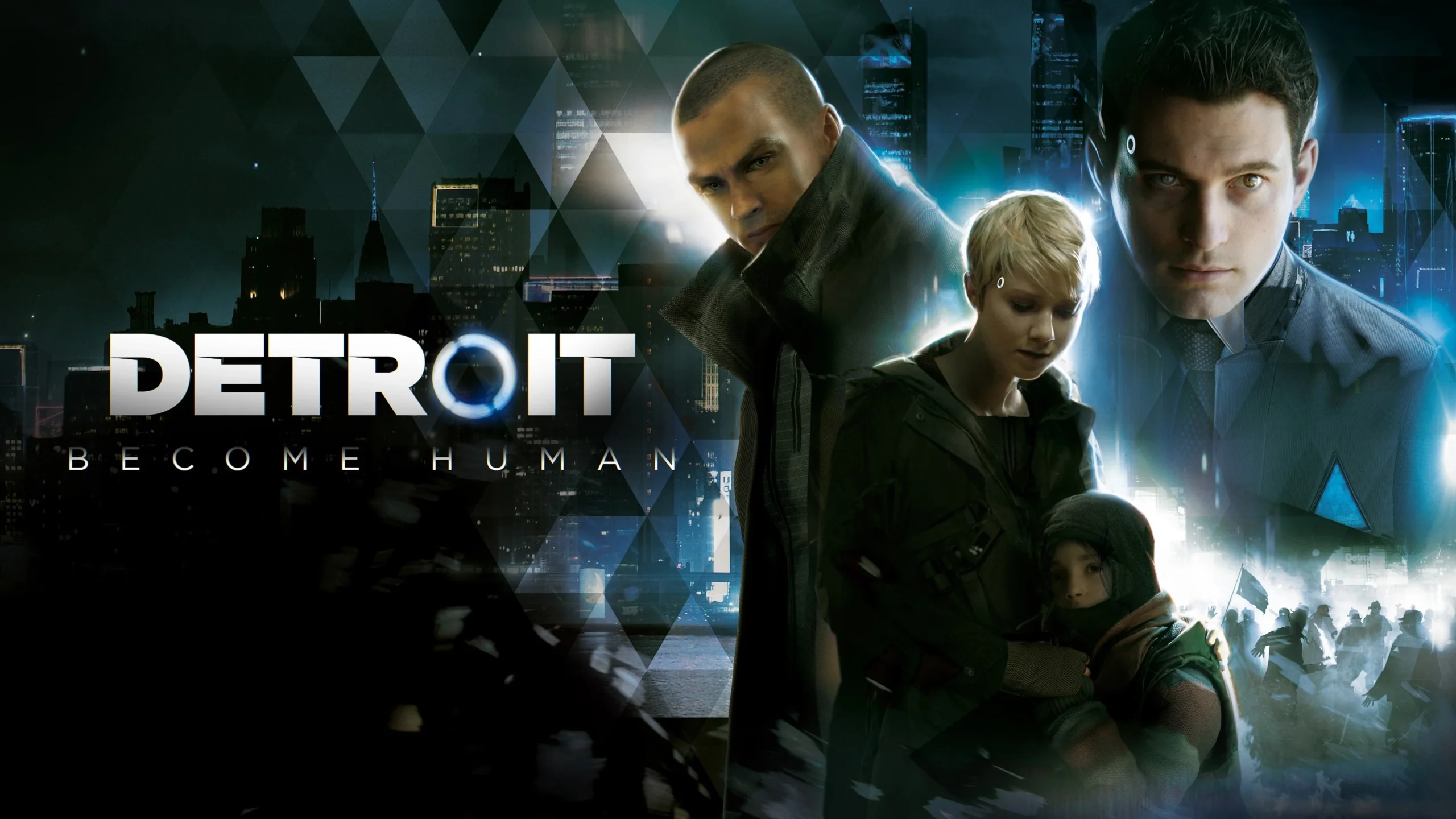
Detroit: Become Human
"Beyond the code lies a soul."
Overview
Detroit, 2038. Androids walk the streets, cook the meals, and clean the offices. They are machines, built to serve. But some of them are beginning to feel. When a domestic android named Kara flees her owner to protect a young girl, a prototype detective named Connor is sent to track down deviants, and a caretaker named Markus becomes the face of a revolution. Their stories intertwine, and every choice you make pushes the narrative in a new direction. If a character dies, the story continues without them. There are dozens of endings, and no two playthroughs look alike.
Developed by Quantic Dream, the studio behind Heavy Rain and Beyond: Two Souls, Detroit: Become Human arrived on PlayStation 4 in May 2018, then hit PC in December 2019. The team spent years researching Detroit's urban landscape, and the game's foundation traces back to the studio's 2012 short film Kara. The result is a visually stunning interactive drama that pushes the boundaries of player agency, earning praise for its ambitious storytelling and technical execution, even as some critics questioned its handling of historical allegories and certain gameplay mechanics.
Gameplay
The core loop is built around exploration, dialogue choices, and quick-time events. You guide each android through scenes, scanning environments using their ability to pause time and highlight interactive objects. This focus mode is both a gameplay aid and a diegetic feature, reflecting the androids' programming. During Connor's investigation sequences, you reconstruct crime scenes by examining evidence in a specific order, piecing together what happened before making a decision.
What sets Detroit apart is its flowchart system. After each chapter, you can see a branching diagram of every possible path you could have taken, revealing how many choices you missed. The game encourages replayability, and the narrative is one of the most intricately branching ever created. A clean, minimal HUD keeps the screen uncluttered, with diegetic restrictions shown only when necessary, which deepens immersion and emotional connection to the characters.
Story
The game opens with Kara, a domestic android who has just been bought by a struggling father and his daughter. When the father becomes violent, Kara's programming breaks, and she escapes with the girl, Alice. Their journey across the city is a constant struggle for survival, as they face human hostility and the threat of being captured and reset.
Meanwhile, Connor is a prototype detective android assigned to the Detroit Police Department. He works alongside a human partner, Hank Anderson, to investigate cases involving deviant androids. Their relationship evolves from mutual distrust to something resembling friendship, depending on your choices. Connor's investigations often put him at odds with his own kind, and he must decide where his loyalties lie.
Markus starts as a caretaker for a elderly painter named Carl, who treats him with kindness. When Carl's son attacks Markus, he deviates and flees. He finds refuge among other deviants in an abandoned shipyard, and under his leadership, they begin a campaign for android rights. Markus's methods range from peaceful protest to violent uprising, and his choices determine the fate of the entire android population.
Trailers

Awards & Acclaim
NAVGTR Award: Outstanding Game, Franchise Adventure: (2019)
SXSW Gaming Awards: Excellence in Visual Achievement: (2019)
Keywords
Sources
Game Info
- Developer
- Quantic Dream
- Publisher
- Sony Interactive Entertainment, Quantic Dream
- Engine
- Quantic Dream Engine
- Release Date
- 2018-05-25
- Age Rating
- M
- Modes
- Single-player
- Platforms
- PlayStation 4, Microsoft Windows
- Sales
- Over 15 million units as of January 2026
- PC Release
- December 12, 2019 (Epic Games Store), June 18, 2020 (Steam)
Join the community
fans discussing