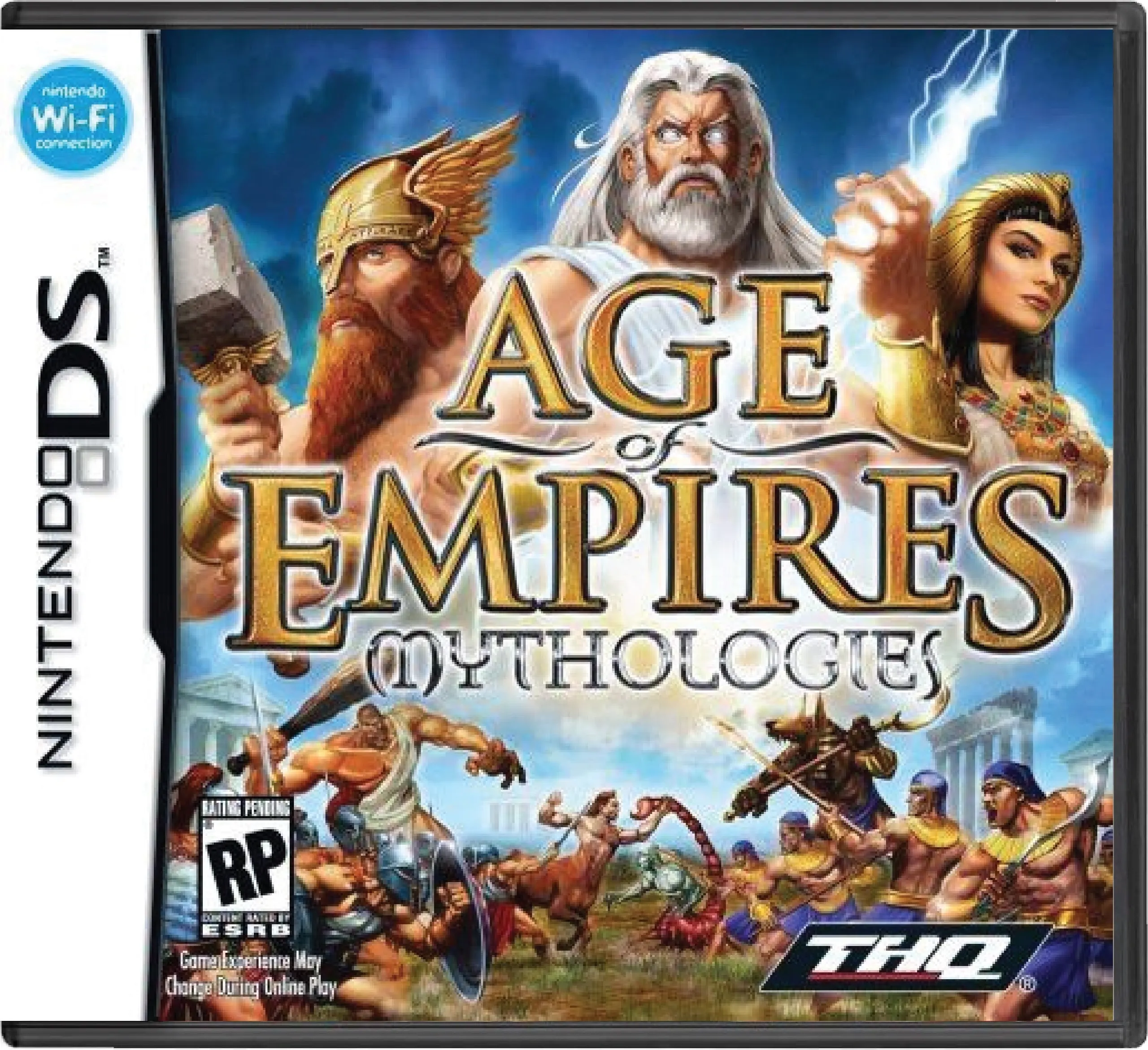
Age of Empires
"Build an empire from the Stone Age to the Iron Age"
Score
4.8/10
Overview
Players take command of ancient civilizations in Age of Empires, a real-time strategy game that launched on October 15, 1997. Developed by Ensemble Studios and published by Microsoft, this title introduced the Genie Engine to render detailed 2D sprites across Windows, macOS, and Classic Mac OS. The core loop involves guiding a society from the Stone Age through the Tool, Bronze, and Iron Ages. Each technological leap unlocks new units and buildings, forcing players to balance resource gathering with military expansion against computer opponents or rivals online.
The original release featured five playable civilizations: Babylonians, Egyptians, Greeks, Assyrians, and Sumerians. Campaigns in the base game focused on historical figures like Genghis Khan and specific events such as the unification of China. Players managed four primary resources, food, wood, gold, and stone, to train armies and construct structures. The game did not rely on a single continuous narrative but rather presented distinct scenarios where victory conditions varied by civilization and mission objective.
While later entries like Age of Empires II: Definitive Edition and Age of Empires IV shifted to 3D graphics and modern engines, the 1997 classic remains a benchmark for the genre. Its influence persists through active communities and competitive play, even as the franchise navigates corporate changes at World's Edge Studio in recent years.
Gameplay
The Genie Engine processed large numbers of units simultaneously using 2D sprite technology, allowing for smooth transitions between the four ages of civilization. Resource management drives every decision, as players must gather food, wood, gold, and stone to sustain their population and fund military production. Advancing through the ages requires specific technologies and buildings, creating a strategic bottleneck where economic growth must outpace enemy aggression.
Military units ranged from basic spearmen to advanced archers and siege weapons, each with unique counters and strengths. The AI opponents were designed to challenge players with expanding territories and aggressive tactics. Multiplayer support allowed for skirmishes and ranked matches, establishing a competitive scene that continues to thrive today.
Story
Campaigns in the original title guide players through historical narratives without a fictional overarching plot. The Babylonian campaign follows the rise of Hammurabi, while the Egyptian section details the construction of the pyramids under various pharaohs. Greek missions explore the conflicts of Alexander the Great, and Assyrian scenarios depict the expansion of Ashurbanipal. The Sumerian campaign concludes the base game with the rise of Gilgamesh and the establishment of early city-states.
Victory conditions vary by mission, often requiring the destruction of enemy bases, the survival of key units, or the completion of specific objectives within a time limit. These scenarios served both as entertainment and educational tools, introducing players to different historical periods and cultures.
Trailers

Awards & Acclaim
GameSpot Game of the Year: Real-Time Strategy: (1997)
PC Gamer US Game of the Year: Strategy: (1997)
Keywords
Sources
Game Info
- Developer
- Ensemble Studios
- Publisher
- Microsoft Corporation
- Engine
- Genie Engine
- Release Date
- 1997-10-15
- Age Rating
- E for Everyone
- Modes
- single-player, multiplayer, campaign
- Platforms
- Microsoft Windows, macOS, Classic Mac OS
- Civilizations (Base Game)
- Babylonians, Egyptians, Greeks, Assyrians, Sumerians
- Technological Ages
- Stone, Tool, Bronze, Iron
- Resource Types
- Food, Wood, Gold, Stone
Join the community
fans discussing