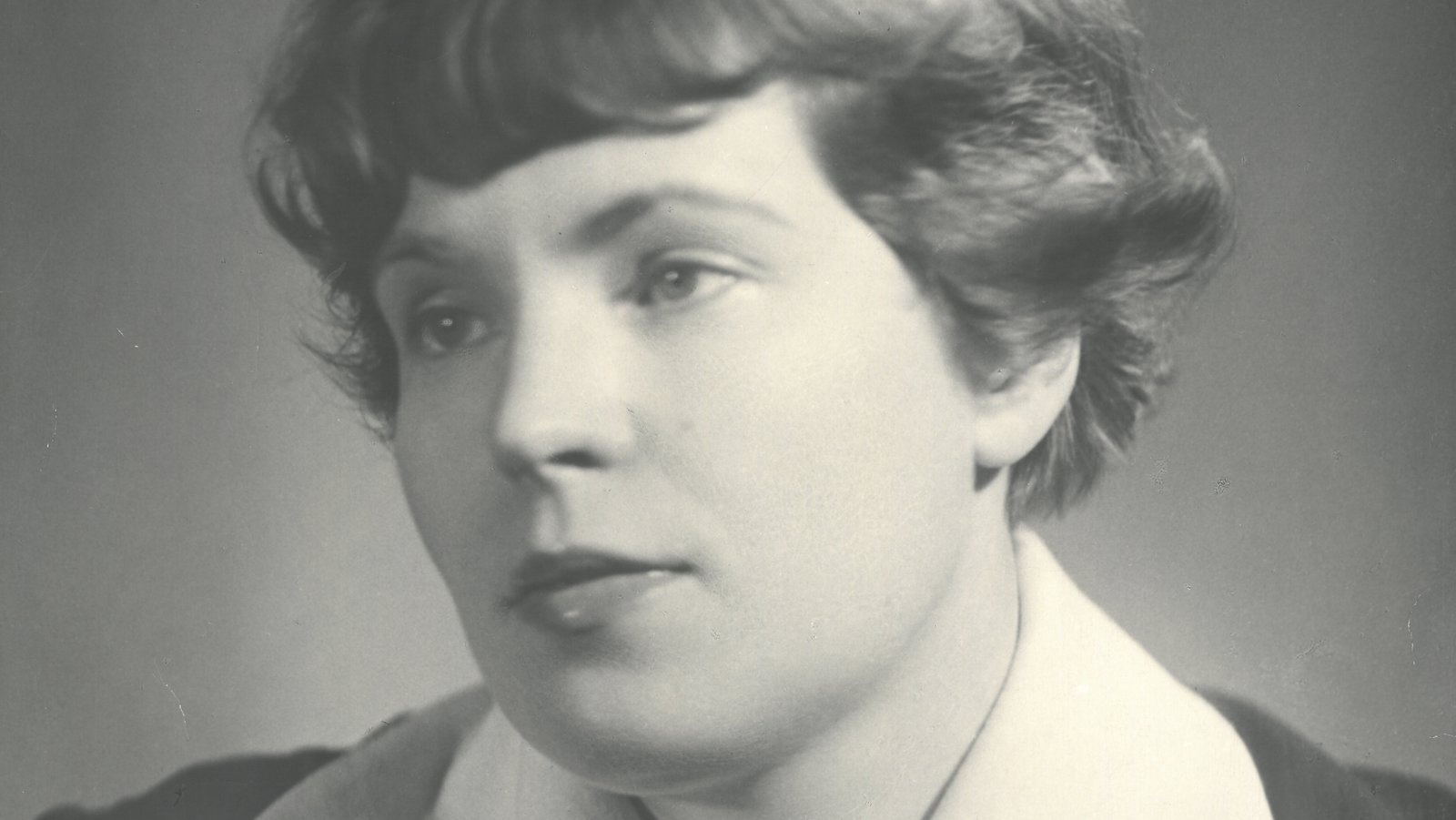
Galina Ustvolskaya
 Russia
classical composer•music educator
Also known as: The Lady with the Hammer
Birthday
June 17, 1919
Birth Sign
Gemini
Birthplace
Petrograd (now Saint Petersburg), Russia
Age
Died at 87
About
Galina Ivanovna Ustvolskaya was a Russian classical composer and music educator, recognized for her fiercely independent and uncompromising musical style. Born in Petrograd (now Saint Petersburg), she lived her entire life in that city, cultivating a unique compositional voice. Her work is characterized by dense, textured blocks of sound, often featuring intense tone clusters and wide dynamic shifts. Dutch critic Elmer Schönberger memorably described her as 'the lady with the hammer,' a moniker that perfectly captured the powerful and boundary-pushing nature of her compositions. Ustvolskaya developed a highly personal aesthetic, marked by stark contrasts and uncommon instrumental pairings. Despite her profound contributions to 20th-century music, she remained a reclusive figure, finding public discussions about her own works unpleasant. Throughout her career, she approved only 21 of her compositions for public performance, reflecting her deeply private approach to her art.
Early Life & Background
Born on June 17, 1919, in Petrograd, a city now known as Saint Petersburg, Russia, Galina Ustvolskaya spent her entire life within its bounds. Her formative years were deeply intertwined with the city's rich musical traditions, which eventually led her to pursue formal training at the prestigious Leningrad Conservatory. She enrolled in 1937 and continued her rigorous studies there until 1947, a decade that included the challenging period of World War II and the harrowing Siege of Leningrad. During her time at the Conservatory, Ustvolskaya studied under several notable instructors, with Dmitri Shostakovich being one of her most prominent teachers. Their professional relationship was a complex one; while Shostakovich reportedly held her talent in high regard, Ustvolskaya herself later made a point of distancing her work from his influence, famously remarking that she had "turned down Shostakovich" in terms of artistic mentorship. This assertion underscored her fierce independence and her determination to forge a unique compositional voice, unburdened by the expectations or styles of her contemporaries, even those as eminent as Shostakovich. After graduating, Ustvolskaya chose to remain in Leningrad, where she balanced her work as a music educator with her demanding schedule as a composer. This period, before her music began to gain wider recognition, established the foundation for the intensely personal and often solitary artistic journey she would embark upon.
Career Growth
Following her studies at the Leningrad Conservatory, Galina Ustvolskaya dedicated herself to composing, cultivating a musical language that was remarkably concentrated and potent. Her breakthrough wasn't a sudden public debut, but rather the gradual emergence of a distinctive and uncompromising body of work. She produced a modest but impactful catalog of compositions, each conveying a succinct and powerful message. Among her key works are the demanding Piano Sonata No. 2, the profound Symphony No. 1, and the striking Clarinet Trio. Her symphonies, in particular, were often described as explosive and deeply saturated, born from a place of solitude and intense isolation. Symphonies numbered 2 through 4 uniquely incorporated texts by an eleventh-century monk, exploring themes like "True and Eternal Bliss," "Jesus Messiah," and "The Beatitudes." Over a span of 43 years, she completed six piano sonatas, each contributing to her reputation for extreme intensity. Critics often characterized her music as "brutally uncompromising" and possessing an "elementality that's both horrifying and thrilling." While she remained a reclusive figure, interest in her unique musical voice began to grow steadily, particularly around the centenary of her birth in 2019, which saw renewed attention to her catalog. This continued into 2026, with performances featuring her music scheduled in February alongside Shostakovich's works, and Brecht Valckenaers set to perform her intensely demanding compositions. A review of BIS recordings of her Symphonies 1-5 was published in September 2025, and Christian Karlsen discussed her influence in November 2025, showing her enduring impact on contemporary music.
Career Timeline
Public Image & Style
Galina Ustvolskaya cultivated the public image of a deeply reclusive and uncompromising composer, a persona that mirrored the intensity of her music. She rarely engaged with the media or sought public attention, preferring to let her compositions speak for themselves. Her signature style, characterized by stark contrasts, relentless intensity, and often unusual instrumental pairings, became her most recognizable public trait. Fans and critics alike perceived her work as profoundly powerful and challenging, often demanding a great deal from the listener. This challenging aspect was part of her appeal; audiences connected with the raw, elemental force in her music, which was seen as a distinct and unvarnished artistic statement. She was not interested in pleasing crowds, but rather in expressing her unique, often spiritual, vision through sound.
Fame & Fandom
Galina Ustvolskaya's devoted following is a niche but fervent cult among contemporary classical music connoisseurs. There's no formal fandom name, no official fan club, no collective identity, no grassroots campaigns. Instead, her fans express their devotion through performance, scholarship, and recording. Pianist Conor Hanick has performed her complete piano sonatas at festivals like Other Minds, conductor Vasily Petrenko programmed her work alongside Shostakovich with the Royal Philharmonic Orchestra, and conductor Christian Karlsen has championed her influence in major publications. The unofficial website ustvolskaya.org serves as an authoritative fan resource, and her publisher Boosey & Hawkes maintains her catalogue. The 2019 centenary of her birth sparked a wave of performances, recordings, and critical reassessment, including a New York Times feature titled 'She's Rising From the Depths of Soviet Music History.' Fan discourse often revolves around the mythology of her relationship with Dmitri Shostakovich, particularly the story that she rejected his marriage proposal, and the sheer physical intensity of her music, which fans describe with extreme hyperbole, like 'being pulverized by a dinosaur raised from the dead.' As of August 2026, the iFANN Global Fame Engine has evaluated Galina Ustvolskaya, but she does not currently hold a placement in the published rankings, either in the Global Top 1,000 or any Top-100 scope list. Her fame, while not numerically ranked, is that of a reclusive legend whose uncompromising voice continues to resonate deeply with those who seek it out.
Interesting Facts and Legends
Galina Ustvolskaya earned the memorable nickname 'the lady with the hammer' from Dutch critic Elmer Schönberger, a reference to the powerful and unyielding nature of her compositions. Her musical style has been uniquely described as 'mystical and granitic,' suggesting a profound, almost geological solidity to her sonic landscapes. Some listeners have even gone so far as to characterize the experience of her compositions as akin to being 'pulverized by a dinosaur raised from the dead,' highlighting the immense, almost overwhelming force she conveyed through sound. Despite having studied with Dmitri Shostakovich, she deliberately chose to separate herself artistically from him, emphasizing her independent creative spirit.
A story fans still retell is that Shostakovich proposed marriage to her and she refused, a tale that has become foundational to her mythology, framing her as a figure of extraordinary integrity who would not be subsumed even by the most powerful figure in Soviet music. Another legend is her extreme reclusiveness: she lived her entire life in one city and reportedly rarely left her apartment in later decades, generating a near-monastic mythology. The 2019 centenary of her birth marked her transition from a cult figure to a major canonical composer, with performances and recordings proliferating worldwide.
Family & Personal Life
Galina Ustvolskaya lived a remarkably private life, choosing to reside in Saint Petersburg throughout her entire existence. Public records and biographical accounts offer no detailed information regarding her parents, any siblings she might have had, or her own marital status. She never publicly disclosed any romantic relationships, nor is there any mention of her having children. This deep privacy extended to her personal household, which she maintained away from public scrutiny. Her reclusive nature meant that her family life, in the conventional sense, remained largely unexamined and undocumented, allowing her to focus almost entirely on her intense compositional work in solitude.
Notable Connections
Relationships & Dating History
Galina Ustvolskaya was known for her intensely private nature, a characteristic that extended to all aspects of her personal life, including her romantic relationships. Public records and biographical accounts offer virtually no information regarding her dating history, marriages, or any significant partnerships. She remained in Saint Petersburg throughout her life, focusing almost exclusively on her work as a composer and music educator. There are no documented public relationships, children, or marital status mentioned in any available sources. This suggests that if she had any romantic entanglements, they were kept entirely out of the public eye, aligning with her reclusive persona. Therefore, at the time of her death in 2006, Galina Ustvolskaya was reportedly single, with no public record of a spouse or partner.
Death & Aftermath
Died
December 22, 2006 (aged 87)
Death Place
Saint Petersburg, Russia
Cause of Death
Natural causes due to advanced age
In the final years of her life, Galina Ustvolskaya remained in the extreme isolation of her Saint Petersburg apartment, having withdrawn completely from social contact and public performance since the early 2000s. She passed away on December 22, 2006, at the age of eighty-seven within that same city where she had lived her entire existence. The circumstances of her final days remain largely unrecorded, leaving the precise physiological cause unconfirmed beyond the general understanding of natural causes implied by her longevity. Public reaction to her death was immediate among classical music circles, characterized by tributes from peers and institutions rather than mass vigils. Critics like Alex Ross noted her significance as a unique voice in Soviet history, while her former teacher Dmitri Shostakovich had previously championed her work.
A private funeral was held shortly after her death, though specific details regarding the exact date or cemetery location have not been made public. Her works continue to be performed globally by ensembles such as the Royal Philharmonic Orchestra and soloists like Sabine Liebner. Posthumously, Ustvolskaya's legacy has been preserved through continued releases of her recordings, including complete cycles of her piano sonatas by labels like Neos. Reviews appeared in publications such as Gramophone and The Guardian, and her estate and rights appear to be managed by her publisher, Boosey & Hawkes. Interest in her music has grown significantly over the decades, leading to renewed attention particularly after her centenary in 2019.
Net Worth (Estate Value)
$1.2 Million
iFANN Editorial Team estimate
Galina Ustvolskaya maintained an extremely private life, and this extended to her financial affairs, meaning detailed public records regarding her personal wealth are not available. As a classical composer and music educator who died in 2006, her earnings would have primarily come from teaching salaries, performance fees for her works, and royalties from published scores and recordings. Given her reclusive nature and her selective approval of only 21 compositions for public performance during her lifetime, her direct income streams from widespread commercial success were likely modest compared to more mainstream artists. Following her passing, her estate would have become the entity managing her musical legacy. This typically involves collecting ongoing royalties from performances of her compositions, licensing her works for recordings or other media, and sales of her published scores. While specific figures are not publicly known, the value of a composer's estate like Ustvolskaya's would be derived from the long-term income potential of her intellectual property. Her unique and increasingly recognized body of work means that while not a commercial juggernaut, her compositions continue to be performed and recorded, generating a steady, albeit niche, revenue stream for her estate. As of 2026, iFANN's editorial analysis estimates the value of her estate at around $1.2 million, reflecting the enduring if specialized interest in her powerful musical contributions rather than extensive commercial ventures.
Awards & Accolades
Keywords
Sources
Quick Facts
- Full Birth Name
- Galina Ivanovna Ustvolskaya
- Nationality
- Russian
- Education
- Leningrad Conservatory
- Associated With
- Dmitri Shostakovich
Personal Details
- Full Name
- Galina Ivanovna Ustvolskaya
- Children
- Education
- Leningrad Conservatory
Frequently Asked Questions
Who was Galina Ustvolskaya?
What is Galina Ustvolskaya known for?
When was Galina Ustvolskaya born and when did she die?
Who was Galina Ustvolskaya's teacher?
What are some of Galina Ustvolskaya's notable works?
Join the community
fans discussing