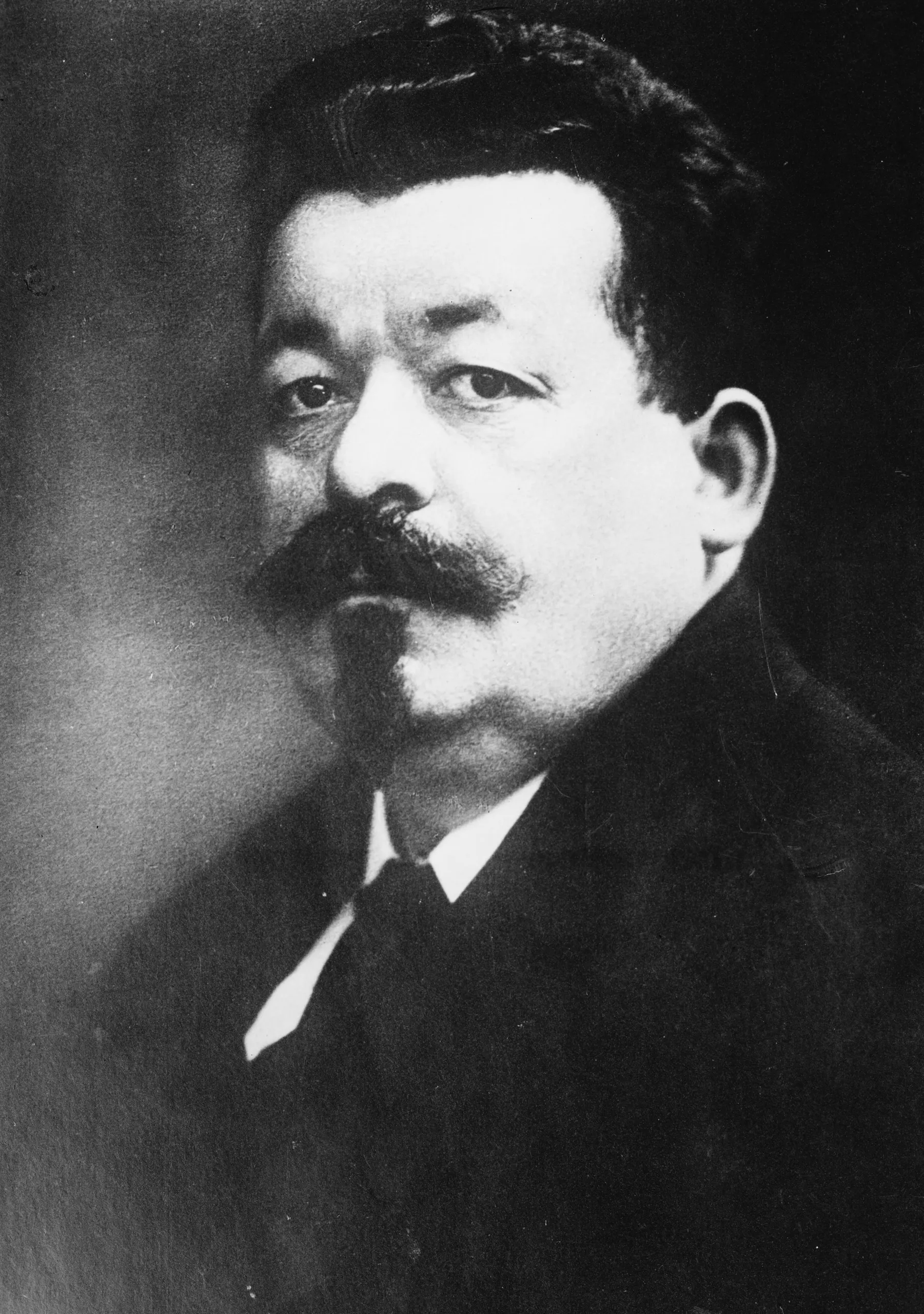
Friedrich Ebert
 Germany
Birthday
February 4, 1871
Birth Sign
Aquarius
Birthplace
Heidelberg, Baden-Württemberg
Age
Died at 54
About
Friedrich Ebert was a German politician of the Social Democratic Party (SPD) who served as the first president of Germany from 1919 until his death in 1925. Born in Heidelberg on February 4, 1871, Ebert rose through the ranks of the SPD, becoming its leader in 1913 after the death of August Bebel. A moderate social democrat, he supported the Burgfrieden policy during World War I, which aimed to suppress domestic political discord to focus on the war effort. This stance deeply divided the party, as Ebert advocated for war loans and sought to isolate anti-war factions.
Ebert played a pivotal role in the German Revolution of 1918–1919. When Germany became a republic at the end of World War I, he became its first chancellor. His primary goals were restoring order and suppressing leftist uprisings. To achieve this, he allied with conservative and nationalistic forces, including the military leadership under General Wilhelm Groener and the right-wing Freikorps. With their help, the Reich government crushed socialist, communist, and anarchist revolts, as well as the Kapp Putsch. This legacy has made Ebert a controversial figure in German history.
Ebert died on February 28, 1925, at the age of 54. His tenure as president was marked by political instability and economic hardship, but his efforts to stabilize the young republic were significant. Despite the controversies, Ebert remains a key figure in the founding of the Weimar Republic.
Early Life & Background
Born into a working-class family in Heidelberg, Friedrich Ebert entered the world on February 4, 1871. His father, Philipp Ebert, worked as a tailor, while his mother, Dorothea, came from a lineage of saddlers. The household was modest, and young Friedrich received only basic elementary education in his hometown. At the age of fourteen, he left school to begin an apprenticeship as a saddler, a trade that defined his early adulthood. He completed his training in 1887 and immediately began working as a journeyman, traveling across various German cities to find employment.
These years of travel proved formative for his political awakening. Moving from town to town as a skilled craftsman, Ebert encountered diverse labor conditions and connected with local socialist groups that were beginning to organize workers. He joined the Social Democratic Party (SPD) in 1891, quickly immersing himself in union activities and political discourse. By 1905, his dedication and organizational skills earned him a seat on the SPD's national executive committee. His rise continued steadily until 1913, when the death of long-time party chairman August Bebel placed Ebert at the helm of the largest socialist party in the world. This period established him as a central figure in the labor movement, setting the stage for his eventual entry into high-level national politics during the upheaval of the First World War.
Career Growth
Ebert's political career reached its zenith during the collapse of the German Empire in late 1918. As the revolution swept through the country, he was appointed Chancellor of Germany in November 1918, effectively becoming the head of the new provisional government. Just weeks later, on February 11, 1919, he was elected as the first President of the Weimar Republic, a position he held until his death six years later. His presidency was defined by the immense challenge of establishing a democratic government amidst economic collapse, hyperinflation, and violent uprisings from both the far left and the far right.
To maintain stability, Ebert formed alliances with conservative military leaders, most notably General Wilhelm Groener. Together they authorized the use of the Freikorps to suppress leftist revolts, including the Spartacist uprising, and later the Kapp Putsch by right-wing nationalists. While these actions preserved the republic from immediate collapse, they also led to the execution of prominent figures like Rosa Luxemburg and Karl Liebknecht, casting a long shadow over his legacy. Throughout the early 1920s, Ebert navigated the crisis of hyperinflation in 1923 and the occupation of the Ruhr, striving to keep the fragile democratic system intact despite growing polarization.
Career Timeline
Public Image & Style
Ebert is portrayed in historical narratives as a moderate, pragmatic leader who struggled to balance the competing demands of the radical left and the reactionary right. His signature style was one of humility and accessibility, reflecting his working-class origins. Media portrayals often highlight the tragedy of his death, framing him as a man worn down by the impossible task of holding a fractured nation together. While he lacks a celebrity-style fanbase, his admirers include political scientists, historians, and members of the SPD, who view him as a foundational figure of modern German democracy.
Fame & Fandom (iFAMOUS Rankings)
Friedrich Ebert's enduring fame rests not on a fan club or a catchy nickname, but on the quiet persistence of his legacy in the institutions he helped shape. The Friedrich-Ebert-Stiftung (FES), his namesake foundation, carries his memory into the 21st century, funding social justice and democracy projects from Ghana to South Africa. Yet, in the pantheon of global renown, Ebert's status is more scholarly than sensational. As of August 2026, iFANN's Global Fame Engine has evaluated him but he does not currently hold a placement in the published rankings, whether the Global Top 1,000 or any Top-100 scope list. This absence from the rankings reflects a fame built on political gravitas rather than mass appeal, his admirers are historians, political scientists, and SPD loyalists, not a self-identified fandom. There is no documented name for his fanbase, no Ebertians or similar, only the institutional reverence of the FES. His iconic moment, the 1919 election as Germany's first democratic president, is a cornerstone of historical education, not a viral sensation. In the realm of fame, Ebert's legacy is a measured, institutional one, far from the flash of contemporary celebrity.
Interesting Facts and Legends
The trajectory of Friedrich Ebert from a saddler's apprentice to the President of Germany stands as one of the most remarkable examples of social mobility in European history. During his time as a journeyman, he acquired fluency in French and English, languages he learned while traveling through different regions of Europe. His wife, Louise Ebert, was not merely a spouse but an active participant in the women's suffrage movement who played a crucial role in mobilizing female voters for the SPD. In the realm of alternate history, the Kaiserreich community has created fictional scenarios imagining Ebert surviving longer, speculating on how a different timeline might have altered the fate of the Weimar Republic. These stories, while purely speculative, highlight the enduring symbolic weight of his life and the pivotal moment of his actual death in 1925.
Notable Quotes
“I am the servant of the people.”
“The republic must be saved.”
Family & Personal Life
Friedrich Ebert married Louise Ruppel on September 2, 1894. Louise was a factory worker and a committed member of the SPD, often supporting her husband's political activities throughout his rise. The couple had six children together: Friedrich Jr., Walter, Hermann, Erich, Else, and Gertrud. Louise remained a steadfast partner throughout Ebert's tenure as President, managing the household and providing emotional support during periods of intense political pressure. There are no documented romantic relationships outside of this marriage; Ebert was known for his private nature and dedication to his family. Louise survived him by many years, outliving her husband by decades.
Notable Connections
Relationships & Dating History
Friedrich Ebert's romantic life was defined by a single, lifelong commitment. He married Louise Ruppel on September 2, 1894, a woman who shared his political convictions and worked alongside him as a factory worker and SPD member. Their partnership lasted thirty-one years until Ebert's death in 1925. Louise managed their household and supported his political ascent, raising six children: Friedrich Jr., Walter, Hermann, Erich, Else, and Gertrud. There are no documented romantic relationships outside of this marriage; Ebert was known for his private nature and dedication to his family. Louise survived him by many years, remaining a widow until her own passing. As of the time of his death, Ebert was widowed by Louise, who had been his constant companion throughout his journey from a saddler's apprentice to the President of Germany.
- MarriedLouise Ruppel1894 - 1925Married until his death; she survived him by many years.
Death & Aftermath
Died
February 28, 1925 (aged 54)
Death Place
Berlin
Cause of Death
Peritonitis following ruptured appendix
Friedrich Ebert spent his final days in Berlin, where he had been navigating the turbulent political climate of early 1925 marked by economic instability and sharp polarization between Germany's left and right wings. His last public appearance involved duties as head of state before severe abdominal pain forced him into a hospital bed, where leading physicians initially treated the condition as indigestion rather than the acute appendicitis that would soon claim his life. Despite undergoing surgery to remove his appendix, the procedure failed to prevent a rupture, leading to fatal peritonitis that took his life on February 28, 1925, at the age of 54. The medical establishment confirmed the diagnosis through standard clinical observation and post-mortem examination, leaving no room for disputed accounts or legal investigations regarding foul play or negligence.
Upon his passing, tributes poured in from peers, institutions, and officials, particularly from the Social Democratic Party who viewed him as the stabilizing force of the young republic. The event was commemorated through speeches and press coverage that highlighted his pivotal role in establishing parliamentary democracy, marking a somber moment for the nation as it lost a unifying leader capable of bridging deep political divides. Ebert was laid to rest in Heidelberg at the family grave within the Hauptfriedhof, with a major public funeral attended by high-ranking government officials, SPD representatives, and large crowds of citizens. The ceremony included military honors befitting the first President of Germany, reflecting his status as a foundational figure of the Weimar Republic.
This burial site later evolved into the Ebert Gedenkstätte to honor his legacy, while the bulk of his estate was channeled into the founding of the Friedrich-Ebert-Stiftung shortly after his death. This foundation continues to operate globally today, dedicated to promoting democracy and social justice through scholarships, political education, and international development support. Numerous memorials, including his birthplace in Heidelberg, have since been designated as landmarks, ensuring that the work of the man who rose from a saddler in Heidelberg to lead Germany remains a focal point for commemoration.
Net Worth (Estate Value)
$0
iFANN Editorial Team estimate
As a deceased historical figure, Friedrich Ebert does not possess a personal net worth in the contemporary sense. His financial legacy is entirely channeled through the Friedrich-Ebert-Stiftung (FES), a foundation established in his memory shortly after his death in 1925. The foundation has grown into a major international organization with a substantial endowment derived from donations, investments, and government funding. While specific real-time figures for the foundation's assets are not publicly disclosed in daily reports. The estate's financial trajectory has seen consistent growth over the decades, funded by the success of its programs in political education, research, and international development. The iFANN Editorial Team notes that the foundation's current operational capacity reflects the enduring value of Ebert's vision rather than personal wealth accumulation.
Awards & Accolades
View 4 records, honours and achievementsKnown For
President of Germany
1919 · First President of the Weimar Republic
Chancellor of Germany
1918 · Provisional Head of Government
Chairman of the SPD
1913 · Leader of the Social Democratic Party
Keywords
Sources
Quick Facts
- Profession
- politician
- Born
- February 4, 1871
- Birthplace
- Heidelberg
- Died
- February 28, 1925
- Death Place
- Berlin
- Gender
- Male
- Spouse
- Louise Ebert
- Birth Sign
- Aquarius
Personal Details
- Full Name
- Friedrich Ebert
- Spouse
- Louise Ruppel
- Children
- Friedrich Jr., Walter, Hermann, Erich, Else, Gertrud
- Education
- Elementary school in Heidelberg; Apprenticeship as a saddler
Frequently Asked Questions
Who was Friedrich Ebert?
How did Friedrich Ebert die?
What is the Friedrich-Ebert-Stiftung?
Was Friedrich Ebert married?
Why is Friedrich Ebert controversial?
Similar People
Join the community
fans discussing