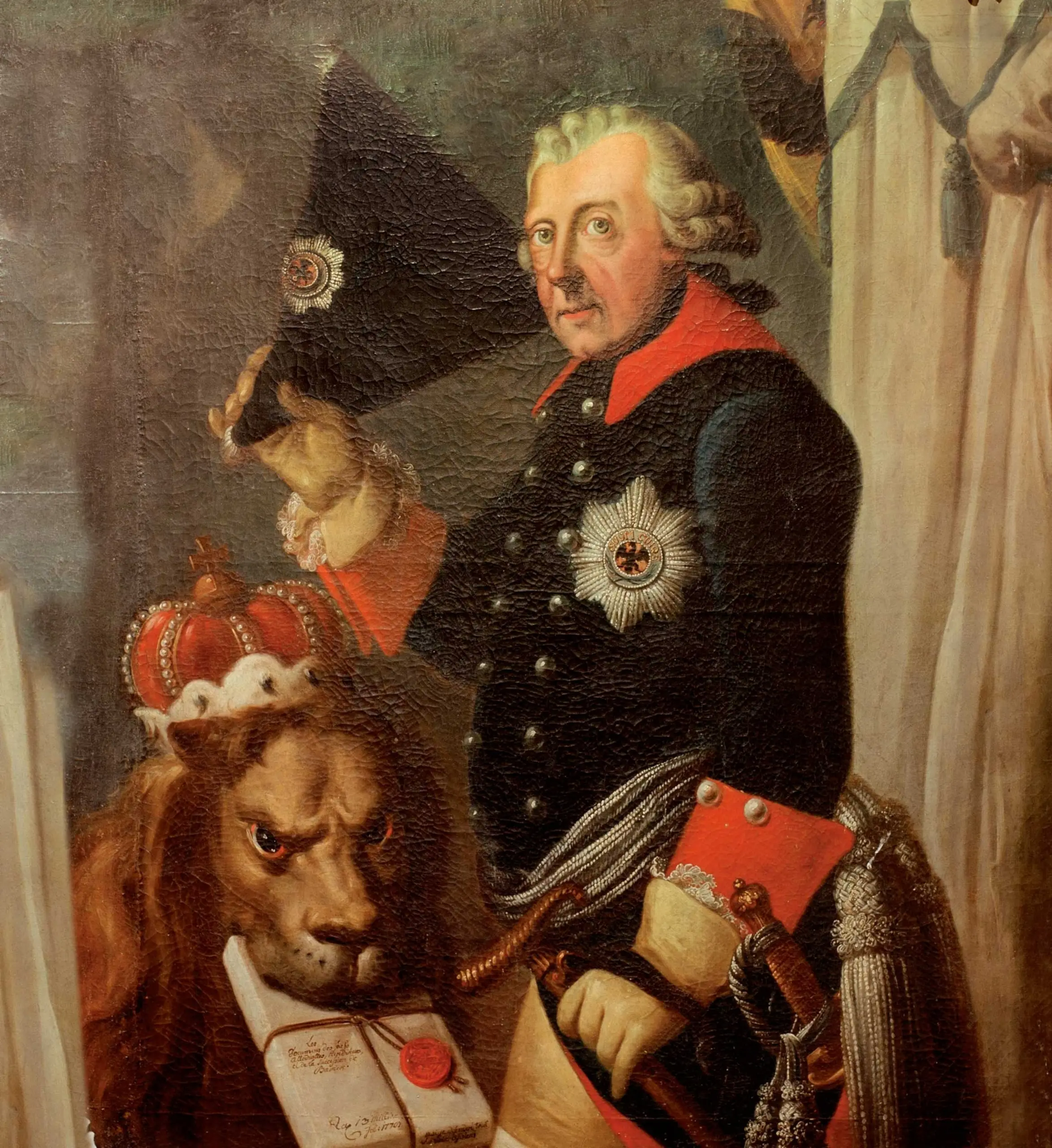
Frederick I of Prussia
 Germany
Also known as: Frederick III, Elector of Brandenburg, Friedrich I, Friedrich I von Preußen
Birthday
July 11, 1657
Birth Sign
Cancer
Birthplace
Königsberg
Age
Died at 55
About
Frederick I stands as the inaugural monarch to bear the title King in Prussia, a pivotal distinction that elevated the Hohenzollern dynasty from a mere electoral principality into a sovereign kingdom. Born Frederick III, Elector of Brandenburg, he spent his formative years navigating a court defined by rigorous religious piety and military discipline before cultivating a profound affinity for French culture and grand display. His reign is historically characterized by an unprecedented emphasis on lavish spending directed toward architecture, art, and ceremonial pomp designed to legitimize his newly acquired royal status. Unlike his son and grandson, who prioritized military conquest and administrative reform, Frederick focused on the visual and cultural elevation of his court, establishing institutions like the University of Halle and the Academy of Arts in Berlin. He famously declared, "I am King in Prussia, not King of Prussia," reflecting his diplomatic caution regarding Polish sovereignty. His legacy remains one of ambition and extravagance, setting the stage for the future rise of Germany while leaving behind a financially strained but politically elevated realm.
Early Life & Background
Frederick was born on July 11, 1657, in Königsberg as the third son of Frederick William, the Great Elector, and Louise Henriette of Orange-Nassau. His upbringing took place in a household where military service and religious devotion were paramount, yet young Frederick showed little interest in the austere martial traditions of his father. Instead, he developed a fascination with the splendor of European courts, particularly after traveling extensively through Europe as a young man. He studied in The Hague and later in Berlin, absorbing the influence of Louis XIV and the French courtly style that would define his own rule. Before ascending to the throne, Frederick served as a soldier and diplomat, fighting in the Franco-Dutch War under his father's command. These early experiences exposed him to the political complexities of the Holy Roman Empire and the delicate balance of power between France and Austria. Upon his father's death in 1688, he succeeded as Elector of Brandenburg, but his ambitions extended far beyond the electorate. For over a decade, he engaged in intense diplomatic negotiations with Emperor Leopold I, trading support for Habsburg war efforts against France in exchange for the right to assume the royal title. This period of patient diplomacy laid the groundwork for his eventual coronation in 1701.
Career Growth
Frederick III became Elector of Brandenburg in 1688 following the death of his father. His primary political goal was to elevate his status from an elector to a king, a move that required careful negotiation with the Holy Roman Empire. In 1701, he achieved this ambition by being crowned King in Prussia in Königsberg on January 18. He chose the title "King in Prussia" rather than "King of Prussia" to maintain a legal fiction that avoided conflict with the Polish crown, which held sovereignty over the Duchy of Prussia. Following his coronation, Frederick focused heavily on legitimizing his new status through cultural patronage. He established the University of Halle in 1702 to promote Enlightenment ideals within his territories and founded the Berlin Opera House, bringing Italian opera to Germany. In 1706, he commissioned a massive yellow damask bed, a symbol of his wealth and extravagance, for his palace in Berlin. He also secured the title of Prince of Neuchâtel from the Swiss cantons in 1707. His reign ended in 1713, leaving behind a kingdom that was financially depleted but politically recognized as a major European power.
Career Timeline
Public Image & Style
Frederick I is historically portrayed as a man of vanity and ambition, obsessed with royal pomp and ceremony. Contemporary portraits depict him with a dignified bearing, prominent nose, and strong jawline, often dressed in elaborate regalia that emphasized his royal stature. His public image was built on the foundation of his coronation in 1701, where he presented himself as a sovereign monarch equal to the kings of France and Spain. However, this image of grandeur was frequently criticized by his contemporaries for its costliness. The story of his yellow damask bed has become a central part of his mythos, representing the excesses of his reign and contrasting sharply with the frugality of his successors. While he is remembered for laying the foundation of the Prussian state, his reputation remains mixed, balancing the achievements of his diplomatic success against the financial strain he imposed on his realm. He famously justified his expenditures by stating, "A king must live like a king," viewing such displays as essential to the dignity of the monarchy.
Fame & Fandom
Frederick I of Prussia currently holds no placement in the iFANN Global Top 1,000 or any Top-100 scope list. While the iFANN Global Fame Engine has evaluated his historical footprint, he does not currently secure a ranked position among the world's most famous figures. This absence reflects the unique nature of his legacy; he is a foundational monarch whose fame exists within the halls of history rather than the fluctuating currents of modern celebrity culture. Unlike contemporary icons who dominate search trends and social media feeds, Frederick I remains a figure studied by academics and enthusiasts of European history rather than a subject of active fan engagement. There is no formal fandom name documented for his admirers, as organized groups, specific community identities, or fan-driven campaigns have never emerged around his reign. His story is one of royal ambition and extravagant spending, captured in the coronation of 1701 where he elevated Brandenburg to a kingdom, yet this grandeur did not translate into the viral interactions or ritualistic celebrations seen with modern stars. The only communities dedicated to him are academic circles analyzing the Hohenzollern dynasty, preserving artifacts like the opulent yellow damask bed commissioned in 1706, and students exploring the nuances of early 18th-century politics. No birthday billboards, subway ads, or charity drives exist to honor him, nor do fans engage in digital rituals that define today's celebrity worship. His influence is quiet and enduring, resting on the establishment of the Kingdom of Prussia rather than the roar of a crowd.
Interesting Facts and Legends
Frederick I was originally named Frederick III when he ruled as Elector of Brandenburg. He changed his name to Frederick I upon becoming King in Prussia to avoid confusion with other rulers holding the same regnal number in the Holy Roman Empire. A legendary artifact from his reign is the massive bed draped in yellow damask hangings with silver fringe, commissioned in 1706. This piece weighed hundreds of pounds and required a team of servants to move, serving as a physical symbol of his financial irresponsibility. Historical narratives often contrast his focus on royal pomp with the austerity of his son, Frederick William I, who had to clean up the financial mess created by his father. Many modern pop-culture references mistakenly attribute stories about military reforms or viral cultural moments to Frederick I, but these actually belong to his grandson, Frederick the Great, or his son. The true legend of Frederick I is simply that of the man who bought the crown and spent too much to maintain it, setting the stage for the militaristic rise of the Prussian state. Additionally, he founded the Berlin Opera House, introducing Italian opera to Germany, and his grandson Frederick II would later expand the kingdom significantly.
Notable Quotes
“I am King in Prussia, not King of Prussia.”
“A king must live like a king.”
Family & Personal Life
Frederick I had three marriages, all arranged for political alliances to secure territory and dynastic stability. His first wife was Elisabeth Henriette of Hesse-Kassel, whom he married in 1668 at the age of eleven. The marriage was unhappy and childless, ending with her death in 1683 after fifteen years. His second wife was Sophia Charlotte of Hanover, sister of the future King George I of Great Britain. Their relationship was reportedly more affectionate, and she gave birth to his successor, Frederick William I, in 1688, along with several other children including Sophia Dorothea. After Sophia Charlotte's death in 1705, Frederick married Sophia Louise of Mecklenburg-Schwerin in 1708. This union produced no children and ended with his death five years later. His son Frederick William I, known as the Soldier-King, succeeded him and immediately reversed his father's policies of extravagance. The couple's daughter Sophia Dorothea later became Queen in Prussia, continuing the lineage's influence across Europe.
Notable Connections
Relationships & Dating History
Frederick I had three marriages, all arranged for political alliances. His first wife was Elisabeth Henriette of Hesse-Kassel, whom he married in 1668 at the age of eleven. The marriage was unhappy and childless, ending with her death in 1683. His second wife was Sophia Charlotte of Hanover, sister of the future King George I of Great Britain. Their relationship was reportedly more affectionate, and she gave birth to his successor, Frederick William I, in 1688, along with several other children including Sophia Dorothea. After Sophia Charlotte's death in 1705, Frederick married Sophia Louise of Mecklenburg-Schwerin in 1708. This union produced no children and ended with his death five years later. At the time of his death, he was widowed for the second time and married to Sophia Louise. Sophia Charlotte was known for her intelligence and patronage of the arts, particularly music and theater, distinguishing her from his other spouses.
- MarriedElisabeth Henriette of Hesse-Kassel1668 - 1683Arranged marriage; childless; ended with her death
- MarriedSophia Charlotte of Hanover1684 - 1705Mother of his successor; died 1705
- MarriedSophia Louise of Mecklenburg-Schwerin1708 - 1713Last marriage; ended with his death
Death & Aftermath
Died
February 25, 1713 (aged 55)
Death Place
Berlin
Cause of Death
Natural causes
Frederick I died on February 25, 1713, in Berlin at the age of fifty-five. The historical record does not preserve a specific medical cause or autopsy report for his passing, though contemporary accounts attribute it to natural causes associated with his age and lifestyle. He was laid to rest in the Royal Crypt beneath the Berlin Cathedral, a final resting place that would later become a focal point for Hohenzollern commemorations. His death marked an immediate shift in the direction of the state; his successor, Frederick William I, known as the Soldier-King, viewed his father's legacy of extravagance as a burden rather than a triumph.
The new king moved swiftly to dismantle the opulent court culture Frederick had cultivated, enforcing strict fiscal austerity and redirecting resources toward military expansion. This reversal meant that many of the projects Frederick championed were abandoned or scaled back significantly. Public reaction to his death was muted by the practical needs of the state, yet his memory persisted through the artifacts he left behind. The massive yellow damask bed commissioned in 1706 survived centuries of plundering and wars, eventually finding its way into museum collections where it stands as a testament to his flamboyant personality. Modern scholarship continues to analyze his reign, particularly his diplomatic maneuvering to secure the royal title, while the 300th anniversary of his coronation in 2001 sparked renewed academic interest in the foundations of the Prussian state. In 2012, Germans commemorated the 300th anniversary of his coronation with exhibitions celebrating the founding of the Prussian state, ensuring his foundational role remains recognized.
Net Worth (Estate Value)
$0
iFANN Editorial Team estimate
As a historical monarch who died in 1713, Frederick I does not have a modern net worth or estate value that can be quantified in current currency terms. His financial legacy is defined by the immense debt he left to the Prussian treasury, which forced his son, Frederick William I, to spend decades paying off obligations incurred during his father's lavish reign. The revenue generated by the Hohenzollern family's legacy continues through museums and historical sites in Germany, particularly those housing artifacts like the yellow damask bed. While no specific dollar figure applies to his estate, the economic impact of his reign is measured in the long-term financial recovery required by his successors and the enduring cultural value of the institutions he founded. The restoration of his famous bed in 2017 serves as a testament to the ongoing preservation of his material legacy, though his personal fortune was entirely consumed by his pursuit of royal grandeur.
Awards & Accolades
View 4 records, honours and achievementsKnown For
Kingdom of Prussia
1701 · Founder
Keywords
Sources
Quick Facts
- Profession
- Monarch
- Born
- July 11, 1657
- Birthplace
- Königsberg
- Died
- February 25, 1713
- Death Place
- Berlin
- Gender
- Male
- Spouse
- Elisabeth Henriette of Hesse-Kassel, Sophia Charlotte of Hanover, Sophia Louise of Mecklenburg-Schwerin
- Birth Sign
- Cancer
Personal Details
- Full Name
- Frederick III, Elector of Brandenburg
- Spouse
- Elisabeth Henriette of Hesse-Kassel, Sophia Charlotte of Hanover, Sophia Louise of Mecklenburg-Schwerin
- Children
- Frederick William I, Sophia Dorothea
- Education
- University of Leiden (attended), educated in The Hague and Berlin
Frequently Asked Questions
Who was Frederick I of Prussia?
When did Frederick I die?
Why is Frederick I famous?
Did Frederick I have children?
What is the Yellow Bed of Frederick I?
Similar People
Join the community
fans discussing