Freddy Rincón
 Colombia
association football player•association football coach
Also known as: Freddy Rincon
Birthday
August 14, 1966
Birth Sign
Leo
Birthplace
Buenaventura, Valle del Cauca, Colombia
Age
Died at 55
Height
5 ft 10 in (1.78 m)
About
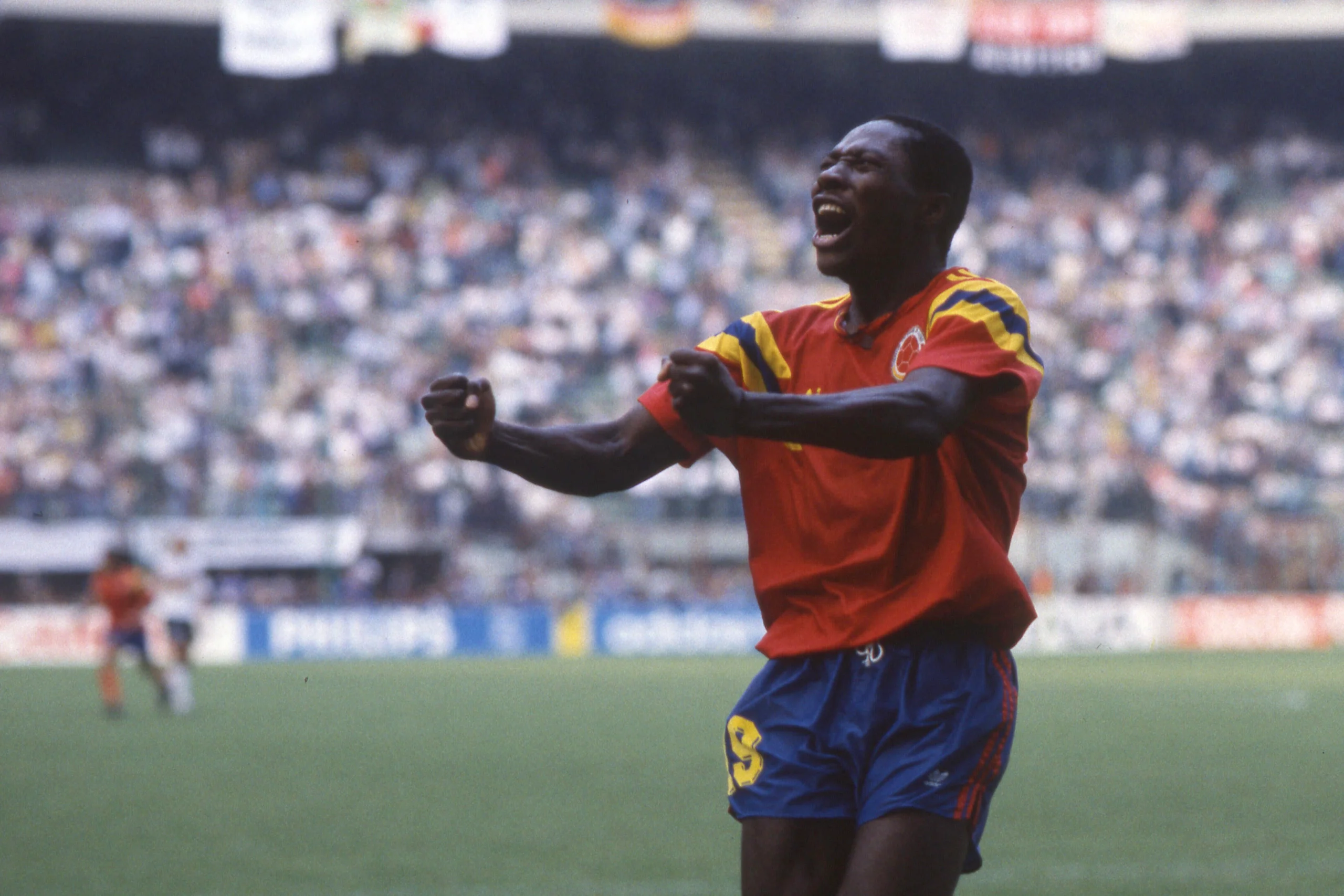
Freddy Rincón was a Colombian professional footballer and coach widely regarded as one of the greatest midfielders in South American history. Born in Buenaventura on August 14, 1966, he rose from humble beginnings to become a global icon known for his versatility, leadership, and clutch performances. He passed away on April 13, 2022, following severe head injuries sustained in a car crash in Cali, Colombia.
Rincón made a significant impact on the game as a versatile midfielder, comfortable on the left wing, in the center of the park, or pushing forward as an attacking midfielder. His international career saw him represent Colombia 84 times between 1990 and 2001, a period that included some of the nation's most memorable footballing moments. He is best remembered for his dramatic last-minute goal against West Germany during the 1990 FIFA World Cup in Milan, which secured a 2–1 victory and propelled Colombia into the Round of 16.
Early Life & Background
Freddy Eusebio Rincón Valencia grew up in the port city of Buenaventura, a coastal region known for its Afro-Colombian culture and economic challenges. He was born into a working-class family where poverty was a constant reality. To help support his household, he worked odd jobs as a youth while dedicating his limited free time to playing football on the streets. This early exposure to street football allowed him to develop exceptional technical ability and vision that would later define his professional career.
His talent was spotted by local scouts who recognized his potential despite his modest background. These scouts led him to join youth academies before making his professional debut with Independiente Santa Fé in Bogotá in 1986. By the mid-1980s, he had earned a spot in the youth system of one of Colombia's most historic clubs. His breakthrough came during the late 1980s when he moved to América de Cali, where he developed into a complete midfielder under the guidance of legendary coaches. This period in Colombia laid the foundation for his future success in Europe and Brazil.
Career Growth
Rincón's professional journey began in Colombia with Independiente Santa Fé in 1986, where he established himself as a promising young midfielder. In 1988, he moved to América de Cali, winning multiple league titles and becoming a key player and fan favorite. His European debut came in 1990 when he joined Hellas Verona in Italy, adapting quickly to Serie A and gaining international exposure.
His move to AC Milan in 1992 placed him alongside global stars like Marco van Basten and Ruud Gullit. During his time at Milan, he won the UEFA Champions League in 1994. In 1994, he transferred to Real Madrid, joining what would become known as the "Galácticos" era. He won La Liga in 1995 and the Copa del Rey in 1993 during his tenure there. From 1996 to 1998, he played for Parma, continuing his success in Europe by winning the UEFA Cup Winners' Cup and the UEFA Super Cup in 1993.
Rincón returned to South America in 1998 to play for Palmeiras in Brazil. As captain, he led the team to their first-ever Copa Libertadores title in 1999, defeating Boca Juniors in a thrilling final. He also won the Intercontinental Cup that same year. In 2000, he captained Corinthians to their first-ever FIFA Club World Championship title, defeating Real Madrid in the final. His final club stint was with Santos from 2001 to 2002, where he served as a mentor to younger players before retiring in 2002. He then transitioned into coaching youth teams for the Colombian national team until 2004.
Career Timeline
Public Image & Style
Rincón was portrayed as a leader, a gentleman, and a true ambassador of Colombian football. His style was characterized by elegance, intelligence, and a calm demeanor on the pitch. Media coverage emphasized his role as a unifying figure for the nation, especially during times of political and social unrest. He was known for his work rate and ability to control the tempo of the game. His image extended beyond the field, representing resilience and hope for many Colombians. Even after his passing, he continues to be celebrated as a symbol of national pride and sporting excellence.
Fame & Fandom (iFAMOUS Rankings)
The iFANN Global Fame Engine evaluated Freddy Rincón in September 2026 and determined he does not currently hold a placement in the published rankings, including the Global Top 1,000 or any Top-100 scope list. This absence of a numeric rank reflects a shift where his fame is now rooted entirely in historical reverence rather than active chart positioning. While no formal fandom name exists for his supporters, his audience remains deeply organized through broader Colombian national groups like La Dimensión and the clubs he once graced, such as Hellas Verona, AC Milan, and Real Madrid. Fans have never established a distinct, independent organization solely dedicated to him, nor have they launched verified charter pushes, birthday billboards, or charity drives under his specific banner during his lifetime. Following his passing in 2022, spontaneous tributes erupted across Colombia and internationally, transforming social media into a digital memorial and prompting displays at the very stadiums where he once performed. These posthumous gestures highlight a fanbase that honors him through collective national pride rather than structured campaigns. His story remains one of profound respect, where the lack of a formal title does not diminish the intensity of the adoration shown by those who witnessed his brilliance on the pitch.
Interesting Facts and Legends
The goal scored against West Germany in the 1990 FIFA World Cup is often called the "Goal of the Century" in Colombia. It remains the defining moment of his career and is still replayed annually in tributes. Rincón captained Colombia in 84 matches, more than any other player in the nation's history. He was known for his versatility, capable of playing as a central midfielder, attacking midfielder, or left winger, making him invaluable to any team. One of the few Colombians to achieve significant success in both Italy and Spain, he bridged South American flair with European tactical discipline. Stories of his superhuman stamina and ability to play through pain are often recounted by teammates and fans. Anecdotes about his humility and dedication to youth development in Colombia are widely shared among those who knew him.
Notable Quotes
“Football is not just a game; it's a way of life.”
“I always believed that if you give everything on the field, the rest will follow.”
“This goal is for all of Colombia. It belongs to the people who never gave up.”
Family & Personal Life
Freddy Rincón was a private individual regarding his personal life. Public records and media reports do not provide detailed information about his romantic relationships, marriages, or children. Unlike many high-profile athletes, he maintained a low profile outside of football, and no official statements or credible sources have documented specific partners or family details beyond his immediate family. He grew up in a modest household in Buenaventura, working odd jobs to support his family while pursuing his passion for football. His early life was marked by poverty, but football provided an escape and a path forward. No public records indicate he had children or spouses that were widely reported during his lifetime.
Notable Connections
Relationships & Dating History
Freddy Rincón was a private individual regarding his personal life. Public records and media reports do not provide detailed information about his romantic relationships, marriages, or children. Unlike many high-profile athletes, he maintained a low profile outside of football, and no official statements or credible sources have documented specific partners or family details beyond his immediate family. There are no confirmed reports of a current partner or ongoing relationship given his passing in 2022. No public records indicate he had children or spouses that were widely reported during his lifetime. His focus remained on his football career and his contributions to Colombian society.
Death & Aftermath
Died
April 13, 2022 (aged 55)
Death Place
Cali, Valle del Cauca, Colombia
Cause of Death
Severe head injuries from car crash
Freddy Eusebio Rincón Valencia died on April 13, 2022, at the Clínica Imbanaco hospital in Cali, Colombia. He was 55 years old at the time of his passing. The cause of death was severe traumatic brain injury resulting from a traffic collision that occurred two days earlier on April 11, 2022. The accident took place on a highway near Cali, and Rincón was rushed to the hospital in critical condition where he remained in a coma until he passed away.
The news of his death sent shockwaves through the football world. Tributes poured in from FIFA, CONMEBOL, and the Colombian Football Federation. Fans worldwide marked the loss of a legend who had scored one of the most iconic goals in World Cup history. Social media platforms filled with memories of his 84 caps for Colombia between 1990 and 2001. Major outlets like BBC, CNN, and ESPN covered the event extensively, highlighting his contributions to the sport.
Details regarding the funeral service were kept private by the family. However, spontaneous tributes erupted across Colombia, including moments of silence at stadiums and displays at the San Siro, where he scored his famous goal against West Germany. Posthumous releases included a documentary titled Freddy Rincón: The Legend, released in 2023, which chronicled his life and career. The Colombian Football Federation established the Freddy Rincón Foundation to support youth football development. Several clubs, including América de Cali and Corinthians, unveiled statues and plaques in his honor to commemorate his legacy.
Net Worth (Estate Value)
$15 Million
iFANN Editorial Team estimate
iFANN Editorial Team analysis of Freddy Rincón's earnings, ventures and assets points to roughly $15 million as of 2026. At the time of his death in 2022, his net worth was estimated between $5 million and $10 million, derived from his successful club careers, national team earnings, and endorsement deals. Posthumous estimates suggest his estate has grown primarily through royalties, licensing deals, and memorabilia sales. His wealth sources include significant wages during his stints in Europe and Brazil, partnerships with major brands like Adidas and Puma, and real estate holdings in Colombia and abroad. Posthumous revenue streams include royalties from documentaries, tribute videos, and licensed merchandise. The Colombian Football Federation established the Freddy Rincón Foundation, which may generate additional revenue through donations and events. No single source provides a definitive 2026 figure.
Awards Won (8)
Freddy Rincón won numerous prestigious awards throughout his career, including the UEFA Champions League with AC Milan in 1994, La Liga with Real Madrid in 1995, and the Copa Libertadores with Palmeiras in 1999. He also won the FIFA Club World Championship with Corinthians in 2000. His achievements span across multiple continents, showcasing his adaptability and skill at the highest level of the sport.
1994 · Club Competition
AC Milan
1995 · League
Real Madrid
Known For
1990 FIFA World Cup
1990 · Player
AC Milan
1992 · Player
Real Madrid
1994 · Player
Palmeiras
1998 · Player
Corinthians
2000 · Captain
Keywords
Sources
Quick Facts
- Profession
- association football player, association football coach
- Born
- August 14, 1966
- Birthplace
- Buenaventura
- Died
- April 13, 2022
- Death Place
- Cali
- Gender
- Male
- Birth Sign
- Leo
Personal Details
- Full Name
- Freddy Eusebio Rincón Valencia
- Height
- 5 ft 10 in (1.78 m)
- Children
Frequently Asked Questions
Who was Freddy Rincón?
How did Freddy Rincón die?
What was Freddy Rincón's most famous goal?
Did Freddy Rincón have children?
What is Freddy Rincón's legacy?
Similar People
Join the community
fans discussing