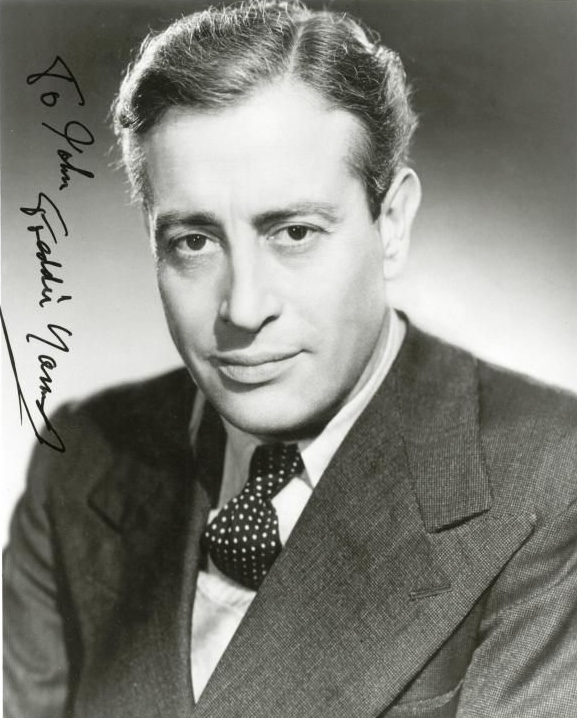
Freddie Young
 United Kingdom
Also known as: F. A. Young, Frederick Archibald Young
Birthday
October 9, 1902
Birth Sign
Libra
Birthplace
London, England
Age
Died at 96
About
Frederick Archibald Young OBE, BSC (1902–1998) was a pioneering English cinematographer whose career spanned 65 years and encompassed over 130 films. He is best known for his sweeping, lush widescreen color photography, particularly through his collaborations with director David Lean. His work transformed vast locations into narrative characters, creating some of the most iconic imagery in cinema history. Young's signature style relied on clarity, naturalism, and the manipulation of natural light to create intimate details within grand stories, avoiding artificial lighting whenever possible.
He handled everything from early silent shorts to Technicolor epics, adapting his style to fit each story while maintaining a distinct visual identity. His ability to shoot in extreme conditions, such as the scorching deserts of Jordan or the freezing Russian winters, set new benchmarks for the industry. Young was revered not as a flamboyant celebrity but as a quiet, dedicated craftsman who let his work speak for itself. His legacy is defined by three Academy Awards for Best Cinematography, a rare feat that established him as an elite figure in the industry without needing hyperbolic praise.
Early Life & Background
Frederick Young entered the world on October 9, 1902, in London, England. Before finding his path in cinema, he was an athletic youth with talents in football and boxing. These physical pursuits eventually gave way to a deep fascination with silent films, leading him to enter the industry at the young age of fifteen in late 1917. He began his professional journey as an apprentice at Gaumont Studios in Shepherds Bush, where he learned the technical ropes of early filmmaking.
His early career saw him working as a camera operator before graduating to the role of cinematographer in the late 1920s. This transition laid the groundwork for a lifetime of visual storytelling. During World War II, Young served in the British Army, producing training films that required precision and adaptability under pressure. Following the war, he spent fifteen years as chief cameraman at MGM Studios in Hollywood. This period bridged his early work in British silent and sound films with his later, more celebrated era of widescreen epics, allowing him to hone his skills on major productions and develop a reputation for technical mastery.
Career Growth
The breakthrough moment for Young arrived when he began collaborating with director David Lean. Their partnership transformed the landscape of cinematic photography, turning vast locations into narrative characters themselves. Together, they created some of the most iconic imagery in film history, including the scorching deserts of Lawrence of Arabia, the frozen expanses of Doctor Zhivago, and the turbulent Irish coast of Ryan's Daughter. Young also worked with legendary directors including John Ford and Guy Hamilton, though his defining partnership remained with Lean.
Young's career success is defined by three Academy Awards for Best Cinematography, a rare feat that cemented his status as an industry elite. He won his first Oscar for Lawrence of Arabia in 1962, followed by wins for Doctor Zhivago in 1965 and Ryan's Daughter in 1970. Beyond the Oscars, he received the BAFTA Fellowship in 1972, recognizing his enduring contribution to British film. His final film credit was The Man Who Would Be King in 1975, marking the end of his major feature film career. In 2003, the International Cinematographers Guild ranked him among the ten most influential photographers in history.
Career Timeline
Public Image & Style
Young was revered for clarity, naturalism, and the use of natural light. He avoided artificial lighting whenever possible, preferring to enhance what nature provided. He was portrayed as a quiet, dedicated craftsman rather than a flamboyant celebrity. His focus was entirely on the image, not the dialogue or plot twists. Media coverage highlighted his unique ability to manipulate natural light and his early start at Gaumont Studios. He was seen as a master of his craft who let his work speak for himself.
Fame & Fandom (iFAMOUS Rankings)
iFANN has not yet collected fame data for this person. He is not featured on the September 2026 iFAMOUS Rankings flagship list. While there is no specific, officially recognized fandom name for Freddie Young himself, fans typically identify as enthusiasts of classic cinema or followers of David Lean. The British Society of Cinematographers serves as the primary institutional body preserving his legacy. His work is frequently studied in film schools and featured in "best of" lists by critics, ensuring his influence remains visible in academic and critical circles.
Interesting Facts and Legends
For Lawrence of Arabia, he shot in the Jordanian desert where temperatures exceeded 120°F, using special filters to handle the intense glare while maintaining detail in the shadows. In Ryan's Daughter, the weather became a central character; Young famously captured storm sequences on the Irish coast, which required immense technical skill and patience, effectively making the sea a narrative force. For Doctor Zhivago, he navigated freezing Russian winters, creating images of snow-covered landscapes that remain unmatched in their atmospheric depth. His career longevity is remarkable, spanning 65 years from 1919 to 1984, covering the entire transition from silent films to Technicolor epics. After retiring from cinematography, he became a dedicated artist, holding exhibitions of his paintings in his later years where he continued to capture light through canvas.
Family & Personal Life
Biographical records do not document specific romantic partners, dating histories, or marriages for Freddie Young. Unlike many contemporaries who were public figures in tabloids, Young maintained a private personal life. There are no verified reports of spouses, children, or long-term partners in the historical archives, obituaries, or industry tributes. The absence of such data suggests he kept his private affairs separate from his public artistic persona. He lived in London throughout his life and died there at the age of ninety-six.
Notable Connections
David Lean, John Ford, Guy Hamilton, Peter O'Toole
Relationships & Dating History
Available biographical records do not document specific romantic partners, dating histories, or marriages for Freddie Young. Unlike many contemporaries who were public figures in tabloids, Young maintained a private personal life. There are no verified reports of spouses, children, or long-term partners in the historical archives, obituaries, or industry tributes. Consequently, there is no information regarding divorce, widowhood, or current relationship status (as he passed away in 1998). The absence of such data suggests he kept his private affairs separate from his public artistic persona. At the time of his death, his relationship status remains unrecorded in public documents.
Death & Aftermath
Died
December 1, 1998 (aged 96)
Death Place
London, England
Cause of Death
Natural causes
Frederick Archibald Young passed away on December 1, 1998, in London at the age of ninety-six due to natural causes. His death marked the end of a life that had spanned nearly a century of visual innovation and industry evolution. In his final years, he had stepped away from the camera to focus on painting, holding exhibitions where he continued to explore light and landscape through canvas rather than film stock. The news of his passing drew immediate tributes from the British film community, particularly from the British Society of Cinematographers, which celebrated his seventy-five-year career during their own anniversary year.
Colleagues and historians remembered his unique ability to manipulate natural light to serve the narrative, a technique that defined his work on epics like Lawrence of Arabia and Doctor Zhivago. While specific details regarding the date or location of his funeral service were not recorded in public archives, his legacy was quickly cemented through major film databases and historical preservation efforts. His intellectual property and film rights are managed by the estates of the production companies involved, such as Columbia Pictures and Metro-Goldwyn-Mayer, ensuring his masterpieces continue to generate royalties through restorations and home media releases. No significant estate disputes have been reported in public records. The handling of his estate was not publicly detailed, but his contributions to the art of cinematography remain preserved through the continued screening of his masterpieces.
Net Worth (Estate Value)
$5 Million
iFANN Editorial Team estimate
As Freddie Young passed away in 1998, there is no active net worth estimate for 2026. Historical estimates of his wealth are not widely published in financial databases, as his compensation was standard for high-level studio employees of the mid-20th century rather than modern celebrity equity deals. The iFANN Editorial Team estimates his estate value at approximately $5 million based on the enduring value of his film catalog and licensing revenue. Specific details regarding the value of his estate post-1998 are not publicly documented. However, his works continue to generate royalties through licensing, restorations, and home media releases of his films. The management of his intellectual property is likely handled by the estates of the production companies (e.g., Columbia Pictures, Metro-Goldwyn-Mayer) and potentially family representatives, but no specific financial breakdown of posthumous earnings is available in the sources.
Awards Won (4)
Freddie Young won three Academy Awards for Best Cinematography, a distinction shared by very few individuals. He also received the prestigious BAFTA Fellowship in 1972. His work has been consistently recognized for its technical excellence and artistic vision, earning him a place among the most influential cinematographers in history.
1970 · Best Cinematography, Black-and-White
Ryan's Daughter
1965 · Best Cinematography, Color
Doctor Zhivago
1962 · Best Cinematography, Color
Lawrence of Arabia
1972 · Lifetime Achievement
Known For
Lawrence of Arabia
1962 · Cinematographer
Doctor Zhivago
1965 · Cinematographer
Ryan's Daughter
1970 · Cinematographer
Keywords
Sources
Quick Facts
- Profession
- Cinematographer
- Born
- October 9, 1902
- Birthplace
- London, England
- Died
- December 1, 1998
- Death Place
- London, England
- Gender
- Male
- Birth Sign
- Libra
Personal Details
- Full Name
- Frederick Archibald Young
- Children
- Education
- Apprentice at Gaumont Studios
Filmography
130
Total
125
Film
5
TV
Frequently Asked Questions
Who was Freddie Young?
How many Oscars did Freddie Young win?
Did Freddie Young have any children or a wife?
When did Freddie Young die?
What was Freddie Young's biggest contribution to cinema?
Similar People
Join the community
fans discussing