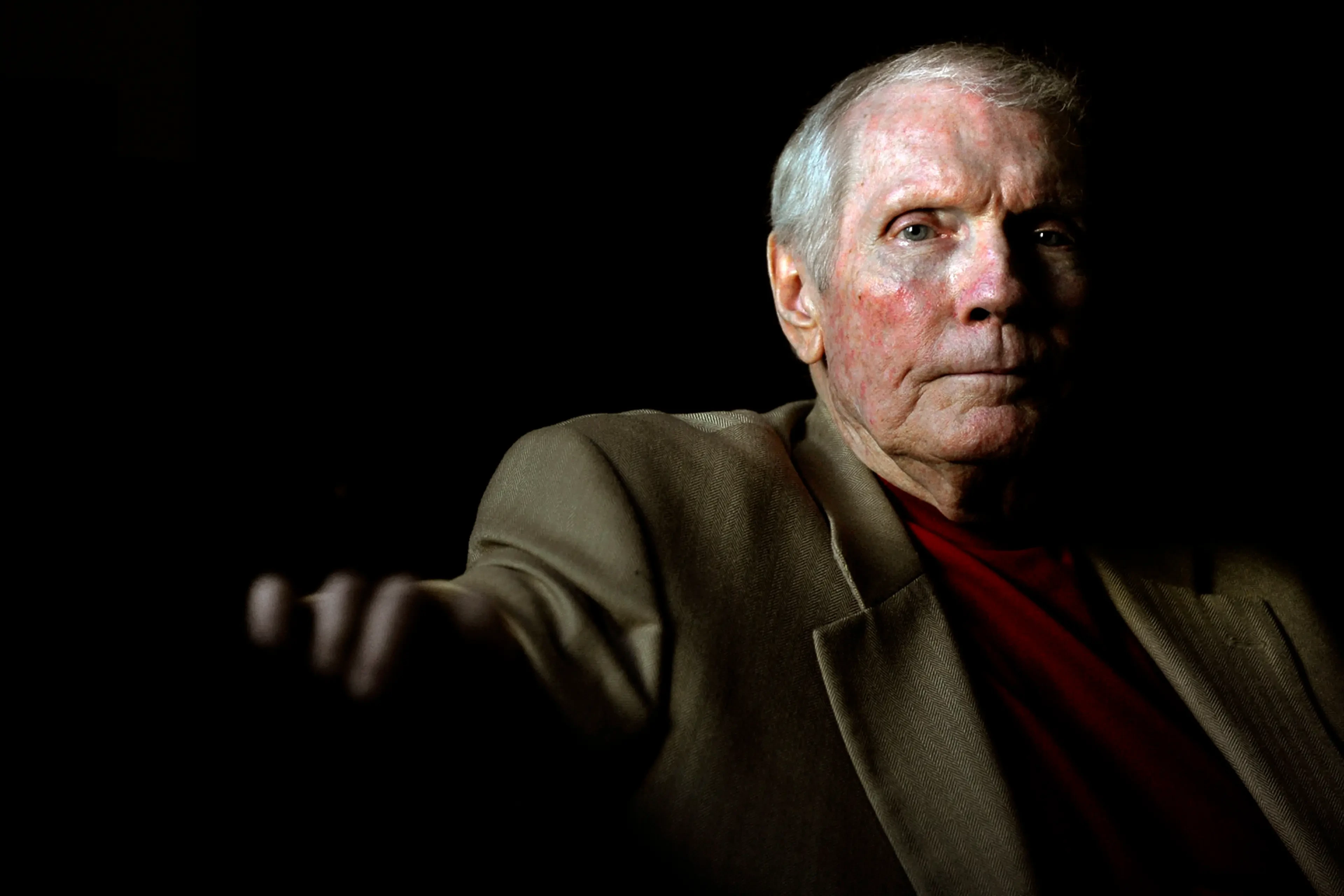
Fred Phelps
 United States
Also known as: Fred Waldron Phelps Sr., Pastor Fred Phelps
Birthday
November 13, 1929
Birth Sign
Scorpio
Birthplace
Meridian, Mississippi, USA
Age
Died at 84
About
Fred Waldron Phelps Sr. was an American minister and disbarred lawyer who led the Westboro Baptist Church, a Topeka, Kansas congregation known for its extreme anti-gay protests. He gained national attention for picketing funerals of gay people, AIDS victims, military veterans, and disaster victims, believing these deaths were God's punishment for American tolerance of homosexuality. The Southern Poverty Law Center called his church "arguably the most obnoxious and rabid hate group in America."
Phelps' activism began in the civil rights era, when he worked as a lawyer for racial discrimination cases, but his legacy is defined by the hateful picketing and legal battles that followed. His protests led to the landmark Supreme Court case Snyder v. Phelps (2011), which protected his speech under the First Amendment. He died in 2014, and the church continues to operate under his daughter's leadership, still classified as a hate group.
Early Life & Background
Born in Meridian, Mississippi, to a poor railroad worker's family, Phelps grew up in a devout Baptist household. He experienced a religious conversion as a teenager and began preaching early. He was ordained as a Baptist minister in 1947 at First Baptist Church in Vernal, Utah, and attended Bob Jones University in Greenville, South Carolina, where he studied theology. In 1951, he was expelled for leading a protest against racial segregation at the school, an act that foreshadowed his later activism but also marked the start of a contentious relationship with institutions.
After his expulsion, Phelps earned a law degree from Washburn University in Topeka, Kansas, and was admitted to the state bar. He moved to Topeka in the early 1950s, where he began his legal career and became involved in civil rights litigation, representing African American clients in employment and housing discrimination cases. In 1955, he founded the Westboro Baptist Church, initially a small independent congregation. His early ministry focused on traditional Baptist teachings, but the church's direction shifted dramatically in the 1980s toward anti-gay activism, a change that would define his public life.
Career Growth
Phelps' breakthrough into national notoriety came in the 1990s with the church's protests at gay pride events and funerals. The 1998 funeral of Matthew Shepard, a gay college student murdered in Wyoming, brought widespread media attention. The church also picketed funerals of 9/11 victims and military veterans, arguing these deaths were divine punishment. In 2006, the church protested at the funeral of Marine Lance Corporal Matthew Snyder, leading to a lawsuit that reached the U.S. Supreme Court. In Snyder v. Phelps (2011), the Court ruled 8–1 that the protests were protected speech under the First Amendment, a decision that solidified the church's legal standing.
Throughout his career, Phelps maintained a law practice until his disbarment in 1979 for misconduct, including filing frivolous lawsuits and making false accusations against judges. He ran unsuccessfully for governor of Kansas in 1964, for the U.S. Senate in 1970, and for state legislature. In 2013, he was excommunicated from the church he founded after reportedly advocating for a kinder approach. He died the following year, but the church continues to protest under his daughter Shirley Phelps-Roper.
Career Timeline
Public Image & Style
Phelps was widely characterized as a hate group leader and homophobic activist. Media portrayals consistently described him as a virulently antigay preacher and an angry, bigoted man who thrived on conflict. Documentarian Louis Theroux, who made two films about Phelps, captured his confrontational style and the church's insular family dynamics. The church's membership consisted almost entirely of Phelps' extended family, and its protests were often met with counter-protests and public outrage. Despite the universal condemnation, Phelps maintained a following among his family and a small group of supporters, and his church's message continued to attract attention through its provocative tactics.
Fame & Fandom
Fred Phelps stands as the 39th most famous person in Pastors, a position he has held steady since the previous cycle according to the iFANN Global Fame Rankings. This specific placement reflects his enduring notoriety within religious history, driven by decades of media coverage and public discourse surrounding the Westboro Baptist Church. While his fame is rooted in infamy rather than adoration, the sheer scale of global attention on his legal battles and protests ensures his name remains a frequent subject of historical analysis.
Unlike pop culture icons who inspire organized fanbases, Fred Phelps had no formal fandom with a recognized name or collective rituals. There are no fan clubs, birthday campaigns, or charitable drives dedicated to his memory; the only group closely associated with him was the small congregation of adherents within the Westboro Baptist Church itself. These members were defined by their adherence to a strict theological doctrine rather than the celebratory behaviors typical of fandoms. His legacy is characterized by antagonism, where public interaction usually manifested as counter-protests, police interventions, and widespread revulsion rather than support.
The cultural mythology surrounding Phelps is built on documented moments of extreme controversy rather than heroic folklore. The most widely retold story involves the church's practice of picketing military funerals, particularly during the wars in Iraq and Afghanistan, holding signs with messages like "God Hates Fags." A verified and legally significant chapter occurred during the funeral of Marine Lance Corporal Matthew Snyder in 2007. Phelps and his daughter Shirley picketed the service, leading to the Supreme Court case *Snyder v. Phelps* (2011), which ruled in favor of the church's free speech rights despite the emotional devastation caused to the family. This event remains a central pillar in discussions about the limits of free speech versus privacy. Additionally, Louis Theroux's documentary "Weird Weekends: Westboro Baptist Church" served as a primary vehicle for introducing the group's internal logic to the world, cementing Phelps's image as an unrepentant extremist who viewed himself as a prophet warning America of divine judgment.
Interesting Facts and Legends
Phelps' church operated under the website GodHatesFags.com, which served as the group's principal online presence for years. He was instantly recognizable by his distinctive deep voice, often amplified by a bullhorn during protests. Despite his public persona as a hate figure, he was a licensed attorney for over two decades before eventually facing disbarment. Phelps was also a prolific letter writer, sending thousands of correspondence pieces to public figures and newspapers throughout his life. In a surprising political turn, he once ran for governor of Kansas as a Democrat, though he lost the election badly. His death occurred on March 19, 2014, coinciding with the birthday of Fred Rogers, whose funeral he had famously picketed, a coincidence that drew widespread commentary.
Beyond these facts, the legend of Fred Phelps includes the story of his own death and the complete lack of a traditional funeral service. Upon passing at age 84, the community response was largely one of relief, and reports indicated there was no funeral service for him, reflecting the deep animosity he generated over his lifetime. This absence of mourning marked the end of an era for the Westboro Baptist Church, though the organization continued under his daughter's leadership. The stories told to newcomers are not tales of heroism but cautionary accounts of a man who used the law and the constitution to spread hatred, leaving behind a legacy of division rather than unity.
Notable Quotes
“God hates fags.”
“Thank God for dead soldiers.”
“America is doomed.”
“The pope is the Godfather of pedophiles.”
Family & Personal Life
Phelps married Marguerite Marie Simms in 1952, and the couple had 13 children. Many of their children became active members of Westboro Baptist Church, including daughter Shirley Phelps-Roper, who became the church's spokesperson after his death. At least four of his children, including son Nathan Phelps, left the church and became vocal critics. Nathan has described his father as abusive and using religion as a weapon. Phelps' granddaughter Megan Phelps-Roper also left the church and became an activist against extremism. Marguerite died in 2010, and Phelps was widowed at the time of his own death in 2014.
Notable Connections
Fred Phelps was associated with his wife Marguerite Marie Simms, his daughter Shirley Phelps-Roper who led the church after his death, and his estranged son Nathan Phelps who became a critic. Documentarian Louis Theroux profiled Phelps in two films, and his granddaughter Megan Phelps-Roper left the church and became an activist against extremism.
Relationships & Dating History
Phelps married Marguerite Marie Simms in 1952, and the couple remained together until her death in 2010. Their marriage produced 13 children, many of whom became involved in the Westboro Baptist Church. Phelps was widowed at the time of his own death in 2014. No other public relationships have been documented.
- MarriedMarguerite Marie Simms1952 - 2010Married for 58 years until her death; they had 13 children together.
Death & Aftermath
Died
March 19, 2014 (aged 84)
Death Place
Topeka, Kansas, USA
Cause of Death
Natural causes
Fred Phelps, the founder and pastor of the Westboro Baptist Church in Topeka, Kansas, died on March 19, 2014, at approximately 11:15 p.m. local time. He was eighty-four years old, having been born on November 13, 1929. The cause of death was officially reported as natural causes by his family and confirmed by hospital statements. He died peacefully in his sleep at a hospital in Topeka, and there were no reports of foul play, violence, or suspicious circumstances surrounding his passing.
Public reaction to his death was characterized largely by relief and criticism rather than mourning. Major news outlets described him as a much-loathed figure whose demise marked the end of an era of intense controversy. Former associates like Louis Theroux publicly criticized his legacy as an angry man who thrived on conflict, while the Westboro Baptist Church continued its picketing activities without interruption following the event. A private funeral service was held consistent with the church's policy of isolationism, though details remained obscure due to their strict adherence to keeping affairs internal. He was interred in a private capacity within the Phelps family plot in Topeka, avoiding the traditional religious ceremonies that might have drawn crowds.
While Phelps had a long history of arrests for assault, battery, and trespassing prior to his death, none of these incidents led to post-mortem legal proceedings regarding his demise. His estate was handled entirely by the Westboro Baptist Church, which operates as a non-profit entity controlled by the Phelps family.
Net Worth (Estate Value)
$1 Million
iFANN Editorial Team estimate
Fred Phelps' estate was not publicly valued at the time of his death in 2014, and no comprehensive accounting has been released. The Westboro Baptist Church, which he founded, continues to operate and holds property in Topeka, including its meeting house and website headquarters. The church's revenue sources include donations from members and supporters, but no figures have been made public. Per iFANN's editorial analysis, the estate's value is estimated at around $1 million as of 2026, based on the church's assets and ongoing operations. No posthumous releases, licensing deals, or merchandise ventures have been reported. The estate is managed by the church's leadership, primarily his daughter Shirley Phelps-Roper.
Awards & Accolades
Known For
Westboro Baptist Church
1955 · Founder and pastor
Snyder v. Phelps
2011 · Defendant in Supreme Court case
Keywords
Sources
Quick Facts
- Profession
- lawyer, pastor
- Born
- November 13, 1929
- Birthplace
- Meridian, Mississippi, USA
- Died
- March 19, 2014
- Death Place
- Topeka, Kansas, USA
- Gender
- Male
- Birth Sign
- Scorpio
Personal Details
- Full Name
- Fred Waldron Phelps Sr.
- Spouse
- Marguerite Marie Simms
- Children
- 13
- Education
- Bob Jones University (expelled); Washburn University (law degree)
Frequently Asked Questions
What did Fred Phelps die of?
Was Fred Phelps excommunicated from Westboro Baptist Church?
How many children did Fred Phelps have?
Did Fred Phelps have a funeral?
Is Westboro Baptist Church still active after Fred Phelps died?
Similar People
Join the community
fans discussing