 Germany
About
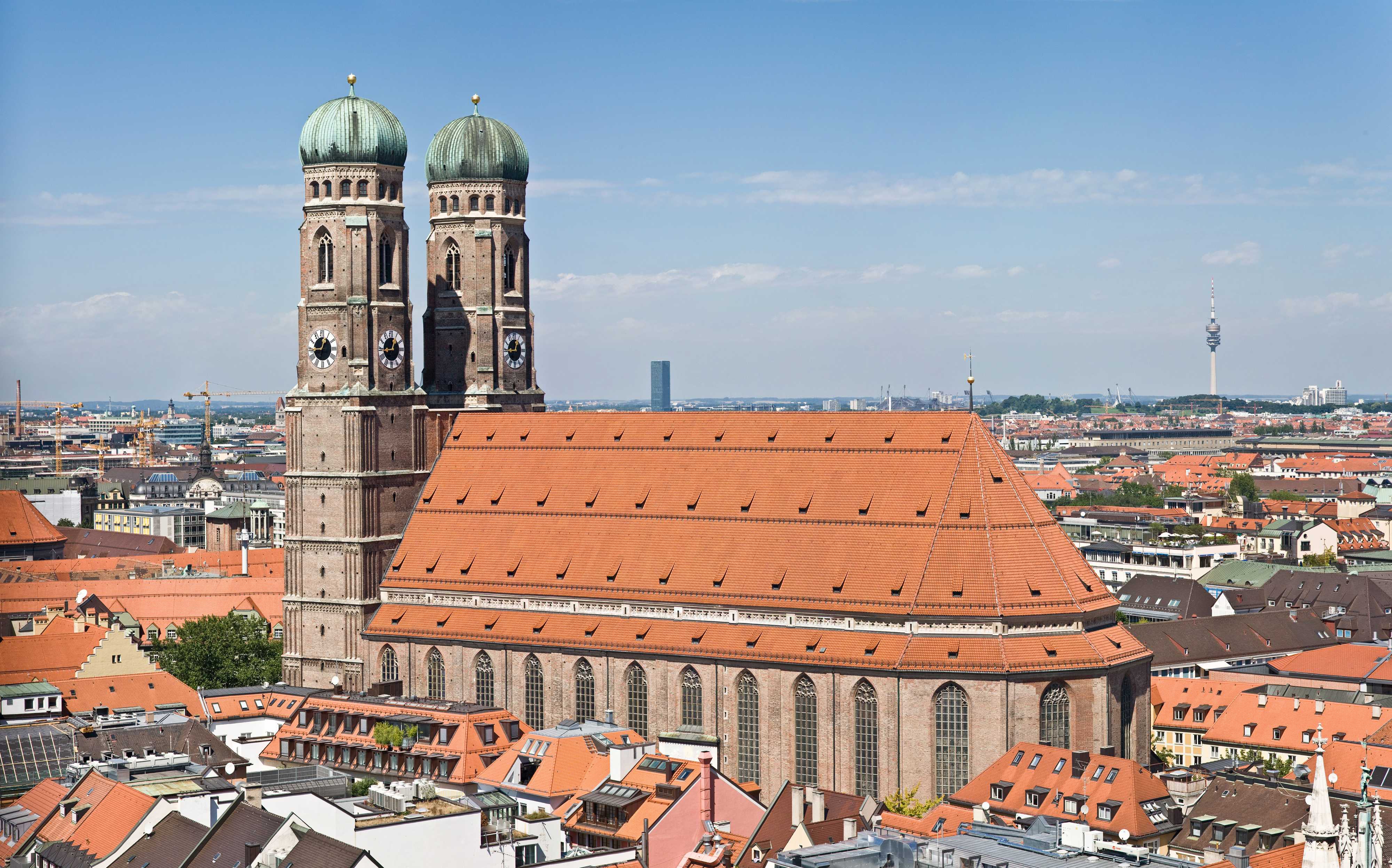
The Frauenkirche, formally known as the Cathedral of Our Dear Lady, stands as the principal Catholic cathedral in Munich and the seat of the Archbishop of Munich and Freising. This late Gothic brick hall church dominates the city skyline with its twin towers capped by green copper onion domes, a silhouette that has defined Munich for over five centuries. Locals refer to it simply as the Dom, a shorthand that reflects its central role in the daily life and identity of the Bavarian capital.
Commissioned by Duke Sigismund of Bavaria, construction began in 1468 under the direction of architect Jörg von Halsbach. The project moved with remarkable speed for such a massive undertaking, finishing the main structure and towers within twenty years. Unlike traditional cathedrals with a central nave supported by columns, this building features a vast, open interior without central supports, allowing it to hold up to 20,000 people comfortably. The famous "Devil's Footstep" near the entrance remains a popular curiosity among visitors, adding a touch of folklore to the stone walls.
During World War II, Allied bombing raids in 1944 collapsed the roof and destroyed much of the interior, yet the standing towers remained intact. Reconstruction began in 1946 and was largely completed by 1957, utilizing original bricks and salvaged materials to restore the building to its former glory. Today, the cathedral serves millions of visitors annually who come to attend services, explore the crypts, or climb the towers for panoramic views of the Alps on clear days.
Mission
The institution functions as the spiritual center for the Archdiocese of Munich and Freising, providing a sacred space for Catholic liturgy, prayer, and the administration of sacraments. Beyond its religious duties, the cathedral maintains a commitment to preserving its historical and architectural heritage for future generations. It actively fosters cultural enrichment through regular concerts, educational programs, and public events that bridge centuries of tradition with contemporary urban life.
History
Duke Sigismund of Bavaria commissioned the Frauenkirche in 1468, initiating a project that would transform the city's religious landscape. Architect Jörg von Halsbach designed a three-aisled brick hall church, an innovative style for the time that eliminated the need for central support columns. The building process concluded remarkably quickly; the main structure and towers were finished by 1488, followed by the official consecration in 1494. While the original design featured Gothic spires, the cathedral acquired its current iconic look in 1525 when onion domes were added to the twin towers, which now rise to a height of 98.57 meters.
The Second World War brought devastation to the historic site. In 1944, Allied bombing raids caused the roof to collapse and severely damaged the interior. The surviving towers stood as a symbol of resilience, prompting reconstruction efforts that started in 1946. By 1957, the majority of the rebuilding work was complete, with craftsmen using original bricks and salvaged materials wherever possible to maintain historical authenticity. Subsequent restorations in the 1990s addressed structural issues and modernized facilities to meet contemporary needs.
Recent decades have seen the institution navigate significant challenges regarding the Catholic Church's sexual abuse crisis. A report released in January 2022 by the archdiocese found that both Pope emeritus Benedict XVI and Cardinal Reinhard Marx mishandled abuse cases during their tenures. The investigation cost approximately $1.5 million and significantly impacted the organization's reputation, driving ongoing reform efforts within the diocese.
Notable People
Jörg von Halsbach
Architect · 1468–1488
Designed and oversaw the construction of the cathedral
Cardinal Reinhard Marx
Archbishop · 2008–present
Current head of the Archdiocese of Munich and Freising
Pope Benedict XVI
Former Archbishop · 1977–1982
Served as Archbishop before his election to the papacy
Milestones
1468
Construction begins under architect Jörg von Halsbach
1488
Towers completed and main building finished
1494
Official consecration of the cathedral
1525
Onion domes installed on the twin towers
1944
Severe damage from Allied bombing raids
1957
Reconstruction largely completed
2022
Release of sexual abuse report implicating former leaders
Sources
Organization Info
- Founded
- 1468
- Headquarters
- Frauenplatz 12, 80331 Munich, Germany
- Country
- Germany
- Archbishop of Munich and Freising
- Cardinal Reinhard Marx
- Parent
- Archdiocese of Munich and Freising
- Type
- Religious
- Architect
- Jörg von Halsbach
- Style
- Late Gothic, brick hall church
- Height of towers
- 98.57 meters
- Capacity
- Up to 20,000 people
- World's largest
- Hall church
Official Website
www.muenchner-dom.de/
Join the community
fans discussing