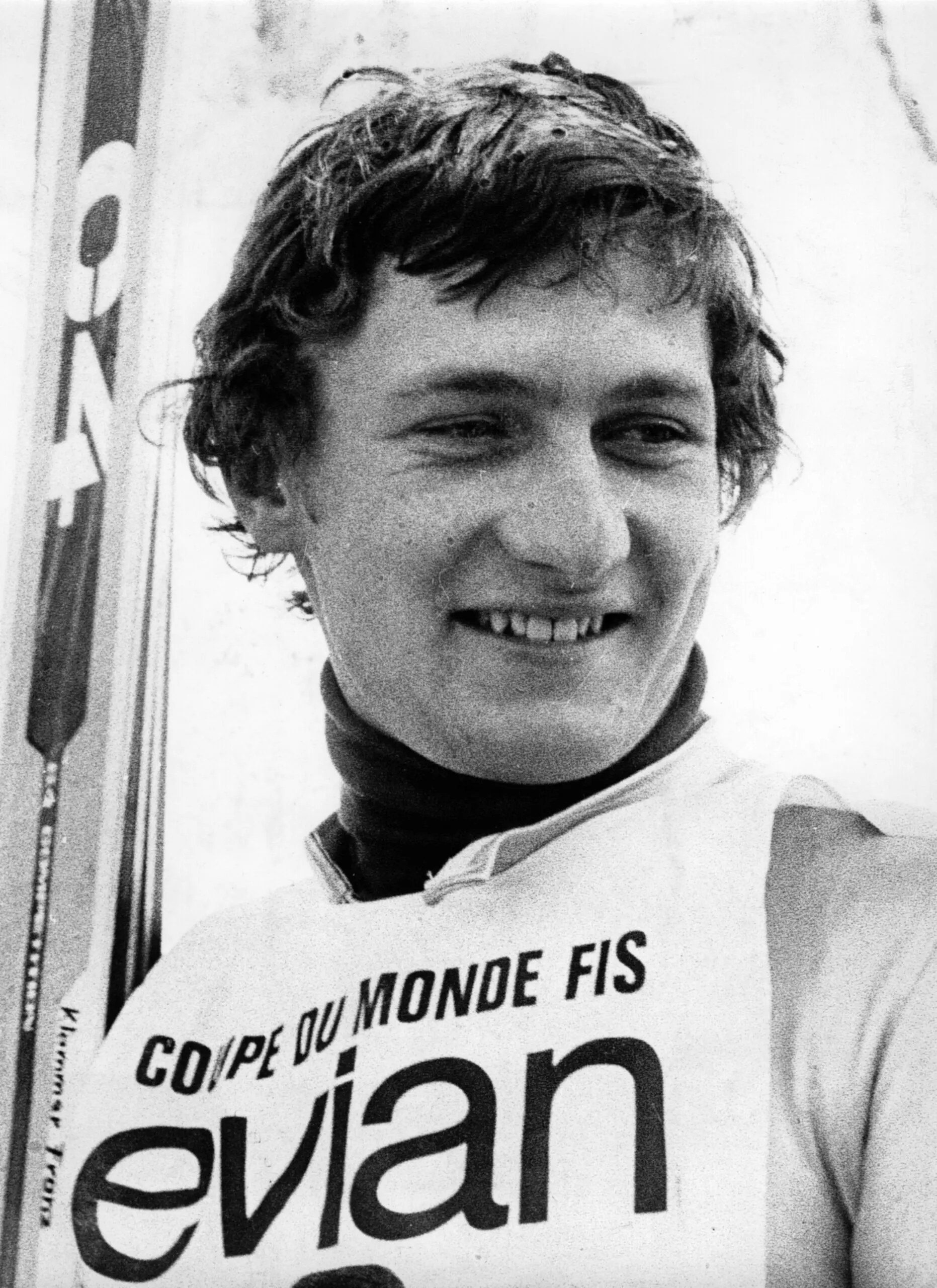
Franz Klammer
 Austria
Also known as: Franzl, The Kaiser, Klammer Express
Birthday
December 3, 1953
Birth Sign
Sagittarius
Birthplace
Fresach, Austria
Age
72 years old
Height
6 ft 0 in (183 cm)
About
Franz Klammer is an Austrian former alpine ski racer who became the most dominant downhill skier of his era. Known worldwide as "The Kaiser," he won the World Cup downhill title four consecutive years from 1975 to 1978, a streak no other skier has matched. His crowning achievement came at the 1976 Winter Olympics in Innsbruck, where he delivered a fearless run down the Patscherkofel to take gold by 0.33 seconds over Switzerland's Bernhard Russi, clocking 1:45.73 in front of a roaring home crowd. Over his career, Klammer amassed 25 World Cup downhill victories, including four wins on the legendary Hahnenkamm course at Kitzbühel, a record for the full course that still stands. He also earned a silver medal in downhill at the 1974 World Championships and a bronze in the combined at the 1976 Worlds. After retiring in 1982, he stayed connected to the sport as a mentor and commentator, and his name remains synonymous with the golden era of Austrian skiing.
Early Life & Background
Franz Klammer was born on December 3, 1953, in Fresach, a small village in the Austrian state of Carinthia. His family had deep roots in the Alps, and he learned to ski almost as soon as he could walk, spending his childhood on the slopes that surrounded his home. He attended local schools in Fresach and later trained with the Ski Club Lienz, where his raw talent began to show.
As a junior racer, Klammer developed a technique that set him apart from his peers. While most skiers followed conservative lines, he started cutting across the fall line earlier, a precursor to the "carving" style that would later revolutionize the sport. His willingness to take risks and his sheer speed caught the attention of national team selectors, and he earned a spot on the Austrian squad in the early 1970s. By the time he reached the World Cup circuit, he was already being talked about as a future star.
Career Growth
Klammer's breakthrough came in 1974 when he won a silver medal in the downhill at the World Championships in St. Moritz. The following year, he claimed his first World Cup downhill title, beginning a historic four-year streak that no one has equaled. His most iconic moment arrived at the 1976 Winter Olympics in Innsbruck. On the Patscherkofel course, he abandoned the pre-determined racing line and carved a new path down the mountain, finishing in 1:45.73 to beat Bernhard Russi by 0.33 seconds. That run is still considered one of the greatest in Olympic history.
Between 1976 and 1978, Klammer added three more World Cup downhill titles, completing the unmatched four-year run. He also dominated the Hahnenkamm downhill at Kitzbühel, winning the prestigious race four times from 1975 to 1978, a record for the full course that remains unbroken. His career total reached 25 World Cup downhill victories. After the 1982 season, he retired from competitive skiing. His exclusion from the 1980 Olympic team had caused a national outcry in Austria, so significant that the team manager had to explain the decision on television.
Career Timeline
Public Image & Style
Franz Klammer's public image is that of a fearless, all-or-nothing competitor who redefined downhill skiing. His aggressive style and willingness to take risks made him a national hero in Austria and a global icon. Media and fans alike remember him for his intense focus and the distinctive way he leaned into turns, earning the nickname "The Kaiser." His 1976 Olympic run is frequently cited as one of the greatest moments in sports history, and he remains a beloved figure in the skiing world. Though he has avoided the spotlight in recent decades, his legacy is kept alive by fans and the ski community, who celebrate his achievements at events like his 70th birthday gathering and the 50th anniversary of the Innsbruck Olympics.
Fame & Fandom (iFAMOUS Rankings)
Franz Klammer's fanbase operates as a decentralized community of alpine skiing enthusiasts and Austrians who revere him as a national hero rather than an organized club with chart-pushing campaigns or subway ad drives. Unlike modern pop stars, his supporters engage through commemorative events like the December 2023 gathering of ski legends in his honor or annual tributes at the Hahnenkamm in Kitzbühel. The emotional investment in his career is so profound that when he was unexpectedly left off the Austrian team for the 1980 Winter Olympics, the controversy forced the team manager to explain the decision on national television. This level of public engagement remains unmatched by typical retired athletes from the 1970s. While there is no official registered name for his followers, the sheer scale of affection he commands in Austria ensures his legacy endures through shared stories of his legendary runs rather than digital rituals. Franz Klammer is currently the 42nd most famous person from Austria according to the iFANN Global Fame Rankings, a position holding steady from the previous cycle.
Interesting Facts and Legends
Klammer pioneered a technique allowing skis to cut into the snow rather than skid, making him one of the world's first true "carvers" and influencing modern ski design. His nickname "The Kaiser" reflects his commanding presence and Austrian heritage, evoking historical emperors. In the 1976 Olympic final, he ignored the pre-determined optimal line to carve a new path down the Patscherkofel, a move initially controversial but ultimately faster. A lodge named after him exists in Telluride, Colorado, the Fairmont Heritage Place Franz Klammer Lodge. Fans still retell the story of his 1976 gold medal run where he raced before 150,000 spectators on home soil. He clocked 1:45.73, finishing roughly 10 seconds ahead of the next competitor, a margin so vast it stunned the world. Described as a "downhill run for eternity," this performance cemented his status as a legend who seemed to defy gravity. The 50th anniversary of this victory in 2026 saw renewed media attention celebrating the race as a moment that made viewers cry due to its technical perfection and emotional weight.
Notable Quotes
“I didn't look at the track, I looked at the future.”
“Skiing is not just about speed; it is about courage.”
“The Patscherkofel taught me that you must trust your instincts.”
Family & Personal Life
Franz Klammer has kept his family life largely out of the public eye. He grew up in Fresach, Austria, in a family that was deeply connected to the Alpine region. His parents encouraged his early love of skiing, and he spent his childhood on the slopes near his home. Beyond that, little is known about his parents or any siblings. As of 2026, there is no public record of Klammer being married or having children. He has maintained a quiet personal life, focusing on his involvement in the skiing community and charity work.
Notable Connections
Franz Klammer's career was defined by his rivalry with Swiss skier Bernhard Russi, whom he narrowly defeated in the 1976 Olympic downhill. His early development was shaped by coach Walter Tresch, who helped refine his aggressive technique. Fellow Austrian skier Hannes Trinkl followed in Klammer's footsteps, and the two have been linked in discussions of Austria's downhill legacy.
Relationships & Dating History
Franz Klammer has kept his personal life remarkably private. There are no widely documented or confirmed long-term romantic relationships, engagements, or marriages in credible sources up to 2026. While he was a celebrity in Austria and internationally, he has not publicly disclosed details about dating history or partners. As of 2026, he is generally regarded as living a quiet life away from the spotlight, with no current partner publicly named. The lack of information suggests he either kept his private life entirely out of the media or has remained single since his retirement. Consequently, there are no verified records of divorces, widowed status, or offspring from specific relationships.
Salary, Net Worth In 2026
$3 Million
iFANN Editorial Team estimate
Per iFANN's editorial analysis, Franz Klammer's net worth stands at $3 Million as of 2026. This figure reflects earnings from a competitive career peaking in the 1970s alongside post-retirement income from speaking engagements, licensing, and personal appearances. During his racing days, Klammer secured endorsement deals with ski equipment brands and continues to earn royalties from documentaries and historical footage. He owns property in Austria, and the Fairmont Heritage Place Franz Klammer Lodge in Telluride, Colorado, bears his name, though it is unclear if he holds a direct financial stake. Unlike many modern athletes, Klammer has avoided high-profile business ventures, focusing instead on mentorship and charity work within the ski community.
Awards Won (3)
Franz Klammer's competitive career was defined by his dominance in downhill skiing. He won the Olympic gold medal in 1976, a silver at the 1974 World Championships, and a bronze in the combined at the 1976 Worlds. His four consecutive World Cup downhill titles from 1975 to 1978 remain unmatched, and he holds the record for most wins on the full Hahnenkamm course at Kitzbühel with four victories. These achievements place him among the greatest downhill skiers of all time.
1976 · Downhill
1976 Winter Olympics
1974 · Downhill
World Championships St. Moritz
Known For
1976 Olympic Downhill Gold
1976 · Winner
World Cup Downhill Titles
1978 · Four consecutive titles (1975-1978)
Hahnenkamm Downhill Wins
1978 · Four wins (1975-1978)
Keywords
Sources
Quick Facts
- Profession
- alpine skier
- Born
- December 3, 1953
- Birthplace
- Fresach, Austria
- Gender
- Male
- Birth Sign
- Sagittarius
- Height
- 6 ft 0 in (183 cm)
Personal Details
- Full Name
- Franz Klammer
- Height
- 6 ft 0 in (183 cm)
Frequently Asked Questions
How old is Franz Klammer?
What is Franz Klammer's net worth in 2026?
Did Franz Klammer win any other Olympic medals besides gold?
Is Franz Klammer still active in 2026?
Why was Franz Klammer excluded from the 1980 Olympics?
Similar People
Join the community
fans discussing