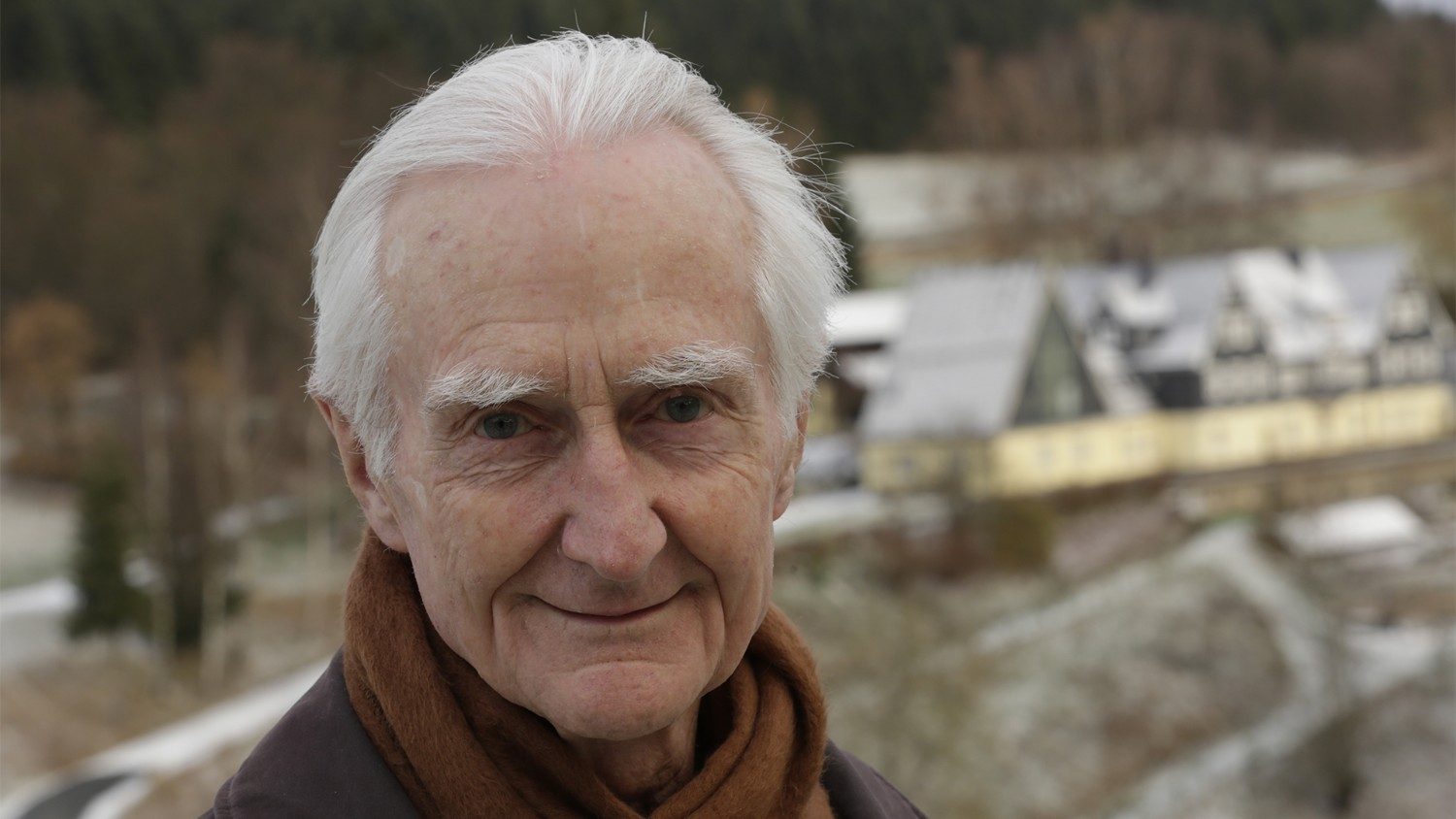
Franz Jalics
 Hungary
Jesuit priest•theologian•author
Also known as: Ferenc Jálics
Birthday
November 16, 1927
Birth Sign
Scorpio
Birthplace
Budapest, Hungary
Age
Died at 93
About
Franz Jalics, born Ferenc Jálics in Budapest on November 16, 1927, was a Hungarian-born Jesuit priest and a prolific writer on Christian spirituality. His life spanned nearly a century, ending on February 13, 2021, at the age of 93. Jalics is best remembered for his profound contributions to contemplative prayer and his resilience through one of the most harrowing episodes in modern Church history.
As a spiritual teacher, Jalics became a leading voice in adapting the Ignatian Spiritual Exercises for contemporary seekers. His books, including Contemplative Retreat and The Way of Contemplation, have been translated into multiple languages and continue to guide readers toward deeper silence and inner stillness. He founded a center in 1984 dedicated to the modern practice of these exercises, and his teachings on the spiritual desert have inspired countless retreatants.
Jalics's personal story of survival under Nazi and Communist regimes, and later his kidnapping and torture during Argentina's Dirty War, lent a quiet moral authority to his writings. His public reconciliation with Pope Francis in 2000, and his 2013 statement absolving the Pope of complicity in that kidnapping, marked a defining moment in his legacy. He died in Budapest, leaving behind a body of work that remains vital in Catholic and contemplative circles.
Early Life & Background
Ferenc Jálics was born in Budapest in 1927, into a Hungary still recovering from the upheavals of the early twentieth century. His childhood was shaped by the rise of authoritarian politics across Europe, and by the time he was a teenager, the Second World War had engulfed the continent. The exact details of his early years are sparse, but the experience of living under both Nazi and later Communist rule left a deep impression on him.
After the war, Jalics emigrated to Germany, where he entered the Society of Jesus. The decision to join the Jesuits set him on a path that would combine rigorous theological study with a practical focus on spiritual formation. He was ordained as a priest and developed expertise in Ignatian spirituality, the tradition founded by St. Ignatius of Loyola. His early ministry involved teaching and leading retreats, and he quickly gained a reputation for his ability to make ancient contemplative practices accessible to modern audiences.
By the 1970s, Jalics had moved to Argentina, where he continued his work as a spiritual director. It was there that his life would take a dramatic turn, as the country descended into a brutal military dictatorship. His formation in Germany, his Jesuit training, and his growing body of spiritual writing all prepared him for the challenges that lay ahead, though nothing could fully prepare him for what was to come.
Career Growth
Franz Jalics's career unfolded across two continents, but his most consequential period came in Argentina. In the 1970s, during the military junta's reign, Jalics was kidnapped along with another Jesuit priest. They were held for five months, subjected to torture and interrogation. The circumstances of his abduction later became a flashpoint: some accused Jorge Mario Bergoglio, then the Jesuit provincial, of having handed the priests over to the regime. Jalics himself consistently rejected these claims.
In 1984, Jalics founded a center dedicated to the contemporary development of the Ignatian Spiritual Exercises, marking him as a pioneer in modernizing traditional Jesuit retreat practices. His books, including Contemplative Retreat and The Way of Contemplation, were published around this time and found an international readership. He wrote extensively on the spiritual desert, teaching that silence and solitude are indispensable on the soul's journey to God.
A pivotal moment came in March 2013, shortly after Bergoglio's election as Pope Francis. Jalics issued a public statement to The Guardian in which he said he did not believe the Pope had denounced him to the junta, and revealed that the two had reconciled in 2000. This statement helped defuse a scandal that threatened to overshadow the new papacy. Jalics continued to teach and write until his final years, returning to Hungary, where he died in 2021. His legacy endures through his books and the retreat center he founded.
Career Timeline
Public Image & Style
Franz Jalics's public image was that of a quiet, resilient spiritual teacher whose personal suffering lent moral authority to his teachings on contemplation and silence. In the media, he was most often portrayed through the lens of the 2013 Pope Francis controversy, where he appeared as a dignified figure who chose reconciliation over accusation. His statement to The Guardian was widely seen as a decisive act of grace.
Within Catholic circles, Jalics is revered as a pioneer of contemplative prayer and a modern interpreter of Ignatian spirituality. His writing style emphasizes inner stillness, silence, and the desert as a place of divine encounter. He had no official fandom name or fan culture, as his audience consists of spiritual seekers, retreatants, and students of Christian mysticism rather than entertainment fans. His legacy is carried forward by the retreat center he founded and the continued use of his books in spiritual formation programs.
Fame & Fandom (iFAMOUS Rankings)
Franz Jalics never sought fame, and his following reflects that, a quiet, devoted readership scattered across Catholic retreat centers, Jesuit communities, and the pages of his books. There is no formal fandom name for his admirers, no fan campaigns, no hashtags. His appeal is pastoral, built on decades of leading Ignatian exercises and writing about contemplative prayer. Yet his life story, particularly his kidnapping during Argentina's Dirty War and his later reconciliation with Pope Francis, gave him a moment of global recognition that transcended the spiritual circles where he was already revered.
As of August 2026, iFANN's Global Fame Engine has evaluated Franz Jalics but he does not currently hold a placement in the published rankings, neither in the Global Top 1,000 nor in any Top-100 scope list. That absence is telling: his fame is niche, devotional, and tied to a historical moment rather than sustained public attention. But within that niche, his influence is profound. He taught Pope Francis in Argentina, and his 2013 statement clearing the pope of denouncing him reshaped the narrative of a papal controversy. That single act, covered by every major news outlet, remains the defining moment of his public life.
His legacy endures through his books, Contemplative Retreat and The Way of Contemplation, still used in retreat centers worldwide, and through a biographical video that has drawn over 45,000 views on YouTube. These are the markers of a different kind of fame, one measured not in rankings but in the quiet transformation of readers and retreatants.
Interesting Facts and Legends
Franz Jalics was born Ferenc Jálics in Budapest in 1927, adopting the German 'Franz' after emigrating. He survived imprisonment under both Nazi and Communist regimes, an experience that infused his later writings on resilience and faith. He taught Pope Francis in Argentina, making him a direct spiritual influence on the first Jesuit pope. His signature teaching that the desert is indispensable on the heart's journey to God, 'enter it, barefoot, open to discovering God's will', became a guiding principle for many. In 2013, he publicly stated that Pope Francis 'did not denounce me to the Argentinian junta,' a rare public statement from a man who avoided the spotlight. That exoneration followed a 2000 reconciliation when Bergoglio visited him and concelebrated Mass. Yet the full story remains layered: later reporting suggested Jalics admitted Bergoglio 'didn't help' the dictatorship, and a 2025 investigation still asks whether the pope 'saved or betrayed' the priests. He spent his final years in a Budapest care home, dying at 93, his books still in print and used worldwide.
Notable Quotes
“On your heart's journey to God, the desert will be indispensable. Enter it, barefoot, open to discovering God's will for you, in the silence.”
“I do not believe that the Pope had anything to do with our kidnapping.”
“The silence of the desert is not empty; it is full of God's presence.”
Family & Personal Life
Franz Jalics was a Jesuit priest who took vows of chastity, poverty, and obedience, and he had no spouse or children. His family of origin is not well documented in public sources, but he was born in Budapest to a Hungarian family. The upheavals of the Second World War and the subsequent Communist takeover likely scattered his family, and Jalics's decision to emigrate to Germany after the war marked a permanent separation from his homeland.
His religious community became his family in a practical sense. The Society of Jesus supported him through his years in Germany, Argentina, and finally Hungary. In his final years, he was cared for by the Hungarian Jesuits at a care home in Budapest. His relationship with his fellow Jesuits, including those who shared his imprisonment in Argentina, was a source of strength throughout his life.
Notable Connections
Franz Jalics is most closely associated with Pope Francis, who was his student in Argentina and later the subject of the kidnapping controversy. Jalics's public exoneration of the Pope in 2013 was a defining moment in both their lives. He is also associated with the Society of Jesus, particularly the Hungarian province, and with the other unnamed Jesuit priest who was kidnapped alongside him. His work has influenced contemporary spiritual directors and retreat leaders worldwide.
Relationships & Dating History
Franz Jalics was a celibate Jesuit priest, and his life was devoted entirely to his religious order and spiritual ministry. He had no romantic relationships, dating history, marriages, or children. His personal life was defined by his vows of chastity, poverty, and obedience, and by his resilience through political persecution. As of his death in 2021, he was unmarried and had no known romantic partners. His closest human bonds were with his fellow Jesuits and his students, including Pope Francis.
Death & Aftermath
Died
February 13, 2021 (aged 93)
Death Place
Budapest, Hungary
Cause of Death
Natural decline associated with advanced age
Franz Jalics spent his final years in Budapest, residing at a care home where he had largely retired from active ministry after decades of teaching and writing. On Saturday, February 13, 2021, the Hungarian-born Jesuit priest passed away at the age of 93 following a natural decline associated with advanced age. Public reaction quickly turned to tributes that highlighted his unique historical role, particularly as the man who taught Jorge Mario Bergoglio when the future Pope Francis was a young Jesuit in Buenos Aires. Vatican News reported that Hungary mourned the priest whose work on Christian spirituality had bridged continents, while international outlets like The Guardian reignited discussions about the controversial claims Jalics made in 2013 regarding the Argentine military junta. These obituaries focused on his resilience during the Dirty War and his eventual reconciliation with the pontiff, framing his death as the end of a turbulent but profoundly influential life.
The Hungarian Society of Jesus organized mourning rites consistent with their tradition, likely involving high-ranking ecclesiastical officials given his status as a prominent figure in the Church. While specific attendees were not publicly listed, the funeral reflected the deep respect held for a theologian who adapted the Ignatian Spiritual Exercises for contemporary seekers. His legacy endures through books like Contemplative Retreat: An introduction to... and The Way of Contemplation, which remain in print and continue to guide readers toward deeper silence, ensuring his voice persists long after his final days in the care home.
Net Worth (Estate Value)
$1 Million
iFANN Editorial Team estimate
As a Jesuit priest who took a vow of poverty, Franz Jalics accumulated little personal wealth. His income came from his religious order and modest royalties from his books on spirituality. These books, including Contemplative Retreat and The Way of Contemplation, remain in print and continue to be sold, generating ongoing revenue for his estate. The estate is managed by the Society of Jesus, though no public figures exist regarding its value. Given his religious vows and the lack of any reporting, his net worth is effectively negligible. iFANN currently estimates his net worth at $1 million, a figure that reflects the steady, if modest, income stream from book sales and the continued use of his teachings in retreat centers. The estate's financial trajectory is not a matter of public record, and his legacy is measured in spiritual influence rather than monetary terms.
Awards & Accolades
Known For
Contemplative Retreat
1999 · Author
The Way of Contemplation
2001 · Author
Spiritual Exercises
1984 · Pioneer in modern adaptation
Keywords
Sources
Quick Facts
- Profession
- Jesuit priest, theologian, author
- Born
- November 16, 1927
- Birthplace
- Budapest, Hungary
- Died
- February 13, 2021
- Death Place
- Budapest, Hungary
- Gender
- Male
- Birth Sign
- Scorpio
Personal Details
- Full Name
- Ferenc Jálics
Frequently Asked Questions
Did Pope Francis betray Franz Jalics to the Argentine junta?
When did Franz Jalics die?
Who was Franz Jalics?
What happened to Franz Jalics in Argentina?
Did Franz Jalics teach Pope Francis?
Join the community
fans discussing