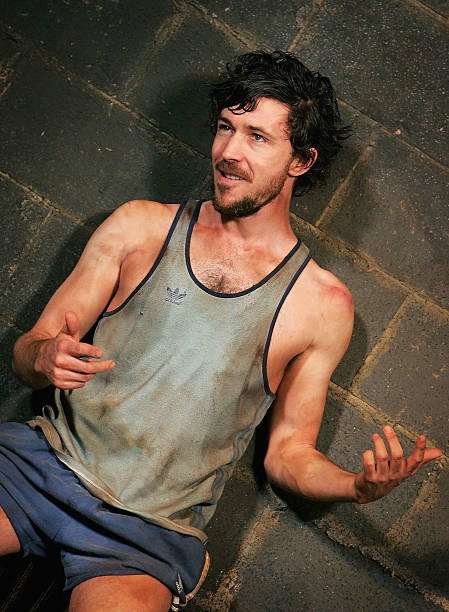
Frank McGuinness
 Ireland
playwright•screenwriter•poet•translator
Birthday
July 29, 1953
Birth Sign
Leo
Birthplace
Buncrana, County Donegal, Ireland
Age
73 years old
About
Frank McGuinness is an Irish playwright, screenwriter, poet, and translator, widely regarded as one of the foremost voices in contemporary Irish theatre. Born in Buncrana, County Donegal, he has built a career spanning over four decades, with works that explore Irish history, identity, and sexuality. His most celebrated play, Observe the Sons of Ulster Marching Towards the Somme (1985), is a landmark of modern drama, and his adaptations of European classics have earned international acclaim.
McGuinness is also a respected academic, having served as Professor of Creative Writing at University College Dublin from 2007 to 2018. His contributions to literature include six poetry collections, two novels, and numerous screenplays. As of 2026, he remains active in the theatre world, with recent productions at Dublin's Abbey Theatre. His work is studied in schools and universities, and his influence on Irish drama is profound.
Early Life & Background
Frank McGuinness grew up in Buncrana, a small town on the Inishowen peninsula of County Donegal, a region whose landscape and history would later permeate his writing. He attended Carndonagh College in Donegal before moving to Dublin for university. At University College Dublin, he earned a BA and an M.Phil in medieval studies, focusing on Middle English literature, an unusual foundation for a playwright, but one that honed his sensitivity to language and narrative.
In 1974, McGuinness began writing poetry, publishing in journals such as Cyphers and the Irish Press's New Irish Writing section. From 1977 to 1979, he taught linguistics and drama at the New University of Ulster, during the height of the Troubles, an experience that likely shaped his interest in conflict and identity. He then returned to UCD as a lecturer in English, where he remained for decades. His first major play, The Factory Girls, premiered in 1982, marking the start of his theatrical career after eight years of writing and teaching.
Career Growth
Frank McGuinness's breakthrough came in 1985 with Observe the Sons of Ulster Marching Towards the Somme, which premiered at the Abbey Theatre and won the Harvey's Best Play Award. The play, focusing on Protestant Unionist soldiers in World War I, was a critical and commercial success, and it remains his most produced work internationally. In 1992, Someone Who'll Watch Over Me, a drama about hostages in Beirut, earned him the London Evening Standard Award and brought him to West End and Broadway audiences.
His later works include Dolly West's Kitchen (1999), set in wartime Donegal, and Do You Come From Gomorrah?, which explores LGBTQ+ themes and was staged at the Abbey Theatre's Peacock stage. McGuinness also gained acclaim for his translations and adaptations of plays by Racine, Sophocles, Ibsen, Lorca, and Strindberg. His screenwriting credits include the film adaptation of Dancing at Lughnasa (1998) and the television film A Short Stay in Switzerland (2009). He served as Professor of Creative Writing at UCD from 2007 to 2018, and his papers are archived at UCD Special Collections.
Career Timeline
Public Image & Style
Frank McGuinness is seen as one of Ireland's foremost contemporary playwrights, often mentioned alongside Brian Friel and Tom Murphy. His public image is that of a serious, intellectually rigorous artist whose work bridges popular theatre and academic drama. He is known for his lyrical, musical dialogue and his willingness to explore uncomfortable aspects of Irish society, including sectarianism, sexuality, and class. His plays are studied in schools and universities, and he has a dedicated following among theatre enthusiasts and academics. His translations are prized for their speakability and dramatic energy rather than strict literalism, and his offstage persona is that of a thoughtful, articulate commentator on theatre and history.
Fame & Fandom (iFAMOUS Rankings)
Frank McGuinness's audience is not the kind that screams at airport arrivals or fills stadiums. It is quieter, more devoted, and found in the dimmed lights of theatres and the dog-eared pages of play scripts. There is no formal name for his fanbase, no 'McGuinnessians' or 'Frankophiles' documented in iFANN's data. Instead, his following is built on the intellectual and emotional weight of his work, from the haunting trenches of Observe the Sons of Ulster to the lyrical despair of Dancing at Lughnasa. When his new play Do You Come from Gomorrah? premiered at the Abbey Theatre in April 2026, it wasn't fans camping out for tickets, but critics and theatre-goers packing the Peacock Stage for a five-star reckoning with abuse and prejudice. That's the closest thing to a legendary moment in his recent career, a premiere that sparked debate about storytelling in 2026, not a viral fan campaign.
His legend is built on quieter milestones: the eight-year incubation from poetry to first theatrical success in 1982, the unlikely academic path through Middle English medieval studies, and the collaboration with Alan Rickman on a new version of Ibsen's John Gabriel Borkman at the Abbey in 2010. The origin story, a poor boy from Buncrana, Donegal, rising to professorship and international acclaim, is the tale fans and newcomers alike repeat. Yet in the global fame rankings, Frank McGuinness is currently evaluated by iFANN's Global Fame Engine but holds no placement in the published rankings, neither the Global Top 1,000 nor any Top-100 scope list. His fame is real, but it lives in the theatre, not in the metrics of mass celebrity.
Interesting Facts and Legends
McGuinness began writing poetry in 1974, but his first theatrical success did not come until 1982, an eight-year incubation period. His postgraduate training in Middle English medieval studies is an unusual background for a contemporary playwright. He taught at the New University of Ulster during the Troubles, an experience that likely informed his writing about conflict. His play Observe the Sons of Ulster Marching Towards the Somme is notable for centring on Protestant Unionist soldiers, a perspective rarely explored in Irish nationalist theatre. He has translated works from French, Greek, Norwegian, Spanish, and Swedish. His papers are archived at UCD Special Collections, preserving his manuscripts for scholars.
One of the most retold stories in his career is the 2010 collaboration with Alan Rickman, who starred in McGuinness's new version of John Gabriel Borkman at the Abbey Theatre, a pairing of international stardom and Irish dramatic craft. More recently, the April 2026 premiere of Do You Come from Gomorrah? at the Abbey's Peacock Stage became a defining moment, drawing five-star reviews and sparking debate about how to tell stories of abuse in the modern era. The play's blistering portrait of a young boy's vulnerability and violence was hailed by the Irish Times as 'startlingly revelatory.'
Family & Personal Life
Details about Frank McGuinness's family are scarce, as he has kept his personal life private. He was born in Buncrana, County Donegal, and grew up there, but no public information is available about his parents or siblings. He lives in Dublin and is openly gay, but he has never publicly discussed a partner or children. His play Do You Come From Gomorrah? explicitly engages with LGBTQ+ themes, reflecting his personal identity. His family background has not been a subject of public discussion, and he has chosen to keep that aspect of his life out of the spotlight.
Notable Connections
Frank McGuinness is associated with the Abbey Theatre, his primary producing theatre, and with fellow Irish playwright Brian Friel, whose work Dancing at Lughnasa McGuinness adapted for film. He has worked with actress Julie Walters on A Short Stay in Switzerland. Academically, he is linked with P.J. Mathews, who interviewed him at the Abbey Theatre, and with University College Dublin, where he taught for decades.
Relationships & Dating History
Frank McGuinness has kept his personal life private, and there are no well-documented public relationships, marriages, or partnerships recorded in accessible sources. He is openly gay, and themes of sexuality, particularly queer identity within Irish society, recur throughout his work. As of 2026, his relationship status is not publicly documented, and he appears to have kept his romantic life entirely out of the public eye throughout his career. This privacy is consistent with his generation of Irish artists, many of whom did not discuss their personal lives publicly.
Salary, Net Worth In 2026
$5 Million
iFANN Editorial Team estimate
Frank McGuinness's net worth is not publicly documented, but as of 2026 iFANN estimates it at $5 million. His income derives primarily from royalties from productions of his plays worldwide, fees for translations and adaptations commissioned by major theatre companies, and his academic salary during his professorship at UCD. He has also earned from screenwriting for film and television, including Dancing at Lughnasa and A Short Stay in Switzerland. Unlike actors or pop stars, playwrights of his stature typically earn modest but sustainable incomes from royalties, and his financial details have never been publicised. His back catalogue remains in active production through licensing agencies such as Concord Theatricals, ensuring a steady stream of royalty income.
Awards Won (4)
Frank McGuinness has won several major awards for his work, including the Harvey's Best Play Award for Observe the Sons of Ulster Marching Towards the Somme in 1985, the London Evening Standard Award for Someone Who'll Watch Over Me in 1992, and the Windham-Campbell Literature Prize from Yale University in 2014. He has also received the Irish Times/ESB Irish Theatre Award for his contribution to Irish theatre.
2014 · Drama
Body of dramatic work
1992 · Best Play
Someone Who'll Watch Over Me
Known For
Observe the Sons of Ulster Marching Towards the Somme
1985 · Playwright
Someone Who'll Watch Over Me
1992 · Playwright
Dancing at Lughnasa
1998 · Screenwriter
Dolly West's Kitchen
1999 · Playwright
The Factory Girls
1982 · Playwright
Keywords
Sources
Quick Facts
- Profession
- playwright, screenwriter, poet, translator
- Born
- July 29, 1953
- Birthplace
- Buncrana, County Donegal, Ireland
- Gender
- Male
- Birth Sign
- Leo
- Education
- University College Dublin (BA, M.Phil)
- Known for
- Observe the Sons of Ulster Marching Towards the Somme
Personal Details
- Full Name
- Francis McGuinness
- Education
- University College Dublin (BA, M.Phil)
Filmography
5
Total
2
Film
2
TV
Frequently Asked Questions
Is Frank McGuinness gay?
What is Frank McGuinness's most famous play?
What did Frank McGuinness teach?
Is Frank McGuinness still writing?
What awards has Frank McGuinness won?
Similar People
Join the community
fans discussing