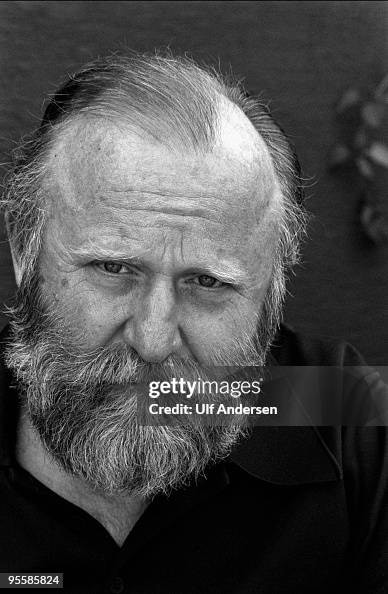
Frank Herbert
 United States
Birthday
October 8, 1920
Birth Sign
Libra
Birthplace
Tacoma, Washington, USA
Age
Died at 65
Height
5 ft 9 in (175 cm)
About
Frank Herbert was an American science fiction writer whose 1965 novel Dune became one of the best-selling and most influential works in the genre. The book won both the Hugo and Nebula awards, and its intricate world-building, blending ecology, politics, religion, and philosophy, set a new standard for speculative fiction. Herbert wrote five sequels, creating a sprawling saga that has sold over 20 million copies worldwide. His work has been adapted into films by David Lynch in 1984 and Denis Villeneuve in 2021 and 2024, the latter sparking a major resurgence in popularity. Before his writing career, Herbert worked as a journalist, photographer, and ecological consultant, experiences that deeply informed his fiction. He died in 1986, but his legacy continues through new adaptations and the ongoing Dune expanded universe co-authored by his son Brian Herbert.
Early Life & Background
Frank Herbert grew up in Tacoma, Washington, during the Great Depression, the only child of a streetcar driver and a homemaker. He developed a love for writing and photography early, contributing to his high school newspaper at Lincoln High School. After graduating in 1938, he worked as a reporter for the Glendale Star and the Oregon Statesman. During World War II, he served as a photographer in the Navy Seabees from 1942 to 1944, but was discharged early for medical reasons. He then attended the University of Washington to study creative writing, but left without a degree to pursue journalism full-time. In 1957, while researching an article on Oregon's sand dunes, he became fascinated by the ecology and politics of desert environments. That research spiraled into six years of intensive study, culminating in the novel Dune.
Career Growth
Herbert published his first short story, "Looking for Something," in 1952, and his first novel, The Dragon in the Sea, in 1955. But his breakthrough came in 1965 when Chilton Books published Dune. The novel won the Hugo Award for Best Novel in 1966 and the inaugural Nebula Award for Best Novel in 1965, establishing Herbert as a major voice in science fiction. He followed with sequels: Dune Messiah (1969), Children of Dune (1976), God Emperor of Dune (1981), Heretics of Dune (1984), and Chapterhouse: Dune (1985). He also wrote standalone novels like The Santaroga Barrier (1968) and The Dosadi Experiment (1977). In the 1980s, he collaborated with his son Brian Herbert on The Man of Two Worlds. Herbert's work as an ecological consultant and lecturer at the University of Washington complemented his writing. The 1984 David Lynch film adaptation of Dune disappointed him, but Denis Villeneuve's 2021 and 2024 films brought his vision to a new generation, grossing over $700 million combined.
Career Timeline
Public Image & Style
Herbert is often called the "father of ecological science fiction" for his dense world-building and focus on environmental themes. His writing style, complex, multi-layered, and philosophical, is admired for its depth but sometimes criticized for pacing. The Dune fandom, informally called "Dunies," celebrates October 8 as "Dune Day" in honor of Herbert's birthday. Fans engage in extensive theorizing about the universe, and cosplay at conventions is common. The estate maintains a respectful tone on social media, highlighting new adaptations and releases. Villeneuve's films have dramatically expanded the fanbase, introducing Herbert's work to a younger audience.
Fame & Fandom (iFAMOUS Rankings)
Frank Herbert's readers have never rallied under a single banner. Unlike the Potterheads or Trekkies of the world, his fanbase remains a loose constellation of Dune enthusiasts, academics, and science-fiction devotees. They gather in online forums, dissect the timeline, and debate the messianic warnings of his universe, but no formal name has ever stuck. The fandom's power shows in numbers: the books have never gone out of print, and the Villeneuve films brought a new generation into the fold.
In iFANN's Global Fame Engine, Frank Herbert is currently evaluated but does not hold a placement in the published rankings. He is not among the Global Top 1,000 or any Top-100 scope list. This absence says less about his cultural weight than about the engine's focus on contemporary visibility, Herbert's legacy endures through his work and the continued reverence of his readers.
His influence is measured in the sustained life of Dune: the 2021 and 2024 film adaptations, the expanding expanded universe novels, and the endless critical reassessments. The fandom may lack a name, but it has a voice, one that keeps Herbert's cautionary tales relevant decades after his death.
Interesting Facts and Legends
Frank Herbert's path to Dune began with a magazine article about Oregon's sand dunes, a project that evolved into the novel that would define his career. In the 1960s, he practiced Buddhism, and his writing desk bore a sign reading "I am a writer" to keep him motivated during tough periods. The word "Dune" originally had no apostrophe in the title; it was added later for the film. Herbert worked as a speechwriter for Republican Senator Guy Cordon and covered the 1960s counterculture as a photographer for the San Francisco Examiner.
One of the most enduring legends is the novel's rocky road to publication: rejected by more than twenty publishers before Chilton, a company known for auto-repair manuals, accepted it in 1965. Fans still retell the story of the manuscript's reported length, which necessitated serialization in Analog magazine. Herbert himself framed Dune as a cautionary tale about charismatic leadership, a lens that continues to shape interpretations. He died in 1986 before completing the seventh novel of the saga, leaving the ending a subject of debate for decades.
Notable Quotes
“I was determined to write a novel that would have something to do with the deepest purposes of history and human life.”
“The mystery of life isn't a problem to solve, but a reality to experience.”
“I must not fear. Fear is the mind-killer. Fear is the little-death that brings total obliteration.”
“Deep in the human unconscious is a pervasive need for a logical universe that makes sense. But the real universe is always one step beyond logic.”
“The beginning of knowledge is the discovery of something we do not understand.”
“I wrote Dune because I wanted to write a novel about the environment and the politics of ecology.”
“The future is a kind of history. We are always making it, but we cannot predict it.”
Family & Personal Life
Herbert was the only child of Frank Patrick Herbert Sr., a streetcar driver, and Eileen McCarthy Herbert. He married Flora Lillian Parkinson in 1941, and they had a daughter, Penny, before divorcing in 1945. In 1946, he married Theresa Diane Shackelford, a fellow journalist who managed his business affairs and supported his writing. They had two sons: Brian Patrick Herbert, born in 1947, and Bruce Calvin Herbert. The couple also adopted a daughter, Jana. Theresa survived him, passing away in 2010. Brian Herbert has become the steward of his father's legacy, co-authoring numerous Dune prequels and sequels with Kevin J. Anderson.
Notable Connections
Herbert's son Brian Herbert manages his estate and co-authors Dune continuation novels with Kevin J. Anderson. Director Denis Villeneuve adapted Dune into critically acclaimed films in 2021 and 2024. David Lynch directed the 1984 film adaptation. Herbert's editors included John W. Campbell at Analog and Sterling Lanier at Chilton Books. His ecological influences include Rachel Carson and J.R.R. Tolkien.
Relationships & Dating History
Herbert married Flora Lillian Parkinson in 1941, and they had a daughter, Penny, before divorcing in 1945. In 1946, he married Theresa Diane Shackelford, a journalist who became his lifelong partner and business manager. They had two sons, Brian and Bruce, and adopted a daughter, Jana. Theresa remained married to Herbert until his death in 1986. Some biographies mention a rumored relationship with a woman named Beverly in the 1960s, but details are unconfirmed. As of 2026, Herbert is deceased; his last known relationship was with Theresa.
- MarriedFlora Lillian Parkinson1941 - 1945First wife; they had one daughter, Penny, before divorcing.
- MarriedTheresa Diane Shackelford1946 - 1986Second wife; they had three children, and she managed his business affairs.
Death & Aftermath
Died
February 11, 1986 (aged 65)
Death Place
Unknown
Cause of Death
Unknown
Frank Herbert, the acclaimed science fiction author best known for the Dune series, died on February 11, 1986. He was 65 years old at the time of his death. Available biographical summaries from Wikipedia, Britannica, HistoryLink, and publisher profiles consistently list his birth date as October 8, 1920, and death date as February 11, 1986, but do not elaborate on the circumstances of his final days or the specific medical statements that established the cause of death.
Information concerning the funeral or memorial service is absent from the provided search results. There is no record of when or where the service took place, whether it was public or private, who attended, what performances occurred, or the specific method of his interment. The records focus exclusively on his literary career and legacy rather than any legal proceedings surrounding his demise.
Posthumously, Frank Herbert's estate has been managed to continue his literary legacy. His son, Brian Herbert, along with Kevin J. Anderson, has written several sequels and prequels to the original series, including Chapterhouse: Dune which remains a point of retrospective discussion regarding the saga's conclusion. New editions of his works, such as the Dune Deluxe Trade Paperback Edition, continue to be released, with recent entries noted in 2026. The ongoing commercial and critical success of his estate includes film adaptations like Dune: Part One in 2021 and Dune: Part Two in 2024. His work continues to be referenced in contemporary political discourse, and retrospective analyses of his unfinished saga remain relevant decades later.
Net Worth (Estate Value)
$18 Million
iFANN Editorial Team estimate
As of 2026, iFANN's editorial research places the Frank Herbert estate's value at approximately $18 million. The primary revenue stream remains book royalties: Dune sells between 200,000 and 500,000 copies annually worldwide, generating $500,000 to $1 million per year. Film licensing fees from Denis Villeneuve's adaptations brought in an estimated $5 million upfront plus backend participation. Merchandise, video games like Dune: Spice Wars and the upcoming Dune: Awakening MMO, and board games add steady income. The Syfy miniseries from 2000 and 2003 continue to generate licensing fees. Brian Herbert and Kevin J. Anderson's expanded universe novels, over 20 titles, contribute royalties shared with the estate. The estate is managed by Brian Herbert and the Herbert Family Trust, which actively licenses the IP for new adaptations, including the HBO series Dune: Prophecy.
Awards Won (2)
Herbert won the Hugo Award for Best Novel in 1966 for Dune and the inaugural Nebula Award for Best Novel in 1965 for the same work. These two awards remain his most prestigious honors, recognizing Dune as a landmark of science fiction.
1966 · Best Novel
Dune
1965 · Best Novel
Dune
Known For
Dune
1965 · Author
Dune Messiah
1969 · Author
Children of Dune
1976 · Author
God Emperor of Dune
1981 · Author
Heretics of Dune
1984 · Author
Chapterhouse: Dune
1985 · Author
Keywords
Quick Facts
- Profession
- writer, novelist, photographer
- Born
- +1920-10-08
- Birthplace
- Tacoma
- Died
- +1986-02-11
- Death Place
- Madison
- Gender
- Male
- Spouse
- Flora Lillian Parkinson, Theresa Diane Shackelford
- Birth Sign
- Libra
Personal Details
- Full Name
- Franklin Patrick Herbert Jr.
- Height
- 5 ft 9 in (175 cm)
- Spouse
- Flora Lillian Parkinson, Theresa Diane Shackelford
- Children
- Penny Herbert, Brian Patrick Herbert, Bruce Calvin Herbert, Jana Herbert (adopted)
- Education
- University of Washington (creative writing, no degree); Lincoln High School (1938)
Frequently Asked Questions
What is Frank Herbert's net worth?
How old was Frank Herbert when he died?
Did Frank Herbert finish the Dune series?
Who was Frank Herbert married to?
How many kids did Frank Herbert have?
Similar People


Join the community
fans discussing