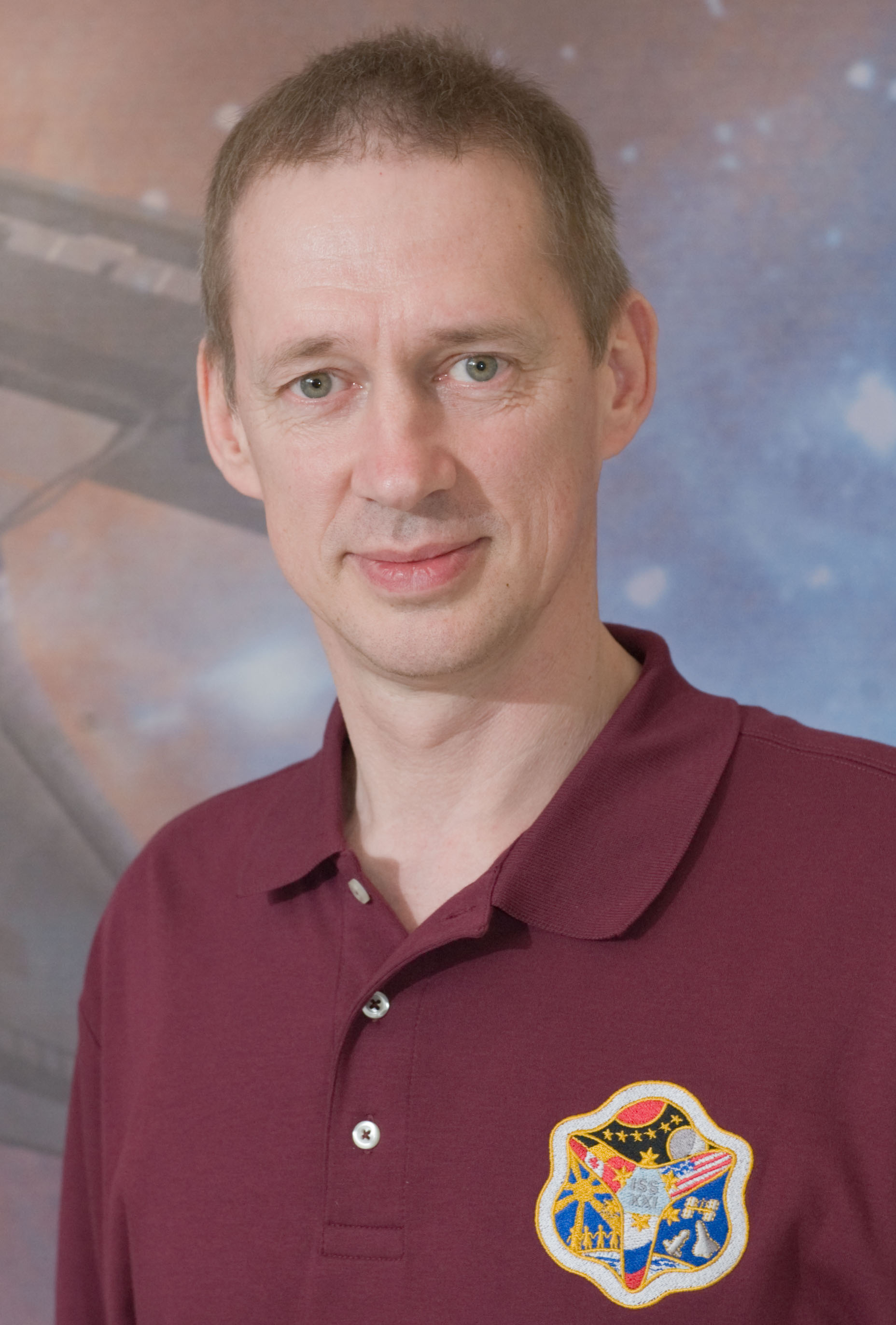
Frank De Winne
 Belgium
astronaut•engineer•military officer
Birthday
April 25, 1961
Birth Sign
Taurus
Birthplace
Ledeberg, Belgium
Age
65 years old
About
Frank De Winne is a Belgian Air Component officer and a highly respected European Space Agency (ESA) astronaut. He holds the distinction of being Belgium's second person to journey into space, following Dirk Frimout. Today, De Winne plays a pivotal role in shaping the future of European human spaceflight, serving as the Head of ESA's European Astronaut Centre in Cologne, Germany, a position he has held since 2012. His career is characterized by significant leadership, including his historic command of the International Space Station, a milestone for European space exploration. He guides the rigorous selection and training processes for new astronauts, ensuring they are prepared for complex missions. Fans and colleagues recognize him for his calm demeanor and deep expertise, which he now applies to fostering international collaboration and advancing scientific research in microgravity.
Early Life & Background
Frank De Winne was born on April 25, 1961, in Ledeberg, Belgium, a city with a rich history, which perhaps subtly influenced his own path toward pioneering endeavors. From a young age, he showed a strong aptitude for science and an unwavering interest in the mechanics of flight, a fascination that would ultimately lead him to the stars. His formal education began at the prestigious Royal Military Academy in Brussels, where he pursued an intensive curriculum. He excelled in his studies, ultimately earning a master's degree in engineering. This advanced degree provided him with the rigorous technical foundation necessary for a career in cutting-edge aerospace. After his academic achievements, De Winne embarked on a distinguished military career. He joined the Belgian Air Force, where his exceptional flying abilities and meticulous attention to detail quickly saw him rise through the ranks. He became a skilled and highly regarded pilot, eventually earning the demanding and critical role of a senior test pilot. In this capacity, he was entrusted with overseeing all test programs for new aircraft and modifications, meticulously evaluating their performance and safety. He also took responsibility for optimizing the crucial pilot-vehicle interfaces, ensuring seamless interaction between the pilot and complex aircraft systems. This period of his life, filled with precision flying, intricate technical analysis, and a deep understanding of aerospace engineering, perfectly prepared him for the exacting environment of space travel. His extensive experience and calm under pressure made him an ideal candidate for the European Space Agency, setting the stage for his selection as an astronaut.
Career Growth
Frank De Winne's breakthrough into space exploration came in October 2002 when he embarked on his first mission, named Odissea. Aboard the Soyuz TMA-1 spacecraft, he traveled to the International Space Station (ISS), spending 10 days in orbit. This initial journey provided invaluable experience in microgravity and international cooperation, setting the stage for even greater achievements. He returned to space in May 2009 for a much longer stay as part of the Expedition 20 and Expedition 21 crews. This mission marked a truly historic moment for European spaceflight, as De Winne became the first ESA astronaut to command the International Space Station. His leadership during this period was crucial for the smooth operation of the orbiting laboratory and its diverse international crew. After his return to Earth on November 2, 2009, De Winne transitioned into a key leadership role within the European Space Agency. On August 1, 2012, he was appointed Head of ESA's European Astronaut Centre in Cologne, Germany. In this capacity, he oversees the training and preparation of Europe's astronauts, a role he continued to hold as of January 2015. Since 2017, he has remained deeply involved with International Space Station operations, contributing his extensive experience to ongoing missions. More recently, in April 2023, he was integral to discussions regarding ESA's ambitious goal of sending new astronaut cadets on missions by 2030. His continued influence was evident in October 2025, when he was a featured speaker at the IAC 2025 plenary, sharing insights from his distinguished career and vision for the future of space exploration.
Career Timeline
Public Image & Style
Frank De Winne projects the image of a distinguished and highly competent professional, a perception consistently reinforced by media portrayals. He is widely seen as a pioneering astronaut and a significant figure in European space exploration, particularly for his leadership on the International Space Station. Media coverage often highlights his calm demeanor and dedication to advancing human spaceflight, emphasizing his role in astronaut training and international collaboration. Audiences connect with him as someone who has achieved the pinnacle of space exploration and now actively shapes its future. His public persona is one of deep expertise and unwavering commitment to scientific progress and the continued exploration of space, making him a respected voice in the aerospace community.
Fame & Fandom
Frank De Winne's fame rests on a singular, historic achievement: he was the first European to command the International Space Station. That 2009 feat made him a national hero in Belgium and a respected figure across the global space community. Yet, in the eyes of iFANN's Global Fame Engine, as of August 2026, he has been evaluated but does not currently hold a placement in the published rankings. He is not among the Global Top 1,000, nor does he appear on any of the Top-100 scope lists. This absence is not a judgment on his legacy but a reflection of the quiet, specialized nature of his celebrity.
His fanbase, such as it is, has no formal name. There is no 'De Winnies' or 'AstroFans', no organized fan clubs, no coordinated campaigns, no rituals or inside jokes that have entered the cultural lexicon. His supporters are best characterized as space enthusiasts, Belgians proud of their national hero, and followers of European space policy. They engage with him through institutional channels: ESA press releases, interviews at conferences like the International Astronautical Congress, and educational programs. His lockdown advice during the COVID-19 pandemic, drawn from his time in orbit, was widely shared and demonstrated his ability to connect with the public. But this is a following built on respect and admiration, not the fervent, organized devotion seen in entertainment fandoms.
Interesting Facts and Legends
Beyond the stars, Frank De Winne enjoys football, tinkering with small PC applications, and has a refined palate for gastronomy. During his 2009 mission, he and two crewmates visited BMW Welt in Munich, exploring the exhibition and taking part in M-car driver training. Drawing on his ISS experience, he offered practical lockdown coping tips in 2020.
His most iconic moment remains his 2009 command of the ISS, making him the first European to lead a space mission. It's a story fans still retell with pride. He also became Belgium's second man in space in 2002, following Dirk Frimout, and later rose to the title of Viscount. In 2023, he helped announce ESA's new 'Euronaut' class, shaping the next generation of European astronauts.
Notable Quotes
“If there's one person who knows about being shut up in a confined space with barely any human contact for a long period, it's Frank De Winne.”
Family & Personal Life
Frank De Winne shares his life with his wife, Lena Clarke De Winne. Together, they have three children, who undoubtedly serve as a source of pride and inspiration. While specific details about his parents or siblings are not widely publicized, De Winne has spoken publicly about the immense importance of family support during his demanding career as an astronaut. The challenges of extended periods away from home during space missions and intense training schedules are considerable, requiring understanding and resilience from his loved ones. This strong family foundation has been essential for him to navigate the rigors of spaceflight and his leadership roles within ESA. The family generally maintains a private life, which is often the case for individuals in such high-profile yet sensitive positions within the aerospace community.
Relationships & Dating History
Frank De Winne's public relationship history is centered entirely around his long-standing marriage to Lena Clarke De Winne. While the precise date of their wedding has not been widely publicized, their enduring union has clearly been a significant and stable anchor in his life, especially given the extraordinary demands of his profession. Together, Frank and Lena are parents to three children, forming a close-knit family unit that has navigated the unique challenges inherent to a career in space exploration. The life of an astronaut involves rigorous training, prolonged periods away from home, and the inherent risks of spaceflight, all of which require immense resilience and a strong support system from loved ones. Lena Clarke De Winne has consistently provided that crucial support, understanding the profound commitment required for his roles as an astronaut and later as a key leader at the European Astronaut Centre. Their partnership exemplifies the deep personal foundation necessary for individuals who dedicate their lives to such high-stakes and globally significant endeavors. Public records and media coverage offer no indication of other significant past relationships for Frank De Winne. As of 2026, Frank De Winne remains married to Lena Clarke De Winne, with their family life continuing to be a private but undoubtedly vital aspect of his world.
- MarriedLena Clarke De WinneCurrentThey have three children together.
Salary, Net Worth In 2026
$5 Million
iFANN Editorial Team estimate
While specific detailed figures for Frank De Winne's net worth are not publicly disclosed, research by the iFANN Editorial Team places his estimated total at $5 Million. This valuation primarily stems from his long and distinguished career trajectory, encompassing several high-earning and prestigious roles. A significant portion of his wealth comes from his extensive service as an officer in the Belgian Air Component, where he served as a senior test pilot for many years. Military salaries, particularly for high-ranking and specialized personnel, are substantial. His subsequent career as a European Space Agency astronaut involved significant compensation, reflecting the highly specialized and demanding nature of the profession. Furthermore, his leadership position as the Head of ESA's European Astronaut Centre in Cologne, Germany, since 2012, represents a senior executive role within a major international organization, which comes with a commensurate salary and benefits. His continued involvement in International Space Station operations and speaking engagements, such as the IAC 2025 plenary, also contribute to his overall financial portfolio. Over the years, his consistent employment in these high-level capacities has allowed him to build a solid financial foundation.
Awards & Accolades
View 3 records, honours and achievementsKnown For
Odissea Mission
2002 · Flight Engineer
Expedition 20/21
2009 · Flight Engineer / Commander
First ESA ISS Commander
2009 · Commander, International Space Station
Keywords
Sources
Quick Facts
- Profession
- astronaut, engineer, military officer
- Born
- April 25, 1961
- Birthplace
- Ledeberg, Belgium
- Gender
- Male
- Spouse
- Lena Clarke De Winne
- Birth Sign
- Taurus
- Children
- Three
- Education
- Royal Military Academy in Brussels
- Nationality
- Belgian
Personal Details
- Spouse
- Lena Clarke De Winne
- Children
- Three
- Education
- Royal Military Academy in Brussels
Frequently Asked Questions
What is Frank De Winne's profession?
When and where was Frank De Winne born?
What are Frank De Winne's major achievements in space?
What is Frank De Winne's current role at ESA?
Is Frank De Winne married and does he have children?
Join the community
fans discussing