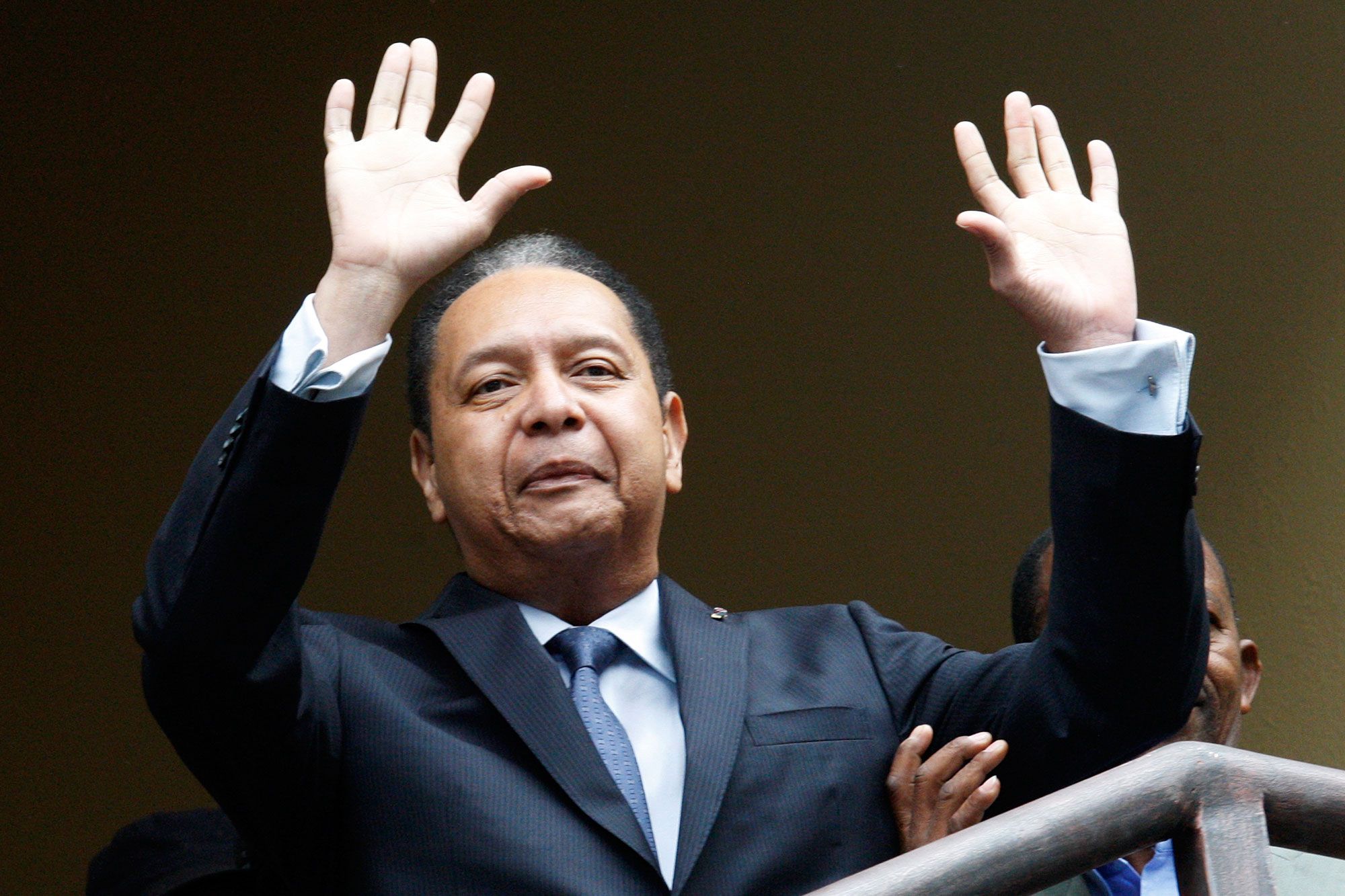
François Duvalier
 Haiti
HaitiAlso known as: Papa Doc, François Antoine Élie Duvalier
Birthday
April 14, 1907
Birth Sign
Aries
Birthplace
Port-au-Prince, Haiti
Age
Died at 64
Height
5 ft 9 in (175 cm)
About
François Duvalier, universally known as "Papa Doc," was a Haitian physician and politician who served as the President of Haiti from 1957 until his death in 1971. He transformed a democratic election into a totalitarian regime that defined modern Haitian history through fear and repression. His rule relied heavily on the creation of the Tonton Macoute, a paramilitary death squad that terrorized the population, and the strategic use of Vodou to cultivate a cult of personality around himself.
Born into a prosperous family in Port-au-Prince, Duvalier earned a medical degree and worked as a rural doctor before entering politics. His early reputation as a healer earned him the affectionate nickname "Papa Doc," which he later weaponized to project an image of paternal authority and spiritual power. After winning the presidency in 1957, he quickly dismantled democratic institutions, declared himself president for life in 1964, and ruled Haiti with an iron fist until his death.
Early Life & Background
François Antoine Élie Duvalier entered the world on April 14, 1907, in Port-au-Prince, Haiti. He was the eldest son of Louis Duvalier, a successful farmer and merchant, and Marie-Louise Cézard. Growing up in the capital, young François absorbed the cultural and political tensions of a nation often caught between foreign influence and internal instability. His father's business acumen provided a stable foundation, but it was medicine that would ultimately define his path.
Duvalier attended the University of Haiti, where he graduated with a medical degree in 1934. Seeking further specialization, he spent a year at the University of Michigan studying public health, focusing intensely on tropical diseases like malaria and yellow fever. This period abroad exposed him to different medical practices and solidified his expertise in treating the ailments that plagued the Haitian poor. Upon returning home, he did not seek the comfort of urban practice. Instead, he traveled to rural areas as a doctor, treating patients who had little access to healthcare.
It was during these years as a rural physician that he earned the moniker "Papa Doc." His patients, grateful for his care and presence, began calling him this affectionate title. This early connection with the common people would become the bedrock of his future political career. In 1943, he launched a campaign to control the spread of contagious tropical diseases, gaining national attention for his efforts. By 1946, his reputation as a dedicated public servant led to his appointment as Minister for Public Health and Labor under the administration of Dumarsais Estimé, giving him his first taste of high-level government work.
Career Growth
His political ascent culminated in the September 1957 presidential election, where Duvalier ran on a platform of black nationalism, populism, and anti-imperialism. He defeated other candidates in a vote seen as a break from the traditional cycle of military coups, marking the beginning of his era. However, his tenure quickly shifted from democratic promise to totalitarian rule. After thwarting a military coup d'état in July 1958, Duvalier moved aggressively to consolidate power. He was unanimously "re-elected" in a 1961 presidential election where he was the only candidate on the ballot.
In 1964, following another sham referendum, he declared himself president for life. His regime became infamous for the creation of the Tonton Macoute, an undercover government death squad that numbered up to 300,000 members. This paramilitary force consumed more than half of the government budget and was used to indiscriminately torture or kill opponents, fostering a climate of fear where dissent was virtually impossible to express privately. To further solidify his rule, Duvalier incorporated elements of Haitian Vodou into a personality cult, presenting himself as a spiritual leader with supernatural powers.
He maintained this grip on power until his death in 1971. His administration drained the country's economy through corruption and embezzlement, leaving Haiti in a state of severe poverty and instability. Despite international criticism, particularly from the Kennedy administration, Duvalier managed to survive numerous attempts to oust him, relying on the loyalty of his security forces and the fear they instilled in the population.
Career Timeline
Public Image & Style
François Duvalier cultivated a public persona that blended the roles of a benevolent father and a terrifying enforcer. He often wore a black suit, white shirt, and black tie, sometimes accompanied by a fedora or a wide-brimmed hat, projecting an image of authority and mysticism. His speeches and radio addresses were characterized by a blend of nationalist rhetoric, religious symbolism, and veiled threats against enemies. He utilized Vodou imagery, claiming to communicate with spirits, and maintained a stoic, almost menacing demeanor in public appearances.
Fame & Fandom (iFAMOUS Rankings)
iFANN has not yet collected fame data for this person. As of the September 2026 rankings, no placement exists for François Duvalier in the global fame charts. Unlike modern celebrities, he does not have a fanbase in the traditional sense. The term "Duvalierist" refers to supporters of his ideology, but these were largely coerced or politically aligned rather than voluntary fans. There are no fan campaigns, billboards, or social media followings associated with him today. The "legacy" he leaves behind is one of trauma, political instability, and economic devastation, leading to ongoing discussions about justice and reconciliation in Haiti.
Interesting Facts and Legends
François Duvalier is one of the few heads of state to successfully merge Catholicism and Vodou into a single state religion, using both to legitimize his rule. He famously claimed to communicate with spirits and predicted his own death, a story that persists in Haitian folklore. The Tonton Macoute were so feared that many Haitians refused to speak their names aloud, believing the organization could hear them even from miles away.
A widely told legend suggests that Duvalier could cure illnesses through spiritual means, reinforcing his image as a healer turned dictator. In 1964, when he declared himself president for life, he shocked the international community but was celebrated by supporters as having received a divine mandate. His distinctive style included wearing a black suit, white shirt, and black tie, often accompanied by a fedora or wide-brimmed hat, projecting an air of authority and mysticism.
Notable Quotes
“I am the only one who can save Haiti.”
“If you want peace, you must fear me.”
Family & Personal Life
François Duvalier was married to Simone Ovide Duvalier, a schoolteacher and daughter of a prominent family. They met during his time as a young physician and married in 1932, well before his political ascent. Their relationship lasted until his death in 1971. The couple had several children, most notably Jean-Claude Duvalier, who succeeded his father as president. Simone played a significant role in the regime's operations, often acting as a powerful figure behind the scenes. The family lived in the Presidential Palace and the nearby Milot estate, surrounded by the trappings of absolute power.
Notable Connections
Relationships & Dating History
François Duvalier was married to Simone Ovide Duvalier (née Marie-Denise Ovide). They met during his time as a young physician; she was a schoolteacher and the daughter of a prominent family. The couple married in 1932, well before his political ascent. Their relationship lasted until his death in 1971. There are no publicly documented romantic relationships outside of this marriage, nor any records of divorce or separation. The union produced several children, most notably Jean-Claude Duvalier, who succeeded his father as president. As of 2026, François Duvalier is deceased; his status is widower, having died while still married to Simone. No other partners or dating history exists in credible historical records.
- MarriedSimone Ovide Duvalier1932 - 1971Married until his death; she played a key role in the regime.
Death & Aftermath
Died
April 21, 1971 (aged 64)
Death Place
Port-au-Prince, Haiti
Cause of Death
Heart attack (myocardial infarction)
François Duvalier, universally known as "Papa Doc," died on April 21, 1971, at the age of 64. He passed away at his private residence in Port-au-Prince, specifically within the Presidential Palace or the nearby Milot estate, after retreating from public view weeks earlier due to declining health. The officially reported cause of death was a heart attack based on assessments by his personal physicians and family statements. This ruling was established without a formal coroner's inquest or independent forensic investigation due to the authoritarian nature of his regime and the immediate consolidation of power by his son, Jean-Claude Duvalier. While long-standing rumors among opposition groups suggested foul play or assassination, these claims lack documentary evidence and have never been substantiated by a legal inquiry.
Upon his passing, the Haitian military and the Tonton Macoute secret police immediately secured the transition of power to his son, who was inaugurated as president shortly thereafter. The government suppressed any potential scrutiny of the circumstances surrounding the death, ensuring that the succession occurred without legal challenge or public examination of the medical records. Public reaction was complex; state-controlled media issued tributes portraying him as a strong leader who protected Haiti's sovereignty, while the general populace and diaspora expressed relief rather than mourning.
The funeral for François Duvalier took place shortly after his death on April 21, 1971, at the National Cathedral in Port-au-Prince. Notable attendees included high-ranking members of his government, military officials, and his family, including his wife Marie-Denise and his son Jean-Claude. The service combined Catholic rituals with Voodoo symbolism before he was buried in the Duvalier family plot in the National Cemetery in Port-au-Prince. His legacy is primarily handled through historical analysis and academic studies on his dictatorship, while the Duvalier estate was effectively dissolved and seized by the state following the popular uprising that ousted his son in 1986.
Net Worth (Estate Value)
$0
iFANN Editorial Team estimate
As of 2026, François Duvalier is deceased, so the concept of "net worth" applies to his estate and legacy value rather than current income. Upon his death in 1971, the Duvalier family had accumulated significant wealth through corruption and state embezzlement, estimated by various historians to be in the hundreds of millions of dollars in 1970s currency, including gold, real estate, and cash stashed abroad. However, following the popular uprising that ousted his son, Jean-Claude Duvalier, in 1986, the Haitian state seized the Duvalier family assets. The estate was effectively dissolved, and much of the wealth was either looted, frozen, or returned to the state. As of 2026, the "net worth" of François Duvalier is considered zero in terms of liquid assets held by heirs, as the family fortune was largely dissipated or confiscated. The estate has not generated significant revenue since 1986 due to the lack of legal recognition of their claims in Haiti and the global freezing of assets related to human rights abuses. The primary "wealth" associated with him today is the historical cost of his regime, estimated by economists to have drained Haiti of billions of dollars in development potential over decades.
Awards & Accolades
Known For
President of Haiti
1957 · Dictator
Keywords
Sources
Quick Facts
- Profession
- politician, physician
- Born
- April 14, 1907
- Birthplace
- Port-au-Prince, Haiti
- Died
- April 21, 1971
- Death Place
- Port-au-Prince, Haiti
- Gender
- Male
- Spouse
- Simone Duvalier
- Birth Sign
- Aries
Personal Details
- Full Name
- François Antoine Élie Duvalier
- Height
- 5 ft 9 in (175 cm)
- Spouse
- Simone Ovide Duvalier
- Children
- Jean-Claude Duvalier, Michèle Duvalier, Odette Duvalier, Marie-Thérèse Duvalier
- Education
- University of Haiti, University of Michigan
Frequently Asked Questions
What was François Duvalier's profession?
How did François Duvalier die?
Who succeeded François Duvalier?
What was the Tonton Macoute?
Why is François Duvalier called "Papa Doc"?
Similar People
Join the community
fans discussing