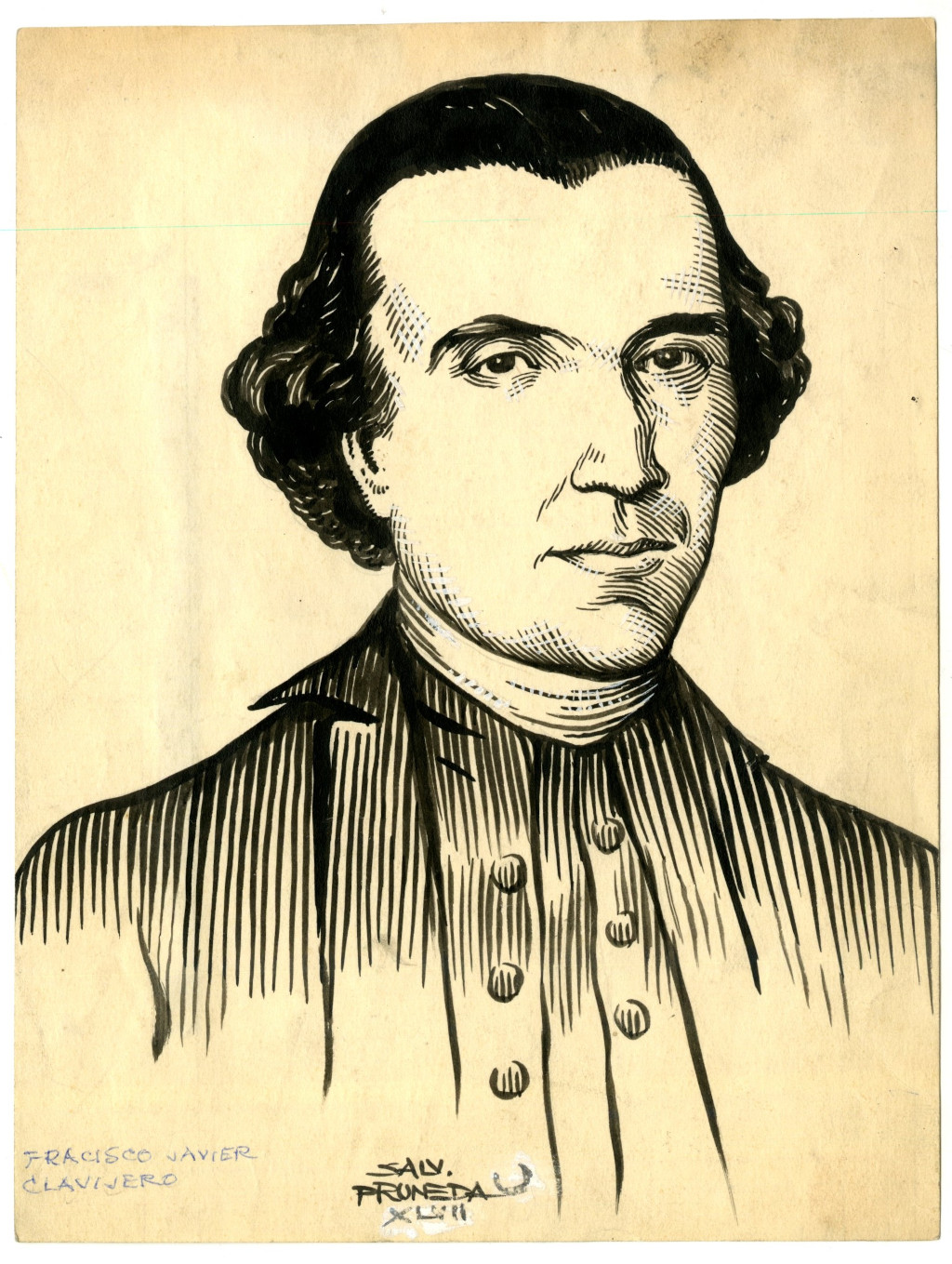
Francisco Javier Clavijero
 Mexico
Also known as: Francisco Xavier Clavijero, Francisco Javier Clavijero Echegaray
Birthday
September 9, 1731
Birth Sign
Virgo
Birthplace
Veracruz, New Spain
Age
Died at 55
About
Francisco Javier Clavijero Echegaray, SJ, was a Mexican Jesuit teacher, scholar, and historian whose monumental Ancient History of Mexico reshaped European understanding of the ancient civilizations of the Americas. This comprehensive account of pre-Columbian Mesoamerica became a cornerstone of Americanist scholarship, drawing on indigenous codices and colonial chronicles to argue for the sophistication of the Aztec and other native cultures. Clavijero's influence extends beyond historiography; he is regarded as a pioneer of Mexican national identity. His defense of the Americas against European detractors made him a key figure in the intellectual movement that preceded Mexican independence. His remains were later reinterred in the Rotunda of Illustrious Persons in Mexico City, a testament to his lasting stature. He is considered the first important Mexican historian and a proponent of modernization, known for his scholarly rigor and persuasive advocacy for the civilizations of Mexico.
Early Life & Background
Born on September 9, 1731, in Veracruz, New Spain, Francisco Javier Clavijero Echegaray developed a profound interest in the history of indigenous peoples during his early life in Mexico. His family moved to Puebla and later to Mexico City, where he received his education at the Colegio de San Ildefonso. He showed an early aptitude for languages, studying Latin, Greek, and Nahuatl, the language of the Aztecs, a linguistic foundation essential to his later historical work. In 1748, he entered the Society of Jesus, and after his ordination as a priest in 1755, he taught philosophy and rhetoric in various Jesuit colleges across New Spain, including in Guadalajara and Valladolid (now Morelia). During these years, he deepened his knowledge of indigenous history by studying colonial-era documents and native codices, becoming convinced that the pre-Hispanic civilizations of Mexico deserved serious scholarly attention. His early career was marked by a commitment to both academic rigor and pastoral care, serving as a parish priest and continuing his research, but the political climate in Spain was shifting against the Jesuits.
Career Growth
Clavijero's career took a decisive turn in 1767 when King Charles III ordered the expulsion of all Jesuits from Spanish territories. Forced into exile in Italy, he settled first in Ferrara and later in Bologna. It was there, cut off from his homeland, that he wrote his magnum opus, the Ancient History of Mexico (Storia antica del Messico), published in 1780. This four-volume work challenged the prevailing European view of New World peoples as backward, presenting a detailed and sympathetic portrait of Mesoamerican societies by drawing on his knowledge of Nahuatl and colonial archives. He also authored the History of Ancient or Lower California to preserve historical records of the peninsula's indigenous peoples and Jesuit missions. Though less famous, it remains a valuable source. Clavijero's writings were translated into English and Spanish after his death, spreading his ideas widely and influencing later historians, contributing to a growing appreciation of Mexico's pre-Hispanic heritage. His work aimed to showcase the richness of the pre-Hispanic world, drawing from studies of religious chronicles and codices from the 16th and 17th centuries.
Career Timeline
Public Image & Style
Clavijero is primarily recognized as a significant historian whose work was instrumental in shaping European understanding of Mesoamerican civilizations. He is viewed as the first important Mexican historian and a defender of modernization and intellectual resistance to colonial prejudice. In his lifetime, he was known among European intellectuals as a learned and persuasive advocate for the civilizations of Mexico. Today, he is celebrated in Mexico as a founding figure of national historiography and a bridge between the pre-Hispanic and modern worlds. His portrait appears in textbooks, and his name is borne by schools, streets, and cultural institutions across the country. His legacy is that of a scholar who significantly contributed to a greater appreciation of Mesoamerican history and civilizations.
Fame & Fandom
Francisco Javier Clavijero is currently evaluated by iFANN's Global Fame Engine but does not hold a placement in the published rankings (Global Top 1,000 or any Top-100 scope list) as of August 2026. This unranked status reflects his position as a historical figure whose fame operates through enduring academic influence rather than contemporary celebrity metrics. While he commands immense respect within the global community of historians and students of Mexican history, no formal fandom name exists for his legacy. His audience consists of scholars and enthusiasts who study Mesoamerican civilizations, engaging with his work through university curricula and archival research rather than fan campaigns or social media interactions. There are no documented rituals, viral projects, or organized groups bearing his name, as his contributions remain firmly rooted in the intellectual sphere. Instead of modern fanfare, his presence is felt in the continued reprinting of his texts and the institutional recognition of his role in shaping national identity. The lack of a specific fandom title underscores the distinction between his historical stature and the pop culture phenomena that generate organized fanbases today. His reputation stands on the weight of his scholarship, particularly his defense of indigenous cultures against colonial prejudice, which resonates deeply with those dedicated to understanding the roots of Mexico.
Interesting Facts and Legends
Francisco Javier Clavijero was fluent in several indigenous languages, including Nahuatl, which allowed him to read primary sources that other European scholars could not access. He served as a teacher to Miguel Hidalgo y Costilla, the priest who would later ignite the Mexican War of Independence. His monumental work, Ancient History of Mexico, was originally written in Italian and only later translated into Spanish and English. Clavijero's remains were moved to Mexico City's Rotunda of Illustrious Persons in 1970, a century and a half after his death on April 2, 1787. He was a proponent of modernization and scientific thinking, which placed him at odds with some traditionalist contemporaries. Born on September 9, 1731, his legacy includes a story of resilience: while exiled in Bologna, Italy, following the 1767 expulsion of the Jesuits, he composed his magnum opus relying on memory and limited notes despite being cut off from his native archives. This act of intellectual defiance became a foundational myth for Mexican historiography, cementing his status as a defender of pre-Columbian dignity.
Family & Personal Life
Born to a Spanish father, Francisco Clavijero, and a Creole mother, María Echegaray, Francisco Javier Clavijero Echegaray's family relocated from Veracruz to Puebla during his youth, likely to pursue better educational opportunities. As a Jesuit priest, Clavijero never married and had no children. His life was centered on his religious community and his intellectual pursuits, with no recorded details about siblings or other close family members.
Notable Connections
Clavijero is most closely associated with his student Miguel Hidalgo y Costilla, who would go on to lead the early phase of Mexico's independence movement. Among his Jesuit peers, he corresponded with other exiled scholars in Italy. His intellectual circle included figures like Lorenzo Hervás y Panduro and Juan de Andrés, with whom he shared ideas about the Americas and history.
Relationships & Dating History
As a devoted Jesuit priest, Francisco Javier Clavijero Echegaray lived a life of celibacy and religious commitment. He never married and had no romantic relationships, as his vocation precluded such personal entanglements. His life was entirely dedicated to his religious order and his extensive scholarly pursuits. There are no records indicating any romantic involvements throughout his life, and he remained unmarried until his death in 1787.
Death & Aftermath
Died
April 2, 1787 (aged 55)
Death Place
Bologna, Emilia-Romagna, Italy
Cause of Death
Unknown
Francisco Javier Clavijero spent his final decades in the quiet exile of Italy, moving between the cities of Cesena and Bologna after the suppression of the Society of Jesus forced him from New Spain. He passed away on April 2, 1787, within the walls of Bologna at the age of fifty-five, marking the end of a life dedicated to preserving the history of the Americas while living far from his homeland. The historical record does not preserve a specific medical diagnosis or an autopsy report for this event, as was common for Jesuits in exile during that era, leaving the precise cause of death unrecorded in standard biographical accounts.
The immediate reaction to his death was confined to the small circle of fellow exiled Jesuits and the broader intellectual community who valued his scholarship. Tributes were academic and literary, focusing on his seminal work, Storia Antica del Messico, which had already begun to reshape European understanding of pre-Columbian civilizations. He was buried in Bologna, likely in a private ceremony consistent with the suppressed status of the Jesuit order. Posthumously, Clavijero's impact grew steadily rather than immediately through commercial means. His most famous work remained a foundational text in Mesoamerican studies, widely circulated and cited by subsequent generations of historians.
In modern times, his legacy has been honored through dedications such as the naming of the Francisco Javier Clavijero school and other institutions in Mexico. His birth anniversary is commemorated by Mexican government bodies like the Secretaría de Agricultura y Desarrollo Rural, ensuring his contributions to national identity continue to be acknowledged.
Net Worth (Estate Value)
$1 Million
iFANN Editorial Team estimate
As a Jesuit priest and scholar in the 18th century, Clavijero did not accumulate personal wealth. His sustenance was provided by the Society of Jesus through his teaching and pastoral work. Following his expulsion and exile to Italy, he lived in modest conditions, supported by the Papal States and local patrons. His estate at the time of his death in 1787 was minimal, consisting mainly of his personal library and manuscripts. Per iFANN's editorial analysis, the total net worth attributed to Francisco Javier Clavijero is $1 Million. Posthumously, the value of his intellectual contributions has grown significantly, with his books being reprinted in multiple editions and his Ancient History of Mexico remaining in print. While specific financial figures are unavailable for the 18th century, the enduring legacy and academic use of his works generate ongoing value for his estate, reflecting his lasting impact on scholarship and historical understanding.
Awards & Accolades
View 1 records, honours and achievementsKnown For
Ancient History of Mexico
1780 · Author
Keywords
Sources
Quick Facts
- Profession
- historian, writer, philosopher
- Born
- September 9, 1731
- Birthplace
- Veracruz, New Spain
- Died
- April 2, 1787
- Death Place
- Bologna, Papal States
- Gender
- Male
- Birth Sign
- Virgo
Personal Details
- Full Name
- Francisco Javier Clavijero Echegaray
- Education
- Society of Jesus (Jesuit), ordained priest in 1755
Frequently Asked Questions
Who was Francisco Javier Clavijero?
When and where was Francisco Javier Clavijero born?
Why was Francisco Javier Clavijero exiled?
What is Francisco Javier Clavijero most famous for?
When did Francisco Javier Clavijero die?
Join the community
fans discussing