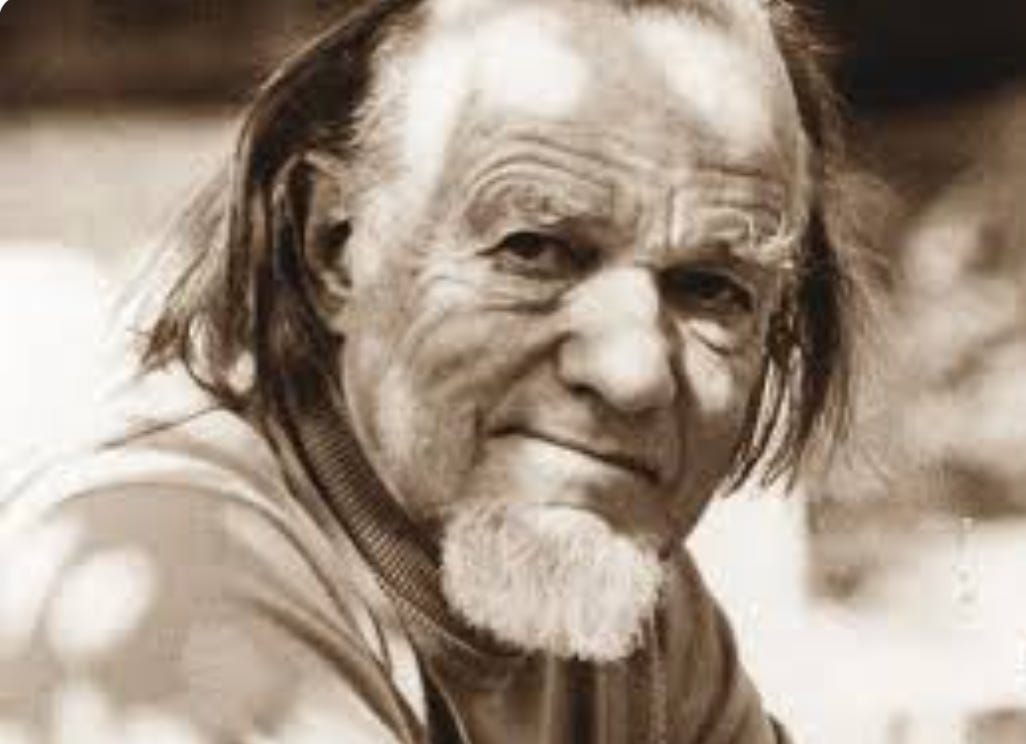
Francis Schaeffer
 United States
theologian•philosopher•pastor•author
Also known as: Francis August Schaeffer, Frank Schaeffer Sr.
Birthday
January 30, 1912
Birth Sign
Aquarius
Birthplace
Germantown, Pennsylvania, USA
Age
Died at 72
About
Francis August Schaeffer was an American evangelical theologian, philosopher, and Presbyterian pastor who spent his life wrestling with the big questions of faith and culture. Born in Germantown, Pennsylvania, on January 30, 1912, he graduated with high honors from Hampden-Sydney College in 1935 and studied at Westminster and Faith Theological Seminaries. He became the first ordained minister of the Bible Presbyterian Church and served congregations in Pennsylvania and Missouri before moving his family to Switzerland in 1948. There, in 1955, he and his wife Edith founded L'Abri, a Christian community that welcomed seekers and skeptics alike to discuss faith, philosophy, and art. The community grew into an international network, and Schaeffer's influence spread far beyond its Alpine origins.
Schaeffer's intellectual approach was shaped by thinkers like Cornelius Van Til, Herman Dooyeweerd, and Hans Rookmaaker. He argued that non-Christian worldviews are internally inconsistent, and he developed a method he called 'taking the roof off' to expose the contradictions in secular thinking. His books, including The God Who Is There, Escape from Reason, and He Is There and He Is Not Silent, laid out a presuppositional apologetic that aimed to show Christianity as the only coherent foundation for truth, morality, and meaning. In the 1970s and 1980s, Schaeffer turned his attention to political engagement, particularly around abortion and secular humanism. His 1981 book A Christian Manifesto encouraged believers to challenge cultural pluralism while rejecting theocracy, and it influenced groups like Operation Rescue and helped shape the Christian Right. He also co-developed the Seven Mountain Mandate, a vision for Christian influence in society's key spheres.
Schaeffer died on May 15, 1984, at the age of 72, but his ideas continue to resonate. He wrote over 20 books and co-authored several more with his wife, and his lectures and films reached audiences worldwide. His legacy is a call to engage culture thoughtfully and faithfully, a challenge that remains as relevant today as it was in his lifetime.
Early Life & Background
Francis August Schaeffer was born in Germantown, a working-class neighborhood of Philadelphia, to parents of German descent. His father, also named Francis, worked as a machinist, and his mother, Bessie Williamson Schaeffer, kept the home. As an only child, he developed a solitary intellectual streak early on, devouring books on philosophy and languages.
He entered Hampden-Sydney College in Virginia, where he studied philosophy and Greek, graduating with high honors in 1935. During his college years, reading philosophy led him into agnosticism, but a pivotal moment came in 1930 when he read the Bible and converted to Christianity at age 18. That experience redirected his path. He went on to study at Westminster Theological Seminary in Philadelphia, where he absorbed the presuppositional apologetics of Cornelius Van Til, and then at Faith Theological Seminary, where he graduated in 1938.
Ordained as the first minister of the Bible Presbyterian Church that same year, Schaeffer pastored congregations in Grove City, Pennsylvania, and later in St. Louis, Missouri, from 1941 to 1948. The infighting and separatism within American fundamentalism wore on him, and in 1947 a mission trip to Europe changed his outlook. He met Dutch art historian Hans Rookmaaker, whose view of Christianity and culture reshaped Schaeffer's thinking. In 1948, he and his wife Edith moved to Switzerland as missionaries, initially settling in Champéry before relocating to Huémoz in 1955. That move set the stage for his breakthrough.
Career Growth
In 1955, Schaeffer founded L'Abri in Huémoz, Switzerland. The name means 'the shelter' in French, and the community welcomed students, seekers, and skeptics to discuss faith, philosophy, and art in an atmosphere of genuine hospitality. What began as a small chalet grew into an international network, with branches in England, the Netherlands, Sweden, South Korea, India, Brazil, and the United States. His method of 'taking the roof off', exposing the internal contradictions of non-Christian worldviews, became his signature apologetic approach.
His first major book, The God Who Is There (1968), laid out his presuppositional apologetic and established him as a major evangelical intellectual. It was followed by Escape from Reason (1968) and He Is There and He Is Not Silent (1972), which together formed a trilogy on the coherence of the Christian worldview.
In the 1970s, Schaeffer moved into film and political engagement. His 1976 book and film series How Should We Then Live? traced the decline of Western culture and was watched by millions. His 1979 film series Whatever Happened to the Human Race?, co-authored with Dr. C. Everett Koop, addressed abortion and euthanasia and is credited with galvanizing evangelical political engagement on these issues. His 1981 book A Christian Manifesto encouraged believers to challenge cultural pluralism while explicitly rejecting theocracy, and it became his most politically influential work, shaping groups like Operation Rescue and the Christian Right. He also co-developed what later became known as the Seven Mountain Mandate, a vision for Christian influence across society's key spheres.
Career Timeline
Public Image & Style
Schaeffer's public image was that of an unconventional, intellectually rigorous evangelical. He wore his hair long in his later years, often dressed in casual clothing, and sported a signature beret, making him stand out among the suit-and-tie evangelicals of his era. His teaching style was conversational and Socratic, often conducted around a fireplace at L'Abri with students and seekers.
His content combined deep intellectual seriousness with pastoral warmth. His books sweep across ancient philosophy, modern art, literature, and film, offering a cultural critique that resonated with a generation of Christians seeking intellectual engagement. His fandom consisted largely of evangelical Christians, Reformed theologians, and Christian intellectuals. There is no official fandom name, but followers often describe themselves as shaped by 'Schaefferian' thinking. The L'Abri community maintains its own culture of hospitality, intellectual inquiry, and prayer that continues to attract visitors from around the world.
Fame & Fandom
Francis Schaeffer stands as the 66th most famous person in Pastors, a standing confirmed by the 66th most famous person in Pastors within the August 2026 iFANN Global Fame Rankings. This placement reflects his enduring influence on religious thought rather than celebrity culture. His legacy does not rely on a formal fandom or fan rituals; instead, his following consists of theologians, pastors, and students who engage with his work through established ministries like L'Abri Fellowship and the Francis A. Schaeffer Foundation. There is no specific tribe name for his supporters, who are defined by their Reformed evangelical alignment rather than pop-culture devotion. While he never hosted autograph signings or viral social media campaigns, his impact resonates through millions of book sales across forty languages and digital archives that keep his lectures accessible to new generations. The intellectual gravity of his arguments regarding truth and culture has sustained his relevance decades after his death, creating a global readership that operates more like an academic community than a traditional fanbase. His presence in the rankings underscores how deeply his ideas continue to shape modern Christian discourse.
Interesting Facts and Legends
Born in Germantown, Pennsylvania, Schaeffer was an agnostic teenager before converting at age eighteen. He and his wife Edith initially served children in a Chester, Pennsylvania slum before relocating to Europe. Known for his fluency in French, he conducted discussions at L'Abri in multiple languages, often wearing a signature beret and casual attire while engaging hippies and countercultural figures during the 1960s and 1970s. He coined the phrase 'true truth' to counter relativism and co-authored Whatever Happened to the Human Race? with Dr. C. Everett Koop in 1979, anticipating later political battles over abortion. Though he held an honorary doctorate from 1954, he used the title 'Dr. Schaeffer' without earning a doctoral degree. Legends of his life center on the founding of L'Abri in 1955, which became a legendary hub where seekers debated philosophy around a fireplace. Another iconic moment involved his method of 'taking the roof off' the church in the late 1960s, challenging believers to integrate faith with all of life. His 1982 lectures, published as A Christian Manifesto, are also remembered as pivotal in shaping the Religious Right's approach to civic engagement.
Notable Quotes
“If we do not show love to one another, the world has a right to question whether Christianity is true.”
“If there is no absolute moral standard, then one cannot say in a cross-cultural way that anything is wrong.”
“The Bible gives us the only integrated answer to the questions of existence, and it is the only answer that corresponds to what is.”
“We must not be content with a Christianity that is merely a set of ideas, but we must live it out in the whole of life.”
“The church is to be the community of truth, and that truth is to be demonstrated in love.”
Family & Personal Life
Francis Schaeffer was the only child of Francis A. Schaeffer, a machinist, and Bessie Williamson Schaeffer, of German descent. He married Edith Rachel Merritt Seville on July 26, 1935, whom he met at a summer Bible conference. Edith was his indispensable partner, co-founding L'Abri and writing over 20 books of her own. They had four children: Priscilla, Susan, Deborah, and Frank. Frank later became a controversial figure, initially a prominent evangelical filmmaker before renouncing evangelicalism and becoming a liberal Orthodox Christian author who has publicly criticized his father's political legacy. Edith died in 2013 at the age of 98. The family lived modestly in the Swiss village of Huémoz, where L'Abri was based.
Notable Connections
Francis Schaeffer's closest collaborator was his wife Edith, with whom he co-founded L'Abri. His thinking was shaped by Cornelius Van Til, his professor at Westminster Theological Seminary, and by Dutch art historian Hans Rookmaaker. He co-authored Whatever Happened to the Human Race? with Dr. C. Everett Koop, who later became U.S. Surgeon General. His son Frank Schaeffer produced films based on his works but later became a vocal critic of his father's political legacy. Other associates include L'Abri students Os Guinness and Jerram Barrs, and his son-in-law Udo Middelmann, who directed the Francis A. Schaeffer Foundation.
Relationships & Dating History
Francis Schaeffer's personal life was defined by a single, lifelong marriage. There is no record of any public romantic relationships outside his marriage, and no dating history, affairs, or separations have been documented in any credible source.
He married Edith Rachel Merritt Seville on July 26, 1935, a fellow student he met at a summer Bible conference in 1933. Edith was a co-founder of L'Abri and a prolific author in her own right. They had four children together: Priscilla, Susan, Deborah, and Frank. Their partnership was both personal and professional, with Edith managing the practical operations of L'Abri while Francis focused on teaching and writing.
At the time of his death on May 15, 1984, Francis was married to Edith, and they had never divorced or separated. Edith survived him by 29 years, dying in 2013 at the age of 98.
- MarriedEdith Schaeffer1935 - 1984Married on July 26, 1935, they co-founded L'Abri and had four children together. Marriage lasted until his death.
Death & Aftermath
Died
May 15, 1984 (aged 72)
Death Place
Huémoz-sur-Ollon, Switzerland
Cause of Death
Heart failure due to cancer complications
Francis Schaeffer spent his final months in the quiet halls of L'Abri Fellowship in Huémoz-sur-Ollon, Switzerland, a place he had helped build decades earlier. He continued receiving visitors and engaging with students until his health deteriorated sharply. On May 15, 1984, the theologian passed away at the age of 72 within the community he called home. The reaction from the evangelical world was immediate and profound. Prominent figures like R.C. Sproul described Schaeffer as a brave soldier against secularization, while institutions rushed to honor his intellectual legacy. Book sales for titles such as The God Who Is There and Escape from Reason surged as churches and seminaries sought to preserve his teachings.
Tributes poured in from peers who recognized his unique ability to bridge faith and philosophy. A private funeral service took place shortly after his death at L'Abri, attended by family members, close friends, and staff. Reflecting his preference for simplicity, the gathering remained intimate rather than a large public event. Schaeffer was cremated, and his ashes were interred in the L'Abri cemetery, keeping him close to the site of his life's work. His estate was managed by his wife Edith and their children through the Francis A. Schaeffer Foundation, which continues to fund educational initiatives and maintain the fellowship center today.
Net Worth (Estate Value)
$2 Million
iFANN Editorial Team estimate
As a pastor, missionary, and author who lived modestly in a Swiss village, Schaeffer never accumulated significant personal wealth. His income derived primarily from book royalties, speaking fees, and the modest support he received as a missionary. After his death in 1984, the Schaeffer estate is managed by his family, particularly through the Francis A. Schaeffer Foundation and the ongoing operations of L'Abri. His books remain in print through publishers including Crossway and InterVarsity Press, generating ongoing royalties. The God Who Is There, A Christian Manifesto, and How Should We Then Live? continue to sell steadily. The film series have been remastered and re-released on DVD and streaming platforms. The L'Abri Fellowship operates as a nonprofit organization with branches worldwide, funded by donations rather than generating personal income for the estate. Per iFANN's editorial analysis, the estate's value is estimated at around $2 million as of 2026, based on ongoing royalties and licensing. This figure is modest compared to many public figures, reflecting Schaeffer's lifelong commitment to simplicity and his focus on ideas rather than accumulation.
Awards Won (1)
Schaeffer received relatively few formal awards during his lifetime, reflecting his role as a countercultural intellectual rather than a mainstream figure. He was awarded an honorary doctorate from a small California Christian college in 1954, after which he used the title 'Dr. Schaeffer.' He also received honorary doctorates from several evangelical institutions, including Geneva College, recognizing his contributions to Christian thought. His legacy is honored through the ongoing work of L'Abri and numerous scholarly assessments.
1954 · Honorary
Lifetime contribution to Christian thought
Known For
L'Abri Fellowship
1955 · Founder
The God Who Is There
1968 · Author
How Should We Then Live?
1976 · Author and presenter
A Christian Manifesto
1981 · Author
Keywords
Sources
Quick Facts
- Profession
- theologian, philosopher, pastor, author
- Born
- January 30, 1912
- Birthplace
- Germantown, Pennsylvania, USA
- Died
- May 15, 1984
- Death Place
- Rochester, Minnesota, USA
- Gender
- Male
- Spouse
- Edith Schaeffer
- Children
- Priscilla, Susan, Deborah, Frank
- Education
- Hampden-Sydney College, Westminster Theological Seminary, Faith Theological Seminary
Personal Details
- Full Name
- Francis August Schaeffer
- Spouse
- Edith Schaeffer
- Children
- Priscilla, Susan, Deborah, Frank
- Education
- Hampden-Sydney College, Westminster Theological Seminary, Faith Theological Seminary
Frequently Asked Questions
What is Francis Schaeffer best known for?
Was Francis Schaeffer a Calvinist?
What happened to Francis Schaeffer's son Frank?
Does L'Abri still exist today?
What is the Seven Mountain Mandate?
Similar People
Join the community
fans discussing