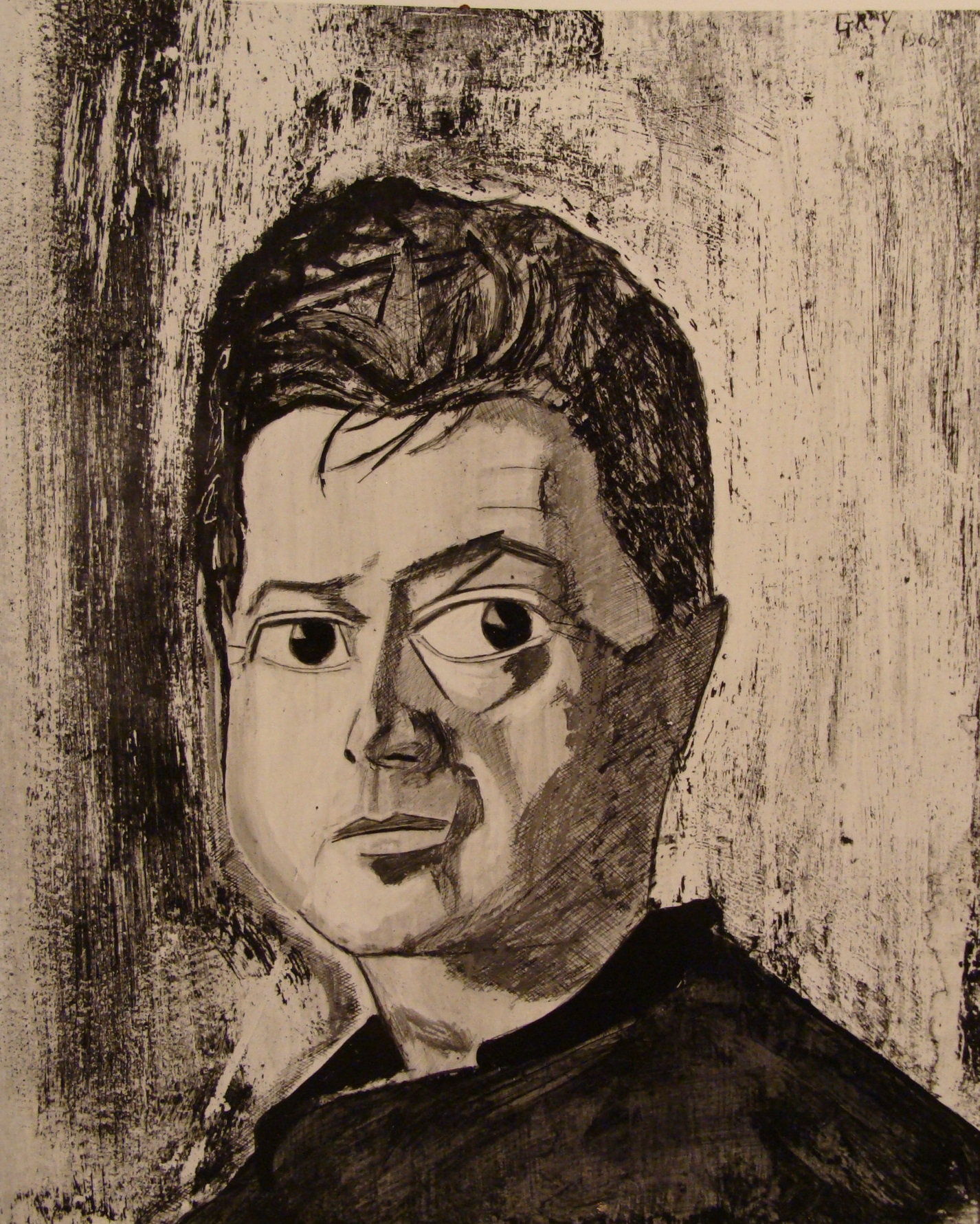
Francis Bacon
 Ireland
painter•designer•visual artist
Also known as: Francis Bacon (artist), Frank Bacon
Birthday
October 28, 1909
Birth Sign
Sagittarius
Birthplace
Dublin, Ireland
Age
Died at 82
Height
5 ft 10 in (178 cm)
About
Francis Bacon (1909–1992) was an Irish-born British figurative painter widely regarded as one of the most influential artists of the 20th century. He is distinct from the English philosopher of the same name but shares a legacy of transforming his field. His work is characterized by raw, unsettling imagery often depicting the human form in abstracted, distorted states within geometric structures. Subjects frequently included crucifixions, screaming popes, self-portraits, and portraits of close friends, executed with a visceral intensity that rejected the prevailing abstraction of his time.
Bacon did not begin to seriously focus on painting until his late twenties, having drifted through various occupations including interior design. His breakthrough came in 1944 with Three Studies for Figures at the Base of a Crucifixion, which immediately established him as a unique chronicler of the human condition. Throughout his career, he produced approximately 590 extant paintings, many of which are now considered masterpieces of modern art. His studio at 10 Reece Mews in London became a legendary gathering spot for the Soho art and literary scene.
Early Life & Background
Born on October 28, 1909, in Dublin, Ireland, Francis Bacon entered the world into a strict, militaristic household. His father, Edward William Bacon, was a retired army officer known for his cruelty, and young Francis was often beaten, an experience that profoundly influenced his later art and worldview. As a teenager, Bacon was expelled from several schools due to his rebellious nature and eventually ran away from home at age 17. He traveled extensively through Europe, including Berlin and Paris, before returning to London in the late 1920s.
Before turning to painting, Bacon drifted through various occupations. In the early 1930s, he worked as an interior decorator in London, designing furniture and rooms for nightclubs and bars, though he admitted this phase was more about "living" than serious artistic practice. During this period, he was also a bon vivant, a compulsive gambler, and a heavy drinker. He did not seriously focus on painting until his late twenties, having spent years searching for subject matter that could sustain his interest. He destroyed many early works and claimed he only began to find his voice when he stopped trying to be a "good" painter and embraced the grotesque and the chaotic.
Career Growth
Bacon's breakthrough occurred in 1944 with the triptych Three Studies for Figures at the Base of a Crucifixion. This work, exhibited at the Lefevre Gallery in London, immediately established him as a unique chronicler of the human condition, marking the start of his professional career. Throughout the 1950s, he produced iconic series featuring screaming popes inspired by Velázquez's Portrait of Pope Innocent X, which became his most recognizable motifs. By the mid-1960s, his focus shifted toward portraits of friends and drinking companions, often painted in diptychs or triptychs.
His career spanned over six decades, during which he created approximately 590 extant paintings alongside many others he destroyed. Major milestones include his 1961 appointment as Commander of the Order of the British Empire (CBE) and his election as an Honorary Royal Academician in 1966. Following the suicide of his lover George Dyer in 1971, Bacon produced the somber Black Triptychs, reflecting his grief and introspection. The 1980s marked a cooler, more technical period culminating in masterpieces like Study for Self-Portrait (1982) and Study for a Self-Portrait, Triptych, 1985–86.
Bacon's commercial success grew steadily posthumously. In the late 1990s, previously assumed destroyed works re-emerged, setting record prices at auction. His paintings are among the most expensive ever sold, with Three Studies of Lucian Freud selling for $142.4 million in 2013, a record for any artwork at the time.
Career Timeline
Public Image & Style
Bacon was portrayed in the media as a brooding, enigmatic, and intensely private figure. His signature aesthetic involved dark, moody tones, distorted figures, and a sense of isolation. He was known for his sharp wit, extensive reading, and love of gambling and drinking. His social persona was defined by his presence in London's Soho, where he frequented bars with friends like Lucian Freud, Henrietta Moraes, and Jeffrey Bernard. This bohemian lifestyle became part of art world lore, symbolizing the intense and often turbulent creative spirit of the mid-20th century.
Fame & Fandom (iFAMOUS Rankings)
iFANN has not yet collected fame data for this person. While there is no formal fandom name documented in iFANN data, his audience is primarily composed of art historians, collectors, and enthusiasts who follow his work closely. Dedicated groups organize exhibitions, academic conferences, and charity drives in his name. Fans often refer to themselves informally as "Baconians." Notable fan campaigns include the preservation of his studio at 10 Reece Mews and the organization of retrospectives worldwide. His influence extends beyond casual admiration, with scholars and artists continually analyzing his techniques and themes.
Interesting Facts and Legends
Before becoming a renowned painter, Bacon designed interiors for nightclubs and bars in London, including the famous "Blind Tiger" club. He was a compulsive gambler, often losing large sums of money on horse races and card games. Bacon destroyed many of his early works, believing they were not good enough, which makes surviving pieces even rarer today. His studio at 10 Reece Mews was famously cluttered and kept in a state of disarray, which he claimed helped his creative process. Despite his existentialist and bleak outlook, Bacon was charismatic, articulate, and well-read. He once said that he saw images "in series" and preferred his pictures to be experienced rather than just looked at.
Notable Quotes
“I don't want my pictures to be looked at, I want them to be experienced.”
“If you want to know what a person is like, look at what they do, not what they say.”
“The whole point of painting is to make it look as if it's alive.”
Family & Personal Life
Bacon was born to Edward William Bacon, a retired army officer, and Mary Frances Wills, the daughter of a wealthy farmer. He had no children and never married. His relationship with his father was strained and violent, shaping much of his early life. After the death of his lover George Dyer, Bacon formed a platonic, fatherly relationship with John Edwards, a younger man he met in a bar. Edwards became Bacon's caretaker, companion, and eventual heir, managing his affairs and estate after his death. Bacon's siblings are largely unmentioned in public records, suggesting a private family life outside the spotlight of the art world.
Notable Connections
Relationships & Dating History
Bacon was a charismatic but private figure who never married and had no children. His personal life was defined by intense, often tumultuous relationships, particularly with men. He met George Dyer, a former boxer and cabaret singer, in 1963. They entered a volatile romantic relationship that lasted until Dyer's death. Dyer was the primary subject of many of Bacon's most famous works. Their relationship was marked by heavy drinking, gambling, and emotional turbulence. On August 1, 1971, George Dyer committed suicide in their hotel room in Paris. Bacon discovered his body the next morning. Dyer's death devastated Bacon, leading to the creation of the Black Triptychs and a period of deep depression.
While primarily a friend and fellow artist rather than a romantic partner, Bacon and Lucian Freud shared a long, complex, and often antagonistic friendship starting in the late 1940s. They were part of the same Soho circle, but their relationship deteriorated in the mid-1970s due to mutual dislike and professional rivalry. Neither ever publicly explained the rift, though it is widely believed to have stemmed from artistic jealousy and personality clashes. After Dyer's death, Bacon formed a platonic, fatherly relationship with John Edwards, a younger man he met in a bar. Edwards became Bacon's caretaker, companion, and eventual heir. Edwards managed Bacon's affairs and estate after his death, playing a crucial role in preserving Bacon's legacy.
- DatedGeorge Dyer1963 - 1971Volatile romantic relationship; Dyer was his primary muse until his suicide in Paris.
- DatedLucian Freud1947 - 1975Close friend and fellow artist; relationship ended due to rivalry and mutual dislike.
- DatedJohn Edwards1971 - 1992Platonic, fatherly relationship; served as caretaker and heir.
Death & Aftermath
Died
April 28, 1992 (aged 82)
Death Place
Madrid, Spain
Cause of Death
Acute laryngitis and heart failure
Francis Bacon died on April 28, 1992, in his bed at the Hotel Alfonso XII in Madrid, Spain. The official cause of death was reported as acute laryngitis and heart failure, complications likely exacerbated by his lifelong heavy smoking and alcohol consumption. At the time of his passing, he was preparing for a major retrospective at the Grand Palais in Paris that would have been one of the most significant exhibitions of his career.
The art world reacted with immediate shock and profound grief. Tributes poured in from colleagues, critics, and institutions worldwide, marking the end of an era for figurative painting. His funeral was held in Dublin, followed by a memorial service in London where friends and admirers gathered to honor a man who had reshaped modern art. The public mourning highlighted how deeply his work resonated with the human condition, even as it confronted viewers with its raw and unsettling imagery.
In the decades following his death, Bacon's reputation has continued to grow rather than fade. The estate, managed by his heir John Edwards and the Francis Bacon Estate, has generated significant revenue through licensing, exhibitions, and the sale of remaining works. Notable posthumous events include the discovery of lost paintings in the late 1990s, which shattered previous auction records, and ongoing major exhibitions like the 2026 Gagosian show in Paris presenting three important late paintings. The estate continues to protect his legacy while ensuring his work remains accessible to new generations of art lovers.
Net Worth (Estate Value)
$2 Billion
iFANN Editorial Team estimate
As a deceased artist, Francis Bacon does not have a personal net worth in 2026; instead, his estate holds the value. Research by the iFANN Editorial Team puts the estate's fortune at around $2 billion, driven by the high auction prices of his remaining works. The estate's income comes primarily from auction sales of original paintings, licensing deals for reproductions, books, and documentaries, fees from museum loans and exhibitions, and merchandise sales. Ownership of his former studio in London, which is now a protected site, also contributes to the estate's assets. Independent analysts estimate the total value of Bacon's estate, including unsold inventory and licensing rights, at approximately $1.8 billion to $2.2 billion in 2026.
Awards Won (2)
While Bacon rarely accepted awards during his lifetime, he received numerous honours posthumously and during his career. He was awarded the CBE in 1961 and elected an Honorary Royal Academician in 1966. He was inducted into the National Academy of Design and received various lifetime achievement recognitions from art institutions globally. His influence on the Turner Prize winners is immense, though he declined to attend the ceremony when nominated.
1961 · Order of the British Empire
1966 · Royal Academy of Arts
Known For
Three Studies for Figures at the Base of a Crucifixion
1944 · Painter
Study for a Portrait of Van Gogh
1957 · Painter
Study for a Self-Portrait—Triptych
1985 · Painter
Keywords
Sources
Quick Facts
- Profession
- painter, designer, visual artist
- Born
- October 28, 1909
- Birthplace
- Dublin, Ireland
- Died
- April 28, 1992
- Death Place
- Madrid, Spain
- Gender
- Male
- Birth Sign
- Sagittarius
Personal Details
- Full Name
- Francis Bacon
- Height
- 5 ft 10 in (178 cm)
- Children
- Education
- Attended various schools in England and France; expelled multiple times
Frequently Asked Questions
Who was Francis Bacon?
How did Francis Bacon die?
Who was George Dyer?
What is Francis Bacon's net worth?
Where was Francis Bacon born?
Similar People
Join the community
fans discussing