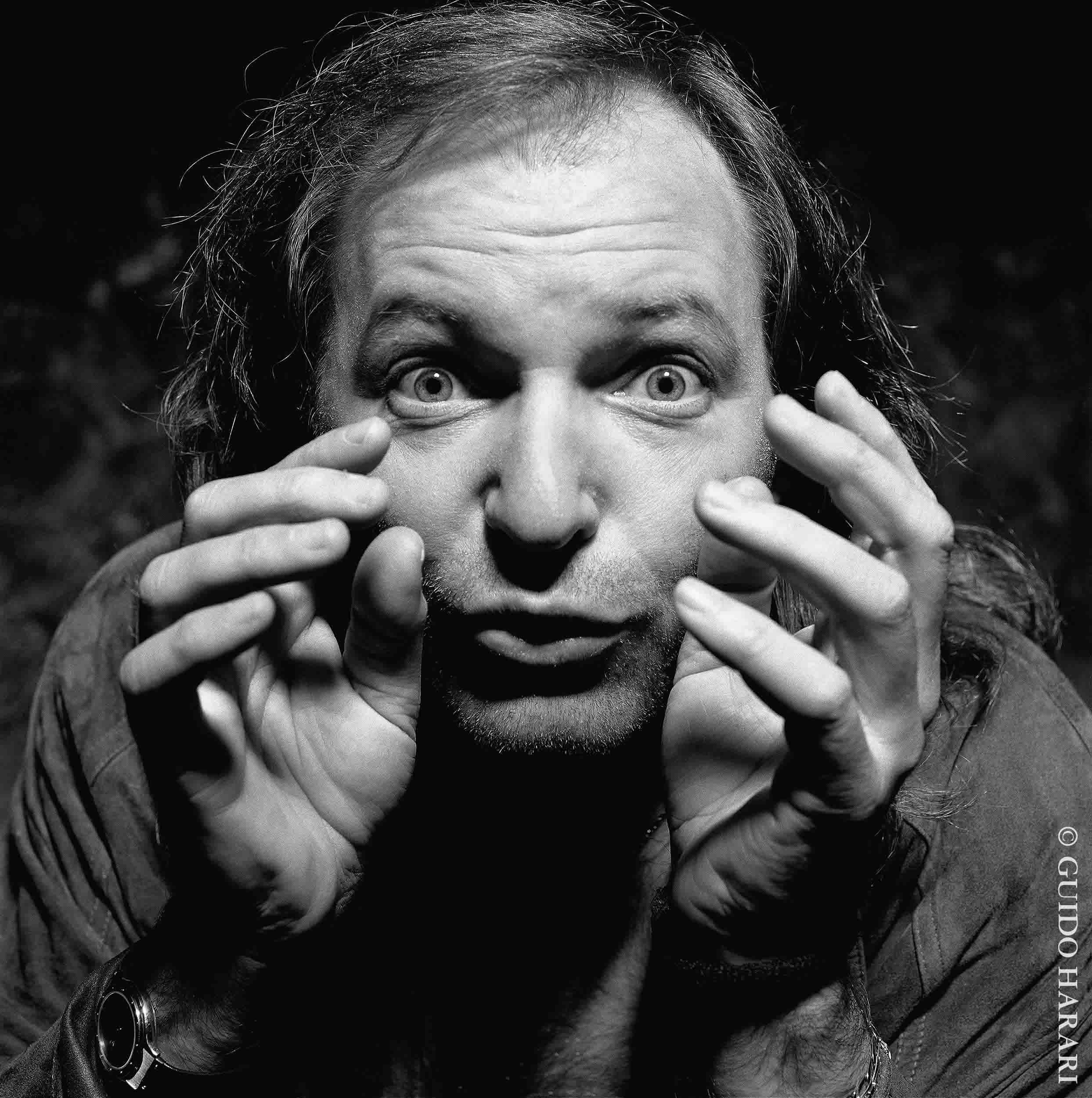
Francesco Guccini
 Italy
Italywriter•actor•singer-songwriter
Also known as: Maestrone
Birthday
June 14, 1940
Birth Sign
Gemini
Birthplace
Modena, Italy
Age
Died at 86
About
Francesco Guccini was an Italian singer-songwriter, writer, and actor whose five-decade career made him a towering figure in his country's cultural life. Born in Modena on June 14, 1940, he died on August 6, 2026, at 86, leaving behind 16 studio albums, six live recordings, novels, comics, and film scores. Critics, including Umberto Eco, called his songwriting "Homeric" for its narrative sweep, blending personal memory with literary allusion and sharp social observation.
His music defined the Italian cantautore tradition, mixing folk, rock, and spoken-word storytelling. Songs like "La locomotiva" and "Dio è morto" became anthems for generations, celebrated for their philosophical depth and political bite. Guccini was also a committed left-wing intellectual, an anti-fascist who championed workers' rights and secularism.
Beyond music, he wrote autobiographical novels and hardboiled crime fiction, contributed to lexicography, and acted in films. Fans knew him as "Maestrone," the big master, and his concerts had a ritual quality, with audiences singing along to every word. His death prompted national mourning and tributes from Italy's president, cementing his status as a cultural icon.
Early Life & Background
Francesco Guccini was born in Modena, but the Second World War scattered his family. At age three, he was sent to live with his grandparents in Pàvana, a tiny Apennine village in the province of Pistoia. Those years in the mountains shaped him deeply, giving him a lifelong attachment to rural life and a perspective that contrasted childhood innocence with adult complexity.
He returned to Modena as a teenager, then moved to Bologna in 1961, a city that became his artistic home. Before music took over, Guccini worked as a bicycle messenger and a mechanic, while absorbing the local cultural scene. He started writing poetry and songs in the late 1950s, influenced by American folk music and the Italian cantastorie tradition of wandering storytellers.
His first public performances happened in Bologna's folk clubs, where he honed a narrative style that set him apart. In 1967, he signed with the Durium label and released his debut album, La ballata dell'eroe. The record introduced his blend of literary lyrics and acoustic guitar, but it was the follow-up, Dio è morto, that would make his name.
Career Growth
Guccini's breakthrough came with 1970's Storia di un impiegato, a concept album about a clerk who dreams of revolution. It became a defining document of Italy's social unrest, praised for its political rock edge. Two years later, Dio è morto sparked controversy with its existential themes, yet solidified his reputation as a poet of the counterculture.
Throughout the 1970s and 1980s, he released a string of acclaimed albums, including La locomotiva (1978), whose title track became an anthem of working-class struggle. He also began acting, appearing in films like I soliti ignoti and Il caso Scafroglia, and composed soundtracks. In 1978, he published his first novel, Vita e avventure di Marcovaldo, launching a parallel literary career.
The 2000s brought new recognition. Buon compleanno Elvis (2002) won multiple awards, and he kept touring across Europe. His 2014 book Il mio nome è Nessuno and the live album Live in Bologna (2015) showed an artist still vital. His final studio album, Cattivo, arrived in 2020, a reflective coda to a monumental career.
Career Timeline
Public Image & Style
Guccini's public persona was that of a gruff, intellectual everyman. He favored simple clothes, often a denim jacket and glasses, and spoke in a gravelly voice that matched his no-nonsense lyrics. Media and fans saw him as the conscience of Italian music, a man who never sold out.
His concerts were legendary for their communal energy, with audiences shouting along to every word. He addressed social issues head-on, from inequality to hypocrisy, earning him a devoted following across generations. His fandom, known as "gucciniani," treated him with reverence, and his death sparked an outpouring of grief and tributes.
Guccini's image was also shaped by his literary output, which reinforced his reputation as a poet who happened to play guitar. He was a rare figure who bridged high culture and popular music, and his legacy remains that of a storyteller who spoke truth to power.
Fame & Fandom (iFAMOUS Rankings)
The devotion to Francesco Guccini transcends the typical metrics of celebrity worship, rooted instead in a shared cultural memory that spans generations. His audience, often affectionately called "Gucciniani" though lacking a formal organizational structure, treats his discography not as a collection of hits but as a living archive of Italian history. Unlike modern fanbases driven by digital campaigns or chart manipulation, Guccini's supporters engage through the communal recitation of lyrics at weddings, protests, and funerals, creating a ritualistic bond with the artist that persists decades after his final performance. This intergenerational loyalty was most visible following his passing in August 2026, when spontaneous gatherings across Italy turned into a national mourning where strangers sang his verses together without prompting. The man who famously avoided the celebrity circuit and maintained a quiet distance from social media cultivated a legacy defined by substance rather than spectacle. His concerts were legendary for their near-religious atmosphere, where audiences shouted every word, transforming venues into spaces of collective identity. Even in death, the connection remains unbroken, with his music serving as the soundtrack to the nation's ongoing narrative. This unique relationship between artist and public has secured his place among the most significant cultural figures of his time. According to the iFANN Global Fame Rankings, he is the 18th most famous person in Italy, holding steady from the previous cycle.
Interesting Facts and Legends
Guccini was a self-taught linguist who loved dialects and etymology, often weaving obscure words into his lyrics. He wrote scripts for comic books, blending his storytelling with visual art. A committed anti-fascist, he drew inspiration from the Italian Resistance and the cultural shifts of the 1960s. He was often called the "Italian Bob Dylan" for his narrative style and acoustic focus. His fans affectionately dubbed him "Maestrone," and his concerts had a near-religious atmosphere, with audiences singing along to every word. Guccini also had a dry sense of humor, once joking that his tombstone should read, "He did what he could." Despite his fame, he remained intensely private, never marrying or having children, a choice he saw as essential to his artistic independence. One of the most enduring legends concerns the release of *La locomotiva*, which became an anthem for labor strikes during the "Hot Autumn," uniting thousands of workers on picket lines. Another iconic moment occurred when he finally appeared at the Sanremo Music Festival to receive a special award; the standing ovation lasted several minutes, a rare display of industry reverence. Following his retirement tour, crowds treated each show as a pilgrimage, often weeping during performances of "Auschwitz" or "Il vecchio e il bambino," cementing his status as the poet of the working class.
Notable Quotes
“My name is Nobody.”
“The song is a story that needs to be told.”
“God is dead, Francesco Guccini too, and we're not feeling too great either.”
Family & Personal Life
Guccini rarely discussed his family in public, but his childhood in Pàvana with his grandparents left an indelible mark. His parents, who had moved him there during the war, later brought him back to Modena. He had no known siblings, and he never married or had children.
In his later years, he lived in Pàvana, the village of his youth, in a modest house where he wrote and painted. He kept a low profile, surrounded by books and his beloved cats. His family, though private, was present at his bedside when he died on August 6, 2026.
Notable Connections
Guccini was close to Umberto Eco, who famously described his songwriting as "Homeric." He also collaborated with fellow singer-songwriter Luciano Ligabue, who paid tribute to him after his death. Guccini was part of the same cantautore generation as Giorgio Gaber, and he cited Bob Dylan as a major influence.
Relationships & Dating History
Francesco Guccini was intensely private about his personal life, and public records reveal no marriages, engagements, or long-term romantic relationships. He never had children. Throughout his career, he kept his private affairs out of the spotlight, focusing entirely on his art and intellectual pursuits. Biographers have noted that this was a deliberate choice to maintain his independence as an artist.
There are no credible reports of any dating history, and he remained single at the time of his death on August 6, 2026. His lack of a spouse or family was a defining aspect of his personal life, one he rarely discussed publicly.
Death & Aftermath
Died
August 6, 2026 (aged 86)
Death Place
Pavana, Tuscany, Italy
Cause of Death
Unknown
Francesco Guccini, the renowned Italian singer-songwriter, writer, and actor, died on Thursday, August 6, 2026, at approximately 07:00 UTC in Pavana, a hamlet within the municipality of Sambuca Pistoiese, Tuscany. He was 86 years old, having been born on June 14, 1940, in Modena. His final days were spent in relative privacy consistent with his reclusive nature, and there is no record of a recent public appearance immediately preceding his death.
The public reaction to Guccini's death was immediate and widespread across Italy and internationally. President Giorgia Meloni issued an official statement expressing deep sorrow, describing Guccini as a voice for the anxieties and ideals of generations of Italians. Municipalities of Bologna and Modena declared periods of municipal mourning in his honor. Cultural institutions and media outlets published tributes highlighting his status as a titan of Italian cantautori and a literary giant. There were reports of fan vigils and spontaneous gatherings in Modena and Bologna, while streaming numbers for his catalog reportedly surged following the announcement. A secular funeral service was held on Saturday, August 8, 2026, in Pavana near Sambuca Pistoiese. The ceremony included significant public figures, including Cardinal Matteo Zuppi, Archbishop of Bologna and President of the Italian Episcopal Conference. In a notable moment bridging faith and Guccini's known agnosticism, Zuppi delivered a homily interpreting the artist's skepticism through a lens of faith before offering a blessing.
Following his death, plans for posthumous tributes were announced, including a concert scheduled for September 11, 2026, during the Argenta Fair dedicated to his legacy. Statements from his family regarding the handling of his estate have not been made public, and a foundation or scholarship specifically created in his name immediately following his death has not been publicly announced, though existing charitable initiatives associated with him continue.
Net Worth (Estate Value)
$15 Million
iFANN Editorial Team estimate
As of 2026, the estate of Francesco Guccini is valued at $15 Million per iFANN's editorial analysis. The bulk of this wealth stems from his extensive music catalog, comprising 16 studio albums and six live recordings that continue to sell and stream steadily in Italy and abroad. Royalties from these recordings, alongside licensing deals for films, television, and advertisements, provide ongoing income. Guccini was also a successful author, and his novels and autobiographical works generate book sales and royalties. His estate benefits from merchandise sales and the enduring popularity of his concerts, which were a major revenue source during his lifetime. The estate is managed by his family, who have not announced any posthumous releases as of 2026. While exact figures vary.
Awards Won (1)
Francesco Guccini received numerous awards throughout his career, though specific competitive trophies are less documented than his lifetime achievements. He won multiple prizes for his album Buon compleanno Elvis (2002) and was honored by Italian cultural institutions for his contributions to music and literature. His work was also recognized internationally, with comparisons to Bob Dylan.
1994 · Lifetime Achievement
Career
Known For
La locomotiva
1978 · Songwriter and performer
Dio è morto
1972 · Songwriter and performer
Storia di un impiegato
1970 · Songwriter and performer
Il mio nome è Nessuno
2014 · Author
Keywords
Sources
Quick Facts
- Profession
- writer, actor, singer-songwriter
- Born
- June 14, 1940
- Birthplace
- Modena, Italy
- Died
- August 6, 2026
- Death Place
- Pàvana, Italy
- Gender
- Male
- Birth Sign
- Gemini
Personal Details
- Full Name
- Francesco Guccini
Frequently Asked Questions
How did Francesco Guccini die?
Was Francesco Guccini married?
What is Francesco Guccini's most famous song?
Where was Francesco Guccini born?
Did Francesco Guccini write books?
Social Media
Similar People
Join the community
fans discussing