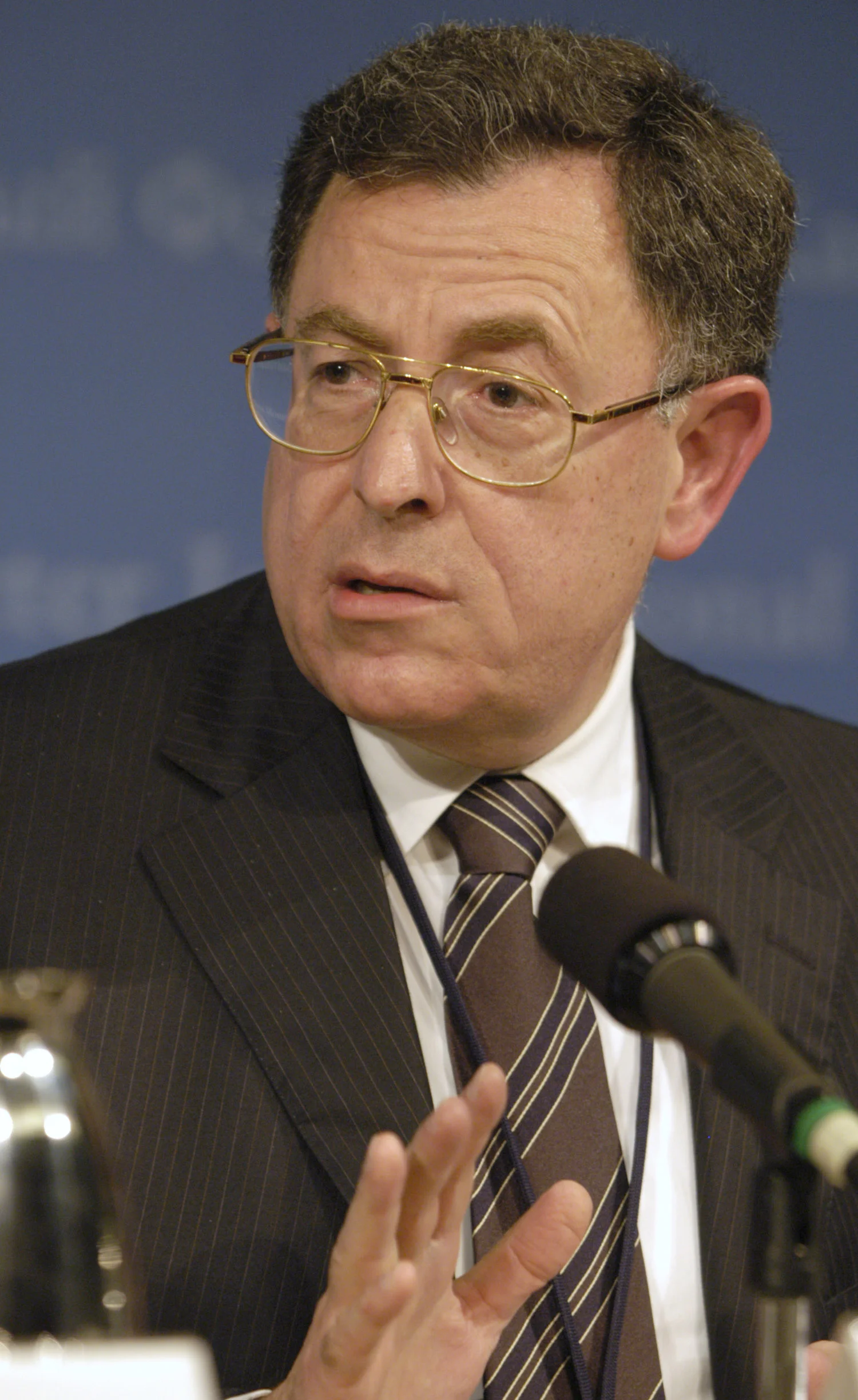
Fouad Siniora
 Lebanon
Also known as: Fuad Siniora, Fouad Sanyoura
Birthday
July 19, 1943
Birth Sign
Cancer
Birthplace
Sidon, Lebanon
Age
83 years old
About
Fouad Siniora is a Lebanese politician and economist who served as the 46th prime minister of Lebanon from 2005 to 2009. A technocrat by training, he is widely recognized for his fiscal expertise and his role in steering the country through some of its most turbulent modern periods. As of 2026, he remains an influential senior statesman, frequently issuing statements on national sovereignty and regional affairs.
Siniora's career is deeply tied to the legacy of Rafik Hariri, the assassinated former prime minister. He served as finance minister under Hariri from 2000 to 2004, where he introduced a value-added tax and worked to stabilize Lebanon's national debt. His premiership was defined by the 2006 war with Israel and the subsequent political crisis with Hezbollah, which he navigated with a measured, diplomatic approach. Today, he is respected internationally as a voice for Lebanon's Sunni community and a proponent of international cooperation.
Early Life & Background
Fouad Siniora was born on 19 July 1943 in Sidon, a coastal city in southern Lebanon. Growing up in a region with a rich political history, he developed an early interest in economics and public affairs. He pursued higher education at the American University of Beirut, where he earned a degree in business administration and economics. His academic background in finance laid the groundwork for his later career as a fiscal technocrat.
Before entering politics, Siniora worked in banking and taught at the American University of Beirut. In the 1980s, he joined the business empire of Rafik Hariri, the billionaire businessman who would later become prime minister. Siniora served in senior financial roles within Hariri's companies, gaining a reputation for loyalty and technical competence. When Hariri entered politics in 1992, Siniora became his key economic advisor, helping design Lebanon's post-civil war reconstruction strategy. This close association would define his political trajectory and position him as a natural successor within the Future Movement.
Career Growth
Fouad Siniora's breakthrough came in 2000 when he was appointed Minister of Finance under Prime Minister Rafik Hariri. During his tenure, he introduced a value-added tax in 2002 and worked to stabilize Lebanon's growing national debt. His fiscal policies drew both praise for their discipline and criticism for their austerity measures.
Following Hariri's assassination on 14 February 2005, Siniora emerged as a key leader within the Future Movement. He became prime minister on 19 July 2005, leading a government that faced extraordinary challenges. His tenure was marked by the 34-day war with Israel in 2006, during which he delivered an emotional televised address that is still remembered. He also navigated the 2006–2008 political crisis, when Hezbollah staged a prolonged sit-in in downtown Beirut, and the May 2008 conflict, which was resolved through the Doha Agreement that granted Hezbollah veto power in the cabinet.
After the 2009 parliamentary elections, Saad Hariri succeeded him as prime minister. Siniora then served as head of the al-Mustakbal (Future) Parliamentary Bloc until 2018. Since then, he has remained active as a senior statesman and commentator, frequently issuing statements on Hezbollah's weapons and Lebanon's relations with international actors.
Career Timeline
Public Image & Style
Fouad Siniora is portrayed in media as a fiscal conservative, a pragmatist, and a pro-Western figure within Lebanon's Sunni political establishment. He is seen as a continuity figure for the Hariri legacy, particularly after Rafik Hariri's assassination. His public tone is measured, technocratic, and diplomatic. He does not have an organized fandom in the entertainment sense, but he retains significant political support among Lebanese Sunnis and is respected internationally as a statesman. His signature style is his economic expertise and his calm, reasoned public statements.
Fame & Fandom
Fouad Siniora commands the kind of recognition that rarely makes headlines: the quiet, durable renown of a statesman who has steered a nation through war and constitutional crisis. In Lebanon, his name carries weight in every political salon and street-side café; abroad, he is the face of a certain kind of resilience, the economist who wept on live television as bombs fell on Beirut, then went back to work. His public following is political, not fanatical; there are no fan clubs, no coordinated campaigns, no birthday billboards. What exists instead is a deep well of respect among Lebanese Sunnis and the international diplomatic community, a support base that shows up not with banners but with votes and deference.
Siniora's legend is built on moments of high drama and quiet endurance. The 2006 televised address, when his voice cracked and tears streamed down his face, remains the story his sympathizers tell first, a human breach in the armor of a technocrat. Then there is the 2007–2008 presidential vacuum, when he effectively ran the country without a president, holding the line as the opposition camped in downtown Beirut. These are the tales that cement his legacy, told and retold in political memoirs and news retrospectives.
In the iFANN Global Fame Engine's August 2026 evaluation, Fouad Siniora has been assessed but does not currently hold a placement in the published rankings, neither the Global Top 1,000 nor any Top-100 scope list. His fame is real, but it is the fame of influence, not of global celebrity. There is no documented fandom name; his audience is a political base, not a fanbase.
Interesting Facts and Legends
Fouad Siniora was born in Sidon, the same coastal city that has produced several prominent Lebanese politicians. A technocrat by training, his deep expertise in finance and economics set him apart from many political contemporaries. His 2006 televised address during the Lebanon War, during which he appeared emotional, is remembered as a defining moment of his premiership. He has been a member of the Club de Madrid, an exclusive organization of former democratic leaders, since his premiership ended. He holds the distinction of having served as both Finance Minister and Prime Minister during some of Lebanon's most turbulent modern periods.
One legend still retold: during the 2006 war, as Israeli bombs pounded Beirut's southern suburbs, Siniora gave a televised speech and broke down in tears, an image that became a symbol of the state's vulnerability and his own human anguish. The moment was captured live and has been referenced in retrospectives as recently as 2026, underscoring its lasting resonance. Another chapter from his tenure: from November 2007 to May 2008, Lebanon had no president, and Siniora's government exercised executive authority, effectively making him acting head of state during a period of intense crisis, including the opposition sit-in that paralyzed downtown Beirut.
Notable Quotes
“Negotiating is the constitutional right of the president and prime minister.”
“Hezbollah can no longer stay armed.”
“The suggestion that Syria could combat Hezbollah in Lebanon is a gross mistake.”
Family & Personal Life
Fouad Siniora is a married family man, though details about his wife and children are not widely publicized in Western sources. He is known to have children, but their names and personal details have been kept largely private, consistent with the discretion typical of Lebanese political figures. His family has remained out of the public spotlight throughout his career.
Notable Connections
Fouad Siniora's political career is closely tied to the Hariri family. He was a close advisor to Rafik Hariri, who was assassinated in 2005, and later worked with his son, Saad Hariri, who succeeded him as prime minister. He frequently appears alongside fellow former prime ministers Najib Mikati and Tammam Salam in joint statements and meetings. He has also worked with Parliament Speaker Nabih Berri and former President Michel Suleiman.
Relationships & Dating History
Fouad Siniora has maintained an exceptionally private personal life. There is no public record of any romantic relationships beyond his marriage. No dating history, engagements, divorces, or public romantic associations have been documented in credible media sources. As of 2026, he is reported as married, though his wife's name is not publicly documented in the available sources. There are no known public records of children's names or details.
Salary, Net Worth In 2026
$10 Million
iFANN Editorial Team estimate
As of 2026, iFANN's editorial analysis places Fouad Siniora's net worth at $10 million. Unlike celebrities and business magnates, Lebanese politicians are not typically tracked by celebrity net worth sites, and Siniora's wealth is believed to derive from his earlier career in banking and business with the Hariri organization, plus his long political career. He is not known to have significant business ventures separate from his political career.
Awards & Accolades
View 1 records, honours and achievementsKnown For
Prime Minister of Lebanon
2005-2009 · Prime Minister
Minister of Finance
2000-2004 · Minister of Finance
Keywords
Sources
Quick Facts
- Profession
- politician
- Born
- July 19, 1943
- Birthplace
- Sidon, Lebanon
- Gender
- Male
- Birth Sign
- Cancer
- Education
- American University of Beirut
- Political Party
- Future Movement
Personal Details
- Full Name
- Fouad Siniora
- Education
- American University of Beirut (business administration and economics)
Frequently Asked Questions
How old is Fouad Siniora?
Who is Fouad Siniora?
Is Fouad Siniora married?
What did Fouad Siniora do as prime minister?
What is Fouad Siniora's current role?
Social Media
Join the community
fans discussing