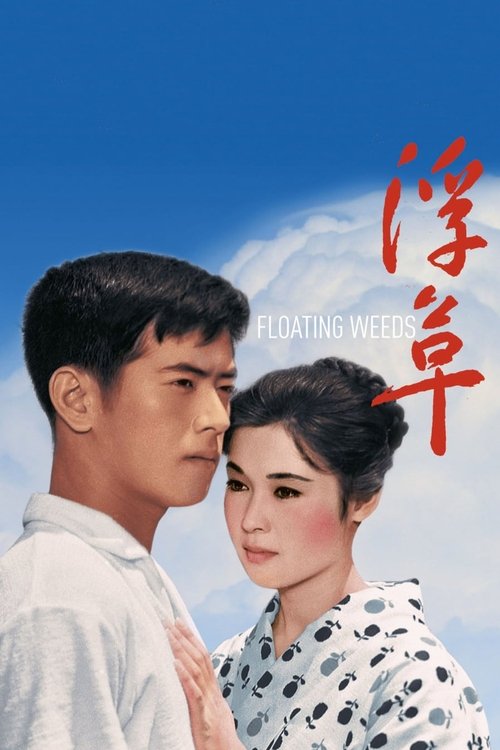
 Japan
Japan“Ozu's direction is so subtle that it feels like watching life itself unfold, with every gesture and glance carrying immense weight.”
Roger Ebert
Chicago Sun-Times
Yasujirō Ozu turned to color filmmaking for the first time in his career with this 1959 remake of his own 1934 silent film. The story centers on Komajuro Arashi, a traveling kabuki actor who returns to a coastal village he abandoned decades ago. His troupe arrives just as he reconnects with Sumiko, a former lover who raised their son alone while believing Komajuro had left them forever.
The film explores the quiet tension between professional duty and personal regret. As the troupe performs plays that mirror their own lives, Komajuro must face the consequences of his past choices. His relationship with his grown son Kiyoshi becomes the focal point of a narrative about forgiveness and the inability to rewrite history.
Availability and pricing can change. Confirm on the provider's site before purchasing.
The Arashi Company sets up shop in a small Japanese fishing town during the late 1950s. Komajuro Arashi leads the group with a mix of charm and weariness, supported by his mistress Kayo who handles the finances and keeps the peace among the actors. They settle into a local theater to perform a series of traditional plays, drawing crowds from the surrounding area. The atmosphere is festive at first, but the arrival of the troupe stirs up old memories for the locals.
Komajuro has not returned here since leaving Sumiko years ago. She now runs a modest bar in the village and has raised their son, Kiyoshi, as her own. Kiyoshi believes his father died or abandoned them long ago and holds a deep resentment toward the stranger who claims to be his uncle. When Komajuro spots the boy, he notices a striking resemblance to himself and begins to suspect the truth. Sumiko initially resists any attempt by Komajuro to bridge the gap, fearing he will take her son away again.
Tensions rise as the troupe prepares for their final performances. Komajuro struggles with guilt over abandoning his family, while Sumiko wrestles with pride and the desire to protect Kiyoshi from further pain. The actors' stage dramas reflect their off-stage conflicts, creating a layered narrative where fiction bleeds into reality. Villagers watch closely as the troupe's internal dynamics play out under public scrutiny.
The situation reaches a breaking point when Komajuro realizes he cannot leave without addressing his relationship with his son. He attempts to reach out to Kiyoshi, offering him a place in the troupe and a chance to know his father properly. Kiyoshi rejects the offer, still hurt by years of absence. Sumiko watches silently, knowing she cannot force her son to stay if he chooses to remain in the town.
As the days pass, the transient nature of the troupe becomes more apparent. They are like floating weeds, destined to move on regardless of the connections they form. The film builds toward a moment of decision where the characters must confront the permanence of their separation. Komajuro faces the possibility of losing his son forever, while Sumiko must decide whether to let go of her anger.
The narrative captures the quiet tragedies of aging performers and the enduring impact of past choices. Themes of familial duty and the passage of time weave through every scene. The troupe's performances become a metaphor for the fragility of human relationships, highlighting how easily bonds can break and reform. As the final act approaches, the audience sees the weight of unspoken words and missed opportunities pressing down on everyone involved.
The story unfolds against the backdrop of post-war Japan, where traditional values clash with modern realities. The setting enhances the sense of transience and impermanence that defines the characters' lives. Every interaction carries the weight of history, and every silence speaks volumes about what remains unsaid. The film leaves viewers contemplating the complexity of love and the difficulty of making amends after so much time has passed.
FLOATING WEEDS (Masters of Cinema) Original Theatrical Trailer
Critical Consensus
This color remake showcases Yasujirō Ozu's signature style with breathtaking cinematography and nuanced performances. The film's gentle yet profound storytelling resonates deeply, capturing the quiet tragedies of aging performers and the enduring impact of past choices. Critics praise its emotional depth and visual beauty.
“Ozu's direction is so subtle that it feels like watching life itself unfold, with every gesture and glance carrying immense weight.”
Roger Ebert
Chicago Sun-Times
“Ozu's use of color and composition elevates this story into a visual poem, making the emotional stakes feel both intimate and universal.”
A.O. Scott
The New York Times
“The film's power lies in its ability to convey deep emotion without melodrama, a testament to Ozu's genius as a filmmaker.”
Todd McCarthy
Variety
“Ozu's Floating Weeds is a film that grows richer with each viewing, offering new insights into the complexities of human relationships.”
Peter Bradshaw
The Guardian
“The film's visual beauty and emotional depth make it a must-see for anyone interested in the art of filmmaking.”
David Ehrlich
IndieWire
Ganjirō Nakamura II
Komajuro Arashi
Machiko Kyō
Sumiko
Ayako Wakao
Kayo
Hiroshi Kawaguchi
Kiyoshi
Haruko Sugimura
Oyoshi
Chishū Ryū
Theatre Owner
Director
Yasujirō Ozu
Writers
Yasujirō Ozu, Kōgo Noda, Tadao Ikeda
Composer
Takanobu Saitō
Cinematographer
Kazuo Miyagawa
Producer
Masaichi Nagata
Academy Awards (1959)
Best Foreign Language Film: Nominated
Mainichi Film Awards (1960)
Best Director: Won
Mainichi Film Awards (1960)
Best Actress: Won
Join the community
fans discussing