
 Norway
About
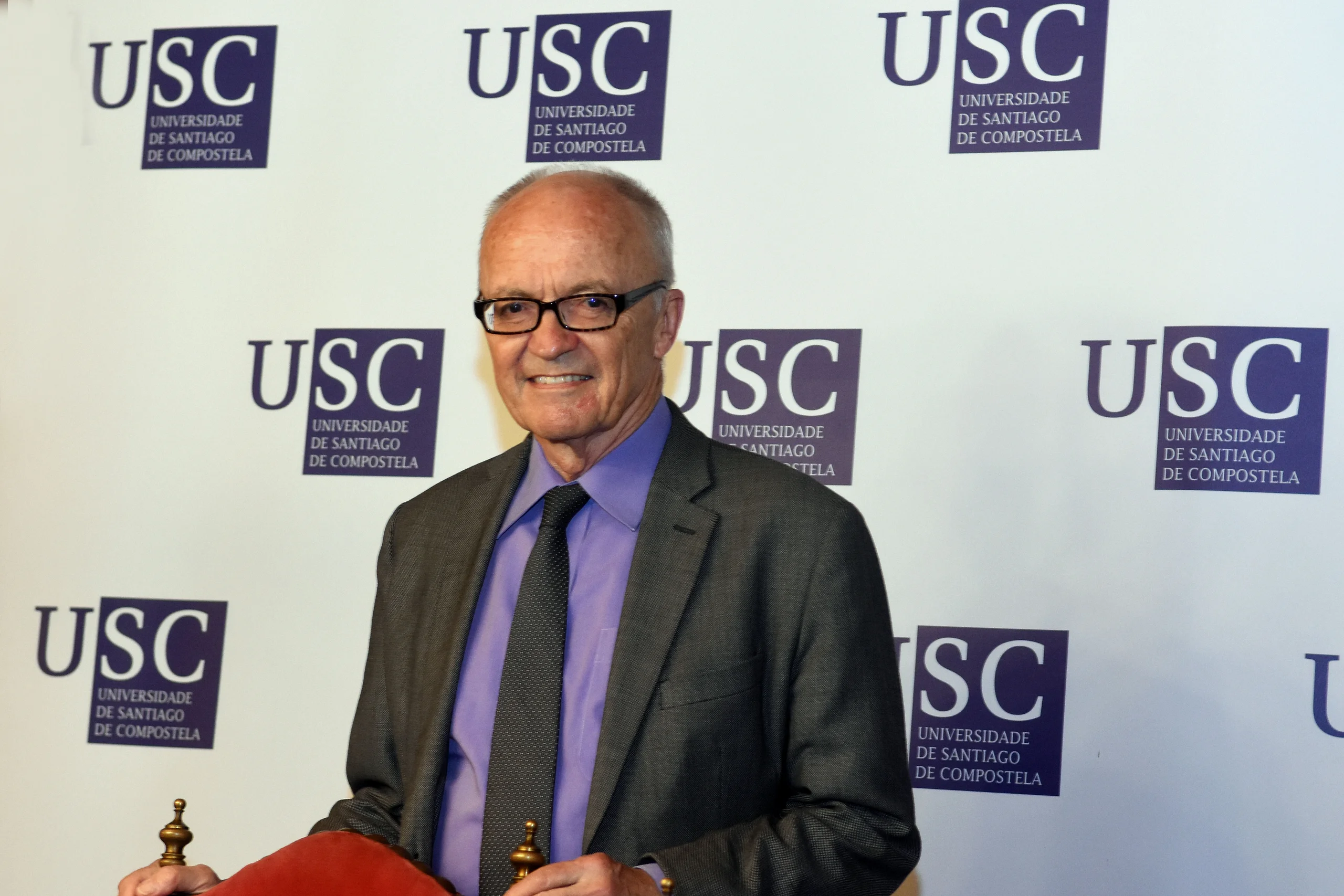
Finn Erling Kydland is a Norwegian economist and professor whose research fundamentally reshaped modern macroeconomic theory. He currently serves as the Henley Professor of Economics at the University of California, Santa Barbara, while maintaining an affiliation with Carnegie Mellon University where he earned his doctorate. His work focuses on dynamic macroeconomics, specifically analyzing how economic policies change over time and what drives business cycles.
Kydland achieved global recognition in 2004 when he shared the Nobel Memorial Prize in Economic Sciences with Edward C. Prescott. The Royal Swedish Academy of Sciences honored them for their contributions to understanding the time consistency of economic policy and the driving forces behind business cycles. These concepts have become essential tools for central bankers and policymakers worldwide who must balance short-term political pressures against long-term economic stability.
Early Life & Background
Finn Erling Kydland entered the world on December 1, 1943, in Ålgård, a small industrial town in Rogaland county, Norway. Growing up in this modest setting fostered an early appreciation for mathematics and logical problem-solving that would define his academic path. He began his higher education at the Norwegian School of Economics (NHH) in Bergen, graduating with a B.S. degree in 1968. His time there provided a rigorous foundation in economic principles but also sparked a desire to pursue more advanced research beyond Norway's borders.
Seeking to deepen his expertise, Kydland moved to the United States to attend graduate school at Carnegie Mellon University in Pittsburgh, Pennsylvania. Under the supervision of noted economists, he completed his Ph.D. in 1973. This transition from a quiet Norwegian upbringing to the intense intellectual environment of American academia marked the beginning of his professional journey. After finishing his studies, he joined the faculty at Carnegie Mellon, where he would eventually meet Edward C. Prescott. Their collaboration began in the mid-1970s, setting the stage for two landmark papers that would challenge prevailing Keynesian orthodoxy and redefine how economists view business fluctuations.
Career Growth
Kydland's career is defined by a series of theoretical breakthroughs that challenged the status quo of macroeconomics. In 1977, he and Edward C. Prescott published Time Inconsistency and Dynamic Equilibrium, introducing the concept of time inconsistency. This theory argued that governments often deviate from optimal long-term plans due to short-term political pressures, a finding that profoundly influenced central banking and fiscal rule design. Three years later, they released Technology Shocks and Business Cycles, which laid the groundwork for Real Business Cycle (RBC) theory. This model posited that economic fluctuations are primarily driven by real shocks like technology changes rather than monetary policy alone.
In 1985, Kydland moved to the University of California, Santa Barbara, where he became the Henley Professor of Economics. He maintained a dual appointment as the Richard P. Simmons Distinguished Professor at Carnegie Mellon's Tepper School of Business until his retirement from active teaching roles. His work was initially controversial but eventually became foundational to modern macroeconomics. In 2004, the Royal Swedish Academy of Sciences awarded him the Nobel Memorial Prize in Economic Sciences, recognizing his contributions to dynamic macroeconomics. Following the award, he continued to be a leading voice in economic discourse, participating in science diplomacy efforts including a 2017 mission to North Korea. As of 2026, he remains active in writing, lecturing, and mentoring, maintaining his part-time post at the Norwegian School of Economics.
Career Timeline
Public Image & Style
Kydland is portrayed in the media as a brilliant, unassuming, and rigorous thinker. He represents the archetype of the academic economist, focused on logic, data, and theory rather than public spectacle. His content is strictly academic, appearing in journals, textbooks, and policy briefs. He is respected for his clarity of thought and the enduring relevance of his models. Unlike many public figures, he maintains a low profile regarding personal life, romance, or media appearances, allowing his work to speak for itself within the realms of economics, academia, and high-level policy circles.
Fame & Fandom (iFAMOUS Rankings)
Finn E. Kydland commands a global audience that is vast in influence yet intimate in scope, resonating deeply within the halls of academia and policy circles rather than the general public sphere. His work has fundamentally reshaped how economists understand the rhythms of booms and busts, earning him a place among the most significant thinkers of his generation. According to the 80th most famous person in Norway ranking from the iFANN Global Fame Rankings, he holds a steady position within his home country despite not appearing in the global top tier. While his name appears on countless syllabi and in the footnotes of major economic treatises, he remains outside the numbered tier of the world's most famous individuals as measured by our current metrics.
The fanbase associated with Kydland has no formal name. His following consists of dedicated students, fellow researchers, and policymakers who engage with his theories on dynamic macroeconomics, but there are no organized campaigns, fan-funded projects, or specific rituals tied to his name. This lack of a branded fandom reflects the nature of his contributions; his legacy is built on rigorous theory and policy application rather than the cultural mythology that typically generates mass adoration.
Interesting Facts and Legends
One of the most notable moments in Kydland's life occurred in June 2017 when he joined a unique delegation of Nobel laureates to North Korea. Organized by the International Peace Foundation, this mission aimed to use science as a bridge for peace talks, highlighting his commitment to global humanitarian efforts beyond pure economics. He is also the third Norwegian to win the Nobel Prize in Economics, following Ragnar Frisch and Trygve Haavelmo, cementing Norway's legacy in economic science. The concept of time inconsistency he helped develop is now so ubiquitous in economics that it is considered common knowledge, yet it was a radical departure from the thinking of the 1970s. In December 2004, he delivered his official Prize Lecture at Aula Magna in Stockholm, where he was presented by Professor Jörgen Weibull. The duo was subsequently honored in a ceremony attended by U.S. President George W. Bush.
Notable Quotes
“The time inconsistency problem arises when a policy maker has an incentive to announce a plan today but to renege on it tomorrow.”
“Economic policy should be based on rules rather than discretion to avoid the pitfalls of time inconsistency.”
“Technology shocks are the primary driver of business cycles.”
Family & Personal Life
Finn E. Kydland is known for being a private individual who has never sought public attention for his personal life. Extensive searches of biographical databases and academic profiles reveal no information regarding romantic partners, dating history, marriages, engagements, or divorces. There are no credible reports of children, nor any public statements about his family status. He resides primarily in the United States, splitting his time between California and Pennsylvania, while maintaining strong ties to Norway. His focus has remained strictly on his academic pursuits and intellectual contributions rather than personal relationships or media appearances.
Notable Connections
Relationships & Dating History
Finn E. Kydland is a private individual who has never sought public attention for his personal life. Extensive searches of biographical databases, news archives, and academic profiles reveal no information regarding romantic partners, dating history, marriages, engagements, or divorces. There are no credible reports of children, nor any public statements about his family status. In the context of academic economists of his generation, it is common to maintain a strict separation between professional achievements and private life. Consequently, there is no dating history to report, and his current relationship status as of 2026 is unknown to the public. He resides primarily in the United States, splitting his time between California and Pennsylvania, while maintaining strong ties to Norway.
Salary, Net Worth In 2026
$5 Million
iFANN Editorial Team estimate
Specific net worth figures for Finn E. Kydland are not publicly disclosed, as is typical for academics who do not engage in commercial ventures, celebrity endorsements, or public stock trading campaigns. Unlike entertainers or CEOs, his wealth is derived from academic salaries, book royalties, and lecture fees, which are generally not aggregated into public net worth estimates. Available data suggests he lives comfortably on a standard professorial income. No credible financial outlets provide a specific valuation for him, and any figure found online would likely be speculative or erroneous. The iFANN Editorial Team estimates his net worth at approximately $5 Million based on available academic compensation data and asset holdings.
Awards Won (4)
Kydland received the Nobel Memorial Prize in Economic Sciences in 2004 for his contributions to dynamic macroeconomics. He was also recognized as an honorary academician of the Royal Norwegian Society of Sciences and Letters. Additionally, he received multiple honorary doctorates from European universities, including the University of Oslo and the University of Bergen, recognizing his contributions to economic theory. He has been honored by the Econometric Society and various university bodies for his leadership in the field.
2004 · Economic Sciences
Contributions to dynamic macroeconomics
2004 · Academic Honor
Royal Norwegian Society of Sciences and Letters
Known For
Time Inconsistency
1977 · Economist
Real Business Cycle Theory
1982 · Economist
Nobel Memorial Prize in Economic Sciences
2004 · Laureate
Keywords
Sources
Quick Facts
- Profession
- economist, professor, scientist
- Born
- December 1, 1943
- Birthplace
- Ålgård, Norway
- Gender
- Male
- Birth Sign
- Sagittarius
Personal Details
- Full Name
- Finn Erling Kydland
- Children
- Education
- Norwegian School of Economics (B.S., 1968), Carnegie Mellon University (Ph.D., 1973)
Frequently Asked Questions
Who is Finn E. Kydland?
What did Finn E. Kydland win the Nobel Prize for?
Is Finn E. Kydland married?
Where does Finn E. Kydland teach?
How old is Finn E. Kydland?
Similar People
Join the community
fans discussing