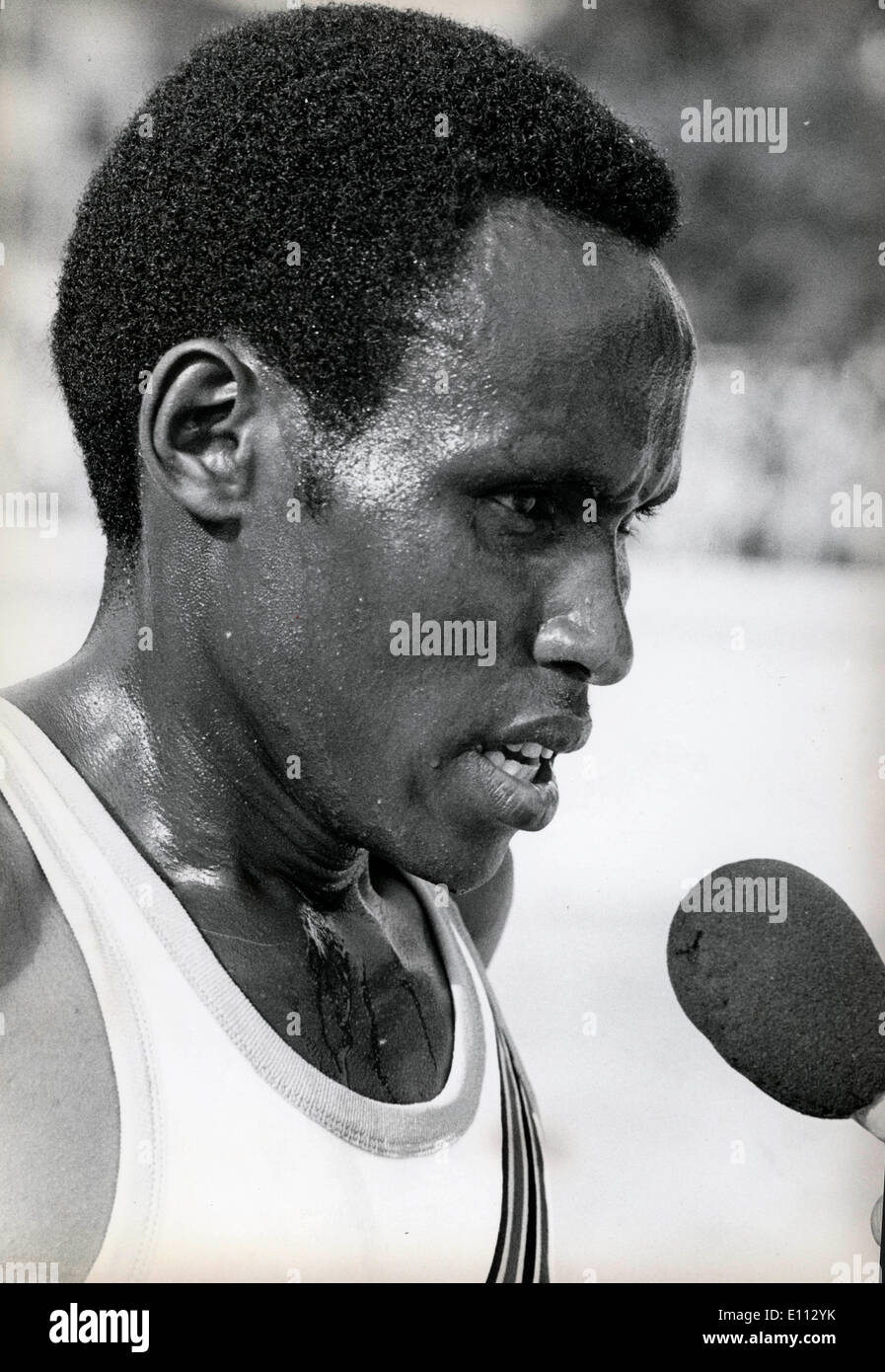
Filbert Bayi
 Tanzania
Also known as: Filbert Bayi Sanka
Birthday
June 23, 1953
Birth Sign
Cancer
Birthplace
Tanzania
Age
73 years old
About
Filbert Bayi Sanka is a former Tanzanian middle-distance runner whose name is etched in athletics history for his world-record performances in the 1970s. Born on June 23, 1953, he became a national hero and a symbol of African excellence on the global track. Bayi is best known for winning the 1500 meters at the 1974 Commonwealth Games in a world-record time, a race often hailed as one of the greatest of its kind. He followed that with a mile world record the next year, cementing his reputation as a front-running pioneer.
Today, Bayi lives in Tanzania, where he runs an AIDS charity, channeling his energy into community service. His legacy endures not only through his records but also through the inspiration he provided to generations of East African runners. His 1974 singlet now resides in the Museum of World Athletics, a testament to his lasting impact.
Early Life & Background
Details of Filbert Bayi's early life are sparse, but he emerged from Tanzania with a raw talent for distance running. He competed in the 1972 Munich Olympics as a teenager, signaling his arrival on the international stage. Before that breakthrough, he likely honed his skills on the dusty tracks of his homeland, where running was both a passion and a path to opportunity.
His early career was marked by a fearless approach, often taking the lead from the gun and daring others to follow. This aggressive style would become his trademark. By 1974, he was ready to shock the world, though few outside East Africa knew his name.
Career Growth
Bayi's defining moment came at the 1974 Commonwealth Games in Christchurch, New Zealand. In the 1500 meters, he led from start to finish, clocking 3:32.2 and breaking the world record. The race was a classic, with New Zealand's John Walker also dipping under the old mark, but Bayi took the gold. That record stood for 47 years as a Commonwealth Games benchmark.
In 1975, he set the world record for the mile in Jamaica, further cementing his dominance. He was set to compete at the 1976 Montreal Olympics, but the African boycott kept him away, a bitter blow. He did earn an Olympic silver medal in the 3000 meters steeplechase at the 1980 Moscow Games, though his best distance remained the 1500. His personal best of 3:32.16, set in 1974, remained a national record for decades.
After retiring, Bayi turned to philanthropy, founding an AIDS charity in Tanzania. In 2024, he celebrated the 50th anniversary of his famous Commonwealth win, and in January 2025, his world-record singlet entered the Museum of World Athletics.
Career Timeline
Public Image & Style
Bayi is revered in Tanzania as a pioneer who put his country on the athletics map. His running style was uncompromising: he would take the lead early and dare anyone to pass him. This audacity won him fans worldwide and made his races must-watch events.
Media coverage often highlights his 1974 race as a triumph of willpower. He is seen as a humble hero, more comfortable talking about his charity than his records. For many, he embodies the spirit of African distance running.
Fame & Fandom (iFAMOUS Rankings)
Filbert Bayi currently holds no placement in the published iFANN Global Top 1,000 rankings or any scope-specific lists, a status confirmed by the August 2026 evaluation of his global cultural footprint. While he does not appear in the current ranked tiers, his influence remains a foundational pillar of Tanzanian identity rather than a metric-driven statistic. The nation itself serves as his enduring fanbase, a collective body that reveres him not through digital campaigns or organized clubs, but through deep-seated national pride and historical memory. Unlike modern pop icons with formalized fandom names like "Beyhive," Bayi's supporters are defined by their shared heritage; there is no specific demographic engaging in real-time social media rituals or fan-funded projects because his fame was cemented decades before the era of digital mobilization. His legacy lives on physically at the Filbert Bayi Grounds in Kibaha, where the community gathers to celebrate athletics and honor his story. The narrative of his 1974 victory over John Walker functions as a cultural rite of passage for young runners, told to every generation as a lesson in courage. This interaction is characterized by quiet respect rather than active engagement, transforming the stadium into a monument where the spirit of African dominance is kept alive through participation. The singlet from his record-breaking run now resides in the Museum of World Athletics, standing as a sacred artifact that speaks louder than any trending hashtag could.
Interesting Facts and Legends
Bayi earned the nickname "Catch me if you can" due to his fearless front-running tactics, a style that often involved looking back on the final straight of the 1974 race to confirm his lead before crossing the finish line. He trained without a coach for much of his career, relying entirely on his own instincts to guide his performance. His 1975 mile world record was set in Kingston, Jamaica, where he took an early lead and never relinquished it, clocking a time of 3:51.0. A legendary story from his career describes his transformation from a runner labeled "lazy" to a "speed freak," highlighting his unique mental fortitude and training philosophy. The singlet he wore during the 1974 Commonwealth Games has been preserved in the Museum of World Athletics, treated as a sacred artifact of the sport. Fans still retell the tale of how he defeated New Zealand's John Walker and Kenya's Ben Jipcho in a race that broke three world records, proving that African runners could dominate with aggressive tactics. His humility remains a defining trait, as he often deflects praise toward his rivals even while holding both the 1500m and mile world records simultaneously.
Notable Quotes
“On the final straight, I looked back again. I did not have a reputation as a strong kicker, but I knew then I would win the race.”
“I always believed in running from the front. It is the only way to race.”
Family & Personal Life
Notable Connections
Relationships & Dating History
Filbert Bayi has kept his personal relationships out of the public eye. There is no documented history of marriages or long-term partners in the available sources. As of 2026, his relationship status remains unknown, and he appears to have prioritized his career and charity work over public romantic life.
Salary, Net Worth In 2026
$2 Million
iFANN Editorial Team estimate
Per iFANN's editorial analysis, Filbert Bayi's net worth stands at $2 Million as of 2026. This figure reflects earnings accumulated during a modest athletics career, prize money from a competitive era, and his later work founding a charity organization. Unlike contemporary athletes who benefit from lucrative sponsorship deals, Bayi competed when such commercial opportunities were virtually nonexistent, resulting in wealth that appears conservative by modern standards. His current income streams include speaking engagements, occasional public appearances, and support mechanisms for his AIDS charity. He has remained uninvolved in major commercial ventures outside of these activities. The details regarding any potential estate remain private and are not publicly detailed.
Awards Won (2)
Bayi won gold at the 1974 Commonwealth Games and an Olympic silver in 1980. His world records in the 1500m and mile are historic achievements that earned him recognition as one of the greatest middle-distance runners of his era.
1974 · 1500m
1500m
1980 · 3000m Steeplechase
3000m Steeplechase
Known For
1974 Commonwealth Games 1500m
1974 · World record and gold
Mile world record
1975 · World record
Keywords
Sources
Quick Facts
- Born
- June 23, 1953
- Birthplace
- Tanzania
- Nationality
- Tanzanian
- Sport
- Athletics
- Events
- 1500m, mile, 3000m steeplechase
- Personal Best 1500m
- 3:32.16
Personal Details
- Full Name
- Filbert Bayi Sanka
Frequently Asked Questions
Who is Filbert Bayi?
What is Filbert Bayi's net worth in 2026?
Is Filbert Bayi still alive in 2026?
What was Filbert Bayi's famous race?
Did Filbert Bayi win an Olympic medal?
Similar People
Join the community
fans discussing