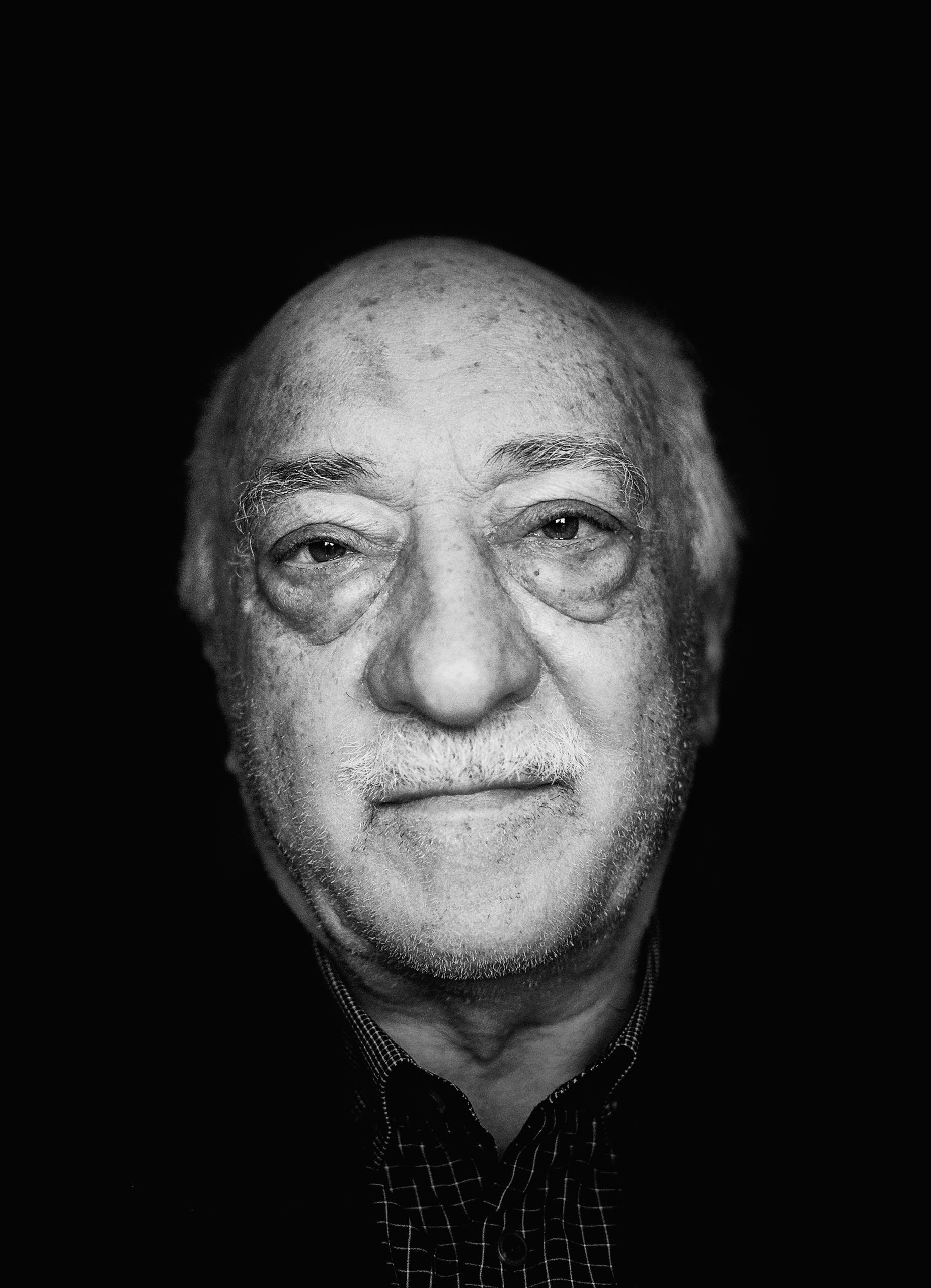
Fethullah Gülen
 Turkey
Islamic scholar•preacher•writer
Also known as: Muhammad Fethullah Gülen, Fethullah Hoca
Birthday
April 27, 1941
Birth Sign
Sagittarius
Birthplace
Pasinler district, Erzurum Province, Turkey
Age
Died at 83
About
Muhammed Fethullah Gülen was a Turkish Islamic scholar, preacher, and writer who served as the spiritual leader of the transnational Hizmet movement. Born in Pasinler, Turkey, he developed a theological perspective rooted in the teachings of Said Nursi, blending traditional Islamic thought with modern educational values. His work emphasized education, interfaith dialogue, and civic engagement across more than 150 countries. Gülen established a vast network of over 2,000 private schools, universities, media outlets, and charitable organizations that operated globally.
He spent the final thirty years of his life in self-imposed exile in Saylorsburg, Pennsylvania, where he lived in relative seclusion until his death in October 2024. His legacy remains polarized; supporters revere him as a benevolent reformer who championed tolerance and learning, while critics accuse him of using the movement to exert political influence. The movement continues to operate under intense scrutiny from the Turkish government, which maintains an arrest warrant against him even after his passing.
Early Life & Background
Muhammed Fethullah Gülen entered the world on April 27, 1941, in Pasinler, a rural district within Erzurum Province in eastern Turkey. He was born into a devout Sunni Muslim family where religious study formed the core of daily existence. His father, Hasan Efendi, served as a local imam and teacher, while his mother, Fatma Hanım, managed the household. This conservative environment provided the foundation for his early spiritual development.
Gülen began memorizing the Quran at a very young age, demonstrating an early aptitude for religious texts. At twelve years old, he enrolled in a traditional religious school known as a madrasa. There, he immersed himself in the classical curriculum and encountered the works of Said Nursi, a prominent Kurdish Islamic scholar whose Risale-i Nur collection would profoundly shape his future theological framework. Gülen synthesized Nursi's ideas with his own vision, advocating for active participation in society rather than withdrawal from the world.
Before entering public ministry, he served as a student and later as a teacher in various religious institutions throughout eastern Turkey during the 1950s. These formative years allowed him to refine his understanding of Islamic jurisprudence and social ethics. By the late 1950s, he had gained enough recognition to be appointed as a state imam in İzmir in 1959, marking his official entry into formal religious service. This appointment set the stage for his extensive travels and sermons that would eventually draw a significant following among students and intellectuals.
Career Growth
Gülen's career took off in 1959 when he was appointed as a state imam in İzmir. Over the next two decades, he traveled extensively throughout Turkey, delivering sermons that emphasized moral integrity, hard work, and the importance of education. By the late 1960s and early 1970s, he had cultivated a substantial following among students and intellectuals who were drawn to his message of living Islam in a modern context.
A pivotal moment occurred in the 1970s when he began organizing informal study circles called dershanes. These gatherings focused on Nursi's works and contemporary social issues, evolving into the foundation of the Hizmet movement. In the 1980s, following political instability and military coups in Turkey, Gülen moved away from direct political involvement but continued to inspire a network of educators and activists. The movement established its first private schools in the 1980s, initially in Turkey and later expanding internationally.
The 1990s marked a period of rapid expansion for the Gülen movement. Schools opened in Central Asia, Africa, Europe, and the United States. Gülen also supported the creation of media outlets, including newspapers and television channels, which became platforms for his ideas. However, tensions with the Turkish government grew due to accusations of political infiltration. In 1999, facing legal challenges and rising tensions with the ruling Justice and Development Party, Gülen left Turkey and settled in Saylorsburg, Pennsylvania. He lived there in relative seclusion until his death in 2024.
Career Timeline
Public Image & Style
Gülen's public image is complex and polarized. Supporters view him as a benevolent reformer who championed education and tolerance, emphasizing his role in fostering interfaith dialogue. Critics accuse him of using the Hizmet movement to exert political influence and infiltrate state institutions. Western media often portrayed him as a proponent of moderate Islam, while Turkish state media frequently depicted him as a terrorist mastermind. His reclusive nature added to the mystique, with few direct appearances after the 1990s.
Fame & Fandom (iFAMOUS Rankings)
Fethullah Gülen never cultivated a formal fandom name, nor did his adherents organize under specific monikers resembling those of pop culture icons. His supporters, numbering between eight and ten million globally, viewed him as a spiritual guide rather than a celebrity idol, manifesting their devotion through institutional participation in the Hizmet movement's schools and charities rather than fan-driven campaigns or emotional outbursts at public appearances. The interaction was defined by distance and reverence, with Gülen rarely engaging directly with crowds after the 1990s, leaving no historical record of fans fainting or shutting down streets for his presence. His legacy is instead anchored in geopolitical mythology and the sheer scale of his educational network.
Despite this reclusive nature, his global profile remains substantial according to the iFANN Global Fame Rankings. By August 2026, he was recognized as the 22nd most famous person in Turkey, a position holding steady from the previous cycle. He also ranked as the 12th most famous person from Turkey and the 67th most famous person in Middle East during that same period. Notably, the data placed him as the 7th most famous person in Streaming / Twitch, reflecting a unique intersection of digital media consumption and his enduring influence. He was featured at No. 7 in the September 2026 iFAMOUS Rankings. These placements, tracked across global attention signals including media coverage and search patterns, underscore his persistent relevance decades after rising to prominence.
Interesting Facts and Legends
Gülen's theology was deeply influenced by Said Nursi, and he spent much of his early life studying Nursi's Risale-i Nur. The Gülen movement's schools are often credited with producing high-performing students in STEM fields, contributing to their reputation as centers of excellence. Despite his reclusive lifestyle, Gülen's influence extended far beyond Turkey, with schools operating in over 150 countries. The 2016 coup attempt in Turkey is widely attributed to Gülen by the government, though he has consistently denied involvement. Gülen's funeral in New Jersey attracted around 15,000 mourners, highlighting the global reach of his movement.
Notable Quotes
“Education is the key to salvation.”
“Living Islam means active participation in society.”
“We must build bridges, not walls.”
Family & Personal Life
Fethullah Gülen came from a devout Sunni Muslim family in Pasinler. His father, Hasan Efendi, was a local imam and teacher, while his mother, Fatma Hanım, managed the household. Gülen never married and had no children, dedicating his life entirely to his religious and educational mission. He remained celibate and rarely spoke publicly about his personal life. His nephew, Salih Gülen, was a notable figure who faced legal troubles and reportedly died in custody under terrorism charges. Gülen lived alone in Pennsylvania during his exile, surrounded by associates but maintaining a solitary domestic life.
Notable Connections
Said Nursi, Salih Gülen, Hizmet Movement
Relationships & Dating History
Fethullah Gülen was known for his reclusive nature and rarely spoke publicly about his personal life. There is no credible public record of any romantic relationships, marriages, or children. Unlike many public figures, Gülen did not cultivate a personal image centered on family life or romantic partnerships. His adherents viewed him primarily as a spiritual guide rather than a celebrity, and there are no documented instances of dating history, engagements, or divorces. As of 2026, Gülen remains deceased, and no posthumous revelations have emerged regarding marital status or offspring. His legacy is defined by his intellectual and organizational contributions rather than personal relationships.
Death & Aftermath
Died
October 20, 2024 (aged 83)
Death Place
East Stroudsburg, Pennsylvania, United States
Cause of Death
Natural causes related to old age
Fethullah Gülen died on October 20, 2024, at the age of 83 while residing at the Chestnut Retreat Center in East Stroudsburg, Pennsylvania. He had lived in self-imposed exile in the United States for nearly three decades before passing away at St. Luke's Hospital - Monroe Campus. While hospital records and family statements did not release a specific medical diagnosis, multiple sources confirmed his death resulted from natural causes associated with advanced age.
The Turkish government maintained an active arrest warrant against him despite his death, citing his alleged role in orchestrating the failed coup attempt of July 2016. Authorities continued their crackdown on individuals linked to the Hizmet movement, arresting thousands and seizing billions in assets in the years following his passing. In 2026, reports indicated that Turkey was still detaining people over alleged links to the movement and pressing Greece to extradite others. A new documentary released that year explored Gülen's legacy amid ongoing repression and legal battles.
His funeral was held in New Jersey and attracted approximately 15,000 mourners who gathered to pay their respects. The event highlighted the deep devotion of his followers, who viewed him as a spiritual guide rather than a political figure. Despite the controversy surrounding his life, the gathering underscored the global reach of the network he established. His nephew Salih Gülen had previously faced legal troubles and reportedly died in custody under terrorism charges, adding another layer of tragedy to the family's history.
Net Worth (Estate Value)
$0
iFANN Editorial Team estimate
There is no reliable public data on Fethullah Gülen's net worth, as he lived in relative poverty during his exile and did not accumulate wealth through commercial ventures. Most estimates suggest his personal assets were minimal, with the majority of resources controlled by the Hizmet movement's institutions. Given his death in 2024, any estate value would be managed by the movement or family, but no specific figures are available. The iFANN Editorial Team estimates his personal fortune at approximately $0, reflecting the lack of documented private wealth.
Awards & Accolades
View 2 records, honours and achievementsKnown For
Hizmet Movement
1970 · Founder
Global School Network
1980 · Founder
Keywords
Sources
Quick Facts
- Profession
- social activist, writer, preacher
- Born
- April 27, 1941
- Birthplace
- Pasinler district
- Died
- October 20, 2024
- Death Place
- St. Luke's Hospital - Monroe Campus
- Gender
- Male
- Birth Sign
- Sagittarius
Personal Details
- Full Name
- Muhammed Fethullah Gülen
- Children
- Education
- Traditional religious school (madrasa)
Frequently Asked Questions
What did Fethullah Gülen do?
Why was Fethullah Gülen exiled?
Why was Erdogan opposed to the Gülen movement?
Who is a famous Turkish spiritual leader?
Did Fethullah Gülen have children?
Social Media
Similar People
Join the community
fans discussing