Overview
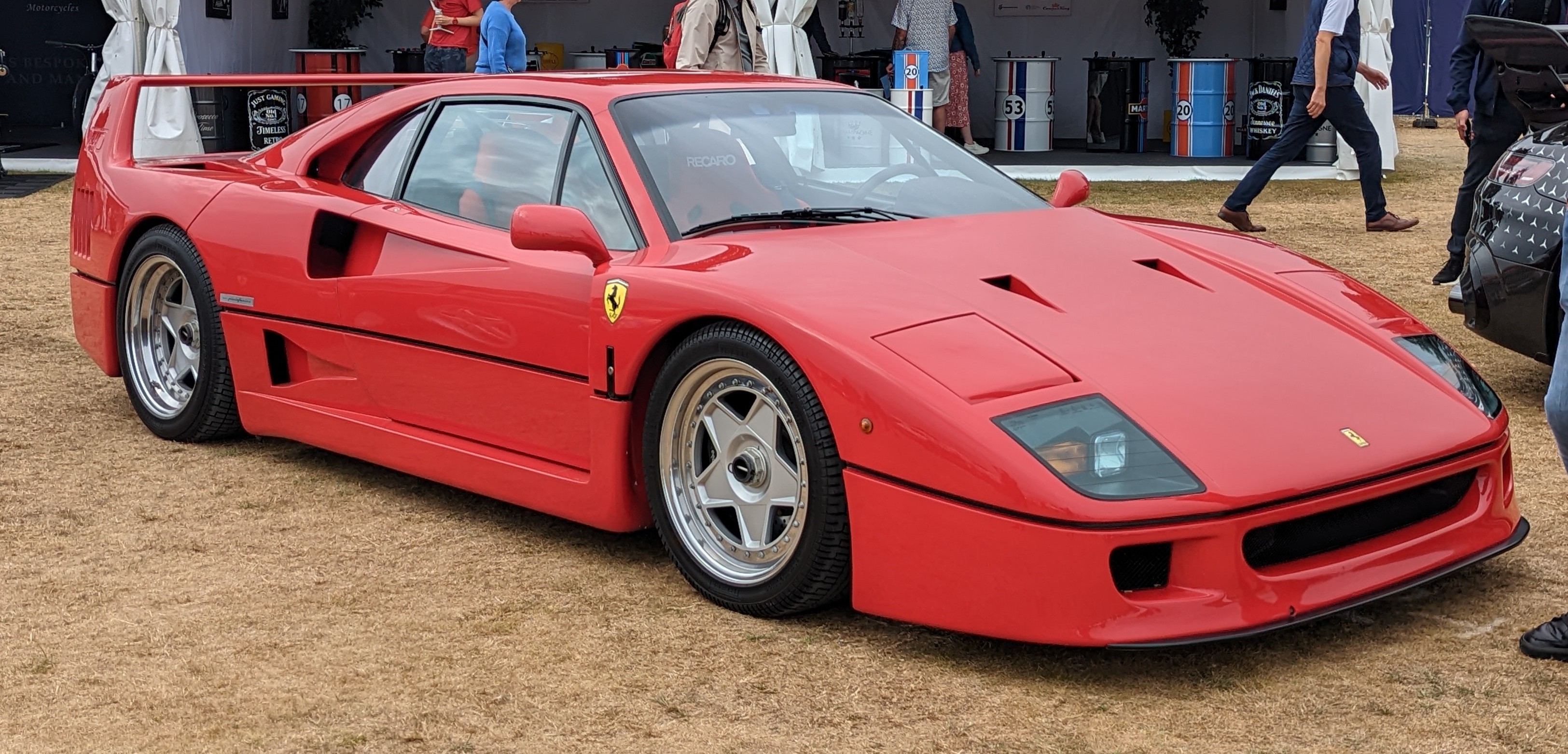
The Ferrari F40, designated Type F120, is a mid-engine, rear-wheel drive supercar that emerged from Maranello in 1987. Engineered by Nicola Materazzi, who had previously worked on the 288 GTO, and styled by Pininfarina, the F40 was built to mark Ferrari's 40th anniversary. It holds the distinction of being the last Ferrari personally approved by Enzo Ferrari before his death in 1988. At its debut, it was the fastest, most powerful, and most expensive car Ferrari offered, with a suggested retail price around $400,000, roughly five times the cost of its predecessor. Production was initially planned for just 400 units, but demand pushed the final tally to between 1,311 and 1,315 cars, including 213 destined for the United States. The F40's performance and pedigree made it an instant icon, and a 1990 sale of a car owned by Formula One driver Nigel Mansell fetched £1 million, a record that stood for decades. Its legacy as a raw, driver-focused machine remains central to its mystique, and it is often cited as one of the greatest supercars ever built.
Under the rear deck sits a 2.9-liter twin-turbocharged V8 that churns out 471 horsepower and 426 lb-ft of torque. That power routes through a five-speed manual gearbox to the rear wheels, pushing the car from 0 to 60 mph in about 4.1 seconds and on to a top speed of 201 mph. To hit that number, Ferrari leaned on lessons from the 288 GTO Evoluzione race program, using a lightweight Kevlar and carbon fiber body over a tubular steel space frame. There are no driver aids here: no ABS, no traction control, just a raw connection between driver and machine. The exterior, with its pop-up headlights, massive rear wing, and exposed rivets, screams purpose, while the interior is stripped to the essentials, with bare door panels and a simple steering wheel.
Today, the F40 has become a blue-chip collector's item. Values have climbed steadily, with average prices around $4.25 million as of 2026, and pristine, low-mileage examples fetching even more. The market continues to reward documentation and originality, as seen in recent sales of well-preserved cars. Beyond the auction world, the F40's cultural footprint remains large. It inspired a generation of supercars and still appears in everything from video games to limited-edition die-cast models. A Hot Wheels RLC exclusive released in August 2026 shows how the name still resonates, and stories of barn finds and kit cars keep it in the news. The F40 isn't just a car; it's a benchmark for what a supercar can be when engineered with pure intent.
Key Features
- Kevlar and carbon fiber body
- Pop-up headlights
- Large rear wing for downforce
- No ABS or traction control
- Tubular steel space frame
- Exposed rivets
Specifications
| Engine | 2.9L twin-turbo V8 |
| Power | 471 hp |
| Torque | 426 lb-ft |
| 0-60 mph | 4.1 seconds |
| Top speed | 201 mph |
| Transmission | 5-speed manual |
| Layout | Mid-engine, rear-wheel drive |
| Weight | 1,100 kg (2,425 lbs) |
Pros & Cons
Pros
- • Raw, unfiltered driving experience
- • Historic significance as last Enzo-approved Ferrari
- • Strong investment potential
- • Timeless, aggressive styling
Cons
- • Harsh ride and loud cabin
- • No modern safety or convenience features
- • High maintenance and running costs
- • Difficult to drive at the limit
Frequently Asked Questions
What is the current value of a Ferrari F40?
How many Ferrari F40 cars were made?
Why is the Ferrari F40 so famous?
What are the technical specifications of the Ferrari F40?
Is the Ferrari F40 worth buying today?
Keywords
Sources
Product Info
- Brand
- Ferrari
- Category
- supercar
- Released
- 1987
- Price
- $400,000 (1987 MSRP)
- Availability
- Discontinued
- Manufacturer
- Ferrari
- Production years
- 1987-1992
- Total produced
- 1,311-1,315
- Designer
- Pininfarina
- Engineer
- Nicola Materazzi
- Last Enzo-approved
- True
Where to Buy
Join the community
fans discussing