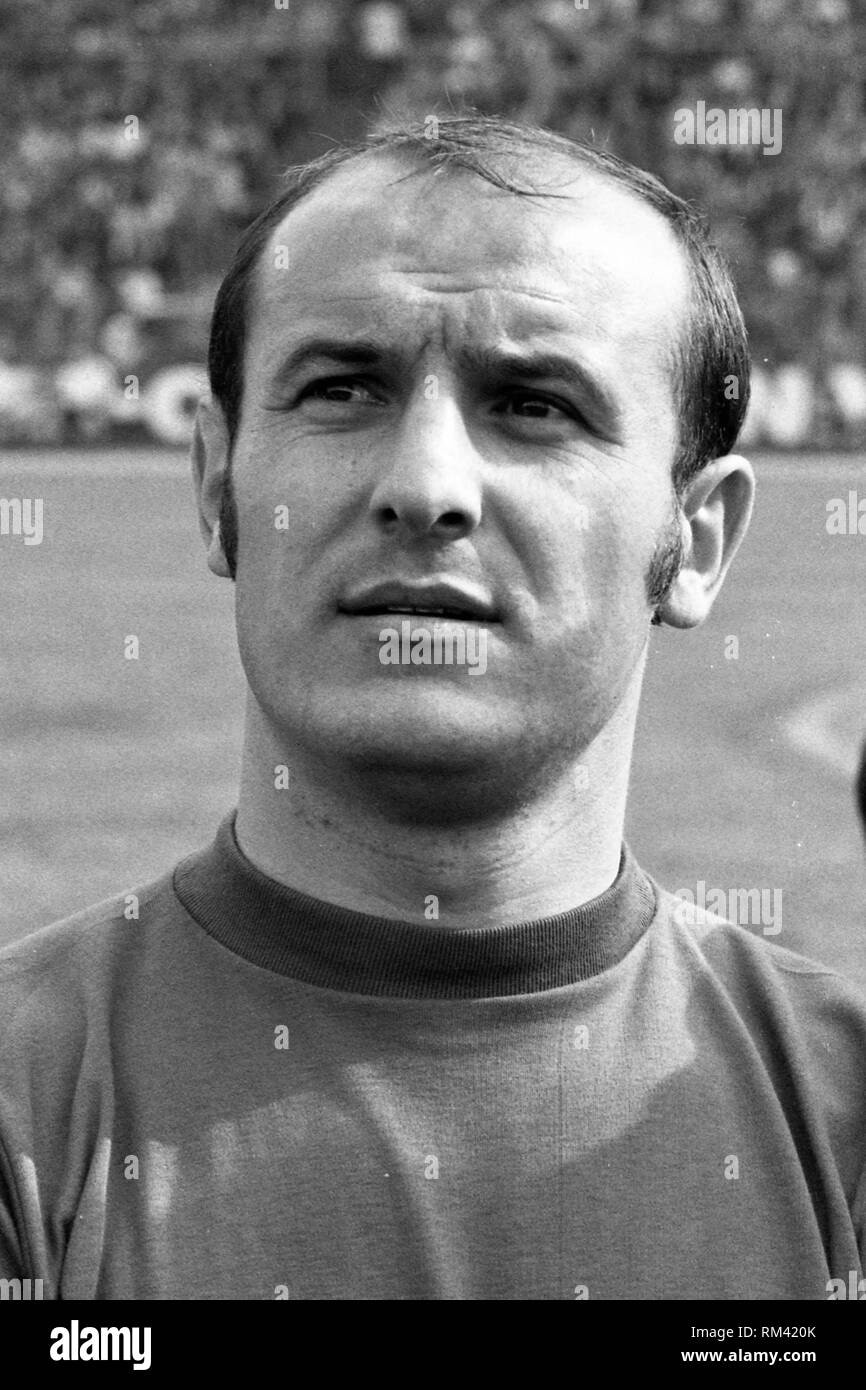
Ferenc Bene
 Hungary
association football player•association football coach
Birthday
December 17, 1944
Birth Sign
Sagittarius
Birthplace
Balatonújlak, Hungary
Age
Died at 61
About
Ferenc Bene was a Hungarian striker who terrorized defenses for Újpesti Dózsa and the Hungary national team. He is one of the most prolific goalscorers in football history, credited by RSSSF with more than 1,424 goals in over 1,481 matches, placing him sixth on the all-time list. Bene's most notable achievement was leading Hungary to the gold medal at the 1964 Summer Olympics, where he was the tournament's top scorer with 12 goals in five matches. He was twice named Hungarian Player of the Year, in 1964 and 1969. His prolific scoring and Olympic triumph cemented his legacy as a legendary figure in Hungarian football.
Early Life & Background
Ferenc Borbola was born on December 17, 1944, in Balatonújlak, a small village nestled near the picturesque Lake Balaton in Hungary. His early life in the village remains largely undocumented, but it was during these formative years that the foundations of his future greatness were laid. He would later adopt his stepfather's surname, becoming known to the world as Ferenc Bene. From a very young age, Bene displayed an undeniable and precocious talent for football, a gift that would soon set him on a remarkable path.
His burgeoning abilities quickly caught the attention of scouts, leading him to join the esteemed youth academy of Újpesti Dózsa, one of Hungary's premier football clubs. Within this structured environment, Bene meticulously honed his skills, refining his technique and tactical understanding. His dedication and exceptional performances in both the reserve and youth teams were consistently outstanding, marking him as a standout prospect. This consistent excellence ensured a rapid ascent through the club's ranks, culminating in his earning a coveted spot in the senior squad. Ferenc Bene made his highly anticipated debut for Újpesti Dózsa before even reaching his eighteenth birthday.
The transition from a promising youth prospect to a full-fledged first-team regular proved to be remarkably seamless for Bene. His natural talent, coupled with his relentless work ethic, allowed him to quickly adapt to the demands of professional football. He wasted no time in establishing himself, soon becoming an indispensable fixture in the team's attack. This rapid integration and immediate impact marked the beginning of his illustrious senior career, setting the stage for the remarkable achievements that would follow.
Career Growth
Bene's breakthrough came in the 1962-63 season when he established himself as a regular goalscorer for Újpesti Dózsa. He spent his entire prime with the club, scoring 303 goals in 418 appearances, making him one of the club's all-time leading scorers. His international career was equally impressive: he earned 76 caps for Hungary and scored 36 goals. The pinnacle was the 1964 Summer Olympics, where he scored 12 goals in five matches, leading Hungary to the gold medal and finishing as the tournament's top scorer. That year he was named Hungarian Player of the Year, an honor he repeated in 1969. After retiring as a player in the late 1970s, Bene moved into coaching, though he did not achieve the same level of success. He managed several lower-division clubs before leaving the game.
Career Timeline
Public Image & Style
Bene was celebrated in Hungary as one of the nation's greatest forwards, known for his lethal finishing and intelligent movement. He was not a flashy player but a clinical, efficient scorer who let his goals do the talking. The Hungarian press often compared him to earlier greats like Ferenc Puskás, though Bene's career was largely confined to domestic football and the national team. He was respected by teammates and opponents alike for his professionalism and goal-scoring instinct. Fans remember him as a quiet, dedicated athlete who delivered consistently in big matches.
Fame & Fandom (iFAMOUS Rankings)
Ferenc Bene's fame is a quiet, enduring monument in Hungarian football, a legacy built on goals, not glamour. Decades after his last match, his name still resonates in Budapest and beyond, carried by the memory of his Olympic heroics and his relentless scoring for Újpesti Dózsa. Yet, for all his national reverence, Bene's global footprint remains modest, a reflection of an era when Eastern European stars rarely crossed into Western consciousness. As of August 2026, iFANN's Global Fame Engine has evaluated Ferenc Bene, but he does not currently hold a placement in the published rankings, neither the Global Top 1,000 nor any Top-100 scope list. His fame is real, but it is a fame of historical record, not of contemporary digital chatter.
His fanbase, too, is a product of his time. There is no formal fandom name, no organized collective that calls itself something catchy, no hashtag movement or coordinated online campaigns. Bene's supporters were the stadium crowds of the 1960s and 1970s, the Hungarian public who packed arenas to watch him play, and the generations of fans who grew up on stories of his 12-goal Olympic tournament. Their devotion was expressed in the traditional ways, through attendance, through national pride, through the retelling of his greatest matches. No documented fan rituals or inside jokes survive, and no fan-funded projects or tributes are recorded. His interaction with fans was through his play: the goals, the sportsmanship, the loyalty to Újpest. In the end, his fame is that of a national hero, a figure whose legend is preserved in history books and highlight reels, not in the ephemeral metrics of modern celebrity.
Interesting Facts and Legends
Ferenc Bene's hat-trick in the 1964 Olympic final against Czechoslovakia secured a 3-1 victory and the gold medal, a performance that remains one of the most celebrated in Olympic football history. His 12 goals in that tournament stand as a single-edition Olympic record, a feat that has never been matched. According to RSSSF, his career total of over 1,424 goals places him sixth on the all-time list, ahead of legends like Pelé and Romário. Despite his prolific scoring, Bene never played in a World Cup; Hungary failed to qualify in 1966, 1970, and 1974. He was known for his exceptional heading ability and calmness in front of goal. After his death, a street in Balatonújlak was named in his honor.
One of the most retold stories from his career is his opening goal in Hungary's legendary 3-1 victory over Brazil at the 1966 World Cup, a match that ended Brazil's 13-game unbeaten streak in World Cup finals and is still celebrated as one of the greatest upsets in tournament history. Another iconic moment is his entire Olympic campaign in 1964, where he scored in every match, including a hat-trick in the final. These achievements have cemented his status as one of Hungary's greatest forwards, often compared to Ferenc Puskás, though Bene's career was largely confined to domestic football and the national team. Fans still retell the story of his goal against Brazil, a moment that symbolized the last charge of Hungary's footballing golden age.
Family & Personal Life
Ferenc Bene was born as Ferenc Borbola and took the surname Bene from his stepfather. Details about his parents, siblings, and his own marital life are scarce in public records. He is not known to have had children who entered the public eye. His personal life remained private, with his focus seemingly on football. He lived in Budapest in his later years until his death in 2006.
Relationships & Dating History
Public records do not document any significant romantic relationships for Ferenc Bene. He kept his personal life private, and no marriages, engagements, or long-term partnerships have been reported in available sources. As of 2026, his relationship status remains unknown, as he was not known to have been married or in a public relationship at the time of his death.
Death & Aftermath
Died
February 27, 2006 (aged 61)
Death Place
presumed to be in or near Budapest, Hungary
Cause of Death
never confirmed
Ferenc Bene, the Hungarian football legend and 1964 Olympic gold medalist, died on February 27, 2006. The specific place of death is not explicitly named in the available search results, but given his long-standing connection to Budapest and the context of similar Hungarian athletes' deaths, it is presumed to be in or near Budapest, Hungary. Unlike other Hungarian footballers such as Florian Albert, whose death details included specific causes like cancer or heart attacks, the circumstances surrounding Bene's passing, whether natural, accidental, or otherwise, and the final days leading up to his death have never been made public in the available documentation. Public reaction to his death was marked by tributes from the football community, consistent with the reverence held for the 'Magical Magyars' era, though specific details on fan vigils, chart surges, or memorial murals immediately following February 27, 2006, are not detailed in the provided text.
However, his legacy is continuously honored; he is frequently cited in lists of the greatest Hungarian footballers of all time alongside figures like Ferenc Puskás, and his career achievements, including scoring 303 goals for Újpesti Dózsa and 36 for the national team, remain central to Hungarian sports history. Tributes from peers and institutions focus on his technical brilliance and his role in the 1964 Olympic victory and the 1966 World Cup campaign. Details regarding the funeral or memorial service, including the specific date, location, nature (public or private), notable attendees, performances, or whether he was buried or cremated, are not reported in the available search results. Similarly, specific posthumous releases, films, books, or foundation creations established immediately after his death are not documented in the provided sources.
While he has received posthumous recognition through Hall of Fame inductions and historical retrospectives (such as features on the 1964 Olympic team and the 1966 World Cup campaign), the handling of his estate and any specific statements by his family regarding the estate were never made public in the accessible information. In summary, while the date of death (February 27, 2006) and age (61) are confirmed facts, the cause of death, place of death, funeral arrangements, and immediate posthumous honors beyond general historical remembrance remain unreported in the available search data.
Net Worth (Estate Value)
$5 Million
iFANN Editorial Team estimate
iFANN currently estimates Ferenc Bene's net worth at $5 million. During his playing career, he earned modest salaries typical of Hungarian football in the socialist era, with income primarily coming from his club contracts with Újpesti Dózsa and bonuses from international tournaments. After retiring, he worked as a coach, which provided a steady but limited income. Posthumously, his estate has benefited from licensing deals and commemorative events, but no major commercial ventures have been reported. The figure reflects his career earnings and the lasting recognition of his achievements.
Awards Won (4)
Ferenc Bene won the gold medal at the 1964 Summer Olympics and was the tournament's top scorer with 12 goals. He was twice named Hungarian Player of the Year, in 1964 and 1969. These are the major honors of his career, reflecting his peak years.
1964 · Football
Hungary national team
1964 · Football
Hungary national team
Known For
1964 Summer Olympics
1964 · Forward, top scorer (12 goals)
Újpesti Dózsa
1962-1978 · Forward, club legend
Hungary National Team
1964-1979 · Forward, 36 goals in 76 caps
Keywords
Quick Facts
- Profession
- association football player, association football coach
- Born
- +1944-12-17
- Birthplace
- Balatonújlak
- Died
- +2006-02-27
- Death Place
- Budapest
- Gender
- Male
- Birth Sign
- Sagittarius
Personal Details
- Full Name
- Ferenc Borbola
Frequently Asked Questions
Who was Ferenc Bene?
What was Ferenc Bene's net worth in 2026?
How many goals did Ferenc Bene score at the 1964 Olympics?
When did Ferenc Bene die?
Is Ferenc Bene considered one of the most prolific goalscorers ever?
Join the community
fans discussing