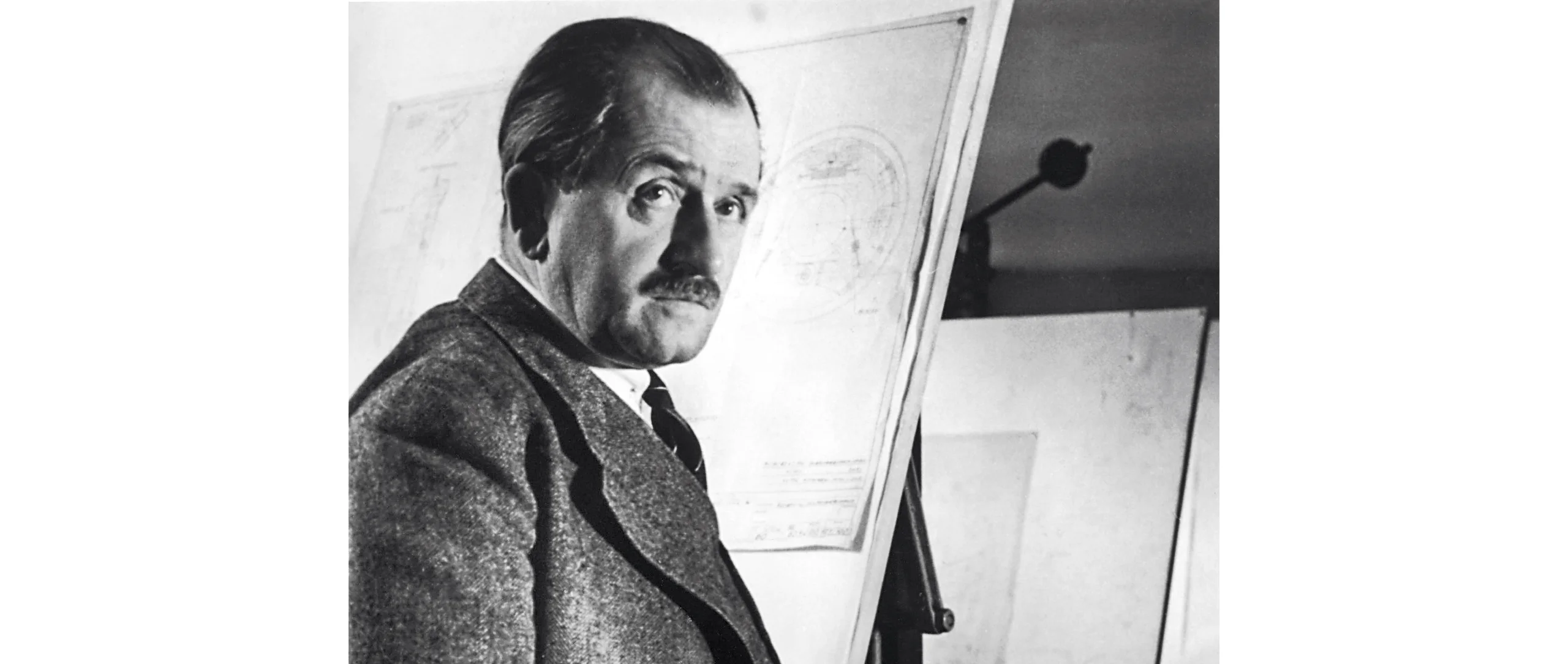
Ferdinand Porsche
 Germany
automotive engineer•entrepreneur•inventor
Also known as: Ferdinand Anton Ernst Porsche
Birthday
September 3, 1875
Birth Sign
Virgo
Birthplace
Vratislavice nad Nisou, Austria-Hungary (now Czech Republic)
Age
Died at 75
About
Ferdinand Porsche was an Austrian-German automotive engineer and entrepreneur whose innovations fundamentally reshaped the global automobile industry. Born on September 3, 1875, in Vratislavice nad Nisou, he created the first gasoline-electric hybrid vehicle, the Lohner-Porsche Mixte, decades before electrification became mainstream. His most famous creation remains the Volkswagen Beetle, originally commissioned as the KdF-Wagen, which became one of the best-selling cars in history. He also designed legendary racing machines like the Mercedes-Benz SS and SSK and founded Dr. Ing. h.c. F. Porsche GmbH in 1931.
Porsche's career intersected with the turbulent political landscape of the 20th century. During World War II, he served as a member of the Nazi Party and an honorary Oberführer in the SS, overseeing the development of military vehicles including the Tiger I tank chassis and the Elefant self-propelled gun. After being imprisoned by French forces following the war, he returned to civilian work and completed the Porsche 356 in 1948, launching the sports car brand that bears his name. He died in 1951, leaving behind a complex legacy of engineering brilliance and wartime collaboration.
Early Life & Background
Ferdinand Porsche entered the world on September 3, 1875, in the village of Maffersdorf, now known as Vratislavice nad Nisou, located in the Bohemian region of Austria-Hungary. His father, Anton Porsche, worked as a locksmith, instilling early mechanical skills in his son, while his mother, Rosina Maurer, came from a miller's family. The household operated on modest means but valued technical aptitude above all else. When Ferdinand was young, the family relocated to Vienna, where the city's industrial energy provided fertile ground for his developing talents.
He attended the municipal trade school and later enrolled at the Technical University of Vienna, though he left before graduating to pursue hands-on engineering work. By age eighteen, his genius was already evident. In 1893, working at Lohner & Co., he designed and built an electric wheel hub motor. This invention resulted in the Lohner-Porsche Mixte Hybrid, the world's first gasoline-electric hybrid vehicle. This machine predates the dominance of the internal combustion engine by decades and demonstrated a forward-thinking approach to electrification that would not be widely adopted until the late 20th century.
His early career saw him rise quickly through the ranks of the automotive world. He joined Austro-Daimler in 1906, where he worked under Paul Daimler. There, he developed high-performance engines and began crafting the aerodynamic designs that would define his reputation. These formative years in Vienna and Graz laid the groundwork for his future role as a chief designer and eventually the founder of his own firm. Before the world knew the name Porsche, he was already solving complex engineering problems that others deemed impossible.
Career Growth
Porsche's professional trajectory accelerated when he joined Daimler-Motoren-Gesellschaft (DMG) in 1923 as technical director. He refined high-performance vehicles there, but his most significant project began in 1934. Adolf Hitler commissioned him to design a "People's Car," leading to the creation of the KdF-Wagen, which later became the iconic Volkswagen Beetle. This vehicle went on to become one of the best-selling automobiles in history, defining mass transportation for generations.
In 1931, before the Beetle's full production, he founded his own design firm, Dr. Ing. h.c. F. Porsche GmbH, in Stuttgart. Initially, the company focused on consulting for other manufacturers like Alfa Romeo and Auto Union. During World War II, his expertise was directed toward the German war effort. He oversaw the development of advanced military vehicles, including the VK 45.01 (P) tank chassis, which evolved into the Tiger I, the Elefant self-propelled gun, and the massive Panzer VIII Maus super-heavy tank. He also contributed to the V-1 flying bomb program.
After his release from French imprisonment in 1947, Porsche immediately resumed civilian production. In 1948, he completed the Porsche 356, the first car to bear his name. This marked the birth of the sports car company that would define the brand's legacy. His son Ferry took over management after Ferdinand's death in 1951, ensuring the company survived the post-war years and grew into a global powerhouse. The Porsche 911, introduced in 1963, would later become one of the most recognizable and successful sports cars ever made.
Career Timeline
Public Image & Style
Ferdinand Porsche is viewed as a visionary engineer whose brilliance was inextricably linked to the turbulent political landscape of the 20th century. His image is complex, celebrated for his engineering genius but scrutinized for his role in the Nazi regime. While there is no formal fandom name, automotive enthusiasts and historians revere his contributions. The fanbase manifests through the preservation of his legacy and the continued operation of the brands he founded. Recent tributes often focus on his grandson, Ferdinand Alexander Porsche, but the original founder's mythos remains strong. His story is one of industrial transformation, where the line between the man and his machines blurs into a singular legend of innovation.
Fame & Fandom (iFAMOUS Rankings)
As measured by the iFANN Global Fame Rankings, which tracks global attention across media coverage, search, and consumption signals worldwide, Ferdinand Porsche holds a position of significant renown. He is currently recognized as the 19th most famous person in Automotive / Car Culture, a standing that has held steady from the previous cycle. This placement reflects a sustained legacy rather than fleeting popularity, anchored by inventions that defined an era. Despite the absence of a formal fandom name or organized community dedicated specifically to him as a living celebrity, his presence is felt through the enduring devotion of automotive historians and enthusiasts who revere his engineering contributions. The fanbase for Ferdinand Porsche does not engage in modern birthday campaigns or social media pushes; instead, their admiration manifests through the preservation of his historical narrative and the continued operation of the brands he founded. The lack of a specific fandom moniker underscores his status as a historical icon rather than a pop culture personality, with his reputation resting entirely on the tangible impact of the Lohner-Porsche hybrid, the Volkswagen Beetle, and the Auto Union racing cars.
Recent developments in 2025 and 2026 continue to highlight his enduring influence. In December 2025, Porsche unveiled the 911 GT3 90 F.A. Porsche Sonderwunsch edition to celebrate the 90th birthday of his grandson, Ferdinand Alexander Porsche, the designer of the iconic 911. Discussions in August 2026 regarding the "Masters of Magic" exhibition further emphasized the family's lasting impact on automotive design. Additionally, reports in April 2026 brought renewed attention to the Jewish heritage of the Porsche family, adding a new layer to the brand's historical narrative. These events demonstrate that while the world may focus on newer iterations, the foundational myths established by Ferdinand remain potent. His induction into the International Motorsports Hall of Fame in 1996 and being named "Car Engineer of the Century" by Autocar magazine in 1999 solidified his status as a titan of the industry. The financial scale of his empire, with the Porsche SE holding company exceeding $100 billion in market capitalization as of 2026, serves as a quantitative measure of this fame. The legacy is not just in the cars but in the sheer magnitude of the entities he helped build.
Interesting Facts and Legends
Ferdinand Porsche held over 400 patents throughout his lifetime, reflecting his prolific nature as an inventor. One of his earliest achievements involved the Lohner-Porsche Mixte Hybrid winning a race against steam-powered cars in 1900, showcasing the viability of electric drive systems long before they were commercially viable. Historical records recently brought to light the Jewish heritage of the Porsche family, adding a new layer of complexity to the brand's mythology and personal history. Despite his involvement with the Nazi regime, he was never convicted of war crimes after his imprisonment, though the use of forced labor in his factories remains a documented historical fact. His grandson, Ferdinand Alexander Porsche, designed the iconic 911, continuing the family's legacy in automotive design. He received the German National Prize for Art and Science in 1937 and the SS-Ehrenring in 1938. In 1944, he was awarded the War Merit Cross, 1st Class with Swords for his work on military vehicles. Contemporary accounts describe him as a man of average to slightly above-average stature. His quotes, such as "The car must be simple, robust, and cheap," reveal his philosophy on mass production.
Notable Quotes
“The car must be simple, robust, and cheap.”
“I want to build a car that every man can afford.”
“We do not make cars for the rich; we make them for the people.”
Family & Personal Life
Ferdinand Porsche married Aloisia Johanna "Helene" Kaestner on October 14, 1904, in Vienna. She was the daughter of a wealthy merchant, and their marriage lasted until his death in 1951. They had two children: Ferry Porsche, born in 1908, who would take over the management of Porsche AG after his father's death, and Louise "Lulu" Porsche, born in 1911, who married Hans Piech. Hans Piech was the son of Anton Piëch, another prominent figure in the automotive industry. The family lived in Stuttgart, where Ferdinand conducted his business affairs. There are no records of other public romantic relationships or affairs; Porsche was a private man focused on his work and family. The family's Jewish roots have been highlighted in recent discussions about the brand's history.
Notable Connections
Relationships & Dating History
Ferdinand Porsche married Aloisia Johanna "Helene" Kaestner on October 14, 1904, in Vienna. She was the daughter of a wealthy merchant, and their union produced two children: Ferry Porsche, born in 1908, and Louise "Lulu" Porsche, born in 1911. The marriage lasted until Ferdinand's death in 1951. There are no records of other public romantic relationships or affairs; Porsche was a private man focused on his work and family. Louise later married Hans Piech, the son of Anton Piëch, another automotive figure. The couple remained together through the complexities of the Nazi era and the post-war period. As of the time of his death, Ferdinand was married to Aloisia, and the family unit remained intact, with Ferry eventually taking over the business. No divorces or engagements prior to his death are documented. His relationship with Heinrich Himmler during the Nazi era was professional, involving the receipt of the SS-Ehrenring.
- MarriedAloisia Johanna "Helene" Kaestner1904 - 1951Married until his death; parents of Ferry and Louise Porsche.
Death & Aftermath
Died
January 30, 1951 (aged 75)
Death Place
Stuttgart, Germany
Cause of Death
Natural causes due to advanced age
In the final months of his life, Ferdinand Porsche remained deeply engaged in the engineering work that defined his later years, overseeing the completion of the design for the Porsche 356 prototype and continuing to guide the development of the Volkswagen Beetle. On January 30, 1951, he passed away at the age of 75 within Stuttgart, Germany, where he had resided and conducted his business affairs. The official determination attributed his death to natural causes stemming from advanced age and a general decline in health, a conclusion reached through family and company statements rather than forensic investigation or an autopsy, which was typical for non-suspicious deaths in post-war Europe.
Public reaction within the automotive industry was immediate, characterized by tributes from peers who recognized his visionary status as a founder of major brands. While specific public vigils were not recorded in contemporary accounts, the enduring legacy of his technical genius was acknowledged by institutions and colleagues alike. The funeral service took place shortly after his passing in Stuttgart, attended by his son Ferry Porsche and key employees, marking a private transition of leadership during the difficult post-war period. Following his death, Ferry Porsche assumed control of the company, ensuring the survival and eventual global expansion of the brand that bears the family name.
The estate evolved into the Porsche SE holding company, which maintains control over both Porsche AG and the Volkswagen Group, while his contributions were later cemented by induction into the Automotive Hall of Fame in 2001 and the International Motorsports Hall of Fame in 1996. Foundations supporting innovation exist, keeping his memory alive through the continued success of the enterprise he established. His legacy was further honored when he was named "Car Engineer of the Century" by Autocar magazine in 1999. The post-war transition saw the company shift focus from military contracts back to consumer vehicles, a pivot that secured its future.
Net Worth (Estate Value)
$100 Billion
iFANN Editorial Team estimate
As Ferdinand Porsche died in 1951, his personal net worth is not applicable in modern terms. However, the value of his estate has grown exponentially. The Porsche SE holding company, which controls the Porsche AG and Volkswagen Group, has a market capitalization exceeding $100 billion as of 2026. The estate's primary revenue sources include royalties from the Volkswagen Beetle, licensing deals for the Porsche brand, and ownership stakes in major automotive entities. The estate is managed by the Porsche family trust, currently overseen by the Piëch and Porsche families. iFANN currently estimates the total value of the Porsche family's influence and holdings at approximately $100 Billion, reflecting the immense scale of the companies he founded. Research by the iFANN Editorial Team puts the fortune generated by the Porsche empire at around $100 Billion, driven by decades of sales, licensing, and strategic acquisitions. The financial trajectory of the estate has seen consistent growth, transforming a small design firm into a global automotive giant. The estate's wealth is derived from the continued success of the Volkswagen Beetle and the Porsche sports car lines, which have remained profitable for nearly a century.
Awards Won (6)
Ferdinand Porsche received numerous honors for his contributions to automotive engineering and military technology. He was awarded the German National Prize for Art and Science in 1937 and the SS-Ehrenring in 1938. Posthumously, he was inducted into the International Motorsports Hall of Fame in 1996 and named the Car Engineer of the Century in 1999 by Autocar magazine. He was also inducted into the Automotive Hall of Fame in 2001.
1937 · Engineering
Automotive Engineering Contributions
1938 · Military Honor
Service to the Reich
Known For
Volkswagen Beetle
1938 · Designer
Porsche 356
1948 · Designer
Lohner-Porsche Mixte Hybrid
1893 · Inventor
Mercedes-Benz SS/SSK
1926 · Chief Designer
Tiger I Tank
1942 · Chassis Designer
Keywords
Sources
Quick Facts
- Profession
- entrepreneur, inventor, automotive engineer
- Born
- September 3, 1875
- Birthplace
- Vratislavice nad Nisou
- Died
- January 30, 1951
- Death Place
- Stuttgart
- Gender
- Male
- Spouse
- Aloisia Johanna Porsche
- Birth Sign
- Virgo
Personal Details
- Full Name
- Ferdinand Anton Ernst Porsche
- Spouse
- Aloisia Johanna "Helene" Kaestner
- Children
- Ferry Porsche, Louise Porsche
- Education
- Municipal Trade School Vienna; Technical University of Vienna (did not graduate)
Frequently Asked Questions
Who was Ferdinand Porsche?
When did Ferdinand Porsche die?
Did Ferdinand Porsche work for the Nazis?
What is Ferdinand Porsche's legacy?
Is Ferdinand Porsche still alive?
Similar People
Join the community
fans discussing