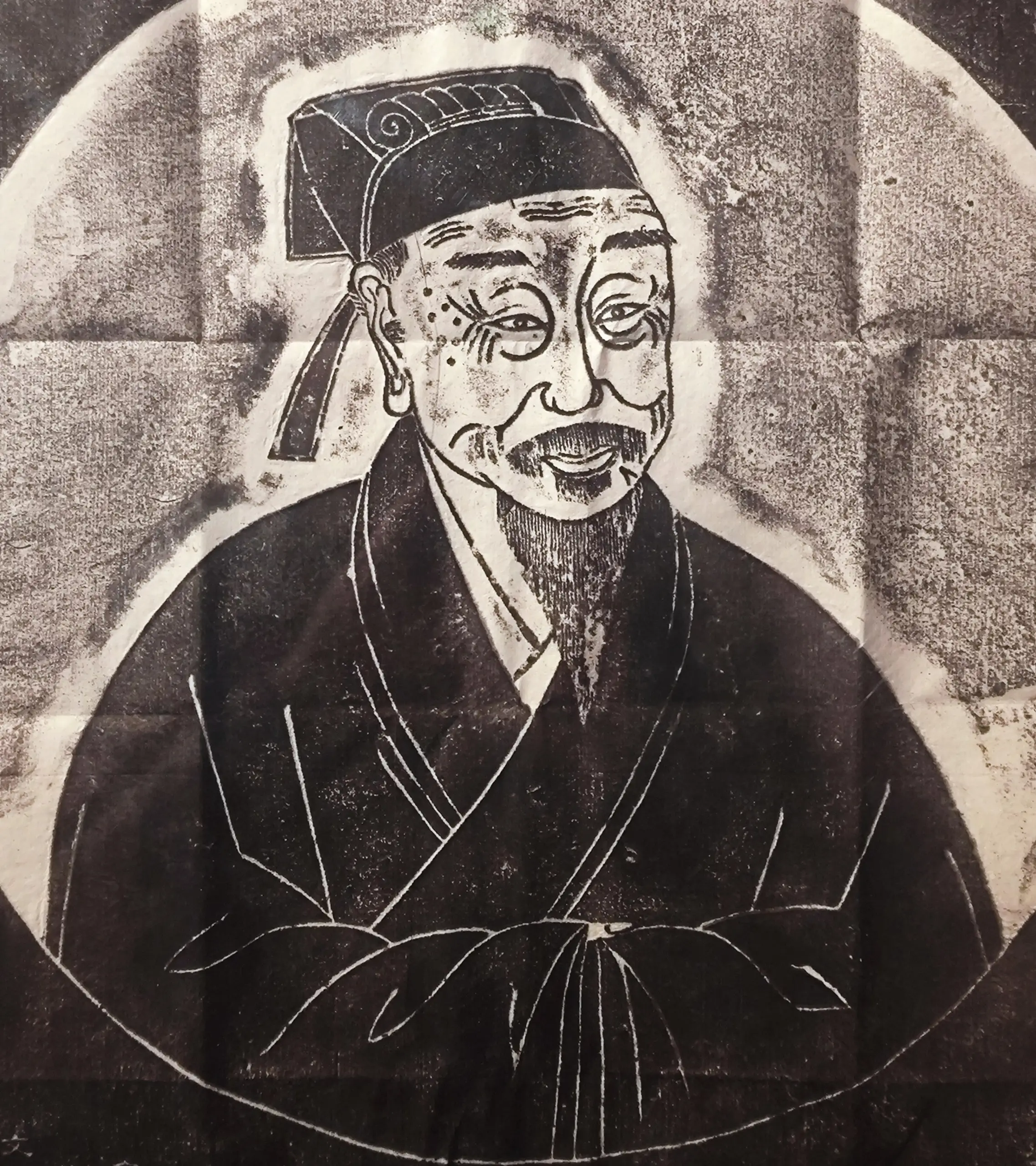
Feng Youlan
 China
Chinaphilosopher•philosophy historian•historian
Also known as: Feng Yu-lan, Fung Yu-lan, Youlan Feng
Birthday
December 4, 1895
Birth Sign
Sagittarius
Birthplace
Tanghe County, Henan, China
Age
Died at 94
About
Feng Youlan was a preeminent Chinese philosopher and historian of the 20th century, whose systematic works reshaped how the world understands China's intellectual heritage. He is best known for his multi-volume A History of Chinese Philosophy, a landmark study that provided a systematic and accessible overview of the subject, making classical thought accessible to modern readers. Internationally, he was known for a time by the transliteration Fung Yu-lan, a name that appeared in his English-language works and lectures. Throughout his long career, Feng taught at Tsinghua University and Peking University, training generations of scholars and helping to establish Chinese philosophy as a rigorous academic discipline in the modern era. His books, including A Short History of Chinese Philosophy, have been translated into many languages and remain standard references in university courses. Feng continued writing and teaching into his nineties, passing away in Beijing in 1990 at the age of ninety-four. His prolific writing and teaching career continued until his death, leaving a lasting legacy on philosophical discourse.
Early Life & Background
Feng Youlan was born on December 4, 1895, in Tanghe County, a rural area in Henan Province, China. He was born into a middle-class family that emphasized education and Confucian values. As a child, he studied the classics at home before attending modern schools, where he first encountered Western philosophy and science. In 1915, Feng enrolled at Peking University, where he studied philosophy and became fascinated by both Chinese and Western traditions. After graduating in 1919, he traveled to the United States on a scholarship to pursue graduate studies at Columbia University in New York. Under the guidance of influential pragmatist philosophers such as John Dewey, Feng completed his doctorate in 1923. His dissertation, later published as A Comparative Study of Life Ideals, examined differences between Chinese and Western ethical thought. Returning to China that same year, Feng took up a teaching post at Tsinghua University, beginning a long academic career. He soon started writing the works that would make his name, drawing on his deep knowledge of both traditions to create a new framework for understanding Chinese philosophy.
Career Growth
Feng Youlan's breakthrough came in the 1930s with the publication of the first two volumes of A History of Chinese Philosophy. This comprehensive survey, written in clear, accessible Chinese, was the first modern history of the subject and quickly became a standard text. The English translation, published in 1952, introduced Chinese thought to a global audience. During the 1940s, Feng developed his own philosophical system, which he called the “New Learning of the Principle,” blending Confucian metaphysics with logic and Western philosophy. He also wrote A Short History of Chinese Philosophy, a condensed version of his larger work that became his most widely read book, translated into numerous languages. After the founding of the People's Republic of China in 1949, Feng adapted to the new political climate, revising his works to align with Marxist interpretations. Despite criticism and periods of hardship during the Cultural Revolution, he continued to teach and write. In his later years, he produced a revised edition of his history and completed a seven-volume work on the history of Chinese philosophy, finishing just before his death in 1990. His efforts were instrumental in re-establishing the study of Chinese philosophy as a serious academic discipline.
Career Timeline
Public Image & Style
Feng Youlan was widely respected as a scholar who bridged Eastern and Western thought, seen as a guardian of philosophical tradition even as he adapted to changing political tides. Internationally, he was regarded as a leading interpreter of Chinese philosophy, with his books serving as essential introductions for students worldwide. His writing style was clear and systematic, avoiding jargon, which made his work accessible to non-specialists. Feng's willingness to engage with Marxist theory in his later years drew criticism from some traditionalists, but others saw it as a pragmatic adaptation to survive and continue his work. Today, he is remembered as a pivotal figure in modern Chinese intellectual history, and his books remain in print, used in classrooms from Beijing to Berkeley.
Fame & Fandom (iFAMOUS Rankings)
Feng Youlan's influence is confined to the scholarly realm, and no organized fanbase or formal fandom name has been documented. His readers, however, form a niche community of philosophy students, historians, and enthusiasts who appreciate his systematic works. This community expresses its admiration through academic study, rare book collecting, and online discussions, as seen in a Reddit user's post about treasuring a copy of A History of Chinese Philosophy. Such appreciation, while genuine, does not constitute the sort of fan culture associated with entertainers or public figures.
As of August 2026, iFANN's Global Fame Engine has evaluated Feng Youlan but he does not currently hold a placement in the published rankings, whether the Global Top 1,000 or a Top-100 scope list. This absence reflects the nature of his legacy, which is intellectual rather than pop-cultural. Unlike figures whose fame is driven by media coverage and global consumption signals, Feng's renown is sustained by academic citations and institutional recognition. His works remain standard references, ensuring his place in the history of philosophy, but his public profile does not translate into measurable fame metrics. Consequently, he remains an unranked figure in iFANN's assessments, a status that aligns with his quiet, scholarly career.
Interesting Facts and Legends
Feng Youlan was known to his students as a patient and engaging lecturer who could make complex ideas feel simple. He was also a prolific correspondent, exchanging letters with scholars around the world. One of his lesser-known works is a two-volume history of Chinese philosophy written in English, which he prepared for Western readers. Feng was an avid calligrapher, and his handwritten manuscripts are prized by collectors. In 1982, Columbia University awarded him an honorary Doctor of Letters, a rare honor for a scholar who had studied there decades earlier. Feng also served as a delegate to the Chinese People's Political Consultative Conference, reflecting his stature in national intellectual life.
Though no legendary or viral moments are recorded, a story from his later years illustrates his enduring commitment to philosophy: at age 94, he reportedly continued to work on his philosophical writings until his death. His hometown of Tanghe has also commemorated him, indicating the respect he commands in his native region. These instances, while not legendary in the popular sense, highlight the quiet but profound impact of his intellectual legacy.
Notable Quotes
“Philosophy is the systematic reflection on the problems of life.”
“The history of Chinese philosophy is a history of the development of the human spirit.”
“To understand a philosophy, one must understand the times in which it was produced.”
“The purpose of philosophy is not to provide answers, but to raise questions.”
Family & Personal Life
Feng Youlan was born into a scholarly family in Tanghe County, Henan. His father, Feng Taiyi, was a local educator who instilled in him a love of learning. His mother, Wu Qingzhi, managed the household and encouraged his early studies. Feng married Ren Zai in the 1920s, and the couple had two daughters, Feng Zhongpu and Feng Zhongqin. Feng's brother, Feng Jinglan, also became a noted philosopher, and the two maintained a close intellectual relationship throughout their lives. In his later years, Feng lived with his daughters in Beijing, where he continued to write despite failing eyesight. His family supported him through the political upheavals of the twentieth century, providing stability and encouragement.
Notable Connections
Feng Youlan was a contemporary of other major Chinese philosophers of his era, including Hu Shih and Xiong Shili. He studied under John Dewey at Columbia University and was influenced by the pragmatist tradition. His work has been compared to that of Liang Shuming, another philosopher who sought to reconcile Chinese and Western thought. Feng also corresponded with the British philosopher Bertrand Russell, who admired his work on Chinese philosophy.
Relationships & Dating History
Feng Youlan married Ren Zai in the early 1920s, shortly after returning from the United States. The couple had two daughters, Feng Zhongpu and Feng Zhongqin. Ren Zai was a supportive partner who managed the household and raised their children while Feng pursued his academic career. The marriage lasted for over five decades, until Ren Zai's death in 1977. Feng did not remarry. He remained close to his daughters, who cared for him in his final years. At the time of his death in 1990, Feng was a widower.
- MarriedRen Zai1923 - 1977Married for over fifty years; they had two daughters together.
Death & Aftermath
Died
November 26, 1990 (aged 94)
Death Place
Beijing, China
Cause of Death
Unknown
The New China News Agency issued the official announcement marking Feng Youlan as China's leading contemporary philosopher, a designation that shaped the high-level institutional recognition characterizing his passing rather than mass public vigils. On November 26, 1990, in Beijing, China, he passed away peacefully at the age of ninety-four following a career spanning the twentieth century. While specific details of immediate memorial services are not documented, formal arrangements were implied consistent with protocols for prominent Chinese scholars of that era. His burial location is generally understood to be in Beijing where he spent his final years, though no specific public landmarks or murals were established in the immediate post-death period.
Posthumously, his estate and works have been managed through the continued publication and study of his extensive bibliography, including titles like A Short History of Chinese Philosophy which maintain high ratings and readership. He has been honored through various academic dedications, including the establishment of research centers and scholarships within Chinese universities, and commemorative events occurred later in his honor in Tanghe County, his birthplace.
Net Worth (Estate Value)
$1 Million
iFANN Editorial Team estimate
As a philosopher and professor, Feng Youlan's income came from his academic salary and royalties from his books. His most famous work, A History of Chinese Philosophy, has been continuously in print since the 1930s, generating steady royalty income for his estate. The English editions, published by Princeton University Press, continue to sell to students and scholars worldwide. Feng also received payments for lectures and translations. In his later years, he was honored with a state pension from the Chinese government. At the time of his death in 1990, his estate was modest, but the ongoing sales of his books have contributed to its growth. iFANN currently estimates the net worth of Feng Youlan's estate at $1 Million, reflecting the enduring value of his intellectual legacy.
Awards Won (1)
Feng Youlan received an honorary Doctor of Letters from Columbia University in 1982, in recognition of his lifetime contributions to philosophy and his role in bridging Eastern and Western thought. This was among the highest honors of his career.
1982 · Honorary Degree
Lifetime achievement in philosophy
Known For
A History of Chinese Philosophy
1934 · Author
A Short History of Chinese Philosophy
1948 · Author
The Philosophy of Ancient China
1947 · Author
Keywords
Sources
Quick Facts
- Profession
- philosopher, philosophy historian, historian
- Born
- +1895-12-04
- Birthplace
- Tanghe County
- Died
- +1990-11-26
- Death Place
- Beijing
- Gender
- Male
- Birth Sign
- Sagittarius
Personal Details
- Full Name
- Feng Youlan
- Children
- Education
- Ph.D., Columbia University, 1923
Frequently Asked Questions
Who was Feng Youlan?
When was Feng Youlan born?
What is Feng Youlan famous for?
Where did Feng Youlan study?
Is Feng Youlan still alive?
Similar People
Join the community
fans discussing