 Japan
Japan“This movie is absolutely amazing.”
True Myth Media
True Myth Media
Part of a Collection
Female Prisoner Scorpion Collection
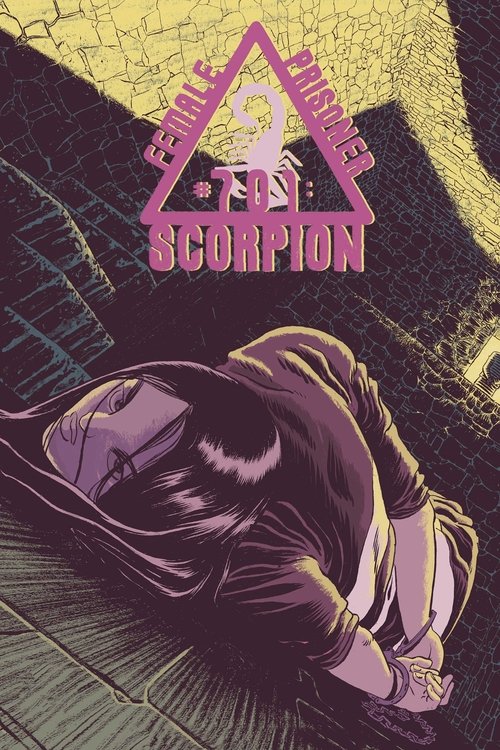
In 1972, Japanese cinema saw the arrival of a new kind of antiheroine: Nami Matsushima, a woman whose quiet fury would ignite a genre. Directed by Shunya Ito in his directorial debut, Female Prisoner #701: Scorpion is a brutal, stylized thriller that mixes exploitation grit with art-house flair. Meiko Kaji stars as Matsushima, a reserved office worker whose life shatters when she is betrayed by her lover, a detective named Sugimi, who is in league with the mob. Framed for a crime she didn't commit, she lands in a hellish women's prison ruled by the sadistic Warden Goda and his brutal guards. The film, produced by Toei Company, was a modest hit, spawning four sequels and cementing Kaji's status as a cult icon. With its striking visual compositions, haunting score by Shunsuke Kikuchi, and unflinching depiction of violence and sexual assault, Scorpion is a raw, poetic exploration of vengeance and survival.
Nami's journey into the depths of despair begins when Sugimi manipulates her into helping him infiltrate a drug ring. Her undercover work leads to a horrific assault by criminals, only for her to discover Sugimi's true motives: he used her to secure a bribe. Seeking retribution, her attempt to stab Sugimi fails, resulting in her sentencing to the unforgiving walls of a women's penitentiary, where she becomes Prisoner #701. The prison environment is depicted as a den of sadism and perversion, with guards frequently subjecting inmates to humiliation and harsh punishments. Despite the overwhelming cruelty from both guards and fellow prisoners, Nami's resolve hardens, fueled by an unyielding desire for revenge.
Nami Matsushima's life takes a dark turn when she becomes involved with a police detective named Sugimi. He enlists her help to infiltrate a drug-smuggling ring, and Nami, deeply in love with him, agrees to go undercover. As she delves deeper into the dangerous world of yakuza and drug dealers, her role is discovered, and she is brutally assaulted by several of the criminals. It is revealed that Sugimi was not acting out of a desire for justice but was merely using Nami as a pawn to secure a bribe from the mob.
Seeking retribution for the betrayal and the horrific assault, Nami makes a desperate attempt to stab Sugimi on the steps of the Tokyo Metropolitan Police headquarters. Her attempt fails, and she is subsequently sentenced to a harsh term in a women's prison, where she is assigned the prisoner number 701. The prison is depicted as a brutal and unforgiving environment, overseen by a sadistic Warden Goda and his equally cruel guards. The guards are portrayed as sex-crazed perverts who frequently force inmates to march nude and subject them to harsh punishments.
Inside the prison, Nami endures relentless cruelty from both the guards and her fellow inmates. The guards gratuitously provoke violence and leer at the prisoners. Nami's initial attempts at defiance, such as an escape attempt with another inmate, Yukiko, result in severe punishment, including being hogtied and left in silence for extended periods. Despite the overwhelming brutality, Nami's resolve remains unbroken. She is driven by a singular desire for revenge against Sugimi and those who wronged her. The film meticulously sets up the depravity of her tormentors, making it clear that Nami's eventual violent retribution is justified. The harshness of her prison experience, combined with the constant threat of violence and exploitation, shapes her into a formidable force seeking vengeance.
Original Trailer [Subtitled]
Critical Consensus
Female Prisoner #701: Scorpion is a brutal and stylized Japanese women-in-prison film that effectively blends exploitation grit with art-house flair. Led by a powerful performance from Meiko Kaji, the film's unflinching depiction of violence and survival cemented its status as a cult classic.
“This movie is absolutely amazing.”
True Myth Media
True Myth Media
“female prisoner 701 scorpion is one of the finest examples of Japanese exploitation and much like Japanese filmmakers often do they took it to the next level here.”
Critic
Late Night Video
“This is a dark gritty film this isn't a fun Roger Corman style women in prison movie I'd say it's much closer to something like violence in a women's prison by Bruno maai along those lines.”
Critic
Late Night Video
“The film's manga origins (by Tōru Shinohara) assert themselves; every major moment is concentrated in an EC Comics-style delivery, visually similar to the shocking primary color backlighting during the climaxes of Creepshow’s eerie segments.”
Critic
Crooked Marquee
“the cinematography the directing the acting just the look of it everything is really well done and I just think kind of the Grim dark nature of it and the time in which it came out in is why it's kind of considered when exploitation”
Critic
Late Night Video
Meiko Kaji
Nami Matsushima
Rie Yokoyama
Katagiri
Isao Natsuyagi
Sugimi
Fumio Watanabe
Warden Goda
Yayoi Watanabe
Yukiko Kida
Yōko Mihara
Masaki / Red-Haired Bully
Akemi Negishi
Otsuka
Hideo Murota
Okizaki
Yumiko Katayama
Kitô
Keiko Kuni
Nemoto
Emi Jo
Morikawa
Sue Mitobe
Imune
Director
Shunya Ito
Writers
Fumio Kōnami, Hiro Matsuda, Toru Shinohara
Composer
Shunsuke Kikuchi
Cinematographer
Hanjirō Nakazawa
Producer
Kineo Yoshimine
Join the community
fans discussing