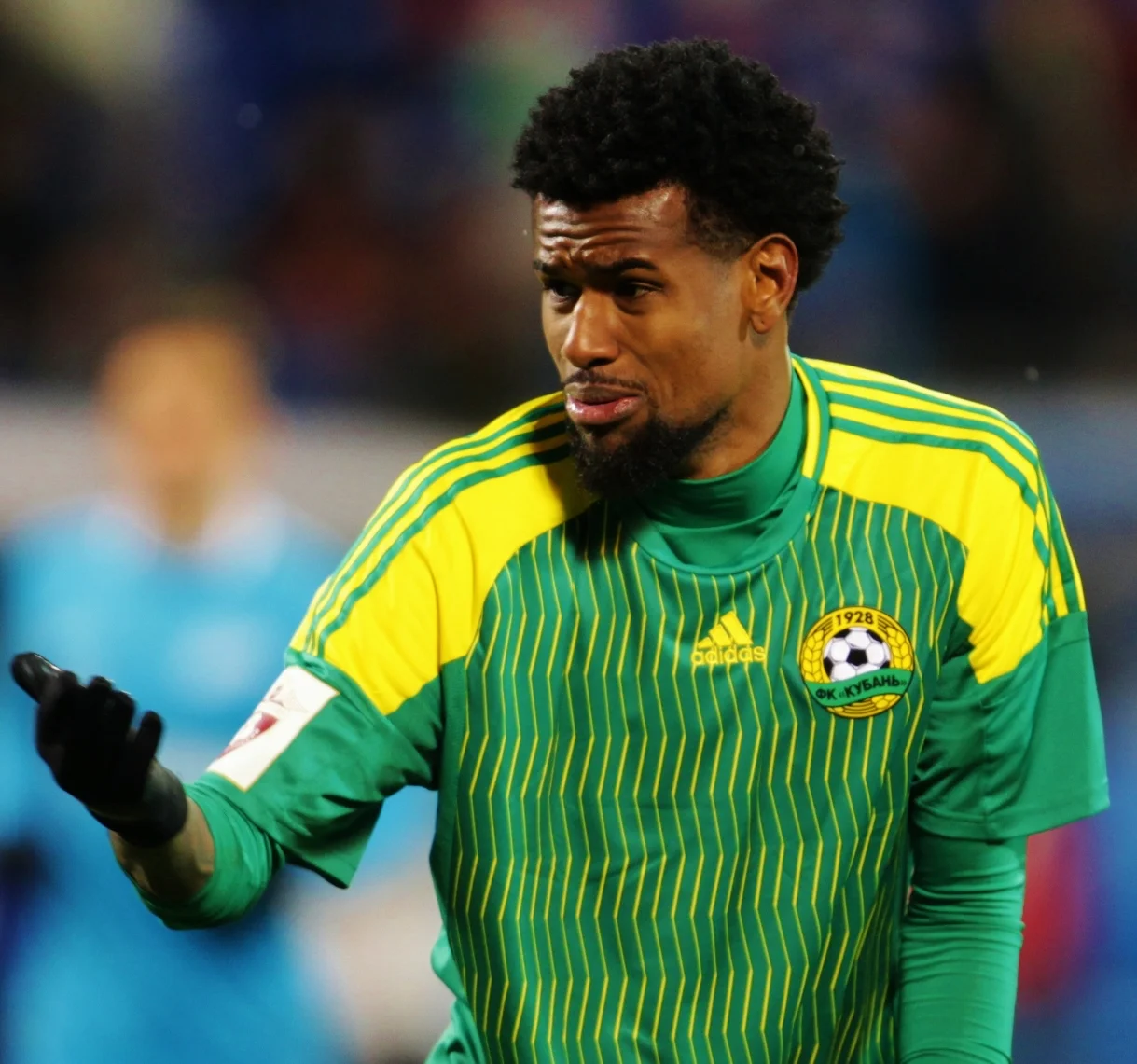
Felipe Santana
 Brazil
Former professional footballer (centre-back) and sports commentator
Also known as: Felipe Augusto Santana
Birthday
March 17, 1986
Birth Sign
Pisces
Birthplace
Rio Claro, São Paulo, Brazil
Age
40 years old
Height
6 ft 4 in (194 cm)
About
Felipe Santana is a Brazilian former professional footballer who played as a centre-back, and he is now a sports commentator and speaker. His career ran 17 years and took him from Santos in Brazil to Schalke 04 and Borussia Dortmund in Germany, plus spells in Greece and Russia.
He is best known for one night in April 2013, when his late goal against Málaga sent Borussia Dortmund into the Champions League semi-finals. That moment made him a cult figure in German football. He also won the 2009 FIFA Confederations Cup with Brazil and was named in the country's 2010 World Cup squad.
Since retiring, Santana has worked as a coach and mentor for young defenders and built a second career in Portuguese-language sports media, where he appears as a commentator and motivational speaker. Fans who remember him tend to remember the header, the height, and the noise inside Signal Iduna Park.
Early Life & Background
Rio Claro sits in the interior of São Paulo state, a few hours from the coast, and it is where Felipe Augusto Santana was born on March 17, 1986. The town is not a football factory in the way Santos or São Paulo are, but the state's scouting network reaches everywhere, and Santana's size made him hard to miss. By his late teens he was 194 cm tall, a frame that would later define how he played.
He came through the youth ranks at Santos FC, the club that produced Pelé and, a generation later, Neymar. Breaking into that senior squad was not easy for a young defender. Santana made his senior debut in 2006, at 20, and Brazilian football writers of the period described him as a rising star in the making. He was not a flashy ball-playing centre-back. He was the other kind: strong in the air, quick over the first few yards, willing to defend the box rather than step out of it.
Two seasons of first-team football at Santos were enough. In 2008, at 22, he moved to Europe and signed with Schalke 04 in the Bundesliga. It was a leap from the Brazilian state championship to one of Germany's loudest stadiums, and it set the pattern for the rest of his career: a defender who traveled, adapted, and did the unglamorous work.
Career Growth
Four seasons at Schalke turned Santana into a Bundesliga regular. He played more than 100 matches for the club and was part of the side that reached the Champions League semi-finals in 2011, a run that included a win over Inter Milan at San Siro. That Schalke team was built on defensive discipline, and Santana was one of the reasons it held.
In 2012 he moved to Borussia Dortmund, then managed by Jürgen Klopp and riding a wave of attacking football. His defining moment arrived on April 9, 2013, in the Champions League quarter-final second leg against Málaga at Signal Iduna Park. Dortmund needed a goal late. Santana got on the end of a scramble in the box and forced it in, sending the club through to the semi-finals in one of the most chaotic finishes in the competition's recent history. The goal is still replayed in Germany.
He left Dortmund that summer, replaced by Sokratis Papastathopoulos, and moved on to Olympiacos on loan. From there came São Paulo back in Brazil, two seasons at Dynamo Moscow in Russia, and late-career spells with Atlético Mineiro and Chapecoense. Across Brazil, Germany, Greece and Russia he played more than 300 professional matches. In retirement he has stayed in the game as a coach and mentor for young defenders, and he now works in Portuguese-language sports media as a commentator and speaker.
Career Timeline
Public Image & Style
On the pitch Santana cut a specific figure: 194 cm, right-footed, a centre-back who defended the box rather than the halfway line. Brazilian coverage in his early twenties framed him as a rising star, and German coverage framed him as a reliable piece of a Champions League side. Neither framing was glamorous, and he never seemed to want it to be.
His second act is more polished. His Instagram bio reads "Esportes, performance e empreendedorismo," followed by communicator, speaker, commentator, and former professional athlete with UEFA and CBF credentials. The tone is measured and professional, closer to a conference speaker than a retired athlete chasing attention. In German football memory he is a cult figure; in Brazil he presents as a calm, articulate voice on the game.
Fame & Fandom (iFAMOUS Rankings)
iFANN has not yet gathered fame data for Santana, so there is no published placement to report. He is not on the September 2026 iFAMOUS Rankings flagship list either.
What he does have is a specific, durable kind of following. German fans of a certain age remember the Málaga night and nothing else about him, and that is enough. The FIFA gaming community keeps its own archive: his Ultimate Team cards from FUT 10 through the early 2010s are still traded and discussed, and searches for his FIFA 13 and FIFA 14 ratings still surface. A podcast billed him as a Bundesliga Legend at an Oktoberfest event, which tells you how German football culture treats players who deliver one unforgettable night.
There is no formal fanbase name, no organized campaigns, no birthday billboards. The audience is nostalgic rather than active: Dortmund supporters, Bundesliga nostalgists, and Brazilian fans who followed the 2009 Confederations Cup squad. On Instagram he engages with them as a commentator and speaker rather than as a former player trading on old highlights.
Interesting Facts and Legends
Santana's FIFA Ultimate Team history is a small cult archive: 11 FUT cards in total, starting with a 77-rated card in FUT 10 and peaking with an 80-rated card. Fans of the older games still search for his FIFA 13 and FIFA 14 cards.
A German podcast once billed him as a "Bundesliga Legend," a label he wears more comfortably than most players with one famous goal would.
In July 2015, ESPN reported a "mystery hand injury" that could affect Schalke's sale plans for him. The circumstances were never fully explained, and the report sits oddly against the record of his 2013 departure from Dortmund.
He is frequently confused online with a Brazilian executive of the same name who was appointed chief financial officer of Embraer in April 2026. They are not related and have never met publicly. Another Felipe Santana, a TV Globo correspondent in Brooklyn, adds to the mix.
Family & Personal Life
Santana has kept his family life out of the public record. No partner, spouse or children have been documented in interviews or press coverage, and he has not discussed his parents or siblings publicly. He grew up in Rio Claro, in São Paulo state, and his career took him to four countries before he returned to Brazil. Beyond that, the details are his own.
Notable Connections
Relationships & Dating History
Santana has not publicly documented any romantic relationship. No partner, marriage, divorce or separation has been reported in the Brazilian, German or Greek press across his playing career or since. As of 2026 his relationship status is unknown, and he should not be described as single, married or dating without a credible source.
Salary, Net Worth In 2026
$5 Million
iFANN Editorial Team estimate
There is no credible public net worth estimate for Felipe Santana. Celebrity finance sites and Google-surfaced figures do not return a reliable number for the footballer, and any figure circulating online is likely to conflate him with the Embraer chief financial officer of the same name, appointed in April 2026. The iFANN Editorial Team's reading of his career earnings, which spanned more than 300 professional matches across Brazil, Germany, Greece and Russia, points to roughly $5 Million as of 2026. That figure is an editorial estimate, not a reported fact.
The income behind it is straightforward. His peak earning years came at Schalke and Dortmund in the Bundesliga, where centre-backs of his level earned solid but not spectacular salaries, and at Dynamo Moscow, where Russian clubs of that era paid competitively. Brazilian clubs Santos, São Paulo, Atlético Mineiro and Chapecoense paid less. Endorsement income was minimal: he was never a commercial face of a brand.
His post-playing income comes from commentary work, speaking engagements and coaching, which his Instagram bio lists explicitly. None of it is documented in financial detail. Readers looking for a number should treat any figure above $10 Million as a mix-up with the executive.
Awards Won (1)
Santana won the 2009 FIFA Confederations Cup with Brazil, the headline honour of his international career. At club level his most significant team achievement was reaching the Champions League semi-finals with Schalke in 2011 and with Borussia Dortmund in 2013, though no individual awards are documented.
2009 · International
Brazil national team
Known For
Borussia Dortmund vs Málaga, Champions League quarter-final
2013 · Scored the late winning goal
Brazil national team, FIFA Confederations Cup
2009 · Squad member and winner
Schalke 04
2008-2012 · Centre-back, 100+ appearances
Keywords
Sources
Quick Facts
- Profession
- Former professional footballer
- Born
- March 17, 1986
- Birthplace
- Rio Claro, São Paulo, Brazil
- Height
- 194 cm (6 ft 4 in)
- Position
- Centre-back
- Nationality
- Brazilian
Personal Details
- Full Name
- Felipe Augusto Santana
- Height
- 6 ft 4 in (194 cm)
Frequently Asked Questions
What is Felipe Santana famous for?
Is Felipe Santana still playing football?
How tall is Felipe Santana?
Did Felipe Santana play for Brazil?
Is Felipe Santana the Embraer CFO?
Social Media
Similar People
Join the community
fans discussing