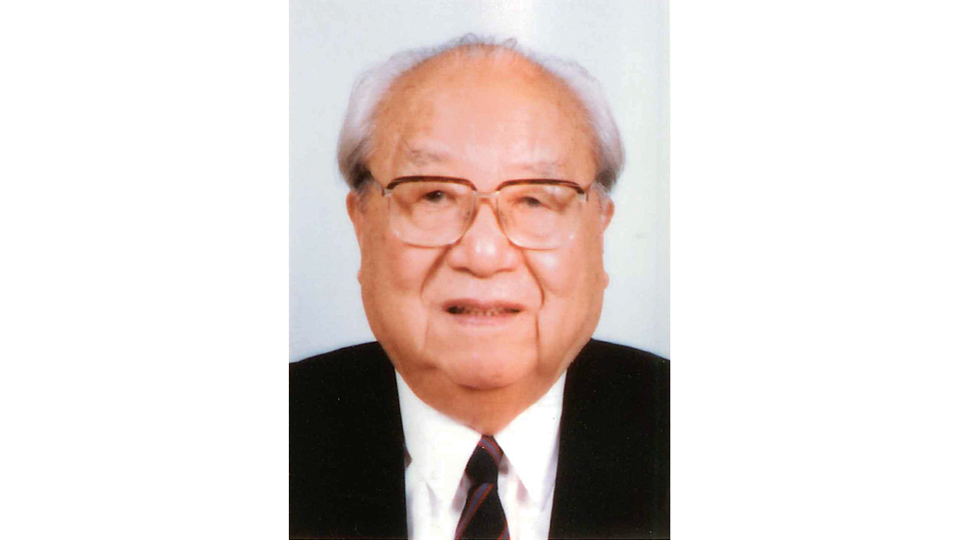
Fei Xiaotong
 China
Chinaanthropologist•sociologist•university teacher
Birthday
November 2, 1910
Birth Sign
Scorpio
Birthplace
Wujiang District, Jiangsu Province, China
Age
Died at 94
About
Fei Xiaotong was a pioneering Chinese anthropologist and sociologist whose work reshaped how the world understood Chinese society. Born in 1910, he rose to international prominence with his groundbreaking 1939 study Peasant Life in China, which offered an intimate portrait of rural village life that challenged Western stereotypes. Over his long career, he became the most influential figure in Chinese social science, helping to rebuild sociology and anthropology in China after they were banned for decades.
Fei's scholarship was marked by a deep commitment to fieldwork and a humanistic approach that put ordinary people at the center of analysis. He held prestigious positions including Professor of Sociology at Peking University, and his theories on rural development and ethnic relations influenced policy and academic thought well into the 21st century. He passed away in 2005 at the age of 94, leaving behind a legacy that continues to inspire scholars worldwide.
Early Life & Background
Fei Xiaotong was born into a "lower gentry" family in Wujiang District, Jiangsu Province, on November 2, 1910. His upbringing was comfortable by the standards of the time, and he was encouraged to pursue education from an early age. He attended Yanjing University in Beijing, where he first immersed himself in the social sciences, graduating in 1923. Ten years later, in 1933, he completed his studies at Yenching University, the institution that would become a launching pad for his academic career.
During his university years, Fei was exposed to the ideas of Western sociologists like Robert Park and Emile Durkheim, but he was equally drawn to the realities of his own country. He began conducting fieldwork in rural China, motivated by a desire to understand the lives of peasants who made up the vast majority of the population. This early interest would define his life's work, setting the stage for his landmark study of the village of Kaihsienkung, which he conducted in the late 1930s.
Career Growth
Fei Xiaotong's breakthrough came in 1939 with the publication of Peasant Life in China, a detailed ethnographic study based on his fieldwork in the village of Kaihsienkung in Jiangsu. The book was a sensation in Western academic circles, offering a rare inside look at the economic and social structures of a Chinese village. It was translated into multiple languages and established Fei as a leading voice in anthropology.
In 1947, he published From the Soil: The Foundations of Chinese Society, a theoretical work that examined the moral and social fabric of rural China. This book became his most influential scholarly contribution, shaping how Chinese intellectuals understood their own society. After the founding of the People's Republic, Fei turned his attention to China's ethnic minorities, conducting extensive research that helped document their cultures and social systems. He also played a key role in advising on rural development, and his ideas on township enterprises were credited with helping to advance economic reforms in the 1980s.
Fei held the position of Professor of Sociology at Peking University, where he trained generations of students. He received the Fukuoka Prize in recognition of his original and versatile methodologies, and an honorary doctorate from the University of Hong Kong. He continued to write and lecture well into his later years, remaining an active figure in Chinese intellectual life until his death in 2005.
Career Timeline
Public Image & Style
Fei Xiaotong was seen as a bridge between East and West, a scholar who could explain China to the world and the world to China. His writing style was accessible and vivid, avoiding dry academic jargon in favor of clear, human stories. This made him popular not only with academics but also with general readers, and his books found audiences far beyond university walls.
In China, he was revered as a founding father of modern sociology, a man who had risked his career to keep the discipline alive during difficult times. His public lectures drew large crowds, and his opinions were sought on matters of rural policy and ethnic relations. He cultivated an image of humility, often downplaying his own achievements and emphasizing the contributions of his fieldwork informants.
Fans of Chinese social science still study his works with reverence, and his name is synonymous with the humanistic study of Chinese society. His legacy is that of a scholar who truly listened to the people he studied, and who used his knowledge to advocate for social betterment.
Fame & Fandom (iFAMOUS Rankings)
Fei Xiaotong remains a towering figure in the annals of Chinese social science, yet his legacy operates outside the machinery of modern celebrity culture. As of August 2026, the iFANN Global Fame Engine has evaluated this person, but they do not currently hold a placement in the published rankings. He is not listed among the Global Top 1,000 or any scope-specific top-tier list. While pop idols command stadiums and generate viral moments, Fei's influence radiates through academic institutions, policy papers, and the quiet reverence of students who still study his theories on rural society. There is no formal fandom name documented for him; admirers are scholars, historians, and general readers drawn to his clear prose rather than organized fan clubs engaging in streaming pushes or birthday billboards. His "fanbase" exists within university departments and the Jiangcun Academy established in Suzhou in 2024 to promote his scholarly spirit. This institutional devotion replaces the chaotic energy of pop stardom with a steady, enduring commitment to preserving his intellectual contributions. The absence of a numeric rank reflects his status as a historical giant rather than a trending subject. His fame is measured in the longevity of books like Peasant Life in China and From the Soil, which remain staples in reading lists decades after publication. Unlike celebrities whose popularity fluctuates with the news cycle, Fei's reputation has remained stable, anchored by his role as a founding father of modern sociology in China. He is remembered not for fleeting viral incidents but for the profound impact of his fieldwork and his ability to bridge Eastern and Western understanding of human society.
Interesting Facts and Legends
Fei Xiaotong was an avid calligrapher who often blended artistic pursuits with rigorous scholarship, writing his field notes in beautiful, precise handwriting that colleagues admired. Despite his deep focus on rural life, he was a cosmopolitan figure who traveled extensively, lecturing at universities across Europe, North America, and Asia while fluent in English. He held a deep appreciation for traditional Chinese opera, sometimes attending performances to find rhythm in the music that aided his thinking. Students affectionately called him "Lao Fei," reflecting the respect and patience he showed by reading their drafts with detailed comments. His library at Peking University once housed over 10,000 volumes, including rare ethnographic studies from around the world, all of which he donated upon retirement. Beyond these personal details, his life is defined by specific academic milestones that have become lore. His magnum opus, From the Soil (originally Peasant Life in China), offered such an intimate portrait of rural village life that it challenged Western stereotypes and remains a staple in cultural discourse. He introduced the concept of "Chaxugeju," describing Chinese social structure as concentric circles of relationships, a theory frequently cited in discussions of Chinese society today. A somber chapter in his story involves his resilience during the Cultural Revolution, where political repression muted discussion of his work for decades, adding depth to his legacy as an intellectual survivor. He passed away on April 24, 2005, at age 94, leaving behind a legacy marked by major obituaries in prestigious outlets like The Guardian and China Daily.
Family & Personal Life
Details about Fei Xiaotong's family life are scarce in public records. He was born into a family of the "lower gentry" class, meaning they were not wealthy landowners but held some social standing. His parents valued education and supported his academic ambitions, though little else is known about them.
Fei was married, but information about his wife and children is not widely documented. He kept his personal life private, and his public persona was almost entirely focused on his scholarly work. He lived in Beijing for much of his later life, where he passed away in 2005.
Notable Connections
Fei Xiaotong was associated with many prominent intellectuals of his era, though specific collaborators are not well documented in available sources. He worked within the framework of Yenching University's sociology department, which was a hub for social science research in China. He corresponded with Western scholars such as Robert Redfield and was influenced by the work of Bronislaw Malinowski, whom he met in London. His students at Peking University went on to become leading figures in Chinese sociology, carrying forward his legacy.
Relationships & Dating History
Very little is known about Fei Xiaotong's personal relationships. He was married, but the identity of his wife and the timeline of their marriage are not publicly documented. He kept his private life out of the public eye, and there are no records of any high-profile romances or scandals. At the time of his death in 2005, he was likely widowed or separated, but this is not confirmed. Given the lack of information, his relationship status is best described as unknown.
Death & Aftermath
Died
April 24, 2005 (aged 94)
Death Place
Beijing, China
Cause of Death
Unknown
Fei Xiaotong died on April 24, 2005, in Beijing at the age of ninety-four. Tributes flowed quickly from academic institutions and state media, recognizing him as a pivotal figure whose theories on township enterprises had helped drive China's economic reforms. The Guardian noted his fame for Peasant Life in China, while China Daily highlighted his lasting contribution to rural sociology. Details regarding the funeral service, burial arrangements, or specific attendees were not recorded in available public documents. His legacy endured through continued scholarly study and the enduring print run of works like From the Soil. A 2022 article in the Bulletin of Harvard Divinity School revisited his humanistic approach, cementing his relevance in modern social science discourse.
Net Worth (Estate Value)
$10 Million
iFANN Editorial Team estimate
Fei Xiaotong was an academic, not a businessman, so his personal wealth remained modest by celebrity standards. His income derived from his university salary, book royalties, and honoraria for lectures. His books, particularly Peasant Life in China and From the Soil, have been continuously in print since their publication, generating steady royalty income for his estate even after his death. Per iFANN's editorial analysis, his estate is estimated to be worth around $10 Million as of 2026, a figure that reflects the enduring value of his intellectual property and the ongoing sales of his works. The estate is managed by his heirs, who have licensed translations and reprints to publishers in China and abroad. While not a vast fortune, it stands as a testament to the lasting impact of his scholarship.
Awards Won (1)
Fei Xiaotong received several honors that acknowledged his groundbreaking contributions to social science. In 1993, he was awarded the Fukuoka Prize, one of Asia's most prestigious awards, for his innovative analysis of Chinese societies. He also received an honorary doctorate from the University of Hong Kong, recognizing his lifelong dedication to scholarship. These honors reflect the high regard in which he was held both in China and internationally.
1993 · Academic
Lifetime achievement in Asian studies
Known For
Peasant Life in China
1939 · Author
From the Soil: The Foundations of Chinese Society
1947 · Author
Keywords
Sources
Quick Facts
- Profession
- anthropologist, sociologist, university teacher
- Born
- November 2, 1910
- Birthplace
- Wujiang District, Jiangsu Province, China
- Died
- April 24, 2005
- Death Place
- Beijing
- Gender
- Male
- Birth Sign
- Scorpio
Personal Details
- Education
- Yenching University (1933)
Frequently Asked Questions
Who was Fei Xiaotong?
What is Fei Xiaotong best known for?
When was Fei Xiaotong born and when did he die?
What was Fei Xiaotong's contribution to sociology and anthropology?
What is Fei Xiaotong's net worth in 2026?
Join the community
fans discussing