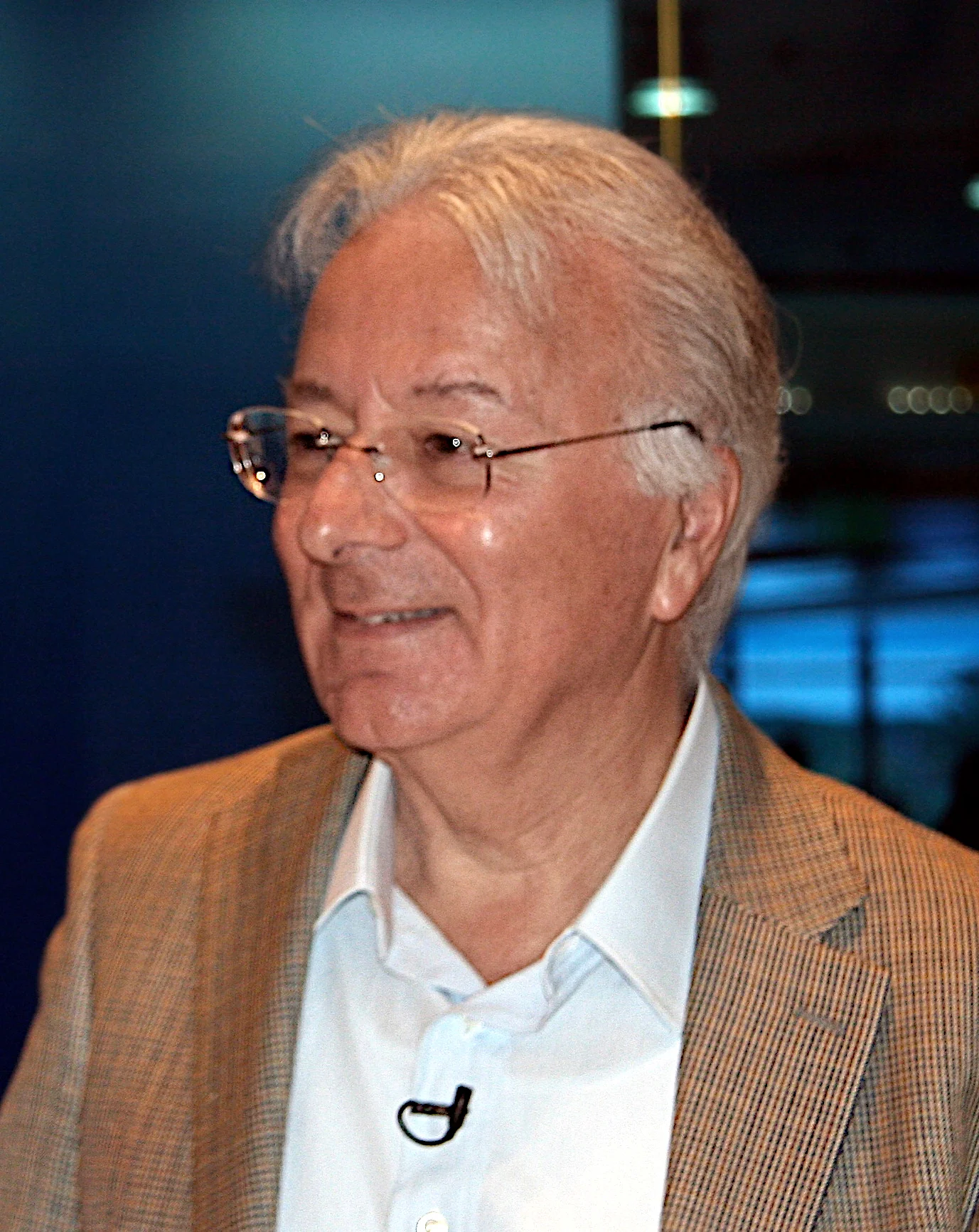
Federico Faggin
 Italy
Italyphysicist•engineer•inventor•entrepreneur
Also known as: Fede Faggin
Birthday
December 1, 1941
Birth Sign
Sagittarius
Birthplace
Vicenza, Italy
Age
84 years old
About
Federico Faggin is an Italian-American physicist, engineer, inventor, and entrepreneur who fundamentally shaped the digital world we live in today. He is widely recognized as the visionary behind the Intel 4004, which became the world's very first commercial microprocessor. This single invention sparked the entire technology revolution that underpins modern computing, artificial intelligence, smartphones, and personal computers.
Beyond his pioneering work at Intel, Faggin developed the self-aligned silicon-gate technology, an important advancement that made microprocessors and other semiconductor devices possible. In recent years, he has turned his keen intellect towards the profound questions of consciousness, exploring theories that challenge our understanding of reality and the human mind. He continues to share his insights through books, lectures, and public discussions, bridging the worlds of advanced technology and deep philosophical inquiry.
Early Life & Background
Federico Faggin's journey began in Vicenza, Italy, where he was born on December 1, 1941. His early years were marked by a strong academic focus, leading him to pursue higher education in physics. He attended the University of Padua, a venerable institution with a long history of scientific excellence, where he earned his Laurea degree in Physics in 1965, graduating with the highest honors, summa cum laude.
After completing his studies, Faggin started his professional career at Fairchild Semiconductor in 1968. It was here that he made a significant early contribution, developing the self-aligned silicon-gate technology. This invention was a crucial step forward in semiconductor manufacturing, greatly improving the performance and reliability of integrated circuits. It enabled the creation of faster, more efficient MOS semiconductor memory chips and CCD image sensors. This foundational work laid the groundwork for his later, even more impactful innovations, preparing him for the pivotal role he would soon play in the nascent field of microprocessors.
Career Growth
Federico Faggin's career truly took off with his move to Intel, where he joined a small team working on a calculator chip project. His leadership and inventive genius shone brightly as he spearheaded the design of the MCS-4 family, which famously included the Intel 4004. Released in 1971, this tiny chip was a monumental achievement, becoming the world's first commercial microprocessor and forever changing the course of technology. The 4004 demonstrated the immense power of integrating a central processing unit onto a single chip.
Following this success, Faggin continued to lead the charge, applying his silicon-gate technology expertise to design the subsequent generations of Intel processors, including the Intel 8008 and the widely influential Intel 8080. The 8080, in particular, became the brain for many early personal computers. In 1974, driven by a desire to focus solely on microprocessors, Faggin co-founded Zilog with Ralph Ungermann. As CEO, he guided Zilog to develop the highly successful Zilog Z80 and Z8 processors, which were popular choices for embedded systems and home computers of the era. He later co-founded Cygnet Technologies and Synaptics, further cementing his reputation as a serial entrepreneur and innovator.
More recently, Faggin has shifted his focus towards the philosophical implications of consciousness. His book, Irreducible: Consciousness, Life, Computers, and Human Nature, published in 2025, explores his theories on the subject. He is a frequent speaker and writer on the topic, suggesting that consciousness is a fundamental aspect of reality and that death might not be the ultimate end, a perspective he shared in interviews as of May 2026.
Career Timeline
Public Image & Style
Federico Faggin presents a unique public image, revered by many in the tech world as a foundational figure and increasingly recognized in philosophical circles for his deep thoughts on consciousness. He carries the gravitas of a pioneer, often appearing in interviews and documentaries to discuss the early days of computing and the future of technology. His shift to exploring consciousness, a topic traditionally outside the realm of engineering, adds an intriguing layer to his public persona, showcasing a mind unafraid to tackle the biggest questions.
His public communication style is thoughtful and articulate, reflecting his background as both a physicist and a philosopher. Fans and admirers often see him as a bridge between the tangible world of silicon and the intangible realm of the mind, appreciating his ability to articulate complex ideas in accessible ways. He engages with the public on platforms like X, offering glimpses into his ongoing intellectual journey.
Fame & Fandom (iFAMOUS Rankings)
Federico Faggin stands as the 47th most famous person in AI, a position he has held steady through cycles of intense technological evolution. This placement within the iFANN Global Fame Rankings reflects his unique trajectory from the silicon labs of Intel to the philosophical frontiers of consciousness studies. While the tech world reveres him for sparking the digital revolution, his public image now carries a dual weight: the architect of the microprocessor and the seeker of universal truth. His following consists primarily of historians of technology, computer scientists, and engineers who track his legacy rather than a mobilized group of fans with a formal moniker. There is no official fandom name for Faggin; instead, his influence is measured by academic recognition, museum exhibits, and technical literature. He interacts with this audience through lectures on the intersection of science and spirituality, engaging readers interested in his theories about spacetime as memory. No fan-funded projects or viral campaigns define his community. The stories told about him are verified historical milestones, specifically the invention of the first commercial microprocessor in 1971 and the development of self-aligned silicon-gate technology. These events form the core of his mythology, celebrated not for crowd reactions but for their profound impact on human civilization. Recent tributes in Paris and commemorations of the Zilog Z80 anniversary further cement his status as a visionary genius bridging the gap between engineering and the nature of existence.
Interesting Facts and Legends
Federico Faggin's X handle, @fedefaggin, serves as a primary channel where he shares insights on science, technology, and consciousness with a dedicated following. His 2025 book, Irreducible: Consciousness, Life, Computers, and Human Nature, marks a significant pivot toward philosophical inquiry. Holding dual Italian and American citizenship, he bridges his origins with the nation where he achieved his greatest technological feats. A core tenet of his later work is the belief that spacetime itself functions as the memory of a self-knowing universe. Beyond these facts, his legacy includes the creation of the Intel 4004, the world's first commercial microprocessor, an event widely cited as the catalyst for the entire personal computer revolution. Another pivotal moment was his invention of self-aligned silicon-gate technology, which enabled the miniaturization necessary for modern integrated circuits. In 2026, the tech community commemorated the 50th anniversary of the Zilog Z80, another chip designed by Faggin, highlighting his enduring influence. Earlier, in 2024, he participated in Vatican events bringing physicists and theologians together to address life's biggest questions, further solidifying his role as a bridge between hard science and deep philosophy.
Family & Personal Life
Federico Faggin maintains a very private personal life, with little public information available about his family. His professional and philosophical pursuits have been the primary focus of his public persona. Details about his parents, siblings, or any personal household arrangements are not widely known, reflecting a preference for privacy regarding his domestic life.
Notable Connections
Relationships & Dating History
Federico Faggin has maintained a highly private personal life throughout his distinguished career, with very little public information available regarding his romantic relationships. Unlike many public figures, he has chosen to keep details about his dating history, marriages, or partnerships out of the public eye. His focus has consistently been on his scientific work, engineering innovations, and more recently, his philosophical explorations of consciousness. As of 2026, there is no publicly reported information about his relationship status or any current partner, indicating a clear preference for privacy in this aspect of his life.
Salary, Net Worth In 2026
$10 Million
iFANN Editorial Team estimate
iFANN currently estimates Federico Faggin's net worth at $10 Million as of 2026, a figure reflecting a career defined by groundbreaking innovation and strategic entrepreneurship. His financial standing stems from his pivotal role as the lead designer of the Intel 4004, a microprocessor that generated trillions of dollars in global value. Although specific compensation details from his tenure at Intel remain private, his contributions likely included substantial salary and stock options during the company's explosive growth phase. A major portion of his wealth derives from co-founding Zilog in 1974, where he served as CEO and led the development of the highly successful Zilog Z80 processor. Subsequent sales or public offerings of such ventures provided significant returns to its founders. Later entrepreneurial efforts, including co-founding Cygnet Technologies and Synaptics, further bolstered his fortune through innovations in human interface devices. Beyond direct corporate earnings, Faggin benefits from patents related to his inventions, lucrative speaking engagements, and royalties from his published works, including his recent philosophical volume, Irreducible.
Awards Won (4)
Federico Faggin has received significant recognition for his monumental contributions to technology. His work, particularly in creating the first commercial microprocessor, has garnered him prestigious honors from national and international bodies. These accolades celebrate his profound impact on the fields of engineering and computing, acknowledging how his inventions laid the groundwork for the digital age.
2010 · Technology and Innovation
Pioneering the microprocessor
1988 · Communications
Contributions to microprocessors
Known For
Intel 4004
1971 · Lead Designer
Zilog Z80
1976 · Designer, CEO of Zilog
Self-Aligned Silicon-Gate Technology
1968 · Inventor
Irreducible: Consciousness, Life, Computers, and Human Nature
2025 · Author
Keywords
Sources
Quick Facts
- Profession
- physicist, engineer, inventor, entrepreneur
- Born
- December 1, 1941
- Birthplace
- Vicenza, Italy
- Gender
- Male
- Birth Sign
- Sagittarius
- Nationality
- Italian-American
- Education
- University of Padua
Personal Details
- Children
- Education
- University of Padua
Frequently Asked Questions
How old is Federico Faggin?
What is Federico Faggin best known for?
What is Federico Faggin's net worth in 2026?
What is Federico Faggin's philosophy on consciousness?
Where did Federico Faggin go to university?
Social Media
Join the community
fans discussing