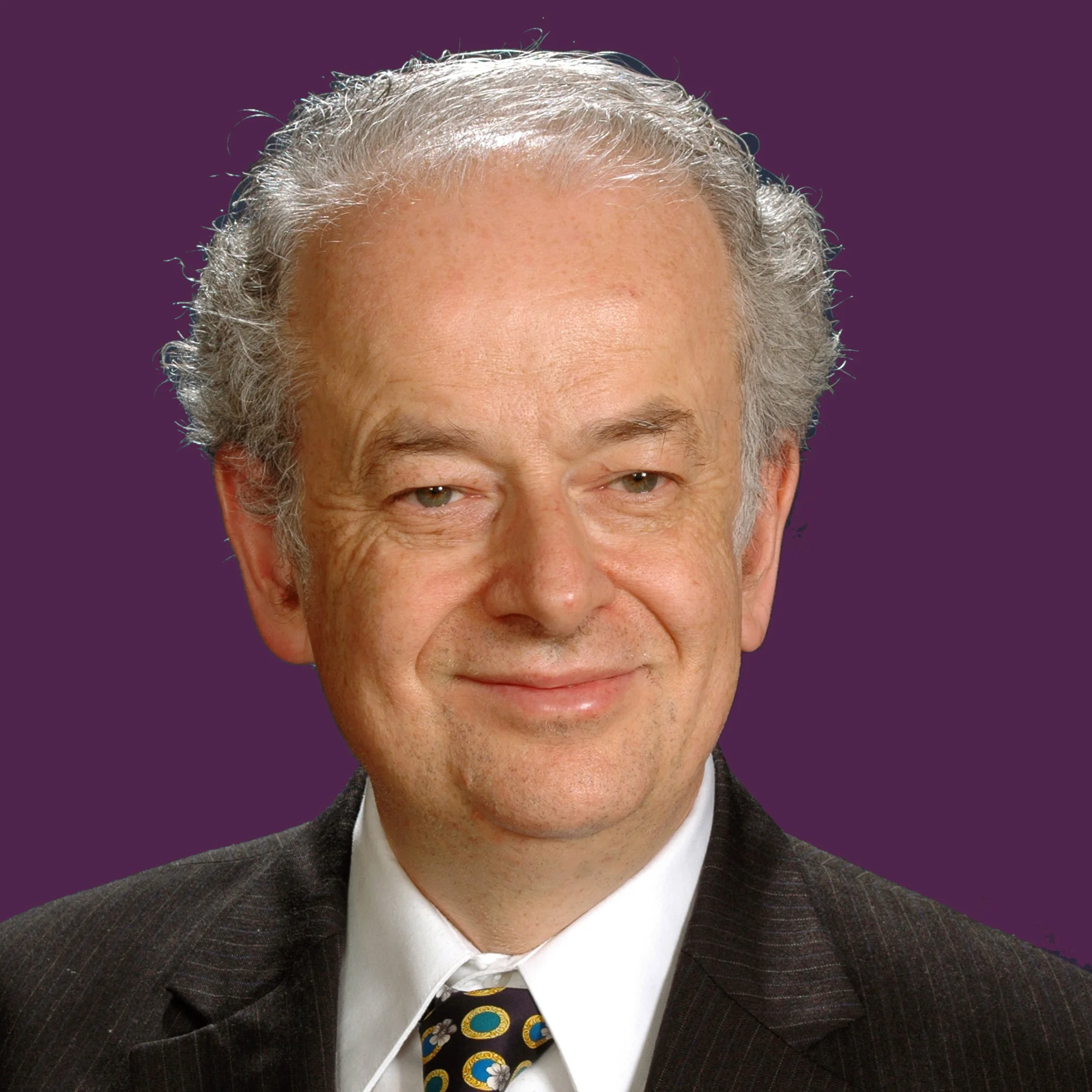
Federico Capasso
 Italy
Italyphysicist•engineer•university teacher
Birthday
January 1, 1949
Birth Sign
Capricorn
Birthplace
Rome
Age
77 years old
About
Federico Capasso is an Italian-American applied physicist and a leading figure in nanotechnology, semiconductor devices, and optoelectronics. He is currently the Robert Wallace Professor of Applied Physics at Harvard University, a position he has held since 2003. Capasso is best known as one of the inventors of the quantum cascade laser, a revolutionary semiconductor laser that has transformed spectroscopy and sensing technologies.
With a career spanning over four decades, Capasso has published more than 500 papers and holds over 60 patents. His recent work focuses on nanophotonics and metasurfaces, exploring ways to control light at the nanoscale. He has received numerous prestigious awards, including the Balzan Prize and the Ives Medal, and his research continues to influence both fundamental physics and practical applications in optics and photonics.
Early Life & Background
Born in Rome in 1949, Federico Capasso grew up in the Italian capital during the post-war years. His early fascination with science and engineering led him to pursue studies in physics at the University of Rome, where he earned his doctorate in 1973. After graduation, Capasso worked briefly in Italy before receiving a Rotary Fellowship in 1976, which brought him to the United States. That same year, he married Paola Salvini, and the couple settled in the U.S. as Capasso began his research career at Bell Laboratories in New Jersey.
At Bell Labs, Capasso initially worked on semiconductor devices and quantum well structures. His early experiments on tunneling and electron transport in heterostructures laid the groundwork for what would become his most famous invention, the quantum cascade laser. The idea for this laser came to him in the mid-1980s, and by 1994, he and his colleagues had demonstrated the first working device. This breakthrough was a direct result of his deep understanding of quantum mechanics and his ability to translate theoretical concepts into practical technology.
Career Growth
Federico Capasso's career reached a turning point in 1994 when he, along with his colleagues at Bell Labs, invented the quantum cascade laser. This new type of laser emitted light in the mid-infrared range and was based on intersubband transitions in semiconductor quantum wells. It opened up applications in trace gas sensing, environmental monitoring, and free-space communications. Capasso continued to refine the technology, and in 2002, he demonstrated a version that operated at room temperature, a major practical achievement.
In 2003, Capasso moved to Harvard University, where he established a research group focused on nanophotonics and metasurfaces. His lab has developed flat lenses, beam shapers, and other optical components that can control light with unprecedented precision. In 2013, he was recognized as a pioneer in terahertz technology for his work on quantum cascade lasers that emit in the terahertz range. More recently, his group has explored the use of metasurfaces for quantum information processing and demonstrated a structured Montgomery effect in 2026. Capasso's contributions have earned him membership in the National Academy of Sciences and the National Academy of Engineering.
Career Timeline
Public Image & Style
Federico Capasso is regarded as a visionary scientist who bridges fundamental physics and applied engineering. Colleagues describe him as an inspiring mentor who encourages creative thinking. His public lectures are known for their clarity and for making complex topics accessible. While he does not have a large public following, he is highly respected within the scientific community, and his work on metasurfaces has been featured in prominent journals and news outlets.
Fame & Fandom (iFAMOUS Rankings)
Federico Capasso currently holds no placement in the iFANN Global Top 1,000 rankings or any Top-100 scope list. The iFANN Global Fame Engine has evaluated his profile, yet he remains unranked among the world's most famous figures because his influence is confined to the laboratory rather than the public square. While pop culture icons command subway ads and viral hashtags, Capasso commands citations. His audience consists of colleagues, students, and researchers who have referenced his work over 147,000 times on Google Scholar, not a demographic seeking celebrity interaction. There is no formal fandom name for his supporters; they are simply the scientific community. No organized campaigns, birthday billboards, or fan-driven charity drives exist in his honor. Instead, his legacy is built on rigorous academic contributions like the quantum cascade laser and flat optics. His impact ripples through optical societies and editorial boards rather than social media feeds. The absence of a fanbase moniker reflects the nature of his career: a distinguished physicist whose fame is measured in patents and peer-reviewed breakthroughs, not search volume or merchandise sales. He interacts with the world through interviews on metasurfaces and mentorship at Harvard, leaving behind a trail of structured light effects and infrared sensing advancements that define modern photonics without ever needing a stadium tour.
Interesting Facts and Legends
Federico Capasso holds more than 60 patents, many tied to semiconductor lasers and optical devices, while his scholarly output has garnered over 147,000 citations according to Google Scholar. A fellow of both the Optical Society of America and the American Physical Society, he received the Ives Medal and Quinn Prize from Optica in 2021, the highest honor in optics. He has served on the editorial boards of journals including Applied Physics Letters. His most iconic moment occurred at Bell Labs, where he invented the quantum cascade laser, a device that revolutionized infrared sensing and spectroscopy by allowing light to be engineered at the atomic level. This invention is now a foundational element of modern photonics, widely retold in scientific literature as the moment flat optics began to take shape. More recently, his lab demonstrated the "Structured Montgomery Effect" and developed coatings for infrared camouflage, pushing the boundaries of how light can be controlled. In February 2021, he was specifically recognized for his work on Casimir forces, further cementing his status as a pioneer in nanophotonics. His personal life saw a significant event in September 2025 with the passing of Paola Salvini Capasso in Cambridge, Massachusetts, marking a somber chapter alongside his professional triumphs.
Family & Personal Life
Federico Capasso married Paola Salvini in 1976. The couple were married for 49 years until her passing on September 25, 2025. They had a long and supportive partnership, with Paola often accompanying him to scientific events. Details about children are not publicly documented. Capasso resides in the Boston area, close to Harvard, where he continues his research.
Notable Connections
Relationships & Dating History
Federico Capasso married Paola Salvini in 1976, after meeting her in Italy. They moved to the United States together and remained married for 49 years until her death on September 25, 2025. Their marriage was a strong partnership, and Paola was often seen at his side during award ceremonies and conferences. As of 2026, Capasso is widowed.
- MarriedPaola Salvini Capasso1976 - 2025Married for 49 years until her passing.
Salary, Net Worth In 2026
$5 Million
iFANN Editorial Team estimate
iFANN currently estimates Federico Capasso's net worth at $5 million as of 2026. His financial standing derives primarily from his role as the Robert Wallace Professor of Applied Physics at Harvard University, supplemented by consulting fees and royalties generated from his extensive patent portfolio. These patents, particularly those surrounding quantum cascade lasers, have been licensed by various companies over the years, contributing significantly to his assets. While he is not among the wealthiest scientists globally, his economic position reflects a highly successful trajectory spanning academia and industry research. The licensing deals for his revolutionary optical technologies have ensured a steady income stream that complements his academic salary.
Awards Won (2)
Federico Capasso has received numerous awards for his contributions to physics and photonics, including the Balzan Prize for Applied Photonics in 2016 and the Ives Medal and Quinn Prize in 2021.
2016 · Applied Photonics
Quantum cascade lasers and nanophotonics
2021 · Optics
Casimir forces and contributions to optics
Known For
Quantum Cascade Laser
1994 · Co-inventor
Metasurfaces
2010 · Pioneer
Keywords
Sources
Quick Facts
- Profession
- physicist, engineer, university teacher
- Born
- January 1, 1949
- Birthplace
- Rome
- Gender
- Male
- Birth Sign
- Capricorn
- Nationality
- Italian-American
- Known for
- Quantum cascade laser
Personal Details
- Spouse
- Paola Salvini Capasso (deceased)
Frequently Asked Questions
What is Federico Capasso known for?
Where does Federico Capasso work?
When was Federico Capasso born?
What awards has Federico Capasso won?
Is Federico Capasso still active in 2026?
Join the community
fans discussing