Federal University of Minas Gerais
 Brazil
"Public research university in Belo Horizonte, Brazil"
About
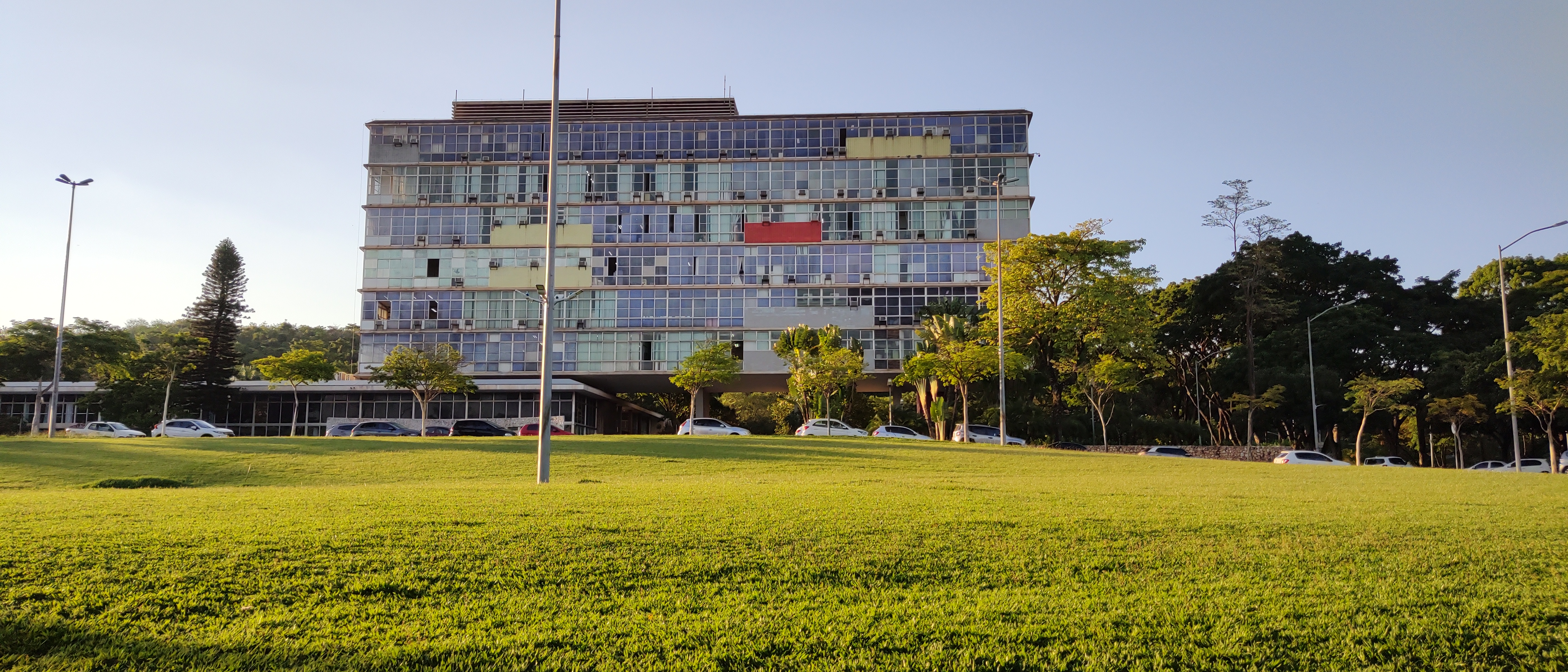
Founded in 1927, the Federal University of Minas Gerais, known universally as UFMG, is the oldest university in the state of Minas Gerais and one of Brazil's five largest and most respected public institutions of higher learning. Its main campus sits in the Pampulha district of Belo Horizonte, a modernist neighborhood that also houses the architectural gems designed by Oscar Niemeyer. Beyond the flagship campus, the university runs satellite facilities across the state, extending its academic reach into the interior.
UFMG's academic profile is broad and deep. The university offers 79 undergraduate degree programs and 90 postgraduate tracks, including doctoral programs in fields as varied as engineering, medicine, the humanities, biotechnology, and information technology. Its student body tops 52,000, and the institution maintains over 8,900 active research projects. These projects are not confined to the lab; extension activities alone touch more than 3.3 million people each year, from health clinics to cultural festivals.
In international rankings, UFMG regularly appears among the best in Latin America. The QS World University Rankings places it at #600 globally, while U.S. News & World Report ranks it #494, with notable subject placements in Agricultural Sciences (#436) and Biology (#280). In December 2025, the university debuted in a ranking of the world's 250 most interdisciplinary institutions, a nod to its cross-cutting research culture. The Nature Index tracks its output in leading scientific journals, confirming its status as a research powerhouse.
Mission
UFMG exists to provide free, high-quality public higher education and to advance research that addresses Brazil's social and economic challenges. The university is committed to social inclusion through affirmative action policies that widen access for underrepresented groups, and it sees its extension programs as a bridge between campus and community. By fostering interdisciplinary collaboration and international partnerships, UFMG aims to remain a leader in Latin American higher education while contributing to global knowledge.
History
UFMG's roots go back to 1927, when the state government consolidated several existing higher education institutions in Belo Horizonte into a single university. That move made it the first university in Minas Gerais and gave the state a central hub for professional training and research. Over the following decades, UFMG expanded its campus in Pampulha, which gradually became a city within a city, with faculties, hospitals, museums, and green spaces.
The military dictatorship of the 1960s and 1970s tested the university's resilience, as it did across Brazil, but UFMG emerged as a center of critical thought and resistance. In the 1990s and 2000s, the university embraced internationalization, forging partnerships with institutions in Europe, Asia, and the Americas. More recently, it has invested heavily in interdisciplinary research centers, such as the Institute of Advanced Transdisciplinary Studies (IEAT), which helped it earn that 2025 ranking among the world's most interdisciplinary institutions.
Notable People
Fernão Castro Braga
Professor of Pharmacy · 2026
Selected as the CAPES Brazil Chair at the University of Münster
Clelio Campolina Diniz
Engineer and regional economics expert
Advocates for strengthening mid-sized cities in Brazil
Milestones
1927
University founded by consolidating existing higher education institutions in Belo Horizonte
2025
Debuted in the ranking of the 250 most interdisciplinary institutions in the world
2026
Researchers launched Selo Verde, a free platform tracking EUDR compliance using government data
Sources
Organization Info
- Founded
- 1927
- Headquarters
- Belo Horizonte
- Country
- Brazil
- Type
- University
- Students
- 52,000+
- Undergraduate programs
- 79
- Postgraduate programs
- 90
Official Website
www.ufmg.br
Join the community
fans discussing