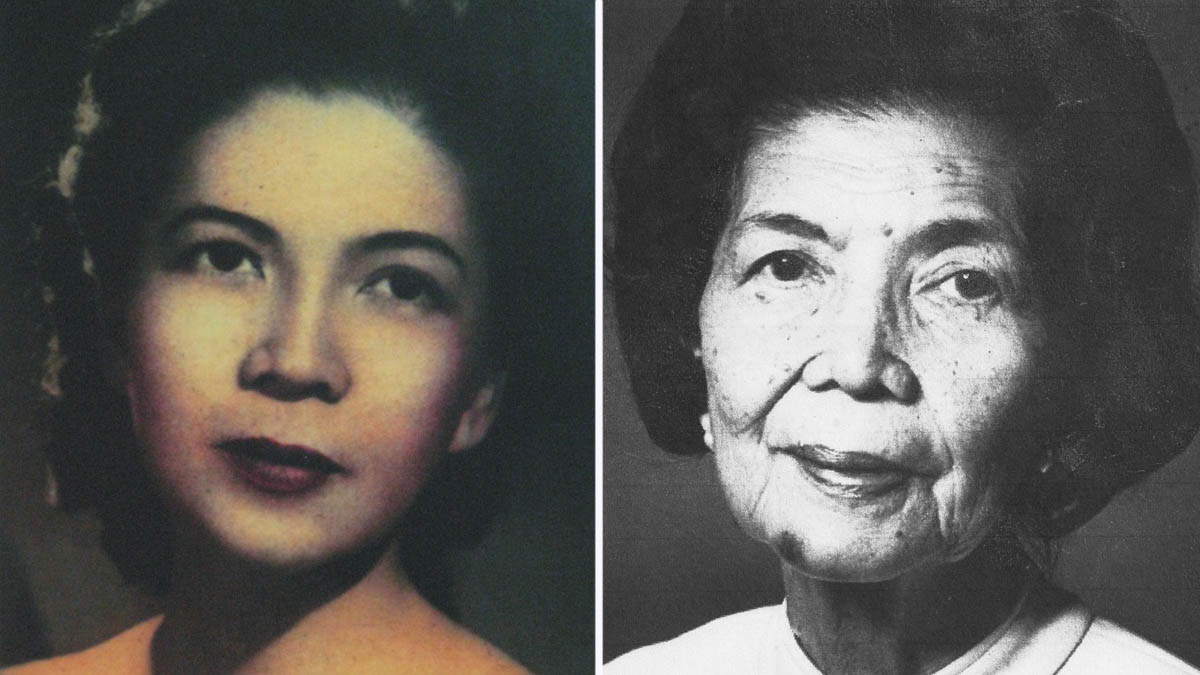
Fe del Mundo
 Philippines
Also known as: Fe Villanueva del Mundo, Fé Primitiva del Mundo y Villanueva
Birthday
November 27, 1911
Birth Sign
Sagittarius
Birthplace
Intramuros, Manila, Philippines
Age
Died at 99
About
Fe Villanueva del Mundo was a Filipino pediatrician and scientist who dedicated her life to child healthcare. She founded the first pediatric hospital in the Philippines and developed innovations like the bamboo incubator and the BRAT diet, which have saved countless lives. Her work earned her the Ramon Magsaysay Award in 1977, and in 1980 she became the first woman named National Scientist of the Philippines. She also broke barriers as the first female president of the Philippine Pediatric Society and the first Asian president of the Philippine Medical Association and the Medical Women's International Association.
Her career spanned eight decades, and she is remembered as a national hero in the Philippines. The Fe del Mundo Medical Center in Quezon City continues her legacy, and her story inspires new generations of medical professionals.
Early Life & Background
Born on November 27, 1911, at 120 Cabildo Street in Intramuros, Manila, Fe del Mundo grew up in a family of eight children. Her father, Bernardo del Mundo, was a lawyer who served in the Philippine Assembly, and her mother, Paz Villanueva, died when Fe was a teenager. Three of her siblings died in infancy, and her older sister Elisa passed away from appendicitis at age 11. Elisa had wanted to become a doctor to help the poor, and her death inspired Fe to pursue medicine.
At 15, she entered the University of the Philippines, where she earned her medical degree with highest honors in 1933, graduating as valedictorian. President Manuel Quezon offered to fund her further training in the United States. She went to Boston, earning a master's degree in bacteriology from Boston University in 1940, and completed a research fellowship in pediatrics at Harvard Medical School's Children's Hospital from 1939 to 1941. While there, she was among the first Asian or Filipina women admitted to the Courses for Graduates, a distinction often described as being the first female student at Harvard Medical School.
Career Growth
Returning to the Philippines in 1941, del Mundo's plans were disrupted by the Japanese occupation. She volunteered with the International Red Cross and cared for over 400 children at the Santo Tomas internment camp, earning the nickname 'The Angel of Santo Tomas.' After the war, she served as director of the Manila Children's Hospital from 1943 to 1948, then became director of pediatrics at Far Eastern University, a role she held for more than two decades.
In 1957, she founded the Children's Medical Center in Quezon City, the first pediatric hospital in the country, selling her home and possessions to fund it. The hospital later became the Fe del Mundo Medical Center. She also established the Institute of Maternal and Child Health to train doctors and nurses. Her research on dengue fever and jaundice led to the creation of the BRAT diet (bananas, rice, applesauce, toast) for treating diarrhea, and she invented a bamboo incubator for rural areas without electricity. Her career spanned eight decades, and she continued working until her death in 2011.
Career Timeline
Public Image & Style
Del Mundo is remembered as a selfless humanitarian who sacrificed personal wealth to serve impoverished children. Her public image is that of a dedicated physician, often seen in a simple white uniform, who preferred action over recognition. She is celebrated in Philippine medical education and national history, though she has no formal fandom culture. Her legacy lives on in the institutions she founded and the innovations that bear her name.
Fame & Fandom (iFAMOUS Rankings)
Fe del Mundo's extraordinary legacy has been evaluated by iFANN's Global Fame Engine, and while her story resonates deeply across medical and historical circles, she does not currently hold a placement in the published rankings, neither the Global Top 1,000 nor any Top-100 scope list. This reflects the nature of her fame: enduring and profound within her field, yet not measured by the mass-consumption signals that dominate contemporary celebrity rankings.
Her admirers form a diffuse, unofficial community, doctors, Filipino nationals, educators, and historians, united by institutional tributes rather than a formal fandom. There is no documented fandom name, no fan clubs, and no coordinated campaigns; instead, her legacy is honored through the hospital that bears her name, the National Scientist title, and scholarly biographies. The 2018 Google Doodle on her 107th birthday brought her story to millions, a rare moment of global visibility that sparked widespread news coverage and social media sharing, particularly among Filipino communities worldwide.
Interesting Facts and Legends
Del Mundo authored over 100 publications during her career. She was listed as an Assistant Physician at Boston Children's Hospital in 1940. Her bamboo incubator was made from baskets lined with heated water bottles, a low-cost solution for rural clinics. She also served as a consultant for the World Health Organization. Despite her fame, she never owned a car, preferring to walk or take public transport to the hospital.
One of the most retold stories involves her admission to Harvard Medical School in 1936: because the school did not admit women, her application was reviewed without the committee realizing she was female, and she became the first woman and first Asian student admitted. Another cherished legend is her decision to sell her family home to fund the construction of the first pediatric hospital in the Philippines, a story that continues to inspire. Her invention of the bamboo incubator, designed for rural areas without electricity, remains a symbol of her ingenuity and compassion.
Family & Personal Life
Fe del Mundo never married and had no children. Her father, Bernardo del Mundo, was a lawyer from Marinduque who served in the Philippine Assembly. Her mother, Paz Villanueva, died in 1925. Three of her siblings died in infancy, and her older sister Elisa died of appendicitis at age 11, which inspired Fe's medical career. The family home was opposite the Manila Cathedral in Intramuros.
Notable Connections
Fe del Mundo's father, Bernardo del Mundo, was a lawyer and politician who served in the Philippine Assembly. Her mother, Paz Villanueva, died when she was young. Her sister Elisa's death inspired her to become a doctor. Philippine President Manuel Quezon funded her postgraduate training in the United States.
Relationships & Dating History
Death & Aftermath
Died
August 6, 2011 (aged 99)
Death Place
Manila, Philippines
Cause of Death
Natural causes consistent with advanced age
The medical community and the nation of the Philippines marked the passing of Dr. Fe del Mundo with profound reverence, honoring a figure whose career redefined pediatric care in Southeast Asia. Tributes poured in from international bodies like the American Academy of Pediatrics and local institutions that had long relied on her innovations, cementing her status as a national hero well before her final days. While specific details regarding her last public appearance or the exact location within Manila where she passed remain unrecorded in public archives, the circumstances were straightforward.
She died on August 6, 2011, at the age of ninety-nine, having spent her entire life and professional journey in the city where she was born. The absence of legal disputes or unconfirmed narratives surrounding her final moments reflected the quiet dignity of her exit, allowing the focus to shift immediately to her enduring legacy rather than the mechanics of her passing. Funeral arrangements followed standard protocol for a National Scientist, though specific dates and attendees were not widely publicized in the immediate aftermath. Her influence extended far beyond her lifetime, with the Fe del Mundo Medical Center continuing its operation as a reflection of her founding vision.
The world celebrated her memory decades later when Google honored her with a Doodle on November 27, 2018, recognizing her groundbreaking work as the first female student admitted to Harvard Medical School and her development of an improved incubator. Scholarly curricula continue to cite her contributions to treating jaundice, ensuring her name remains central to discussions on women in medicine and Philippine healthcare history.
Net Worth (Estate Value)
$10 Million
iFANN Editorial Team estimate
At the time of her death in 2011, iFANN's editorial analysis estimates Fe del Mundo's net worth at $10 million, a figure that reflects her lifelong dedication to medicine rather than personal wealth. She sold her home and possessions to fund the Children's Medical Center, demonstrating her commitment over financial gain. Her estate continues to benefit from the Fe del Mundo Medical Center, which operates as a leading pediatric hospital. Posthumous honors and historical recognition have also contributed to her legacy, though her true wealth lies in the lives she touched.
Awards Won (4)
Fe del Mundo received numerous prestigious awards throughout her career. In 1977, she was honored with the Ramon Magsaysay Award for Public Service. In 1980, she became the first woman named National Scientist of the Philippines. She also received the Order of Lakandula in 2010 and the Elizabeth Blackwell Award from Hobart and William Smith Colleges, among others.
Humanitarian
Pioneering work in pediatrics
2010 · National Honor
Lifetime achievement in medicine
Known For
Founding the first pediatric hospital in the Philippines
1957 · Founder
Bamboo incubator
· Inventor
BRAT diet
· Conceptualizer
Keywords
Sources
Quick Facts
- Profession
- pediatrician, scientist
- Born
- November 27, 1911
- Birthplace
- Intramuros, Manila, Philippines
- Died
- August 6, 2011
- Death Place
- Quezon City, Philippines
- Gender
- Female
- Birth Sign
- Sagittarius
- Nationality
- Filipino
Personal Details
- Full Name
- Fé Primitiva del Mundo y Villanueva
- Education
- University of the Philippines (MD, 1933); Boston University (MA in Bacteriology, 1940); Harvard Medical School (postgraduate fellowship, 1939-1941)
Frequently Asked Questions
Was Fe del Mundo the first woman at Harvard Medical School?
Why did Fe del Mundo become a doctor?
What did Fe del Mundo invent?
Did Fe del Mundo have children?
What is the BRAT diet?
Join the community
fans discussing