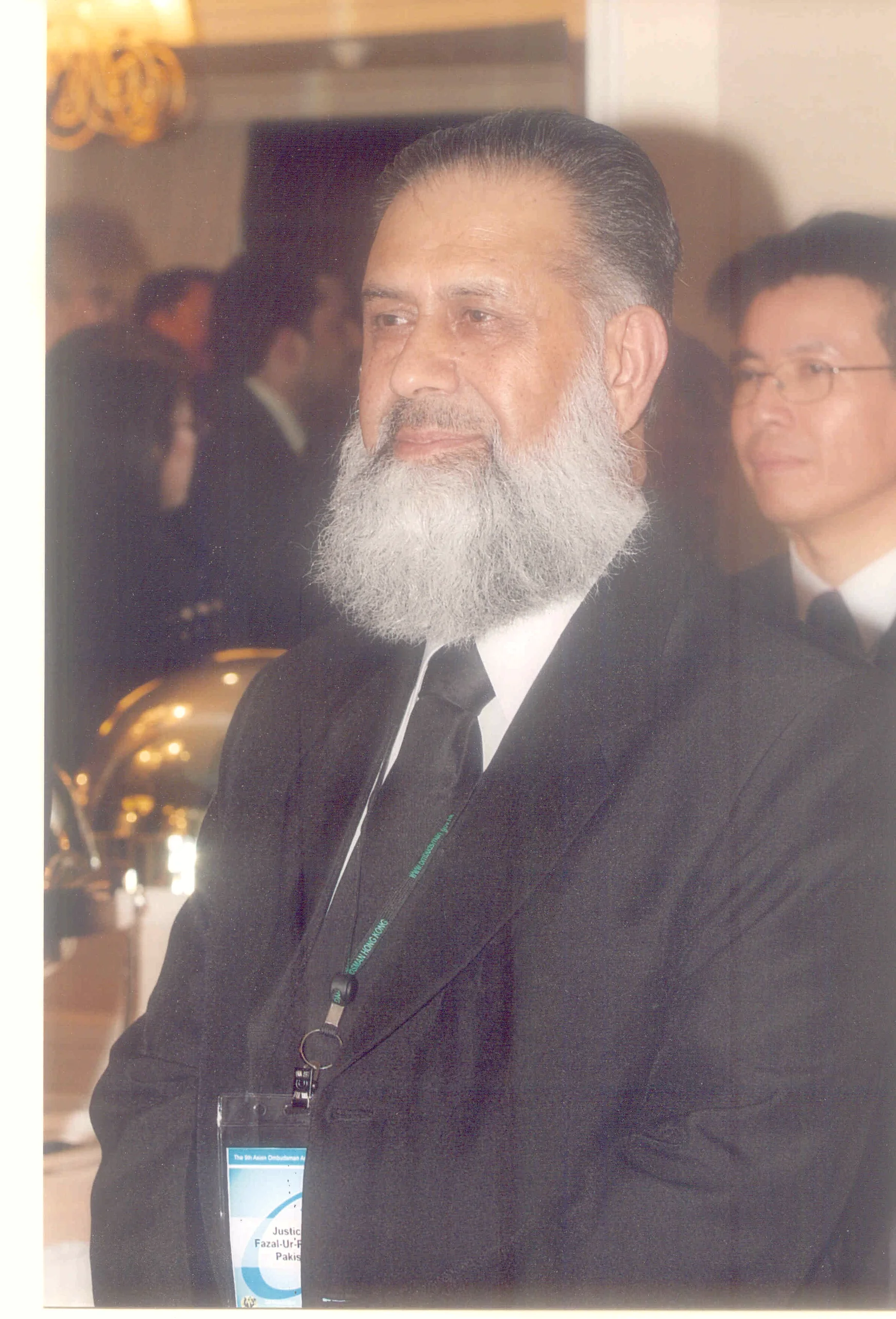
Fazal-ur-Rehman
 Pakistan
Also known as: Maulana Fazal-ur-Rehman, Maulana Fazlur Rehman
Birthday
June 19, 1953
Birth Sign
Gemini
Birthplace
Abdul Khel, Pakistan
Age
73 years old
About
Fazal-ur-Rehman is a Pakistani Islamic scholar and politician who serves as the president of Jamiat Ulema-e-Islam (F). He has been a member of the National Assembly of Pakistan since February 2024, having previously held the seat from 1988 to 2018. Between 2004 and 2007, he was the Leader of the Opposition in the National Assembly. He is known for his influential role in Pakistani politics, particularly as the head of the Pakistan Democratic Movement (PDM), a coalition that successfully ousted Prime Minister Imran Khan in 2022.
Rehman's political identity is shaped by his religious background and his advocacy for Islamic governance. He has been a vocal supporter of the Taliban and maintains close ties with the Islamic Emirate of Afghanistan. While some perceive him as an extremist due to his calls for Sharia law, he has also attempted to project a more moderate image. His leadership of the PDM brought together 11 opposition parties, demonstrating his ability to unite diverse political factions.
His career has been marked by both political achievements and legal challenges. In 2004, his party enacted the Hasba Bill in Khyber Pakhtunkhwa, which was later declared unconstitutional. After losing his National Assembly seat in 2018, he alleged electoral fraud and subsequently formed the PDM. As of 2026, he continues to lead his party and remains a significant figure in Pakistan's political landscape.
Early Life & Background
Fazal-ur-Rehman was born on June 19, 1953, in Abdul Khel, a small town in the Dera Ismail Khan district of Pakistan. He grew up in a religious family, with his father, Mufti Mahmud, being a prominent Islamic scholar and politician. The family's roots trace back to Kandahar, Afghanistan, reflecting a heritage of religious and political engagement. Dera Ismail Khan, an underdeveloped region, shaped his early life and instilled in him a deep commitment to Islamic values and social justice.
His education was grounded in religious studies, preparing him for a life of scholarship and political leadership. In the 1980s, he became actively involved in the Movement for the Restoration of Democracy, a coalition of political parties formed to oppose the military rule of General Zia-ul-Haq. This early participation marked the beginning of his political career, as he aligned himself with democratic forces and religious conservatism.
Growing up in a politically active family, Rehman was exposed to the intricacies of Pakistani politics from a young age. His father's influence, particularly his vision for implementing 'Nizam-e-Mustafa' (the system of the Prophet), would later guide his own political agenda. These formative years laid the foundation for his emergence as a leading figure in the country's religious-political landscape.
Career Growth
Fazal-ur-Rehman's political career took off when he was first elected to the National Assembly in 1988, a position he held continuously until 2018. His tenure as Leader of the Opposition from 2004 to 2007 was marked by his party's controversial 'Hasba Bill' in Khyber Pakhtunkhwa, which aimed to implement Islamic law but was struck down by the Supreme Court. This period solidified his reputation as a staunch advocate for religious governance.
The 2018 general election proved to be a turning point. Rehman lost his seat and his party performed poorly, leading him to allege widespread electoral fraud. This sparked the formation of the Pakistan Democratic Movement (PDM) in 2020, an alliance of 11 opposition parties with Rehman as its president. The PDM's sustained campaign culminated in the successful no-confidence vote against Prime Minister Imran Khan in April 2022, a major political victory.
Following the PDM's success, Rehman returned to the National Assembly in February 2024, reasserting his influence in Pakistani politics. He continues to serve as the president of Jamiat Ulema-e-Islam (F) and remains a key figure in opposition politics. His recent activities include active engagement on social media, where he commands a significant following, and he remains a vocal critic of the government's policies, particularly on issues related to Islamic law and foreign relations.
Public Image & Style
Fazal-ur-Rehman is perceived as a polarizing figure in Pakistani politics. To his supporters, he is a champion of Islamic values and a defender of democracy against authoritarianism. To his critics, he is an opportunist who has aligned with extremist elements, particularly the Taliban. His calls for Sharia law have led some to label him an extremist, yet he has also sought to present a moderate image by engaging in democratic processes.
His public persona is that of a seasoned politician and religious leader, often seen wearing traditional Afghan-style clothing and a turban. He is known for his eloquent speeches in Urdu and Pashto, which resonate with conservative audiences. His social media presence, including a large following on X and Facebook, allows him to bypass traditional media and communicate directly with his base.
Rehman's role in the PDM has cast him as a unifying figure in opposition politics, capable of bringing together diverse parties. However, his support for the Taliban has drawn international criticism, particularly from Western nations. Despite this, he remains a significant force in Pakistan's political landscape, with a loyal following that values his religious credentials and political acumen.
Fame & Fandom
Fazal-ur-Rehman commands a unique space where religious authority meets high-stakes political maneuvering. His influence extends far beyond the parliamentary floor, anchoring him as a central figure in Pakistan's public consciousness. According to the 26th most famous person in Pakistani Dramas ranking within the iFANN Global Fame Rankings, his profile remains steady and prominent despite shifting political tides. This placement reflects a global tracking of media coverage, search activity, and consumption signals that capture how audiences engage with figures who shape national narratives. The data suggests his visibility is sustained by his role as a polarizing yet undeniable force in the region.
Unlike entertainment stars, Fazal-ur-Rehman does not have a formal fanbase or a named legion of followers. His supporters are primarily defined by political alignment and religious adherence rather than celebrity worship. There are no organized fan campaigns, birthday billboards, or viral rituals associated with his name. Instead, his audience mobilizes around legislative actions and ideological stances. He faces critics who view him as an opportunist while supporters see him as a defender of democratic values against authoritarianism. This duality keeps him constantly in the news cycle without generating the traditional mythology seen in pop culture.
Interesting Facts and Legends
Fazal-ur-Rehman is instantly recognizable by his distinctive white beard and traditional Islamic attire, a look that has become his signature across decades of public service. He maintains a robust digital presence, with his X account @MoulanaOfficial boasting over 685,000 followers and his Facebook page nearing 2 million likes. Fluent in Urdu, Pashto, and Arabic, he connects effortlessly with diverse demographics while drawing on deep knowledge of Islamic history for his fiery speeches. A strict teetotaler, he spends his leisure time reading religious texts and consulting with scholars.
Recent years have cemented his status through high-profile political confrontations. In July 2026, he publicly dared General Asim Munir to contest elections, a bold move that drew sharp rebukes from government officials. Later that year, the Taliban administration invited him to a ceremony marking their return to power, highlighting his complex alliances. He also orchestrated a countrywide shutdown in August 2026, demonstrating his ability to mobilize mass support beyond traditional party lines.
Family & Personal Life
Fazal-ur-Rehman was born into a religious family in Dera Ismail Khan. His father, Mufti Mahmud, was a respected Islamic scholar and politician who served as the Chief Minister of Khyber Pakhtunkhwa in the 1970s. His father's vision for implementing 'Nizam-e-Mustafa' deeply influenced Rehman's political ideology. The family traces its ancestry to Kandahar, Afghanistan, a heritage that has shaped their religious and political outlook.
Details about his mother and siblings are scarce, as Rehman has kept his family life largely out of the public eye. He is known to have several children, though their names and occupations are not publicly documented. His family has remained supportive of his political career, often appearing alongside him at public events.
Rehman's household reflects his religious values, with an emphasis on traditional Islamic practices. He maintains a modest lifestyle despite his political prominence, residing in his ancestral home in Dera Ismail Khan. His family's deep roots in the region have made them influential figures in the local community.
Relationships & Dating History
Fazal-ur-Rehman's personal life has remained largely private, with limited public information about his relationships. He is known to be married, though his wife's name and details about their marriage are not publicly documented. The couple has children, but their identities are also kept out of the spotlight.
There have been no publicly reported romantic relationships or scandals involving Rehman. His focus has been on his political and religious career, and he has maintained a low-key personal life. As of 2026, he is believed to be married, though the status of his relationship is not confirmed.
Given the lack of public information, it is difficult to provide a detailed history of his relationships. What is known is that Rehman values his privacy and has successfully kept his family life separate from his public persona.
Salary, Net Worth In 2026
$5 Million
iFANN Editorial Team estimate
iFANN currently estimates Fazal-ur-Rehman's net worth at $5 Million. This valuation reflects his long tenure as a parliamentarian and his ongoing role as the president of Jamiat Ulema-e-Islam (F). His income streams include a monthly parliamentary salary of approximately $1,000 alongside official allowances. Revenue also flows from his religious activities, such as lectures and publications. He holds property assets in both Dera Ismail Khan and Islamabad, which bolster his financial standing. While exact figures remain undisclosed due to the nature of political holdings, his lifestyle indicates a comfortable existence without extravagant displays. No major business ventures have been reported, keeping his wealth rooted in his political and religious career.
Awards & Accolades
Known For
Jamiat Ulema-e-Islam (F)
Present · President
Pakistan Democratic Movement
2020-2022 · President
Leader of the Opposition
2004-2007 · National Assembly
Keywords
Sources
Quick Facts
- Profession
- Politician
- Born
- June 19, 1953
- Birthplace
- Abdul Khel, Pakistan
- Gender
- Male
- Birth Sign
- Gemini
- Political Party
- Jamiat Ulema-e-Islam (F)
- National Assembly Member
- 1988-2018, 2024-present
Personal Details
- Full Name
- Fazal-ur-Rehman
Frequently Asked Questions
Who is Fazal-ur-Rehman?
When was Fazal-ur-Rehman born?
What is Fazal-ur-Rehman's net worth in 2026?
Is Fazal-ur-Rehman still active in politics in 2026?
What is Fazal-ur-Rehman's stance on the Taliban?
Social Media
Join the community
fans discussing