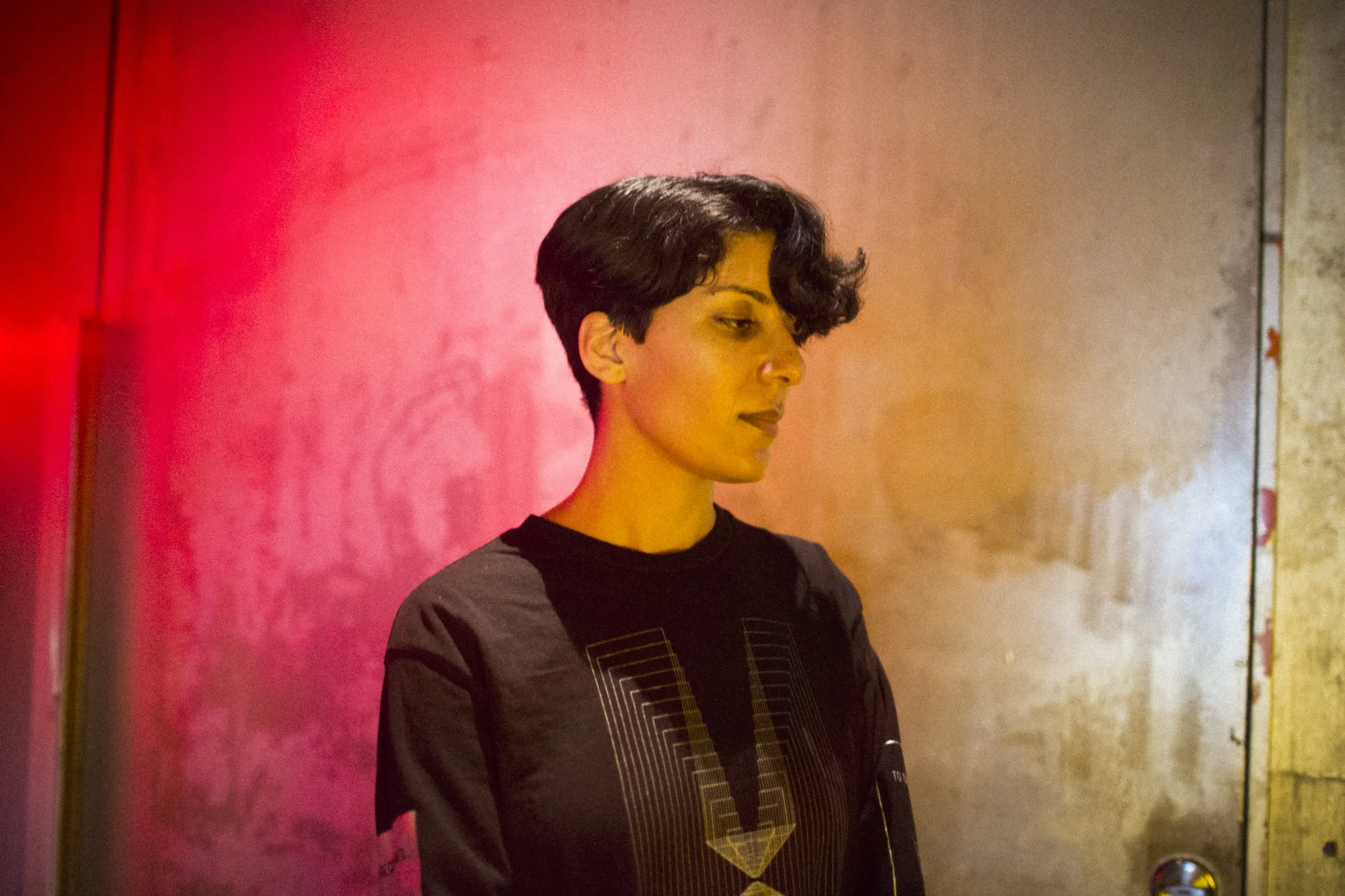
Fatima Al Qadiri
 Kuwait
Member of Future Brown
performance artist•electronic musician•songwriter
Also known as: Ayshay
Birthday
July 1981
Birth Sign
Cancer
Birthplace
Dakar, Senegal
Age
45 years old
About
Fatima Al Qadiri is a Kuwaiti musician, composer, and conceptual artist known for her atmospheric electronic music and film scores. Born in Dakar, Senegal, and raised in Kuwait, she now lives in Los Angeles. Her work blends digital culture with references to the Arab world, Islamic devotional traditions, and post-colonial theory, earning her a dedicated following among experimental music fans and cinephiles. She is a member of the collective Future Brown and has scored films like Atlantics and Nanny.
Early Life & Background
Al Qadiri was born in Dakar, Senegal, in July 1981 to a Kuwaiti family. She spent her childhood in Kuwait during the 1980s and 1990s, a period marked by the Gulf War and its aftermath. Those experiences later surfaced in her work, most explicitly in her 2016 album Brute and her earlier Desert Strike EP. She has cited video games as a formative influence on her aesthetic sensibility. The family eventually relocated to the United States, where Al Qadiri continued her education, though details of her formal studies are not widely documented. Her early artistic steps involved producing music under the alias Ayshay, a project through which she explored Islamic devotional music and its intersections with electronic sound. That period of experimentation laid the groundwork for her later, more widely recognized releases.
Career Growth
In 2012, Al Qadiri released Asiatisch, an EP that critically examined Western perceptions of Asia through a lens of Orientalism and digital culture. The release gained significant critical attention and established her as a distinctive voice in experimental electronic music. In 2013, she co-founded Future Brown with Nguzunguzu and J-Cush; the group's self-titled debut album arrived on Warp Records in 2015. Her solo debut full-length, Brute, followed in 2016 on Hyperdub, addressing themes of war and state power. In 2019, she composed the score for Mati Diop's Atlantics, which won the Grand Prix at Cannes and earned her César and Lumières nominations. She went on to score Nikyatu Jusu's Nanny (2022), which won the Sundance Grand Jury Prize, and Lucy Liu's The Stranger (2025).
Career Timeline
Public Image & Style
Al Qadiri is known for a distinctive aesthetic that blends digital culture with references to the Arab world, Islamic devotional traditions, and post-colonial theory. Her music is characterized by atmospheric soundscapes, rhythmic complexity, and a sense of temporal dislocation. Critics have consistently praised her conceptual rigor and her ability to engage with political themes without reducing them to spectacle. Her social media presence is minimal and focused on her work rather than personal life. There is no official fandom name; her audience consists primarily of electronic music enthusiasts, contemporary art audiences, and cinephiles.
Fame & Fandom
Fatima Al Qadiri commands a significant, though niche, presence within the global landscape of experimental music and contemporary art. Her influence resonates deeply among cinephiles and electronic music enthusiasts who follow her work across independent labels and film scores, yet she operates outside the sphere of mass-market celebrity. According to the iFANN Global Fame Engine evaluation conducted in August 2026, Fatima Al Qadiri is currently evaluated but does not hold a placement in the published rankings for the Global Top 1,000 or any Top-100 scope list. This status reflects her position as a highly respected conceptual artist whose reach is defined by critical acclaim rather than broad commercial metrics. The audience surrounding her work forms an underground collective rather than a mass fanbase with organized campaigns or formal titles; no specific fandom name has been documented in authoritative records. While her fans are dedicated, they interact with her primarily through high-profile cultural institutions and avant-garde platforms instead of direct fan club management. The mythology attached to her career consists of verified historical moments, such as the psychedelic origins of the Future Brown collective's name and their debut performance at MoMA PS1, which cemented her reputation as a bridge between Middle Eastern and Western electronic scenes. These events, alongside her Red Bull Music Academy lecture and satirical recognition in The New Yorker, form the core of her public legacy. Unlike pop stars driven by viral incidents, Al Qadiri's fame rests on her rigorous conceptual output and her ability to engage with political themes without reducing them to spectacle.
Interesting Facts and Legends
Al Qadiri's early alias Ayshay was used for her project exploring Islamic devotional music. She has cited video games, the Alps, and spirit stories as her "three great things." Her 2016 album Brute was assembled from sonic residues including gunshots and military sounds, which she described not as spectacle but as "condition." She considers "romance" and "longing" to be synonymous, a perspective that informed Medieval Femme. She has described using "depression as a cocoon" in her creative process. A well-known story regarding the formation of Future Brown reveals that the group's name originated from a shared experience involving magic mushrooms, a detail Al Qadiri confirmed to The Guardian in 2014. This anecdote established the psychedelic roots of the supergroup before they released their self-titled debut album on Warp Records in 2015. Another defining moment occurred during her preparation for the Pitchfork Music Festival in 2015, where she debuted short hair that she described as "an act of rebellion," linking her aesthetic choices directly to her political stance. These verified events form the backbone of her legend, distinguishing her from artists driven by traditional pop stardom.
Notable Quotes
“When I think of the word 'romance,' I think of the word 'longing', they're the same. I feel like that was present in all of the classical poems.”
“I use depression as a cocoon.”
“I was interested in the idea of decolonizing the sonic language of film scores.”
Family & Personal Life
Notable Connections
Relationships & Dating History
Publicly available sources do not document any confirmed romantic relationships for Fatima Al Qadiri. She maintains a private personal life and has not publicly discussed dating, marriage, or partnerships. There are no credible reports of marriages, engagements, or long-term public relationships. As of 2026, she appears to be single, though this is unconfirmed. No children have been reported.
Salary, Net Worth In 2026
$200 Thousand
iFANN Editorial Team estimate
As of 2026, iFANN currently estimates Fatima Al Qadiri's net worth at $200 Thousand. Her income streams remain modest by industry standards, derived primarily from independent album releases on labels like Hyperdub and Warp, film scoring fees for art-house productions, and occasional art commissions. Streaming royalties from her catalog generate minimal income. Her film scores for projects like Atlantics and Nanny likely earned her between $10,000 and $100,000 each. There are no public records of major endorsements or business ventures.
Awards Won (2)
Al Qadiri has not won major individual awards, but her film scores contributed to significant honors. Atlantics, which she scored, won the Grand Prix at the 2019 Cannes Film Festival. Nanny, also scored by her, won the U.S. Dramatic Grand Jury Prize at the 2022 Sundance Film Festival. She received César and Lumières nominations for her work on Atlantics.
2019 · Film
Atlantics
2022 · Film
Nanny
Known For
Asiatisch
2012 · EP
Brute
2016 · Album
Shaneera
2017 · Album
Medieval Femme
2021 · Album
Atlantics
2019 · Film Score Composer
Nanny
2022 · Film Score Composer
Keywords
Sources
Quick Facts
- Profession
- performance artist, electronic musician, songwriter
- Born
- July 1981
- Birthplace
- Dakar, Senegal
- Gender
- Female
- Nationality
- Kuwaiti
- Residence
- Los Angeles, California
- Group
- Future Brown
Personal Details
- Full Name
- Fatima Al Qadiri (Arabic: فاطمة القادري)
Filmography
5
Total
5
Film
0
TV
Frequently Asked Questions
Who is Fatima Al Qadiri?
Is Fatima Al Qadiri in Future Brown?
What is Fatima Al Qadiri's net worth in 2026?
What films has Fatima Al Qadiri scored?
Is Fatima Al Qadiri active in 2026?
Similar People

Join the community
fans discussing