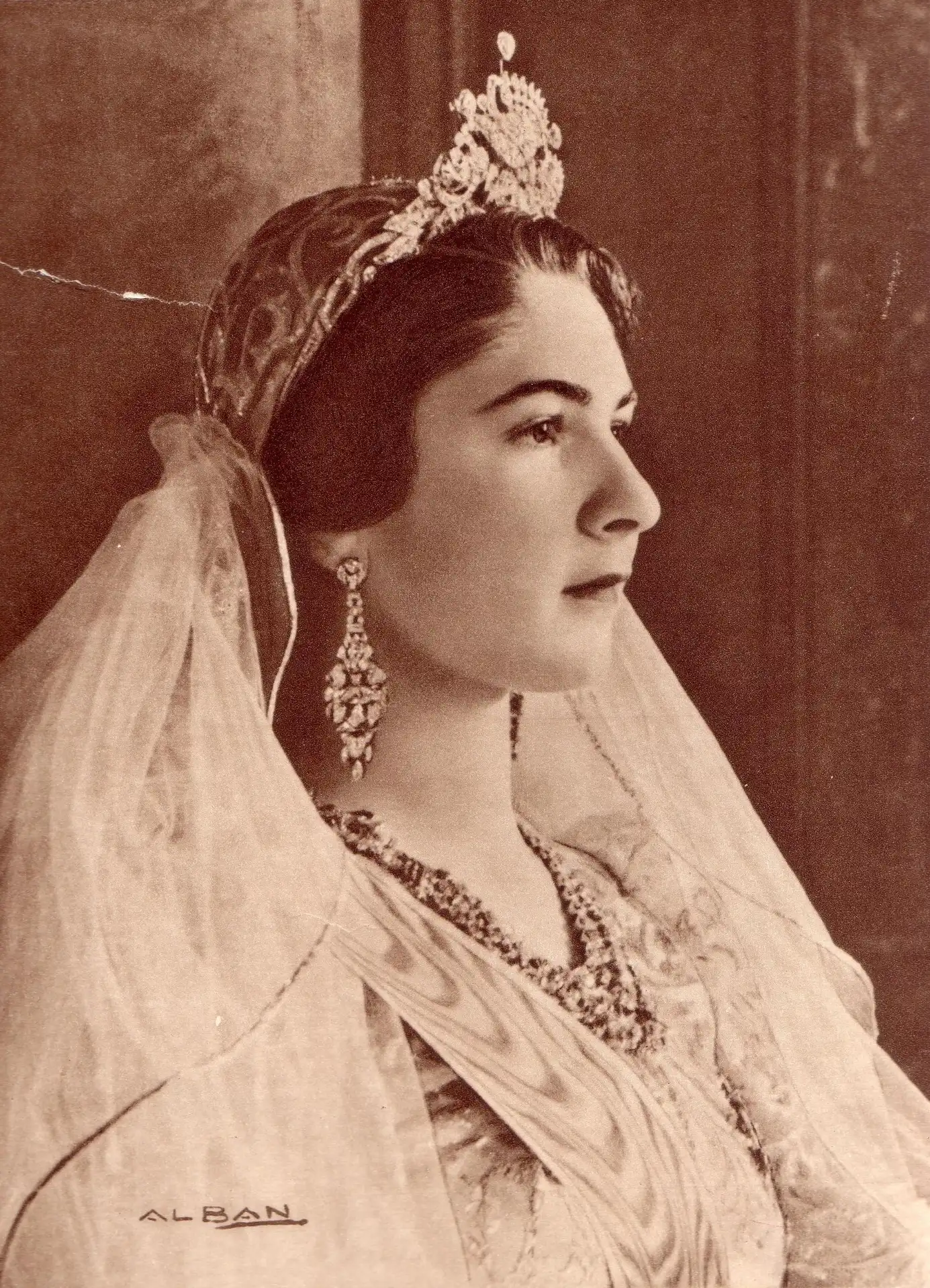
Farida of Egypt
 Egypt
EgyptAlso known as: Safinaz Zulficar, Safinaz Zulfikar
Birthday
September 5, 1921
Birth Sign
Virgo
Birthplace
Alexandria, Egypt
Age
Died at 67
About
Farida of Egypt, born Safinaz Zulficar, was the first wife of King Farouk I and Queen consort from 1938 to 1948. She was the first modern queen of Egypt to take a visible public role, stepping out of seclusion to attend state functions and champion charitable causes. Known for her elegance and dedication to health and education, she left a lasting mark on the monarchy's image.
After her divorce, Farida reinvented herself as a painter, exhibiting her work in Cairo, Europe, and the United States. She remained unmarried and devoted her later years to her art. Her legacy endures through her daughters, her contributions to Egyptian society, and her re-interment at Al-Rafa'i Mosque in 2022.
Early Life & Background
Safinaz Zulficar was born on September 5, 1921, in the Gianaclis neighbourhood of Alexandria, into an aristocratic Egyptian family. Her father, Youssef Zulficar, was a respected judge, and her mother, Zainab Sa'id, came from a prominent lineage. Growing up in privilege, she received a refined education and developed an early interest in painting.
Her life changed in 1938 when King Farouk I, who had seen her photograph, sought her hand in marriage. The engagement was swift, and at seventeen, she became Queen of Egypt, taking the name Farida. The transition from a private young woman to a public royal was dramatic, but she embraced her new role with poise.
Career Growth
As Queen, Farida immediately set about modernizing the role of royal women. She became chair of the Red Crescent Society and honorary president of the Feminist Union, using her position to fund hospitals and schools. Her public appearances were a break from tradition, making her a beloved figure both at home and abroad.
The marriage produced three daughters, Princess Ferial in 1938, Princess Fawzia in 1940, and Princess Fadia in 1943. But as the years passed, the fairy-tale romance soured, and King Farouk divorced her in 1948 after nearly eleven years of marriage.
After the divorce, Farida returned to her art. She held personal exhibitions in Europe and the United States, gaining recognition as a serious painter. Her works were shown in Cairo and internationally, and she continued to paint until her death in 1988.
Career Timeline
Public Image & Style
Farida was known for her elegance and grace, often photographed in couture gowns and diamond tiaras. She was seen as a breath of fresh air in the royal court, and her public engagements made her a popular figure.
Her style, especially her jewellery collection, continues to fascinate royal watchers. She is remembered as a queen who broke with tradition, using her platform to support charitable causes and elevate the role of women in Egyptian society.
Fame & Fandom
For decades, the story of Farida of Egypt has resonated not through a modern digital cult or organized fan clubs, but through a quiet, enduring reverence for her resilience. While she lacks a formal fandom name or viral social media rituals common to contemporary stars, her legacy thrives among historians and art enthusiasts who view her life as a masterclass in reinvention. The narrative arc from an aristocratic schoolgirl to a rejected queen and finally to a celebrated painter creates a unique emotional connection that transcends typical celebrity worship. This audience does not gather for birthday billboards or streaming campaigns; instead, they engage with her history through exhibitions, biographical accounts, and the ongoing fascination with her jewelry and artistic output. Their devotion is rooted in the tangible reality of her achievements rather than manufactured mythos. The scope of this historical appreciation is reflected in global metrics that track attention across media coverage, search activity, and consumption signals worldwide. Farida of Egypt holds a distinct position in these records, recognized as the 96th most famous person from Egypt, a standing she maintains from the previous cycle. These placements within the iFANN Global Fame Rankings confirm that her influence remains robust nearly a century after her reign, securing her spot among the most significant figures of her nation's history.
Interesting Facts and Legends
Farida was the first queen of Egypt to appear on a postage stamp, marking a significant shift in how royalty interacted with the public through mail. She was also an accomplished pianist who frequently entertained guests at royal gatherings with her performances. Her diamond peacock tiara, a wedding gift from King Farouk, remains one of the most exquisite pieces of royal jewellery ever created. After her divorce, she reverted to using 'Safinaz' in private circles but never remarried, dedicating herself entirely to her new life as a painter. She was eventually buried with her daughters following the expansion of the royal tomb in 2022. Beyond these facts, the story of her life has evolved into a modern legend often retold as a Cinderella tale turned tragedy. The widely shared narrative describes her transformation from an aristocratic schoolgirl into the 'rejected queen,' a story that focuses heavily on her divorce from King Farouk I and the end of her eleven-year reign. This account highlights how political instability and personal infidelity forced her departure from the palace, leading to her reinvention as a dedicated artist. While some accounts romanticize her time as a princess, the core of the legend lies in her resilience, turning a public downfall into a private triumph of creativity that continues to inspire admiration decades later.
Family & Personal Life
Farida's father, Youssef Zulficar, was a judge of high standing, and her mother, Zainab Sa'id, came from a respected family. Her upbringing in Alexandria's Gianaclis district was comfortable and cultured.
She had three daughters with King Farouk: Ferial, Fawzia, and Fadia. After the divorce, she raised them with the help of her family. She remained close to her daughters throughout her life, and they were all buried together at Al-Rafa'i Mosque.
Notable Connections
Relationships & Dating History
Farida married King Farouk I in 1938 in a union that was initially celebrated as a fairy-tale romance. The couple had three daughters, but the marriage deteriorated over time, marked by Farouk's infidelities and political pressures. They divorced in 1948.
After the divorce, Farida never remarried. She devoted her life to her daughters and her painting. She outlived Farouk, who died in 1965, but remained single until her death in 1988.
- MarriedFarouk I of Egypt1938 - 1948Married in 1938, divorced in 1948 after having three daughters.
Death & Aftermath
Died
October 16, 1988 (aged 67)
Death Place
Cairo, Egypt
Cause of Death
Unknown
The royal family and the Egyptian press confirmed the passing of Farida of Egypt on October 16, 1988, in Cairo. While one account listed the date as the following day, authoritative biographical records and the Mathaf: Arab Museum of Modern Art firmly establish the death occurring on the sixteenth. Her funeral was held privately, and she was laid to rest at the Al-Rafa'i Mosque in Cairo alongside her three daughters, Ferial, Fawzia, and Fadia. For decades, her burial site remained within the mosque's general grounds until November 2022, when an expansion of the royal tomb complex allowed for her re-interment in the newly designated Royal Tomb area. Tributes from peers and cultural institutions recognized her unique dual legacy as both a modern queen consort and a serious artist whose works were exhibited internationally. Posthumous attention has focused on the preservation of her artistic output and her jewelry collection, including the Diamond Peacock Tiara and the Art Deco Floral Tiara highlighted in October 2023 discussions.
Net Worth (Estate Value)
$5 Million
iFANN Editorial Team estimate
As a former queen, Farida accumulated wealth during her marriage primarily through royal allowances. Following her divorce in 1948, she supported herself through her painting career, successfully selling works in Europe and the United States. Per iFANN's editorial analysis, her estate is valued at an estimated $5 Million as of 2026 and is managed by her heirs, primarily her daughters' descendants. The estate includes royalties generated from her art and various personal effects, though no major posthumous revenue streams have been documented beyond these sources.
Awards & Accolades
View 2 records, honours and achievementsKnown For
Queen consort of Egypt
1938-1948 · Queen
Painting exhibitions
1948-1988 · Artist
Keywords
Sources
Quick Facts
- Profession
- painter
- Born
- September 5, 1921
- Birthplace
- Alexandria, Egypt
- Died
- October 16, 1988
- Death Place
- Cairo, Egypt
- Gender
- Female
- Spouse
- Farouk I of Egypt
- Birth Sign
- Virgo
Personal Details
- Full Name
- Safinaz Zulficar
- Spouse
- Farouk I of Egypt
- Children
- Princess Ferial (1938), Princess Fawzia (1940), Princess Fadia (1943)
Frequently Asked Questions
Who was Farida of Egypt?
Why did King Farouk divorce Queen Farida?
Did Queen Farida have children?
What happened to Queen Farida after the divorce?
Where is Queen Farida buried?
Similar People
Join the community
fans discussing